



 scezny
 « An avid user logins »
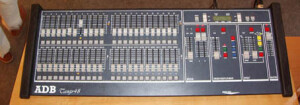
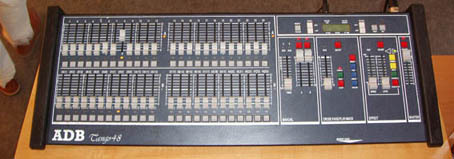
Published on 06/07/11 at 08:43I use this material and his little brother without storage (Bolero) since June 1991. Javais tried and worked on screen with Fiat Lux, Rank-Xerox, Galatec (right panel blocks but less reliable than ADB) and the Fal Lem 61 ADB, etc.. This mixing console Tango was for me one of the simplest because it has three main functions and very important: it works in analog 0 / 10 volt or 370uA, old standard that permits operation of power blocks 61 Fal , and DMX 512. It can operate in manual mode (2 times 24 times 48 or 1 circuits or memory circuits, the storage process is very easy. You can transform yourself for the analog board to 0 / 10 volt or 370uA must be changed resistances of 120 ohms for 0 / 10 volts for 370uA 27K, they are provided by the manufacturer as "chips" to 16 contacts.
The very old model Fal 61 ADB little desk in 12 circuits (prépas questionable because two potentiometers and quite unreliable) was equipped with two power blocks of 6 x 2KW indestructible and amazing flexibility (in 40 years on 4 blocks 6 channels I still have three full blocks and one which lacks 2 circuits for lack of spare parts) and I had to change once the triacs despite heavy use and intense (I equipped the theater of the New Bug Avignon with this material for 4 years during the festival: 6 shows per day from 10 am to 24 for 1 month) and frequent travel by truck with loading and unloading rough in places not so equipped.
for those interested I still have the full doc Tango Bolero 24/48 and 24/48 (the same but without storage) in French, English, German, and Dutch.
Harald Scezny
The very old model Fal 61 ADB little desk in 12 circuits (prépas questionable because two potentiometers and quite unreliable) was equipped with two power blocks of 6 x 2KW indestructible and amazing flexibility (in 40 years on 4 blocks 6 channels I still have three full blocks and one which lacks 2 circuits for lack of spare parts) and I had to change once the triacs despite heavy use and intense (I equipped the theater of the New Bug Avignon with this material for 4 years during the festival: 6 shows per day from 10 am to 24 for 1 month) and frequent travel by truck with loading and unloading rough in places not so equipped.
for those interested I still have the full doc Tango Bolero 24/48 and 24/48 (the same but without storage) in French, English, German, and Dutch.
Harald Scezny