All Audiofanzine
Use the above icons to access different information and services related to the category.
List of user reviews

-
-
Characteristics
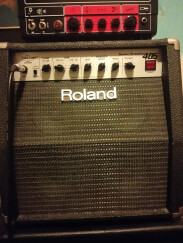
- This is a Marshall tube amp, made in Britain. There is the single 1/4" input and there is an external out as well as an effects loop. There are 20 watts delivered to this amp. It has two channels, a clean and distorted.
-
Utilization
- Getting a good sound out of this isn't too difficult, assuming the amp can provide the sound you are looking for. Channel one is the clean channel, and this channel has its own Gain, Treble, Middle, and Bass controls. Channel two is the overdrive channel and includes its own Gain, Volume, Treble, Middle, and Bass controls. Both channels share the same controls for FX Mix, Reverb, and Master Volume. The amp includes a footswitch, which is a great addition to have in a live setup.
-
Sounds
- This is a great Marshall amp, if the classic Marshall sound is what you are looking for (think Who classics like Won't Get Fooled Again, The heavier Zeppelin stuff, things from that era and a little bit beyond). This amp is perfect for anyone looking to emulate those sounds. There are some who would argue that its a bit cliche, I don't know about that though. Its a great rock amplifier. My main complaint with Marshalls is usually that their clean tones are lackluster. With a Les Paul or even a Strat, the tone of this clean channel is thick and round without being too bassy. And the overdrive...wow! What a great sound. Huge and epic, just like the Marshall sound should be. Its powerful and dynamic without losing warmth or character. Its not the most versatile sound, but it's pretty solid and can't be beaten to rock a club. Since this is just a combo, it can't play larger venues on its own like the stacks could, but it certainly can do some damage when hooked up to a PA. It's not bad for recording either, though I tend to prefer other amps to it for that purpose. The reverb is classic spring reverb, good for some live settings but not necessarily for recording.
-
Overall Opinion
- I like the tone and functionality of this amp the best. The price isn't usually that bad, and used this thing will go for pretty cheap. It's not the greatest Marshall amp out there, but for the price, it's definitely a good purchase. I think that it sounds great and is pretty reliable. The tones are familiar without being boring. I have played a few Marshall combos, but I'm happier with this than I was with most of those. I would definitely recommend this.

-
-
Characteristics
- This is a multi-effect pedal. It has two reverbs (room and hall), tremelo, Pitch shifter, and a versatile distortion. This cannot be edited with a computer or MIDI, and is not rackable. It is analog technology, like most Electro-Harmonix pedals. It has only the 1/4" input and output
-
Utilization
- This pedal isn't too hard to use. Its actually a nice thing to have if you really want a multi-effect pedals that aren't too stocked with features. Since it's an analog pedal, you don't get the cheap sounds that most digital multi-effects pedals have. The manual can explain everything pretty clearly. The only critique I had of the utilization was the fact that the pitch-bending technique wasn't as effective without purchasing an additional expression pedal to control the range of pitch shifting.
-
Sound Quality
- I used this with my Strat, which has a pretty good track record with most Electro-Harmonix pedals. I was a little disappointed in the overall sound of the distortion on this pedal. It wasn't quite what I was looking for, it seemed to feel flat and lifeless very often. It just didn't kick it over the top the way the Big Muff does. That being said, the other effects on it aren't bad. The reverb is reliable, not amazing but it does allow you to combine the distortion and reverb and get a tone that is very cool. It is almost similar to My Bloody Valentine, who have guitar tones that aren't easily recreated. The Tremolo effect is also quite nice, and it too combines well with the distortion and reverb to create some spacey, eerie sounds that are interesting. I haven't tried using this pedal in combination with other distortions, but I'm curious about that possibility. I wasn't too wild about the pitch shifting, because I didn't buy the expression pedal. Without the pedal, you have to change the pitch shifting harmonies by hand, which limits your ability to play the guitar.
-
Overall Opinion
- I liked the peculiar blend of effects that were possibly in some of the combinations of effects. I think that for the price, this is a decent pedal. I'm still convinced that you are better off finding a pedal for each of these effects that would fit more perfectly. However, for players with less of a budget, you can make do with reverb and tremolo from this guy. I would still buy another distortion pedal though.

-
-
Characteristics
- This is an updated version of the classic Digitech Whammy Pedal, but with the addition of Wah-Wah features and a Volume pedal effect. It doesn't have the MIDI in/out that would come with a later version of the Whammy. It is mainly digital technology, and it is not rackable.
-
Utilization
- The actual editing of these effects isn't too difficult. You basically set the effect to the setting you want, and then use the rocker to change it accordingly. There are 29 different effects, and they vary. There is one "Volume" setting that makes the pedal function as a volume pedal. There are five regular Wah-Wah settings, six auto-wah settings, Eight "Whammy Effects", and 9 Harmonizing effects. The whammy effects are octave effects; there is the option of going one or two octaves lower, or higher. There is also the option of pitch shifting down a whole step or two, as well the effect of going down SIX octaves (Which is really wild!). There are harmonizers that alternate a half-step up by pressing the pedal up or down. The manual explains all of this clearly.
-
Sound Quality
- I guess I have sort of a biased opinion of this pedal. I tried it after already being pretty familiar with the original Whammy. That pedal is a classic, and this version recreates almost all of the same features. In this respect, it is almost as good. However, the wah settings on this pedal are pretty terrible. I can't get behind any of them, and would never recommend this pedal over a classic wah like a Vox or a Crybaby. The volume pedal is also a lot worse than the ones I generally use. I just feel as though it might be easier to get a regular Whammy, and use a different wah and volume pedal. If you are not able to do this, you might want to think about buying this, but be warned that you will soon tire of the generic and unappealing Wah sounds.
-
Overall Opinion
- I think that for the price, you are better off buying the regular Whammy. The wah features are almost useless, and they will just get in the way. I actually think the original Whammy sounds better than this one as well. I can't stress it enough, this pedal is unnecessary.

-
-
Characteristics
- This is an American Classic Fender guitar. It is a Blonde Telecaster from 1971, which is a legendary year for Teles. It has 21 frets, a maple neck and fretboard, and two single-coil original Fender tele pickups. It has a volume and tone knob and a three way selector switch.
-
Utilization
- The last fret isn't too hard to reach, so that's a good plus for lead players. Getting a good sound out of this guitar won't require much work on your part, just having a respectable amp and a 1/4" cable should be enough. The version that I play has seen better days, and definitely needs work, but most of the ones for sale will be fixed up nicer. The drivers on most versions should be stable. The guitar feels great to play and isn't very heavy at all. It's a real treat.
-
Sounds
- This guitar sounds absolutely incredible. The clean tones on this guitar are particularly smooth and round. They have all the glory of a nice Strat, but the sounds are less twangy and more manageable. Whether or not you would prefer this is debatable, but a good Telecaster is a solid addition to any collection. I really like plugging this guitar into a Big muff or any good fuzz box, as it can get very great tones without overdoing it like a Les Paul sometimes can. It also doesn't sound as bright as a Strat sometimes does. It is certainly a great guitar for electric blues and I've seen guys do some jazzy, almost countryish picking on them too, with great results.
-
Overall Opinion
- I really enjoy the great smooth sound of this guitar. It's not as warm as a hollow body, or as thin as a Strat can sometimes be. It's also a really expensive guitar. I just haven't heard newer Telecasters that really captured the sound I hear with this one. I think that this is a unique guitar. They are also kind of rare nowadays, so they aren't gonna be an easy find. However, they are certainly worth it if you can afford it, considering how awesome their tone is.

-
-
Characteristics
- This is a unique acoustic guitar. It's made in Ireland, which is interesting, and it actually sounds perfect for many Irish folk tunes. It has a rosewood neck and fretboard, a rosewood back and sides, and a cedar soundboard. It has 21 frets, and is acoustic, so it has no pickups or volume controls.
-
Utilization
- The last few frets on this guitar are hard to reach, but it's almost definitely more of a rhythm guitar anyway, so that's not a huge issue. Getting a good sound on this guitar shouldn't be too difficult for anyone. It isn't too heavy or too light, and it isn't an awkward guitar to play by any means. It certainly plays like a dream, very smooth and gentle without requiring too much brute force to play.
-
Sounds
- I personally think this is a fantastic guitar. It's incredibly smooth and warm for an acoustic. There is never any unnecessarily high or bright overtones coming out of it. I think as a guitar, it's perfect for folk musicians, be it American or English folk. I also think, as I said before, that it would be great for Irish music as well. If what you are going for is more along the lines of Neil Young, this might not be your thing, as it really isn't twangy at all. However, the sound is beautiful. I've noticed that when I strum it hard, or fingerpick it gently, it responds well to dynamics. This is especially helpful in recording, as each dynamic level sounds relatively consistent. This has been an issue for me in the past. If anyone is familiar with the acoustic guitar playing of Richard Thompson, the tones you get are somewhere in the ballpark of his sound on songs such as "1952 Vincent Black Lightning".
-
Overall Opinion
- I can't say there's much I don't enjoy about this instrument. It's very much a smooth and full-sounding guitar. It plays beautifully and is very versatile. I think it's a very expensive guitar, but this is because the Lowden company is smaller and devotes more time to detail. I think that there aren't many other acoustics that are very comparable to Lowdens, they are in a league of their own. I would highly recommend at least trying one of these guitars to anyone.

-
-
Characteristics
- The is a very heavy analog distortion pedal. The model I played had a sick feature called top boost. It can't be edited through a computer, and it's not rackable. It's got your basic 1/4" input and output, and has a power adapter.
-
Utilization
- The sound effects editing is pretty easy. There are six controls on this pedal. (Volume, Top Boost, Treble, Middle, Bass, and Distortion). The distortion knob controls gain, while the Top Boost function contributed to the higher end of your tone, making the aggressive sound of the Metal Muff better for heavier stuff. The manual explains everything pretty clearly, but it would probably only require one good read-through anyway.
-
Sound Quality
- This thing is one of the more intense distortion pedals I've ever played. I was curious to see how it would compare to its cousin, the more famous Big Muff. The main thing I noticed was the name was no joke; this is a metal pedal through and through. As such, its appeal is limited. I personally grew out of metal years ago, and I feel as though this pedal doesn't deliver the midrange that I love so much in the Big Muff. I also feel like the regular big muff has all the distortion I want, but also a lot more warmth than the Metal Muff. As such, I wasn't such a huge fan. A metal player who prefers early 90s and late 1980s tones (Dimebag Darrell, Metallica) might really dig this pedal. The top boost feature especially makes it cut through some of the more dense mixes, and gives your leads a piercing tone that really kills it. However, the lack of midrange sort of kills the pedal for me in my book, as it doesn't do any other genre much justice. It's too bland to be used in a rock context, especially since it's got sort of an artificial brightness. Metal isn't my thing, but if it was, I'd probably be using this guy a lot more.
-
Overall Opinion
- I have to say, I like the sheer power that this pedal has. Sometimes if you're in the mood to create a lurching metal riff, you need just the right pedal, and this is certainly good for that. However, I usually demand more versatility out of my pedals. I don't think that this pedal is particularly versatile at all, in fact, its frustratingly monotonous. I think that for the price, it's not bad. Certainly metal players looking for a really good tone would be well-advised to spend a lot of money on this. However, I don't really think that it's worth it for anyone else. Other players would be well-advised to check out the other Electro Harmonix distortions for more variety, and incredible quality.

-
-
Characteristics
- This is a bass overdrive pedal, for use with a bass and bass amp. The effect cannot be edited on the computer, and is not rackable. It is an analog bass distortion pedal, and has just the 1/4" input and output. There is no MIDI connection.
-
Utilization
- This is a pretty easy pedal to use, and there's nothing too unordinary about the controls. There are 5 knobs (Gain, Treble, Middle, Bass, and Volume). The instruction manual isn't very helpful, but that's mainly because the setup is not at all complicated. Its easy to mess around with this pedal and get different levels of distortion.
-
Sound Quality
- I use this with a P-Bass primarily, though I doubt it's the best bass for this pedal. This thing is not exactly the tone that I'd be looking for in a bass usually. However, I've seen a band where the bassist used this with a Warwick Bass (not sure exactly what model) and a Hartke amp, and he really rocked it. Granted, they were a sort of punk/hardcore/alternative band, where the bassist literally had to carry all the low end and rock pretty hard at the same time. If that is what you are looking for, by all means, this will work. It will also work if you need something a bit lighter but need a bit more crunch than your clean tone. However, if you need the punch and clarity of your clean tone, be prepared to sacrifice it with this pedal, as it sort of mellows the bass sound out while making it distorted and thick. I think that this pedal isn't the greatest I've ever heard in general, but it's certainly respectable. Its not my style aesthetically, but its an effective pedal for those whose genre/style of music demands some heavy bass distortion.
-
Overall Opinion
- I don't really like the sound of this a whole lot, but I recognize that many people will. I think that they are actually kind of hard to find right now, so I can't say that it's going to be worth what you might end up paying for it. I do know that I wouldn't pay too much for it. Again, it robs me of too much pop and punchiness. I need the overdrive not to swallow all the character of my bass. This doesn't really satisfy me in that way. Therefore I'd be better off with something else.

-
-
Overall Opinion
- This is a cymbal that has been used in the studio that I work at very much. It's a great ride cymbal, 20" and its a part of the K Custom series which means that you know it is a good cymbal. It has a very unique quality. It's pretty dark but it still has a lot character and zest. I would certainly say that this is a better sounding cymbal for mellower rock bands, but I think it would be acceptable for jazz and blues, funk and similar genres as well. Basically anything that requires a ton of groove out of the ride, this just sounds better than a Dry Ride. It doesn't shimmer as loudly as the other dry rides, and it has more personality as a subtler cymbal. I feel its a more appropriate cymbal for different genres. As a multi-instrumentalist and aspiring engineer, I feel as though it competes less viciously with the frequencies of a distorted guitar, which gives it a great contrast while recording. The cymbal is pretty expensive, as the K Custom series is one of the better cymbal series out there. But trust me, you will possibly tire of a lesser cymbal much earlier than this one. I think that the Dark Ride will totally be worth any realistic price you pay for it, especially if you can get a used one in half-decent shape. The sound quality is unmatchable, I think that it is one of my favorite sounding rides right now. My boss and head engineer would probably agree. I have tried some of the other K Custom series in order to compare them to each other. I haven't really found a better cymbal series in general, but I truly prefer some to the others, and this one is one of those that I really dig. I would highly recommend this to anyone with the patience to save up for it.

-
-
Overall Opinion
- This is a 24" ride cymbal, possibly the largest in the K Custom Series by Zildjian. This is a very interesting, albeit impractical, ride. It's tremendously deep. It has a misleading name, as I don't tend to think of it as being that dry. In fact, its very ringy, sort of clangy. I can say that it is unique, and that a few contexts might lend themselves well to this pedal. However, you have to be very minimal with it, considering how much it reverberates. I think that in a ride cymbal, most drummers I've recorded with, helped recorded, or recorded myself would say that its distracting and drowns out a lot of the sound of the band. My drummer prefers the smaller rides because they are brighter, crisper and more energetic than the 24". After he demonstrated the difference, I couldn't agree more. I would almost never use this over the 22" unless a drummer absolutely insisted. Its exceptionally well-crafted, as all cymbals in the K Custom line are, however it has little practical uses in the studio unless you need a deep, almost ominous ride sound. I think that even within the K Custom line there are far better alternatives, such as the similar 22" Dry Complex Ride, which actually sounds both drier and more complex than this.
Because of this, I think that anyone who can't afford to collect a lot of cymbals should probably skip this one for now. I think even for recording purposes, you'd be better off re-EQing a smaller ride than using this one if you need something really deep. If you do have the funds to make such a purchase, and feel as though you or your clientele could really benefit from a dark wet sound as this, maybe its worth it. I just know that I wouldn't recommend it to most people.

-
-
Characteristics
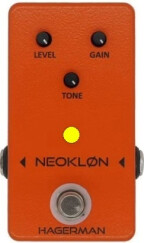
- This is your basic analog distortion pedal. This is one of the finer pedals Ibanez has made. It's sort of comparable with the Tube Screamer by Ibanez, and in fact it could be considered a ripoff of that pedal. This effect is traditional, just the 1/4" ins and outs, and the basic 9V AC Adaptor plug in. There's no midi connections or USBs, and it's not rackable.
-
Utilization
- The effects editing on this is simple, There's three knobs, Gain, Tone and Level. The setup is pretty simple, just plug it in and go. The manual is very short, and almost unnecessary.
-
Sound Quality
- I have used this with a Les Paul and a Strat. I mainly wanted to compare this pedal to the tube screamer, which will run you about $400 more than the Maxon. I think that the difference is notable, but not really that drastic. The sound in both pedals is basically a smooth, melodic overdrive. It can give some of your open chords and rock riffs some extra kick without getting too crunchy. It isn't going to give you the most heavy low-end crunch out there, but that's not really the point. Cranking the gain gives your leads a soaring, powerful tone that will give every note you play more of an edge and a warmth. The one crucial difference between the Ibanez and the Maxon was brightness; the Maxon was brighter, but the Tube Screamer was warmer. I think they are both so similar and good in their own right that it's a matter of taste, and I had a difficult time deciding which one was better. I ultimately went with the Tube Screamer, but it was tough to deny how good this pedal is.
-
Overall Opinion
- The main appeal that this pedal has over the tube screamer is the price; its far cheaper than an original and arguably just as good. The sound quality is great for some rhythm sounds and great leads. It's certainly a pedal I'd recommend to anyone who plays similarly to me.