7 products found
Choose a category


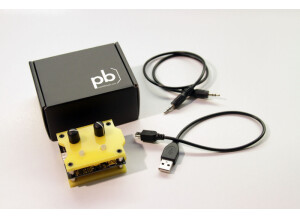
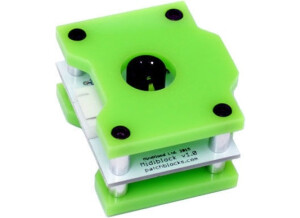
Patchblocks are very tiny "multifunctional" modules. Actually, each patchblock (I own four, plus two midiblocks) features a minijack in and out, plus a 5-pin digital input (not MIDI – but I’ll get back to it). Two knobs, two buttons and that’s all, folks! As to what a patchblock is, well… It’s a bit of whatever you want it to be. Launch the software, follow the tutoriels and here we go! A patchblock can be used as an effect, sound generator or MIDI message generator depending on how you program it, or many other factors. The user community is very active and the patches shared by users allow to understand how it works. Of course, there are still many possibilities, but you have to scrape up information, again and again, a bit like with Reaktor, you have to build your own patches before you can play with them… But when it’s done it’s really nice. Beware, as a consequence there’s no “preset” or such thing (even though you still can manage to do great things using the tutorials), and the output sound is very lo-fi (10 bits if I remember correctly). Just to give you an idea of the different patches I used for live (techno/experimental techno) or production works (dub-techno), I successively used them as: - white noise generators - bass drum sound triggered by my MFB using the block’s audio in - dub sirens - texture generators - glitchy-style effects Now, the arrival of miniblocks has changed a lot the way I’ve used them. A miniblock is a peculiar patchblock that gets clipped before or after the patchblock, depending on whether you’re after the reception of emission of MIDI data. I tried conceiving small synths, it’s cool. But what I mostly use it for is a mini-MIDI controllers so as to avoid shifting on some synth racks… Here we are. As a conclusion, I’d say it’s a useful gadget, but not one for just anyone (you need to know your way into synthesis), and patience is also required (you need to program it beforehand).