Category
Studio & Home Studio
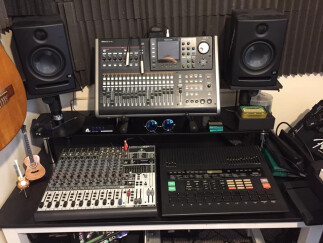
A place where acoustics are carefully studied and controlled, the studio, like its little brother, the Home Studio, brings together all the necessary equipment at the different stages of music production: mics & preamps for recording sound; converters and recorders or computers for recording; console, sound treatment and effects processors for mixing, and of course a monitoring system to hear if everything’s as it should be.
Click on one of the icons above to access the different content & services related to the cateogory Studio & Home Studio.
List of user reviews
Studio & Home Studio

-
-
Characteristics
- The SE Electronics SE4 Stereo Pair are a set of small diaphragm condenser microphones that are designed for use in the studio. Since my main focus is on recording, I've only had the chance to use these microphones inside the studio. The mics have an interchangeable capsule including ones for cardioid, hyper cardioid, and omnidirectional polar pick up patterns. The mic also has a -10 db pad and a high pass filter on it.
-
Overall Opinion
- I've used a pair of the SE Electronics SE4 for recording in a home studio and was definitely happy with the sounds that I was able to get from them. I only used them for two applications during recording - one being for recording drum overheads and the other was for recording an acoustic guitar. I found that they worked great for getting a stereo spread of both applications, but they excelled better as drum overheads. As would probably be the case for all small diaphragms, I found that they didn't pick up enough low end and low mids of the acoustic guitar. I usually will use a small diaphragm in tandem with a large diaphragm for recording acoustic guitar, but thought that this would be cool to try with these mics. Even though I didn't get the exact sound that I was after, I would bet that just having one of them in tandem with another microphone to pick up more of the low end would definitely be a good combination. As drum overheads, the SE4s did an awesome job of getting a wide sound. Although they don't sound as great as a pair of Neumann KM184s, they will cost you a lot less and still have a very acceptable sound. If you are home studio owner looking for a very reasonably priced set of small diaphragm condenser microphones, definitely look into trying or buying the SE Electronics SE4 Stereo Pair.

-
-
Characteristics
- The main effects in this unit are Vocal Harmonizing, voice doubling, pitch correction, Chorus effects, Some high quality reverbs, delays with tap tempo ability, a compressor, 3 band EQ and a Gate.
Yes, these effects can be edited through a downloadable plugin off of TC Helicon's website.
Yes, it is designed to be placed in a Effects rack.
Well, its analog in the sense that it takes in your voice but the insides are all digital. No tubes in this guy.
It has an XLR and a 1/4" input. Balanced 1/4" outputs, S/PDIF in/out, Midi in/out/thru and a pedal jack input.
-
Utilization
- Using just the hardware unit by itself, the editing can be a little bit of a pain. Its hard to really focus on one tiny LCD screen to accomplish a lot of work. Thankfully they have the Computer Plugin that makes is so much easier to do.
The general setup is somewhere in the middle between Easy and Hard. It has a lot of options to mess with, especially when dealing with harmonies. You definitely need to read the manual to get a feel for this guy. I also highly recommend using the computer plugin. Its almost a necessity.
The original manual, or Quick setup guide, doesn't give you nearly enough info to really open this unit up. Since its release, TC has uploaded a new, more in depth manual to its website. You need to download this. It is clear enough, but be prepared to do a lot of reading and learning if you want to master the Voice Works.
-
Sound Quality
- This is strictly for vocals. I have never tried to put another instrument into it and have no real need to ever try.
TC Helicon is famous for there work with Vocal Preamps and effects and this unit stands up to that reputation. I don't think my voice has sounded better than when I use this unit. The mics are faithfully reproduced and the Pre amp is very transparent. I also want to mention that it generates little to no noise into the signal chain.
The presets are fun to start off with, but if you really want to use this device, especially the harmonies, you need to program it. If you don't, your harmonies will sound off. You need to tell it what key, or what progression you are following.
-
Overall Opinion
- I also own the Pedal that operates the unit. Having the foot pedal is my absolute favorite thing. You can use it to switch between patches, tap tempo effects and do something really cool...Harmony Hold. Basically you sing a note and have the harmonies come in. You hold down on the pedal and the harmonies hold their notes as you go on to others. What a brilliant Idea. It really adds a lot when doing a show and you are the only one that can sing.
What I like least is the amount of time you need to spend learning this device. Its not an unbelievable amount of time, but it has a decent learning curve. But in the end, the time you spend will be worth every minute.
The precision and quality is spot on. The reverbs are spectacular and the harmonies are extremely nice. A lot better than I expected actually, especially for the female reproductions.
No, this is the first harmonizer I have really used. As for reverbs and delays, yes, tons of them. For vocals, this unit provides the best I have used so far.
If something happened to this unit I would be very sad. At that point though, I would buy the new Voice Works Plus, just because of the added options.

-
-
Characteristics
- This is definitely a Vocal mic used in live situations.
It is a Vocal Condenser mic with a Cardioid Pattern.
-
Overall Opinion
- The best thing about this mic is the both the warmth and the clarity it delivers in a live setting. it is excellent for any kind of vocal style and is a lot of fun to use. Being a Condenser, you can really use the space around the mic to get awesome dynamics (unlike a dynamic mic which you usually have to be pretty close to be heard). I am also a pianist so I find myself unable to keep my mouth right in front of a mic all the time. With the BG 5.1 its a lot less of a problem being heard an playing.
The only problem with this mic is the traditional problem using a Condenser live, feedback. In all honesty though, there is little chance you will get any if you set it up correctly (ie not to close to you monitors and not too close to any other sound source besides your voice). If you set it up right, people will really notice.
I paid $100 for this mic used. Unfortunately I don't believe they are in production anymore so you have to search around for a used one. $100 for a nice clear/warm mic with a lot of presence is not a bad deal at all.
I own a few different vocal mics but the main one that contends with this mic is my Shure Beta 58a. The BG 5.1 is my main vocal mic, but if I am playing with a loud rock band on a medium to small stage, I usually use the Beta 52a. Its a safer bet when you have to worry about feedback. But if that's not an issue, I definitely go with the BG 5.1. Another setup I like is to bring both. The BG for my clean vocal and the Beta 52a for effected vocals. This ensures my clean voice is well heard and my effected vocals don't feedback (especially when using distortion).
I would definitely buy this mic again. Someone was selling a pair of these in great condition for $120 and I passed due to lack of funds. I am still very sad about that.

-
-
Characteristics
- This is microphone is ideal for studio use as well as live use. I see this mic in studios and on stage almost everywhere I look.
This is a Dynamic mic with a modified supercardioid pattern that is designed for use with Kick Drums and other Bass Instruments.
-
Overall Opinion
- What I like most about this mic is its high quality sound. It captures the Kick drum excellently. Every recording I have made with drums I have reached for this mic. It provides a nice thumpy warm sound while rejecting almost all other noise (sometimes the snare can get through). I also love to use it on my bass amps. It brings the same warmth and clarity on those as well. It also is one solid (and heavy) mic. I definitely feel I could drop this thing from up high and have no problems with it (not going to do that though). I am a big fan of Shure. All there products I own work flawlessly and should anything happen, they have an excellent return policy, even for highly damaged/out of warranty items. Check it out on there website. What I don't like about this mic is the same thing I don't like about all of my Shure mics. The "protective" bag they ship it with is really nothing more than a super thin leather-like material pouch. I don't understand why they would send out such awesome mics without a strong case to ensure the safety of the mic over the years. Even cheap mics like behringer's come with hard plastic cases.
Other than that one flaw that is not really related to the MIc, this is an excellent mic and one of the the most popular Kick mics on the market.
I paid $150 brand new for this mic. I am very happy with that price and would have paid a little more if I had too to get this classic sounding, solid piece of equipment.
The sound Quality is superb and very precise. While in a very nice studio doing some recording, we were juggling between the 52a and a Audix D6. After a few comparisons, we went with the 52a. It seemed to have more response and clarity, not buy a huge amount, but enough to decide which to use.
If anything ever happened to this mic, I would have to get another one, no if's and's or but's.

-
-
Characteristics
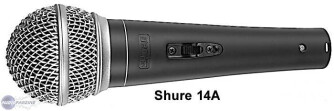
- This is a Dynamic style Vocal mic. It can be used to mic instruments too, but it is definitely a Vocal mic. You can use this in just about every environment. It works great on stage to help me cut through the rest of the band and be heard when I am singing.
-
Overall Opinion
- What I like most about it is its very feedback resistant. You can put the levels up pretty high and be heard over loud music without any ear popping squelch. The only thing I don't like about any shure mic I own is the lousy bag they send it in. Its not actually a bad bag on its own, but it doesn't offer any real protection. I have owned much cheaper samson mics and others that came with a nice protective case. Besides that, the Mic itself is a gem.
I paid $150 for it. Thats a decent amount of money but its worth it when you want intelligible lyrics.
Very good quality of sound. No problem using in the studio.
I had used a lot of sm 58's as well as a few audix mics of similar quality. The reason I went with Shure instead of Audix was Shure's awesome return policy. Even when way past warranty, you just send in your mic in most any condition with about a third of the money its costs brand new, and they will send you a brand spanking new one.
Very cool.
Yes I would definitely buy this mic again. In fact, the next band I play in that has two vocalists, I will recommend they buy one too.

-
-
Characteristics
- It is not rackable alone. I assume there are some rack ears built to hold this.
There are 8 XLR and 1/4" inputs, and 4 1/4" stereo inputs. S/PDIF, Two send/returns, Stereo RCA in/out and of course FireWire and Headphones.
This Console sends 24–bit, 44.1/48 kHz.
The Latency is not bad at all on this guy. Barely noticeable. Almost like chorus effect. I also own a Presonus Firepod and Firebox and all three of them preform quite well with very little latency.
There are 2 sends and 2 returns.
It has a 3 Band Shelving EQ.
Yes there is also a built in effects section. It contains Reverbs, Chorus, Flange Delay and a Pitch Shifter for Harmonies
No, there is no Automation on this.
The Connections are Firewire, Analog XLR & 1/4", and S/PDIF.
-
Utilization
- Typical functions in terms of regular mixing are all easily accessible. It took me a few minutes and a little help from the manual to get a good grasp on the effects section. Its very simple but still somehow confusing how to setup the effects.
As for the install, it went fine. I had to download the drivers offline but that was very easy. Updating the firmware is a little process but the update guide that comes with it explains how to. The manual was ok. Its fairly big so I only have referenced it when I needed it but, I was able to find answers to the problems I had.
-
Sounds
- There is a little bit of noise from the preamps, but not anymore than expected. Besides that, it is very quiet.
Some effects are pretty good, but besides Reverb, I don't think I will ever really use any of them. The reverbs themselves sound pretty nice. Alesis makes a good reverb for the price.
The EQ works fine. The knobs themselves are not as tight and solid feeling as the ones on my Mackie VLZ3, but they function properly.
-
Overall Opinion
- What I do like about this mixer is that it has very good preamps, and the fact that it is a Audio Interface and a Mixer built into one. Great for people recording in a live atmosphere.
The main thing I don't like is that it is not FireWire Powered, which mean a big old power cable/box.
I got this for a steal at $200. Its in brand new condition, so I am happy with that price.
The AD DA converters are very transparent, very good sound.
I own a few other Audio Interfaces and though this is not the absolute best sounding of the three, its the most convenient.
Yes, for that price, I would definitely do it again.

-
-
Characteristics
- The Manley Langevin Massive Passive EQ is a stereo parameter equalizer. I'm not sure what type of connections it has (although I think it has XLR) as the one I have used was pre-racked in a studio and I was not invovled with racking it. This is an analog piece of gear that is rack mountable and will take up four rack spaces.
-
Utilization
- Using the Manley Langevin Massive Passive EQ isn't too difficult as everything is laid out clearly and the unit is overall easy to follow. Each of the stereo channels has four bands of EQ, each including parameters for frequency, bandwidth, and gain, along with switches for either boost or cut and either shelf of bell. Each channel also has an overall gain parameter and a bypass button and there is also a high pass and low pass filter on the unit. The overall editing of your tone is easy granted that you understand how to use a basic parametric EQ and for that reason I don't think that a manual is needed in most cases.
-
Sound Quality
- The sound of the Manley Langevin Massive Passive EQ superb. It is extremely clean and does everything it is supposed to do. I feel confident using it in pretty much any situation, but I would say it excels extremely well when you are trying to get a stereo spread like on a piano or on drum overheads. This is definitely more of a clean EQ than a warm one, but when used right this can be the perfect type of EQ in a lot of different situations...
-
Overall Opinion
- I've been using the Manley Langevin Massive Passive EQ for about half of a year and was definitely impressed with it from day one. I love the tone it has and I love that it is so easy to use and so familiar looking in terms of the parameters that it has. This is definitely a piece of gear that I would recommend to professionals looking for a stereo EQ with great tone regardless of price as this does cost a lot! Even if you can't afford to look at buying one, if you're ever in a studio that has one like I did, you won't be disappointed if you give it a try!

-
-
Characteristics
- The Electrix Filter Factory is an analog piece of outboard gear that has 1/4 inch connections as well as MIDI connections. The unit is rack mountable and will take up two rack spaces.
-
Utilization
- The make up of the Electrix Filter Factory is pretty easy to follow, but there is a lot of room to play around with here since there are a number of different sections each containing their own parameters. The are sections for buzz, stereo filter, and LFO, each with own parameters - and there are a good amount of them. It will take a few minutes to get used to how all of the parameters work, but everything is pretty self explanatory as long as you know the terminology generally involved with filters like this. I haven't seen the manual for the Electrix Filter Factory, so I can't say how well put together it is or not.
-
Sound Quality
- The sounds that are possible with Electrix Filter Factory are extremely diverse, but no matter how you set the parameters it has a warm and realistic tone. I have used this device for all sorts of applications including vocals, electric guitars, keyboards, and anything else that I might want to experiment with. While this isn't a device that is a necessity by any means, it offers a lot of options and is capable of getting some really interesting and cool sounds. This isn't a typical filter device and as long as you know this going in, you're going to have a lot of fun using it.
-
Overall Opinion
- I've been using the Electrix Filter Factory for about three years or so and I'm definitely a fan of this. I've liked all of the outboard gear that I've used made by Electrix as they offer an interesting take on effects. This an extremely versatile piece of gear and will certainly bring a lot to the table for those looking to experiment with filtering. The price is definitely reasonable and makes it a suitable item for any studio owner. While I can't say I would recommend this to everyone as it isn't an essential, if you are looking to spice things up a bit, definitely check out the Electrix Filter Factory.

-
-
Characteristics
- The Audio-Technica Pro 37 is a small diaphragm condenser microphone that has a cardioid polar pick up pattern. It has a standard XLR connection and is probably best suited for recording, but can be used for live shows as well. I only have experience with this microphone as a studio mic, do this review will be focused on the recording applications of the Pro 37.
-
Overall Opinion
- I've used the Audio-Technica Pro 37 a number of a times in a friends' home studio and have found it to be a great microphone for the price. While it isn't my favorite sounding small diaphragm condenser microphone on the market, it is a great option for a home studio owner because of this great price tag. I'm normally not a huge fan of the mics made by Audio-Technica as I find that they are cheaply made and often don't sound all that great, but the Pro 37 is a different story. I'm not saying that I was overly impressed with the sound quality, it's just that the Pro 37 is one of the better sounding mics that I have tried made by Audio Technica. It is a good microphone for a variety of uses including as a drum overhead, on acoustic guitar, and other acoustic stringed instruments. It will be of use for pretty much anything that you would normally want to use a small diaphragm condenser mic, as this is a good microphone for picking up the mids and the high end of sound rather than the lower frequencies. I can't say at all that I would recommend this for a professional studio owner or engineer, as this is only suitable for home studio owners who are on a budget. If you want a cheap way to record drums and add some diversity to your mic collection, definitely look into getting a pair of the Pro 37 as it has a nice sound for those on a budget.

-
-
Characteristics
- This is an analog, tube based preamp.
There are a pair of 1/4" input/outputs and a pair of XLR input/outputs.
The are no traditional effects. I guess you can say that the Phase correction is an effect. This comes in handy when setting up your mic correctly.
Yes, it is rackable. Thats what its designed for.
-
Utilization
- This is all analog with all the parameters that you can edit on the face, so yeah, its very easy tweaking the sound.
The setup/configuration is fairly simple. I had not had much experience with tube preamps before, but the manual is actually quite helpful in guiding you. After I read it, I felt pretty confident on this guy and was able to get some really good sounds out of it.
-
Sound Quality
- Yes, it is transparent if thats what you are setting up to be. It also colors the sound and warms it up a bunch if you set up to do so also. The quality of the "Tube" sound (if thats what you are going for) is highly dependent on the quality of the tubes you put in it. It comes with a pair of cheap chinese tubes (i forget what brand) originally. I got online and bought a nice pair of Gold plated Tung sols and it made a world of difference. Very warm sound now and much more transparent than the original tubes.
-
Overall Opinion
- What I like most about this unit is the very good quality sound you can get out of it with the Right tubes. Even with the right tubes, this thing didn't cost me more than $400. Thats not bad for a quality preamp.
What I didn't like...? Nothing really. When I got mine in the mail, one of the VU meter's Lights wasn't working. I called ART and they express mailed two new ones to me, free of charge and explained how to change it myself (they did say I could return it or have it serviced, but doing it myself was the quickest and easiest way). All good stuff to me.
I was shopping around for a Tube preamp for awhile on a budget, and this was by far the best I could find for the price.
The precision and quality of the sound is quite good for how much I spent on it. I used a really nice Avalon preamp in a studio a few years back. It was amazing, the sound was fantastic. I would have definitely bought an Avalon if I could afford it, but they are $2000 minimum. Other than that, I only read reviews to figure out which preamp to buy. I am happy to say that the ART Mpa is a pretty solid machine and I wasn't disappointed at all.
Yes, I would make the same choice being as it is that I can't afford an Avalon yet.