Log in
EN
FR

ColorSound

26 products found

Categories
Filter
Sort by
Evaluation
  • Reviewed or not
  • Editor’s award
  • Reviewed by Audiofanzine
Availability
  • Available or not
  • Sold new or used
  • Sold new
  • Sold used
Must-have products
  • All products
  • Flagship products
  • Best rated products
  • Hot products
  • Popular products
Price
  • Freeware
€
Clear
Sort by
  • Popularity
  • User ratings
  • Price - low to high
  • Price - high to low
  • Used price, increasing
  • Used price, decreasing
  • Name (from A to Z)
  • Name (from Z to A)
  • Added on
Choose a category
Sort results
  • Popularity
  • User ratings
  • Price - low to high
  • Price - high to low
  • Used price, increasing
  • Used price, decreasing
  • Name (from A to Z)
  • Name (from Z to A)
  • Added on
Filter results 26 results found
Evaluation
Availability
Must-have products
Price
  • Freeware
Show results

The best ColorSound reviews

The reviews Audiofanzine members found the most helpful.
  • mooseherman's review

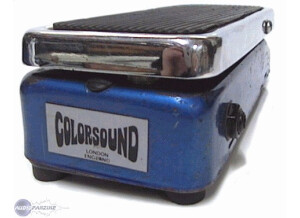
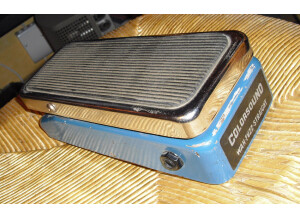
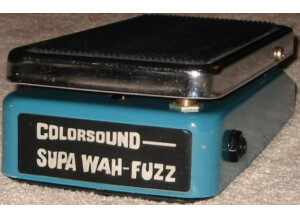
    This is a Wah pedal by a company that I have only recently discovered called Colorsound. I don't know much about this company as of right now, but I have played a few of their pedals and I am impressed so far (for the most part). This is a basic wah pedal that doesn't have any newer, digital elements, so there's no MIDI or Computer editing capabilities. The pedals is also unrackable. The pedal is very much an analog pedal in the tradition of Vox and Cry Baby wahs. UTILIZATION There isn't much in the way of operations that is different with the Colorsound wah than any other wah. I'd say that it's a pretty simple setup. The best part about it is the fact that it uses 9V batteries and can also use a power supply. Most Wahs are not capable of this feature, which gives this pedal an immediate advantage (what regularly gigging musician really wants to have to buy batteries once a week?) The manual should only be needed for really inexperienced players who'd have no idea how to otherwise use a Wah pedal, it's pretty basic in general. SOUND QUALITY I really like the fact that this pedal is different from the Cry-Baby and Vox pedals. I'd say that for the most part, I don't really get why Cry-Baby is so popular, probably because it's the one that Hendrix used. However, the advantage of the Colorsound is the fact that it gives you a far fuller sound, even when the pedal's rocker is pressed all the way forward. My biggest beef with both the Vox and Crybaby pedals is that once you push it far into the high end of the spectrum, it gets very brittle and harsh on the ears, especially with a guitar that has single-coil pickups. I'd say that in general, the color sound has a fuller, fatter sound all the way through. It does color the sound slightly, but I think that in reality, when going for the rapid wah effect, it actually keeps the tone closer to the dry signal than the other pedals mentioned, which makes it easier to control in a live setting (i.e. not letting it get too bright as to be irritating). OVERALL OPINION I like the tone of this pedal most of all, it's been making me wonder why I've been using some of the other pedals for so long. I'd much rather have one that doesn't make my tone brittle and harsh, which is why I like this guy. I don't know how much they go for new, I've seen them online for about $150 which is nice. That's a great price for a really good pedal, and I'd highly recommend it.

  • moosers's review

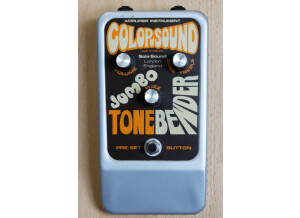
    The ColorSound ToneBender is a vintage fuzz pedal that has also been reissued as a fuzz pedal in recent years. This review is for the original ToneBender however, which I believe was first made in the mid 1970's. It can be powered by a nine volt battery, which is the method that was used while I was using the pedal, and I don't remember if it also had a power supply jack. It's an analog pedal consisting of 1/4" connections and isn't rack mountable as it's a foot pedal. UTILIZATION Using the ColorSound ToneBender is super simple. It isn't limited even though it's only got three knobs either, as you can get a good amount of varying tones just from these three parameters, which are for sustain, tone, and volume. As anyone can see, it's a really simple make up so there's no need for the assistance of a manual. SOUND QUALITY The tone of the ColorSound ToneBender is what has given it it's reputation over the years. It's definitely a traditional sort of fuzz box with a really huge sound to say the least. It's perfect for getting that classic fuzzy distortion, but I like it a lot because it doesn't blur the notes and you can still hear the musically elements of what is being played. I've used it primarily for rhythm guitar parts, but it could be useful for lead as well in the right situation. I've only used the box with electric guitar - mostly a Fender Stratocaster and a '76 Fender Twin Reverb, so I think I'm getting a true picture of what the pedal sounds like. I could see it being useful for keys as well, but I've yet to have the chance to try. OVERALL OPINION There aren't too many ColorSound ToneBenders out there, but you can definitely still find them used if you've really got your heart set on getting one. However, be warned that it will cost you a very decent amount of money! I'm not sure it would be worth the price of a used one considering what they usually go for, but if you're a collector of vintage pedals this is certainly one to be aware of. The ToneBender sounds awesome for sure, but I wouldn't buy one myself since I don't use traditional fuzz that much and I couldn't afford this if I did! If you ever come across a vintage ToneBender, it's definitely going to be a pedal you want to hear.