Log in
EN
FR

Echo

25 products found

Categories
Series
Filter
Sort by
Evaluation
  • Reviewed or not
  • Editor’s award
  • Reviewed by Audiofanzine
Availability
  • Available or not
  • Sold new or used
  • Sold new
  • Sold used
Must-have products
  • All products
  • Flagship products
  • Best rated products
  • Hot products
  • Popular products
Price
  • Freeware
€
Clear
Sort by
  • Popularity
  • User ratings
  • Price - low to high
  • Price - high to low
  • Used price, increasing
  • Used price, decreasing
  • Name (from A to Z)
  • Name (from Z to A)
  • Added on
Choose a category
Choose a series
Sort results
  • Popularity
  • User ratings
  • Price - low to high
  • Price - high to low
  • Used price, increasing
  • Used price, decreasing
  • Name (from A to Z)
  • Name (from Z to A)
  • Added on
Filter results 25 results found
Evaluation
Availability
Must-have products
Price
  • Freeware
Show results

The best Echo reviews

The reviews Audiofanzine members found the most helpful.
  • « a hidden gem! »

    this is my current sound interface in 2021, it is borderline legendary, and i'm in the market for a second one! win 7 echo audiofire 12 into via 1394 chipset external preamps include focusrite isa one, tl audio 2051, aphex 207D, focusrite platinum channel strip. mics include rode ntk, heil pr20, pr30, AT4033, AT4040, various others. used as my primary home studio interface for two years now, with NO desire to change! i have one album production released on this unit, and 4 more scheduled over the next 2 years. driver stability is borderline flawless, the windows based software is simple without losing functionality, and performance is legendary!! i even sandwiched this thing between the tl audio 2051 and the aphex 207D (a total of FOUR tubes between the two) and ran it for upwards of 6 hours of scratch tracking, just to see if i could make it thermally fail. i could not break it! i started with 2x m-audio delta 1010's (on pci cards, not pci-e), but ended up swapping all those mid-fi channels for the tc electronic impact twin - which was no better but smaller and had two onboard preamps. that unit crapped out so i bought the echo audiofire 12 used for $100 as a temporary sound card to do basic DAW playback. it turned out to be next level gear! i later discovered that it is on par with rme fireface, minus the preamps! once i learned about the gem i picked up ONLY due to circumstance, i quickly grabbed some decent mic preamps to really put this unit to the test. because of the quality i was getting, the band i'm in chose to track at home instead of renting a proper studio. we slapped up some mediocre room treatment, and we were blown away at the fidelity we were getting! we upgraded the mediocre treatment to fairly good room treatment, and recorded our album! there are NO mic preamps on this unit, but the line in's are surprisingly transparent and separated from each other! using 6 different mic preamps on the drums had no issues with electrical bleed. even blasting a metronome out from ANY of the output channels has pretty much zero electrical bleed into the inputs, but @ 24 bit 96 khz it is VERY easy to hear the metronome bleed from the headphones of the drummer in between playing. the noise floor is very low! pros: very simple 12x12 sound interface pro class a/d conversion, almost pro class d/a conversion fully routable with 1/4" trs patch cables (any in to any out) super easy interfacing with win 7 in both ASIO and WDM legendary stability STILL is on the active mod list @ black lion audio CHEAP because it's mostly ignored due to firewire & no mic pre's (most are sub-par on sound interfaces) stackable up to 36 channels insanely fast throughput: 2.9 ms @ 24/96khz, using 256 sample/buffer size true realtime monitoring of any dry channel has been ON for almost two years straight now, and IN USE for at least 6 hours per day, still runs perfectly! (i think there MIGHT be a total of 15 hours that it has been OFF in two years) cons: sometimes i have to turn it off and on again, if my pc was powered down for more than 20 mins or so. firewire is hotswappable though, so it works within 10 seconds of powering it back on. this ONLY happens when my pc is OFF for a while. sometimes the WDM side gets hung up in windows and will stop movies and mixed media from playing (loses audio sync). the asio still works, but to get the wdm to work again i switch it from stereo to surround and back to stereo again, and windows will re-sync again. could also power it down and back on again. some people might think that the firewire is a con, but now that thunderbolt 3 is standardized, it is very easy to run this on a new machine. i have ZERO regrets with this unit, and i'm looking for a 2nd one to send to black lion audio for the mods so i can compare the two!

  • Audiofanzine FR's review

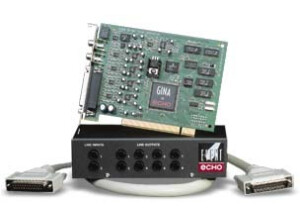
    (Originally written by Seith/translated from Audiofanzine FR) I just received it. I've had many sound cards over the last years. I will use it in my home studio. My computer: Dual Core CPU and 4 GB Ram, Windows Vista 32 Connected instruments: Kurzweil K2600RS, Triton rack, DR880, Joemeek TwinQ, bass, guitar. UTILIZATION Very easy installation. I first downloaded the latest driver. I installed it, turned off the computer and installed the PCI card (the Layla's cable is very long: 6.6'). I then restarted the computer, the card was installed within 20 seconds and everything worked immediately, without bugs, it's incredible!!!! The setup is very easy unlike with the RME Total Mix, which offers more possibilities but is very complicated (I installed a Fireface 400 and the card was not detected. I had a lot of problems with it and once it worked I noticed that the famous RME sound is nothing special... I also had a Motu 828 MKIII and I didn't hear any difference when compared to the RME)... GETTING STARTED Ultra stable drivers (pretty normal for a PCI) I just don't get the current update madness. Updates are made to correct bugs, so the more updates the more problems you might have. I use Cubase SX3 and I recently bought Samplitude 10, which I find great... The latency (factory) setting is 60 ms and I didn't change it because it works fine with 8 recording tracks and 26 playback tracks. It's ultra reliable... OVERALL OPINION I tested it a very short time but considering that I had lots of problems with other brands (stay away from M-audio, RME is overrated, Motu is for Mac users) this Echo sound card was the right choice and it offers an unbeatable value for money. I don't understand people who buy Firewire cards for desktop computers. Most people use their sound cards only in their studio so the PCI bus is the best solution. Perfect value for money. I would definitely buy it again and I'm very satisfied with this purchase... I first wanted a much more expensive Fireface or a Studiokonnekt, but with this Echo I had enough money left to buy an Avalon U5 DI box and a DBX166 compressor....

  • « Echo Mona »

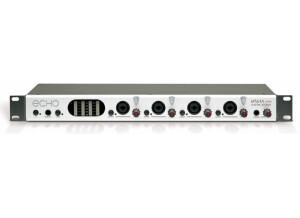
    I got it at Guitar Center for under 800 dollars but I think it was a returned item. Its extremely easy to use. It basically has 4 guitar/balanced/xlr inputs at the front with trim tables. It has 4 LED readouts to tell you if your clipping. It also has phantom power (to power your condesor microphone). The back has a number of line in and out (I use it primarily to drive powered monitor speakers). The quality of the pre-amps is excellent. You'd have to go into major bucks to beat these. The analog/digital converters are best in their class, unless you want to spend alot more. The unit allows up to four inputs recorded at the same time. Also, there's a "guitar" button for each input that turns the input into an excellent Hi-Z input. Just plug in your guitar or bass 1/4 inch mono plug and rock on! Unit has an attractived burnished aluminum face plate and is rack mountable (although no one would likely bother to rack mount it). Also it has a PCM board that installs in your PC and a cable running to the "break out box". Maybe a little pricey but hey, the quality remains long after the price is forgotten! The burnished aluminum face plate easily shows off your grubby finger prints (so wash your hands after the pizza!). The manual attempts to explain how the software mixing/monitoring and bussing works, but like all hardware units, the manual is written by severe hardware geeks with little chance of us common folk understanding whatever it is they are talking about. Therefore, the power of the software mixing and multiple inputs and outputs etc. etc. is likely to be unused by us overly rich amateurs that can afford such a unit without truly understanding it. Luckily, the software practically runs on autopilot. The construction and quality is high. This, my friend, is the best unit you can buy, unless you want to spend alot more money. Don't be fooled by cheaper cards and breakout boxes. Go on, you know you deserve an Echo unit. Its top of the line Mercedes for the serious recording amateur (and maybe the professional too). This review was originally published on http://www.musicgearreview.com

  • « Awesome! »

    The number of jack I/Os and the fact that the card is pci USE The latency with live 7 is 12ms. I sometimes use up to 20+ tracks with 1 pan, eq, compressor per channel, and the card doesn't even flinch. It works with assio4all v2. OPERATION I installed it on my PC running Seven 64bits and, to be honest, I have never had an issue so far. OVERALL OPINION I've been using it intensively since May and it's the core of my home studio. I would've love to have two XLR outputs more for monitoring and one more midi i/o. Other than that, it's a good product!

  • « Small »

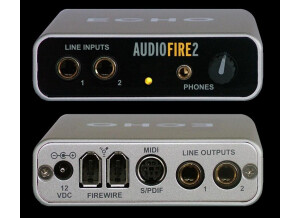
    The Echo Audio Fire 2 is a very tiny device that can be used almost anywhere in any situation. This type of interface is always good to have around, they are very cheap and sound good in most situations with low latency and sync with any computer and work with any program and daw. I have one of these and I keep it around as a back up and when I go out of my home and still want to record. It is truly an on the go type of interface. UTILIZATION This interface is only about 5 inches wide and 4 deep at the most. It can pretty much fit in the palm of your hand so it can be put into your pocket or any carry bag that you need to have it in if you are on the go. I have seem several DJ’s use the Echo Audio fire 2 because they are very mobile and from time to time they need an interface that they can do some mixing with on the computer and still track in there vocal audio. When using this I have noticed a lag though, but the lag varies depending on your machine and operating system. GETTING STARTED It is compatible on windows xp, vista and windows 7 32 or 64 bit as long as you have at least 256 ram available and a fire wire port. When on a mac you need to have 10.4 operating system or later and at least a G4 processor. On both systems you need to have a 400 mega bytes per second fire wire port. OVERALL OPINION Very small interface, with a little latency, but its still very affordable and powerful. I will keep mine as a back up device for on the road. I love this pocket sized interface that I can use anywhere. You have to try it.

  • « Echo Mia »

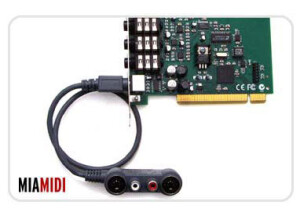
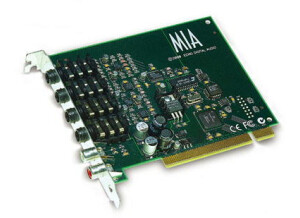
    Bought at www.midigear.com for 169.00 total(shipping paid!). Non-factory sealed special (still under warantee) The Mia really is worth every penny you pay for it. The entry level price of only $200 dollars is what first got me interested in the mia. When I started doing research, I was pleased to find that every site that I came across offered a positive review. Simple, intuitive interface and mixer that unlike a pricey sound blaster feature-fest, it is well designed to be used with professional recording software. I have only used the digital in/outs and the analog out. I haven't fully tested the d/a converters as I've only had it a week. Like what I hear so far. The sorted windows sound drivers are a puzzle to get right at first, no fault to the mia or Cubase. Windows has several types of drivers to sort out. The unit has no preamp, which although keeps the price respectable, cuts back on the versitility. I can't just plug in one of my mics as I have no separate preamp. Once again, no fault to mia, since the card is only 200 dollars instead of way more. Besides, cheap preamps are worthless. For now I use my Sony SBM-1 from my DAT which has nice preamps. Makes all the difference. Well designed for an internal sound card. No basis for comparision since it never leaves the computer case. Great sound. Priced right. Designed for use with real production software. This review was originally published on http://www.musicgearreview.com

  • Audiofanzine FR's review

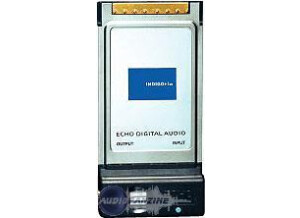
    (Originally written by Udun/translated from Audiofanzine FR) Interesting features: - PCI card + external rack - 2 analog inputs (mic, instrument preamps, ...) - 3 RCA analog outputs - Midi In/Out - Multiclient I use it to produce demos, to record instruments (guitar, synth, etc.) and VSTi via Midi. Good-quality sound compared to basic sound cards, good-sounding preamp for guitar... I have a small critique regarding the analog outs if you plan to use several audio applications at the same time (like Cubase, Reason, Windows Media Player, etc.)... The sound card doesn't have a monitoring output for headphones or monitors. You'll have to add a small mixer connected to the main sound card outputs. A guy from customer support recommended this setup. UTILIZATION No installation problems if you follow the indications in the user's manual: install the driver first, then the PCI card and then the rack. No incompatibility. The setting is ultra easy. Everything worked fine from the start. The user's manual is clear but not up to date anymore. GETTING STARTED Very reliable driver. I've had no crashes in 2 months of intensive use (Cubase, recording, music playback). You can find updated drivers on Echo's website. You can feel some latency (6 ms) with some VSTi but it is short enough for most applications. OVERALL OPINION My first sound card was a Presonus Firebox. I brought it back to the store to get a refund because it was not stable. The audio quality was good but I had lots of audio drop outs. (See review on Audiofanzine). So I decided to get a PCI sound card instead of a firewire one. The stability is much better. And Echo's customer support answers immediately, unlike Presonus'. In spite of the lack of a monitoring output this sound card has a very good value for money. I wouldn't hesitate to buy it again.

  • Audiofanzine FR's review

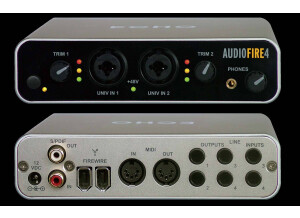
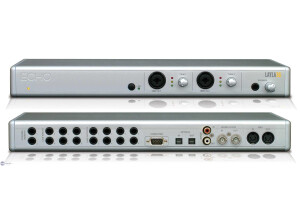
    (Originally written by bounav/translated from Audiofanzine FR) Audio, MIDI and SPDIF interface 24bit/96kHz Six audio inputs and six audio outputs: - Two XLR/instrument combo inputs on the front panel - Two balanced line inputs on the rear panel - Four balanced outputs on the rear panel - Two SPDIF inputs - Two SPDIF outputs Firewire Self-powered I use it with Mac OS X Leopard on a Mac Mini Intel (Core 2 Duo) and a 12" Powerbook with Logic Pro 7.2. Instruments most often recorded: acoustic, electric and bass guitars, and vocals UTILIZATION The Audiofire 4 is natively compatible to Core Audio and Core Midi so there's no need for drivers! Just connect it and OS X will automatically detect the card. No compatibility problems until now. I use the interface with Mac OS and Logic Pro 7.2. The configuration can't be easier. It's a REAL plug'n'play device. I haven't tested it with Windows yet. I read on Echo's website that there are 32 and 64 bit drivers available for XP and Vista (WDM, ASIO 2 and GSIF drivers) I never read the user's manual. It's not necessary. GETTING STARTED No driver needed with OS X. Native Core Audio and Core MIDI card. Very stable operation. No drop-outs nor crashes. Notice: since the card uses a Firewire bus, every time you add or switch on a device (like an external hard drive) in the Firewire chain the connection to the computer is reset and the sound is gone for 1/4 of a second. This is totally normal. It's the same with every Firewire device. In order to realize the card's full potential install Audiofire Console, a small software mixer for the interface that allows you to change the routing of each stereo channel (three stereo channels = six outputs), enable the phantom power, change the sampling rate and the SPDIF protection mode, etc. The software I use are Logic Pro 7.2, iTunes and Audio Hijack Pro Latency time: I've set the latency down to 64 samples without having a single problem, but I usually set it to 128 samples. Simultaneous recording of six mono tracks. Six assignable outputs (three stereo buses) OVERALL OPINION I've been using this interface for two weeks. Pros: Transparent converters. Compact size. Ease of use. Cons: Only one headphone output. Previously used audio interfaces: several Sound Blaster Live, M-Audio Firewire 410, Tascam FW-1082. Excellent value for money! Would I buy this product again? Yes, yes, yes! It's the interface I had been dreaming about!