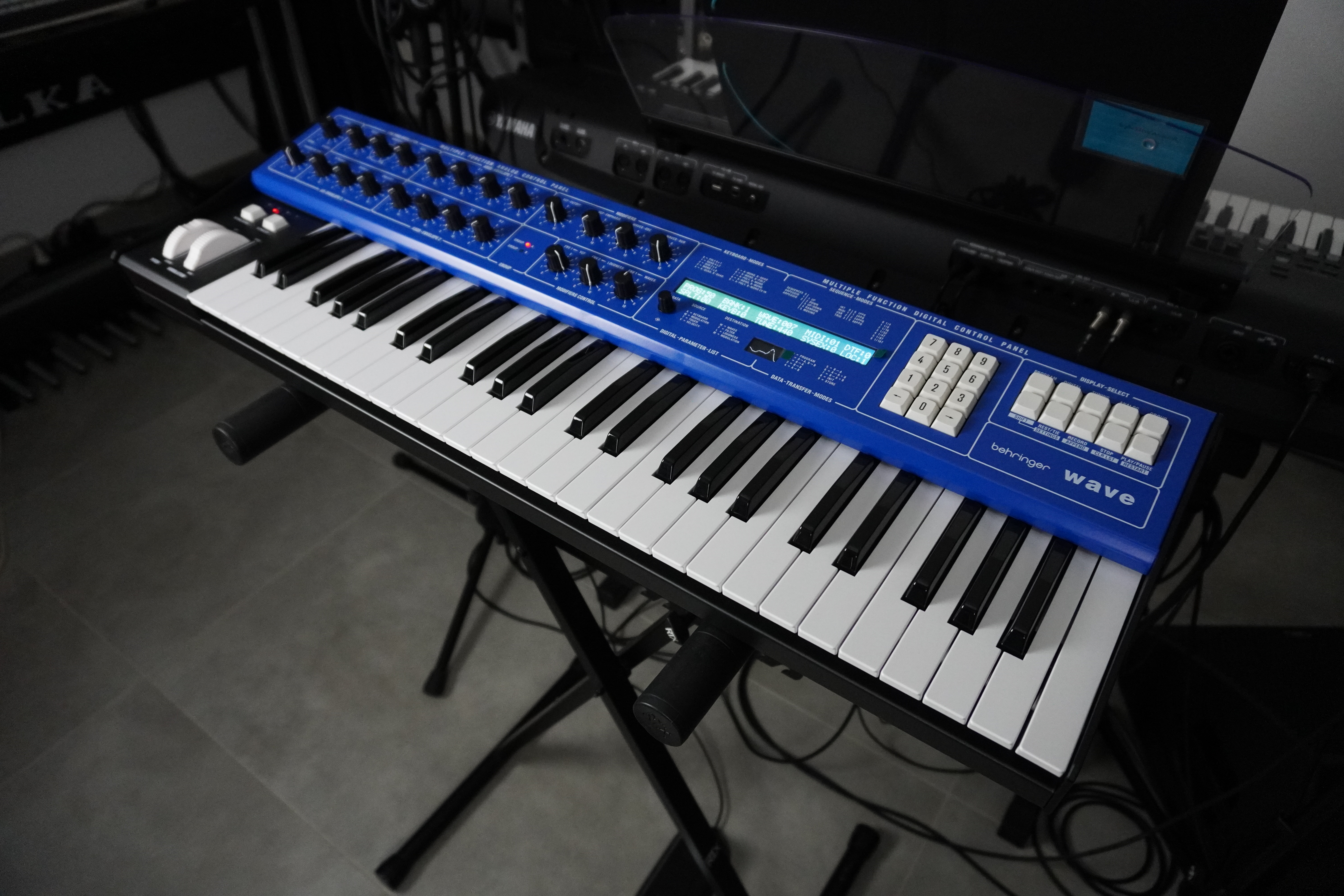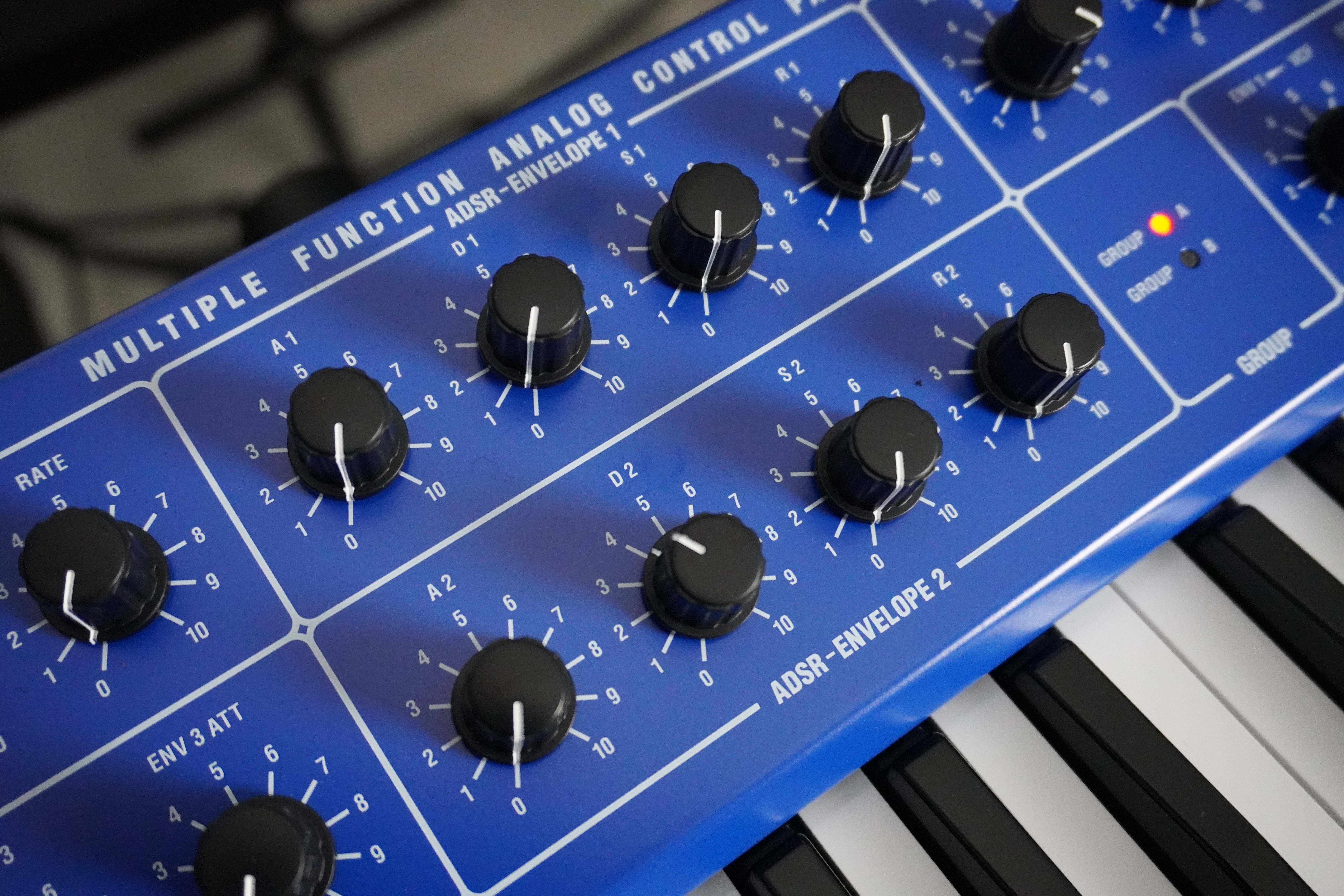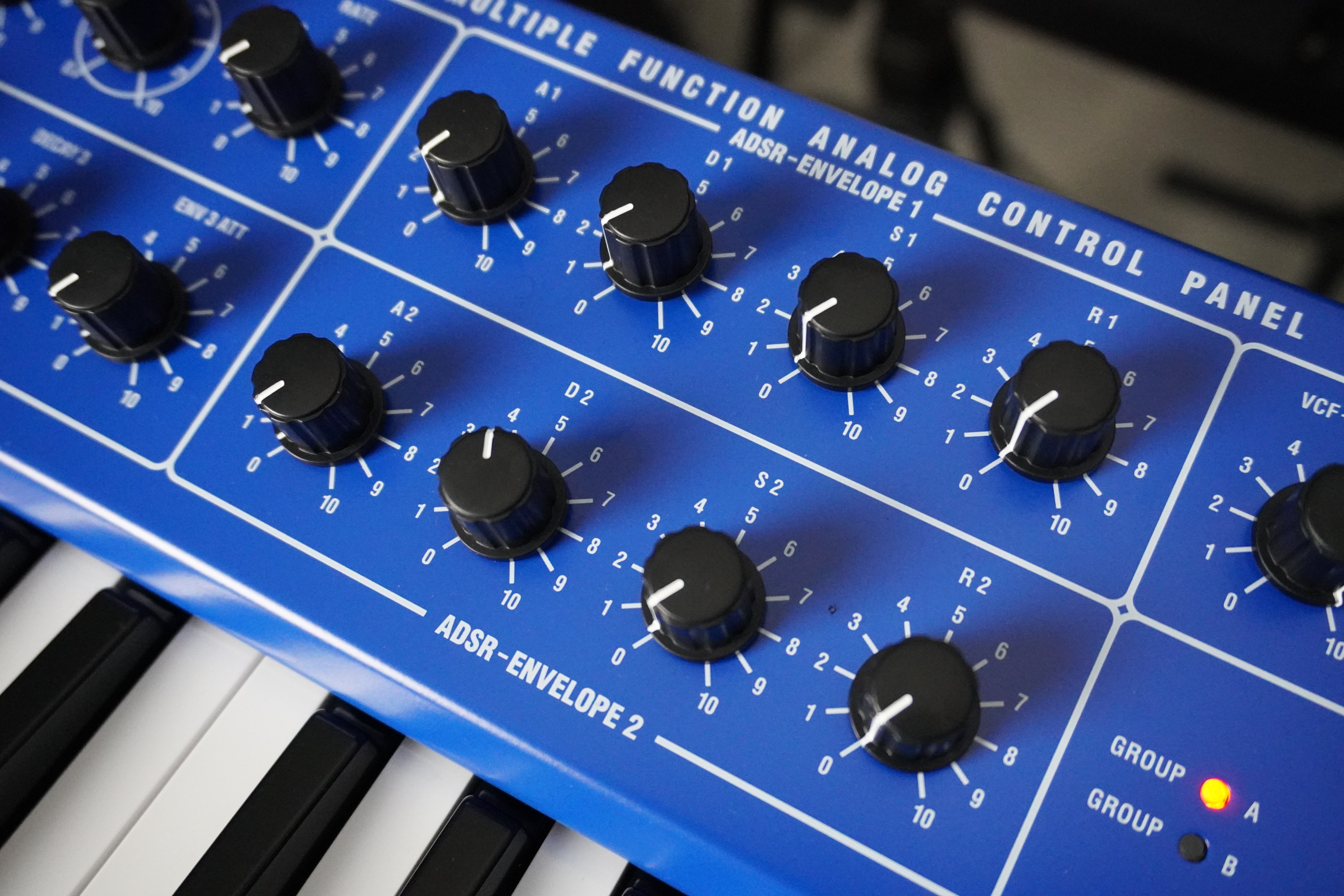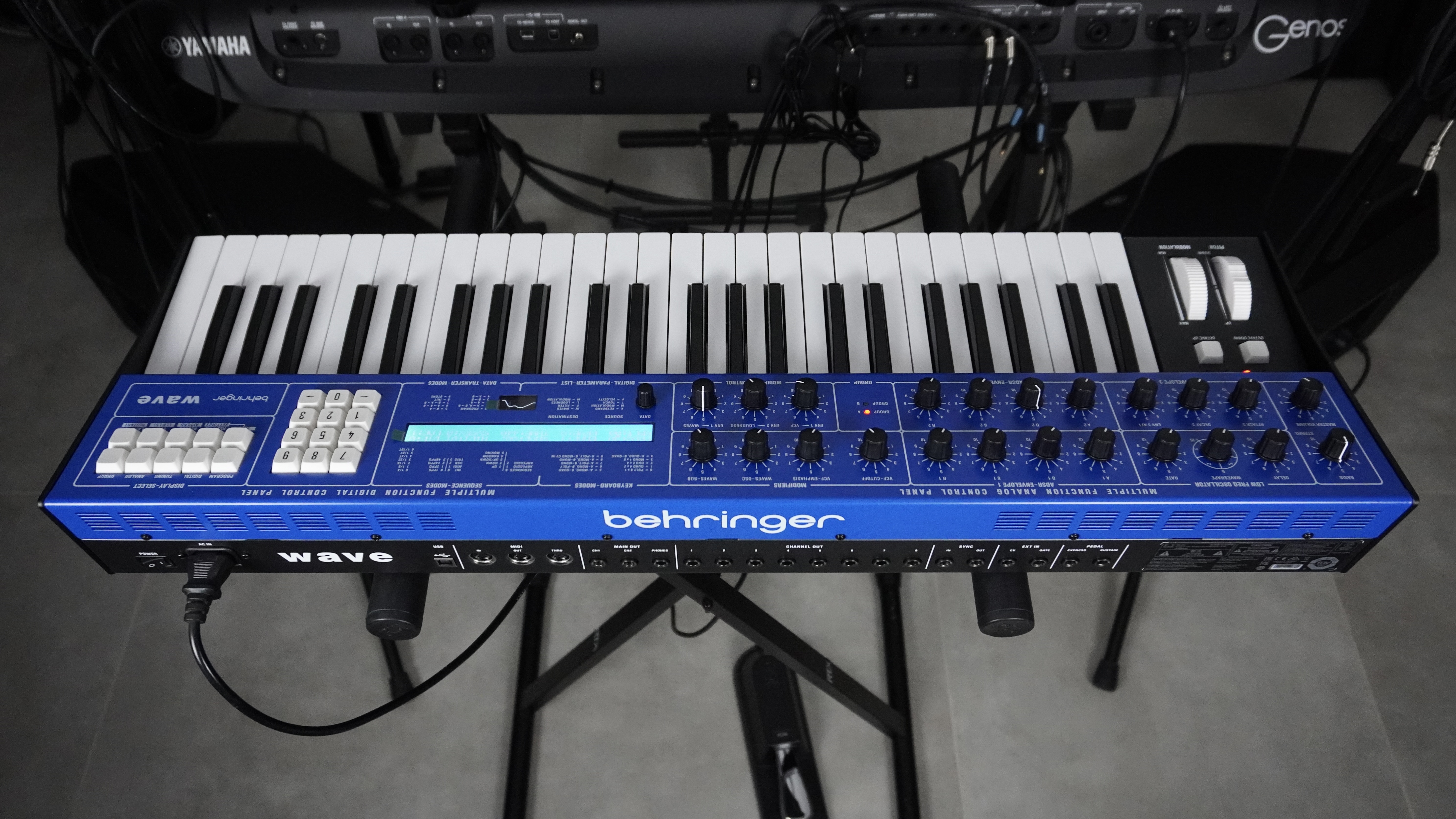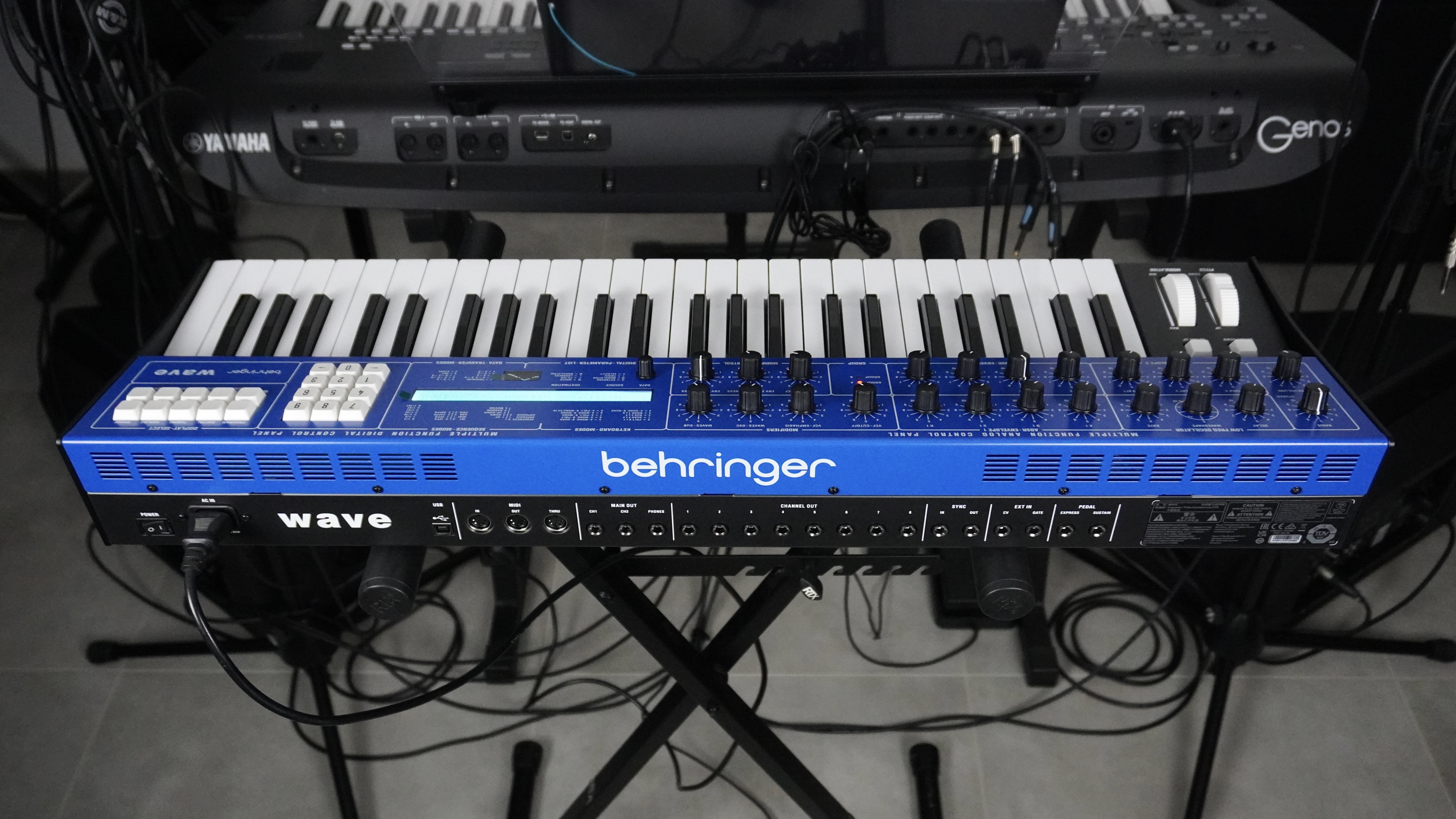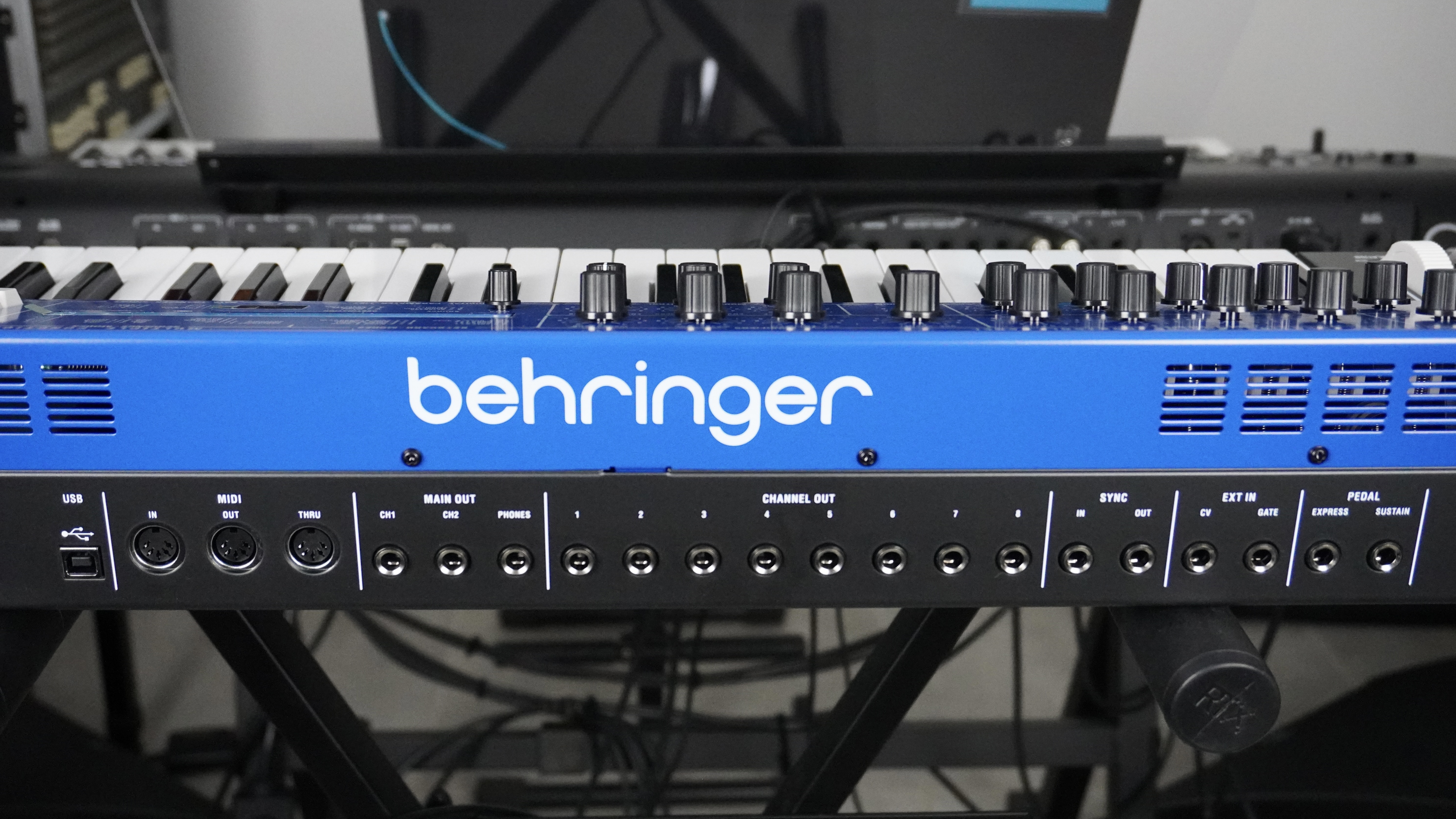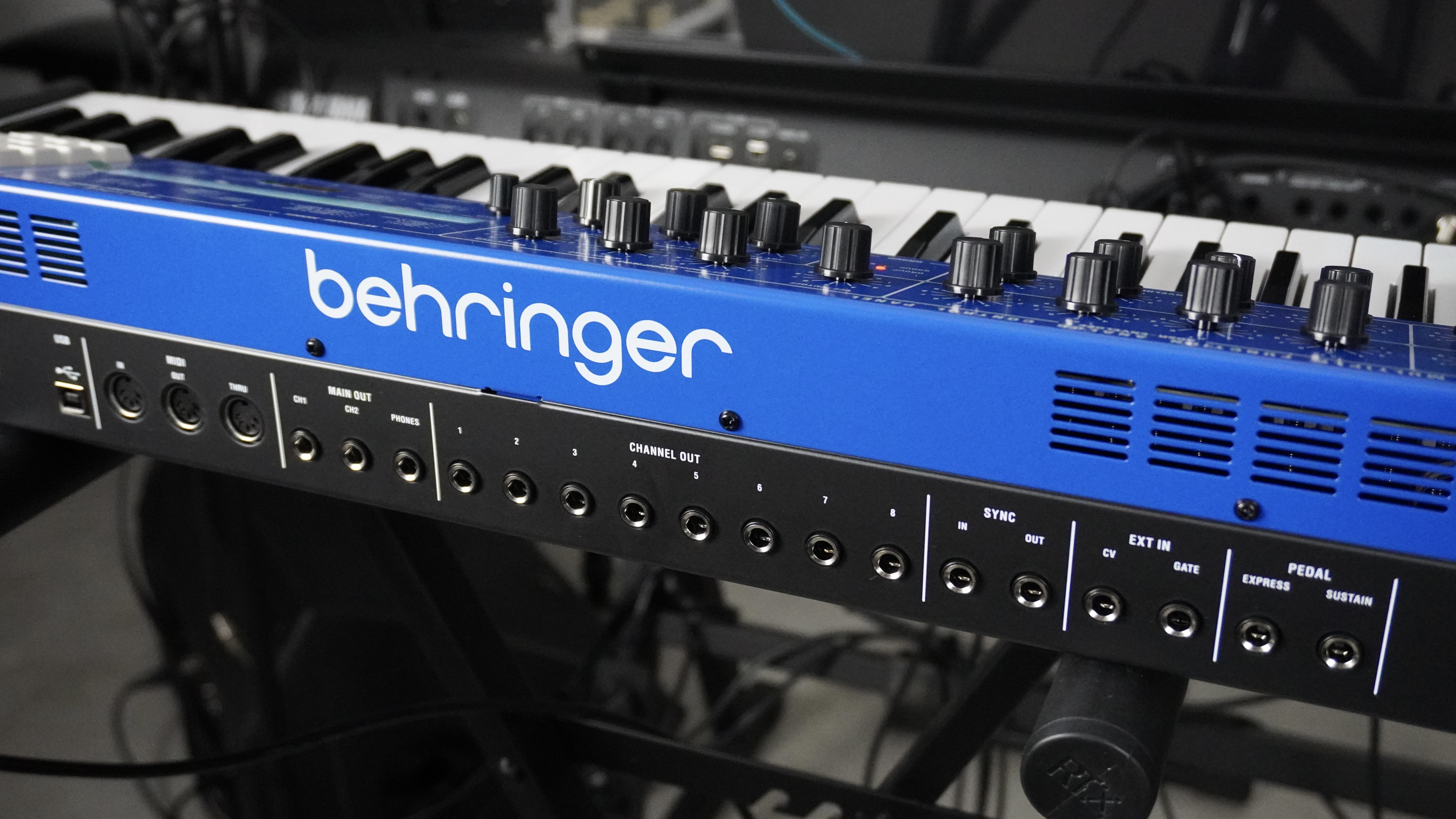
The Wave is positioned as a faithful imitation of the PPG Wave 2.2 and 2.3 from the early 80s, at a very attractive price. While it copies their color codes and overall presentation, has it managed to retain their distinctive sound while improving on the uninviting ergonomics of the originals?


Around the Wave 2 units, a series of peripherals was grafted that communicated via an in-house protocol, forming a complete digital audio solution. Among them was the Waveterm A and then the Wavetern B, a sampler (8, then 16 bits) capable of sending samples to the Wave 2 memory to complete wavetables. A few decades later, after initially devoting itself almost exclusively to cloning analog synths, Behringer decided to tackle the PPG system. With the Wave, Behringer intends to get as close as possible to the Wave plus Waveterm pairing. Let’s see if the designers have taken the opportunity to improve the not exactly unforgettable ergonomics of its ancestors.
Blue and black metal for a relatively compact synth

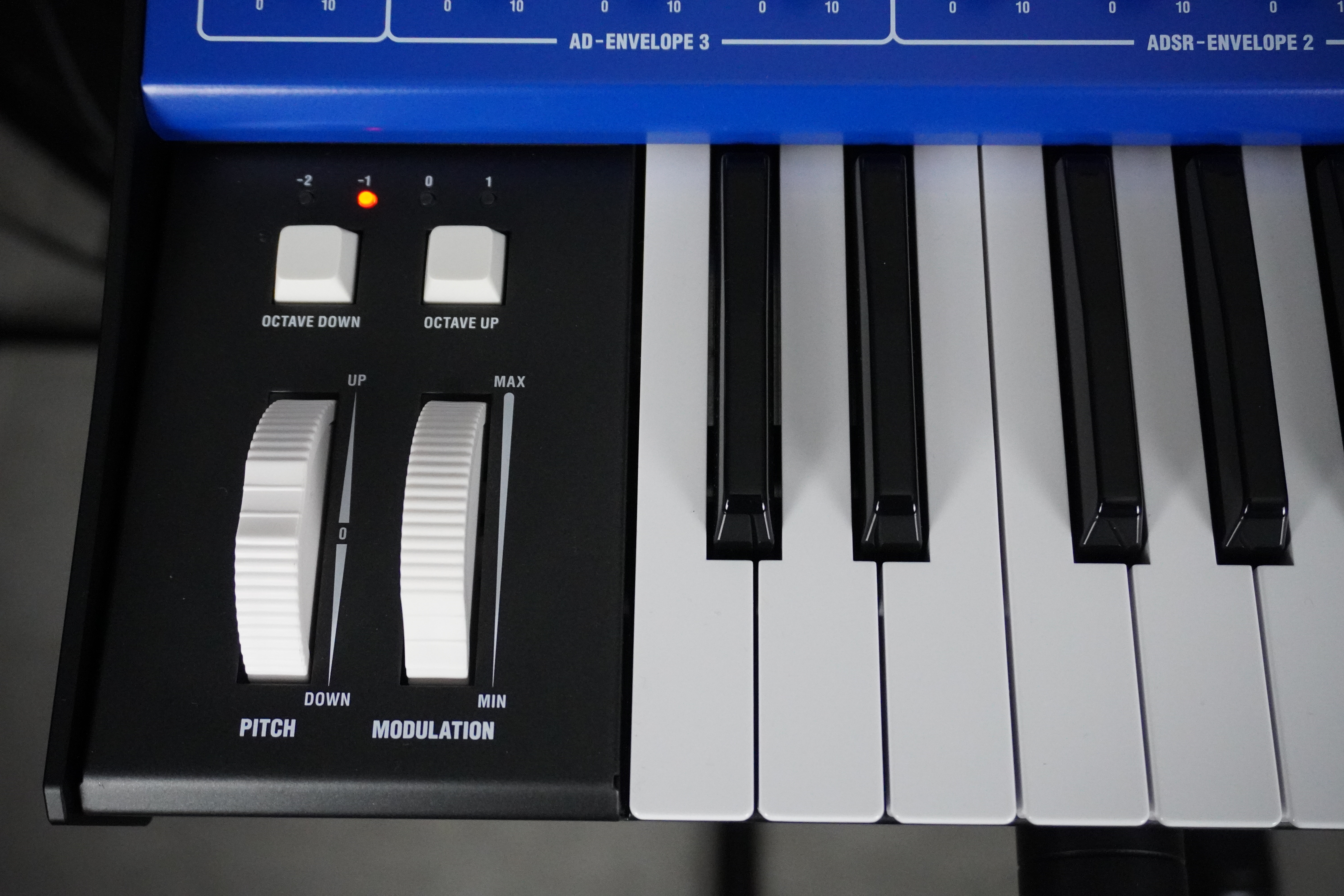
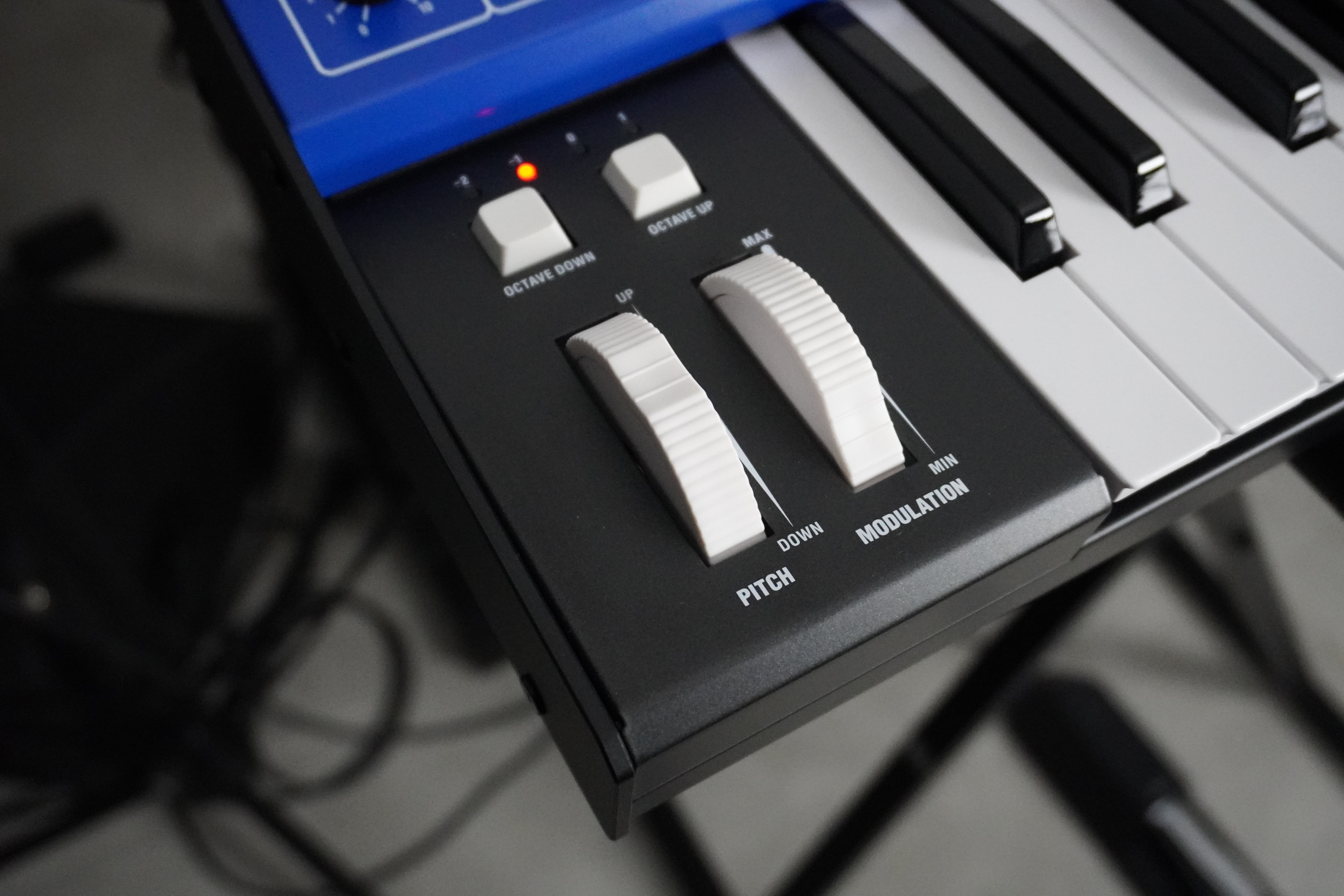
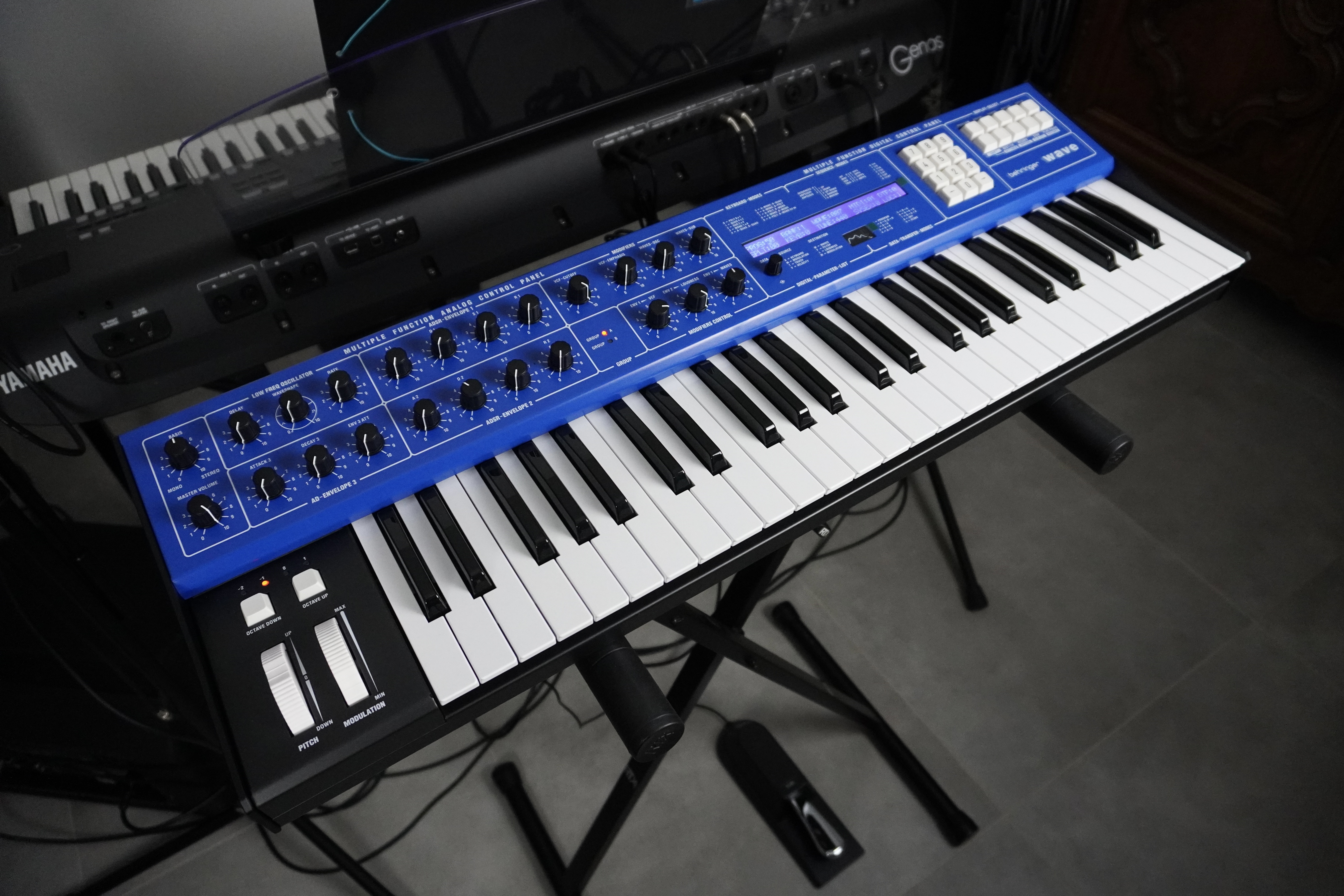
On the Behringer unit, the front panel is reduced to the useful surface of the controls, which overhangs a four-octave keyboard, two assignable knobs (one spring-loaded, the other free) and two octave transposition buttons (+1/-2). The keyboard is rather mediocre, with a disparate response between white and black keys and an initial resistance that limits precision at the beginning of a stroke.
Worse still, the single-response curve is very poorly calibrated for low velocities, and velocity control is ultra-limited in the modulation matrix (four values are available). It’s impossible to play pianissimo, especially when assigning volume. It’s essential to revise the response curve (or create several), as driving the Wave with an external keyboard doesn’t solve anything either! The keyboard responds to pressure by channel (mono), and here it’s a little better balanced. The choice of four octaves is undoubtedly an advantage for those looking for a compact instrument — 80 × 26 cm, weighing 7 kg (31.5 × 10.2 inches, 15.4 lbs.) — but a disadvantage for those who want to take advantage of split modes.
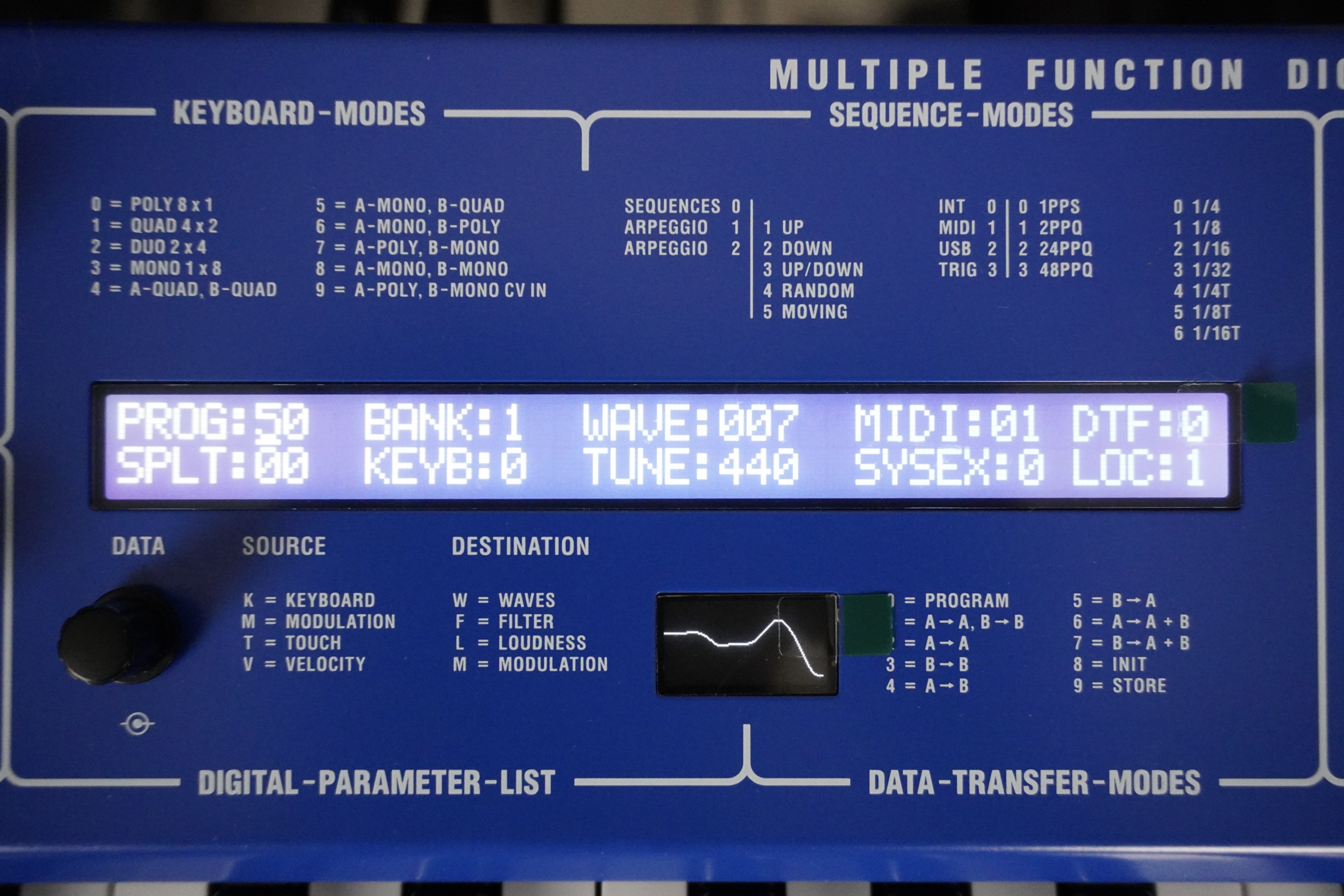
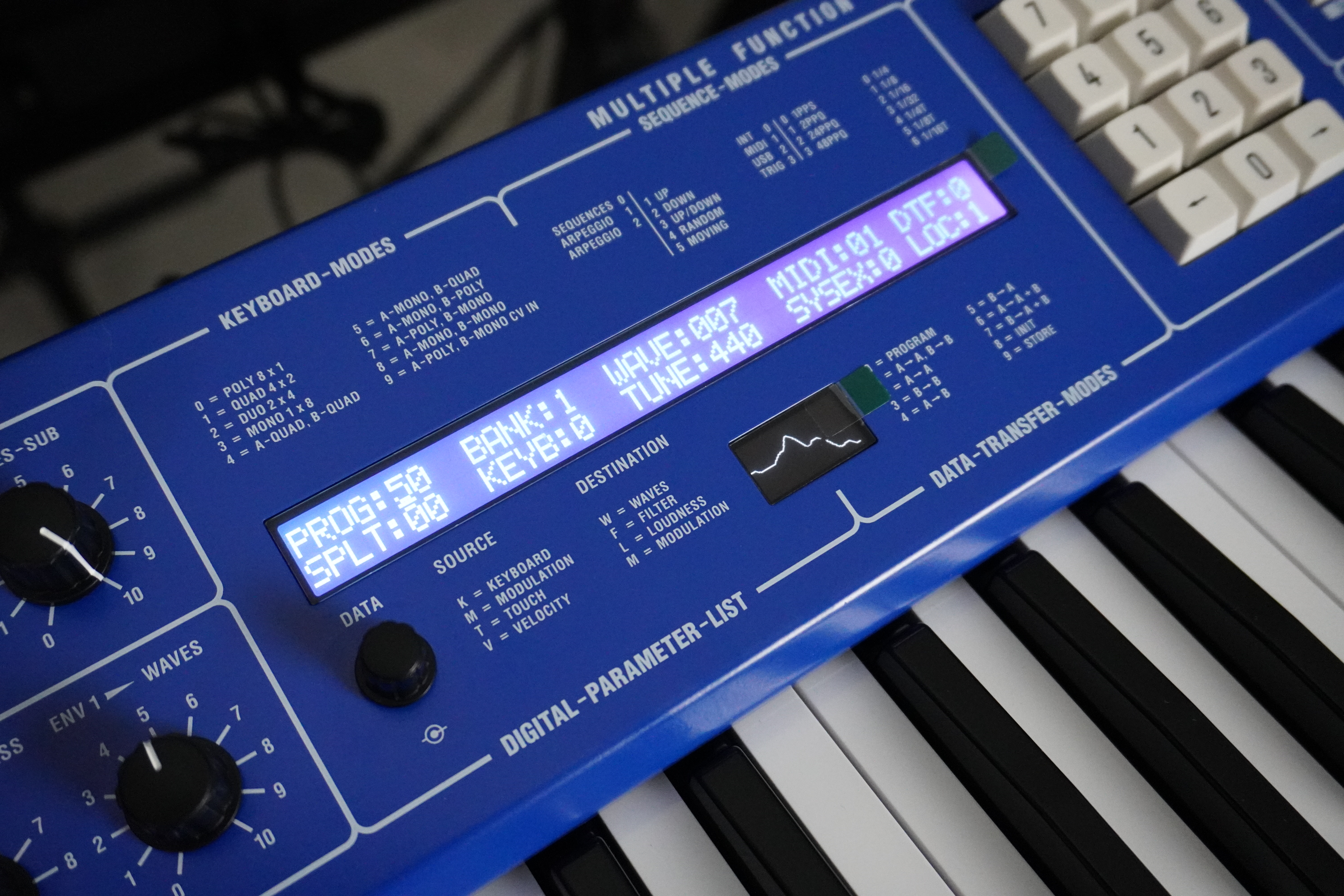
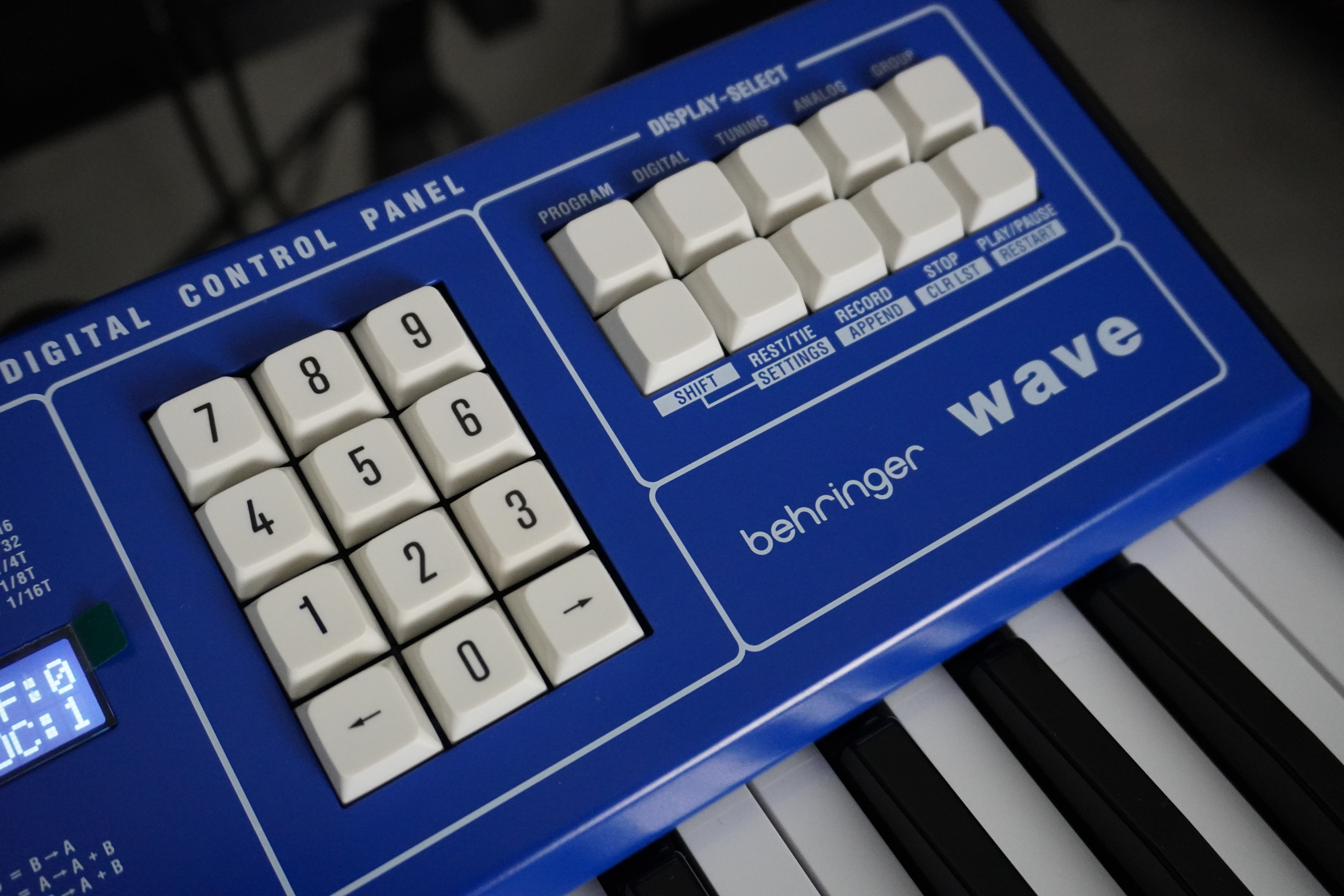
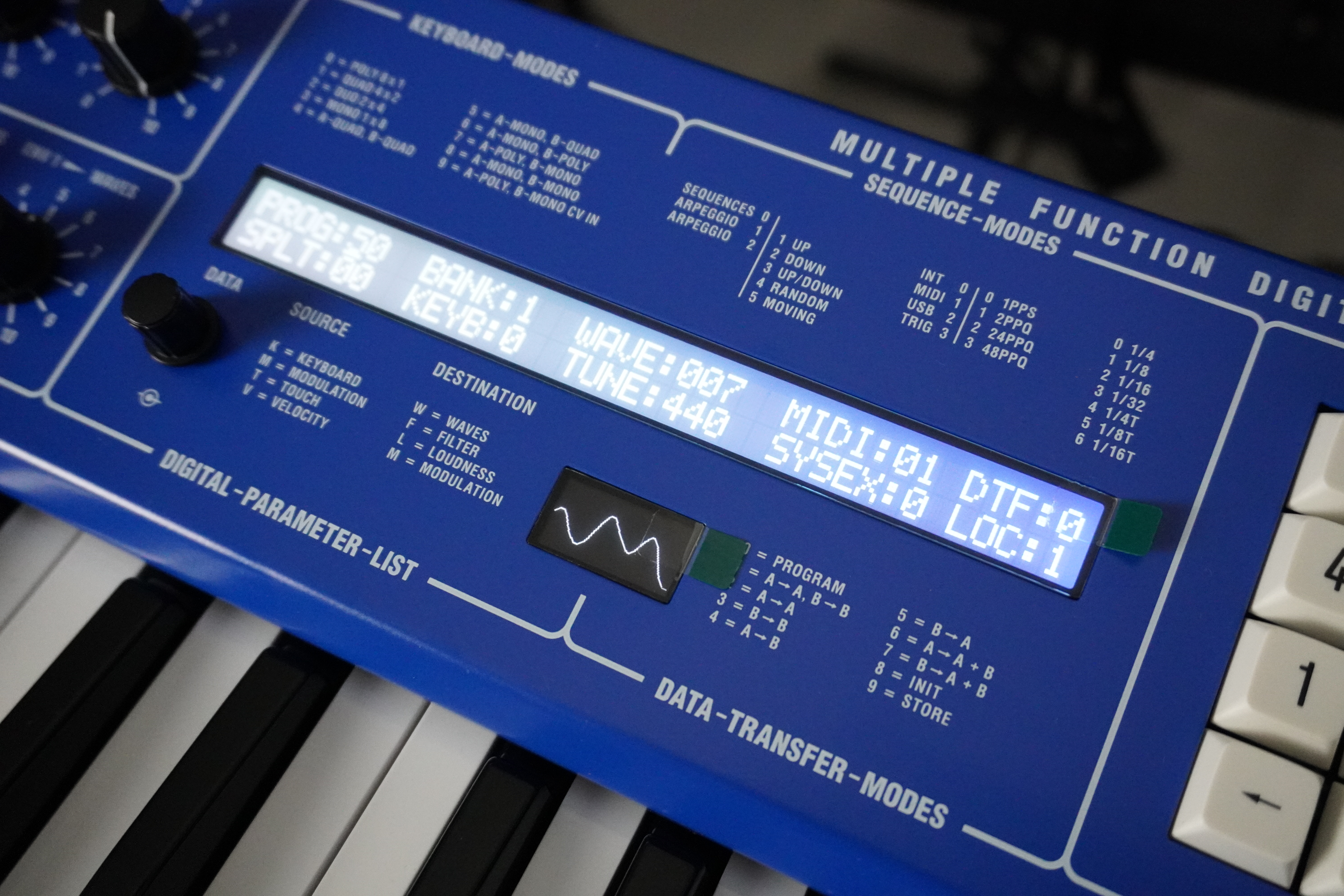
In the center, an easy-to-read 2 × 40 white LCD on a blue background (contrast and brightness adjustable via menu) overlooks a notched push-button encoder (navigation/data entry) and a small OLED display (real-time oscilloscope, wavetable name display, calibration monitoring and acknowledgement of waves transmitted by Sysex). The encoder is sensitive to acceleration, but recalcitrant at low speeds where it tends to skip steps. On the right, there’s a numeric keypad (programs and data entry) and a sequencer edit/transport mode selection pad (2×5 keys).
The repulsive ergonomics inherited from PPG Wave 2 were stupidly preserved
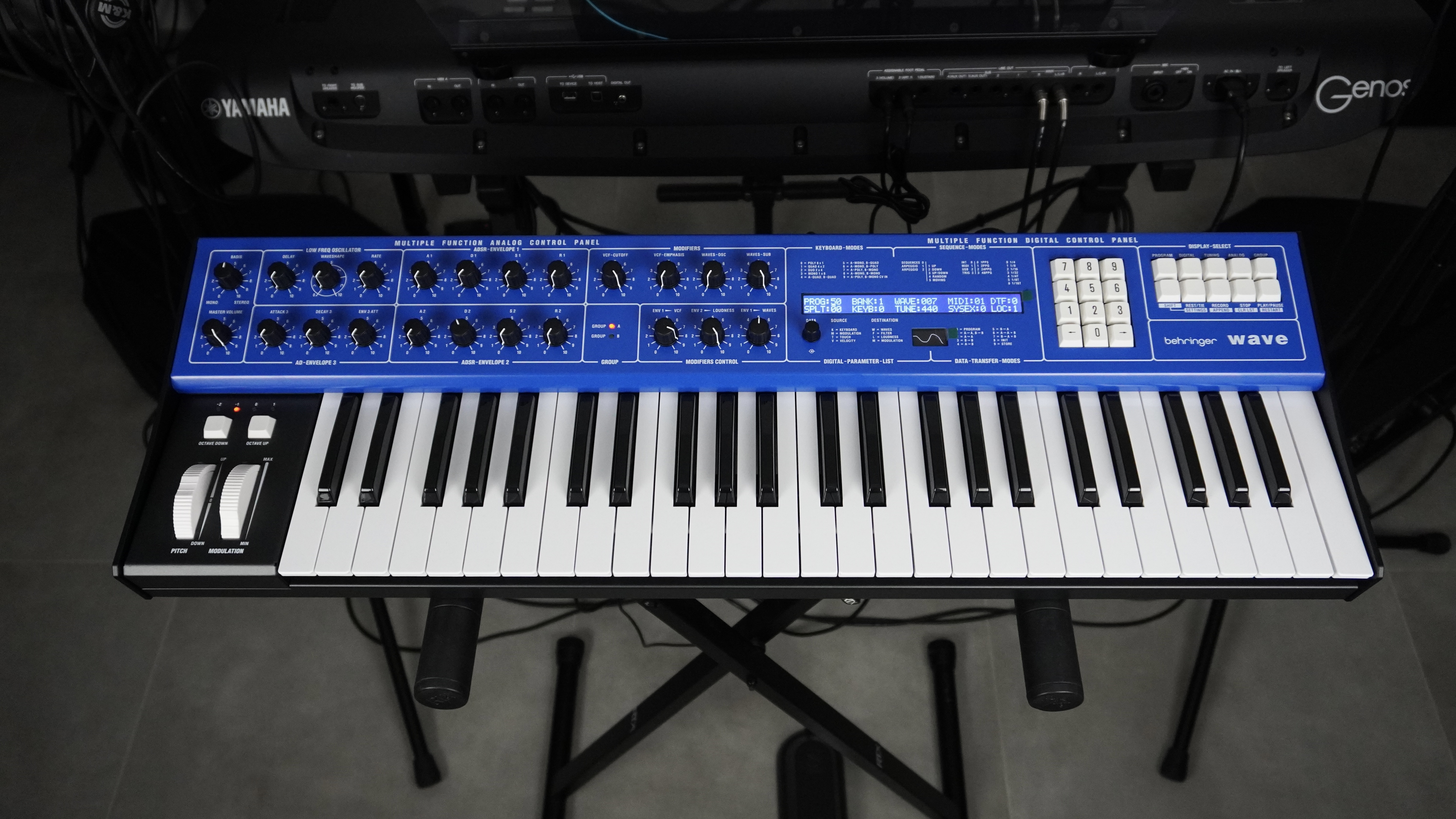
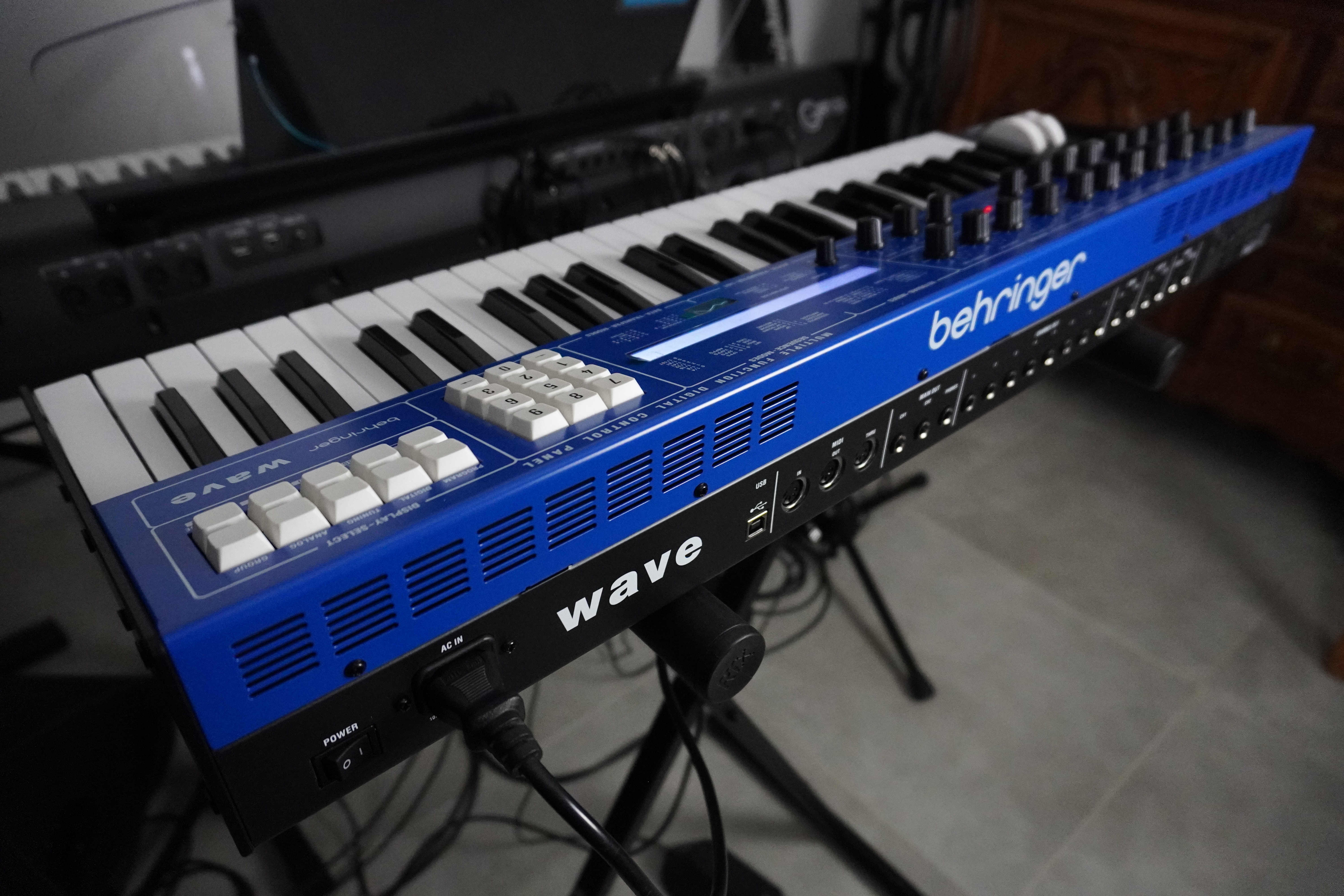
The menus are full of abbreviations that are almost impossible to memorize. For example, for the modulation matrix, there are 16 letter pairs followed by a number. You have to guess that SW0 means the suboscillator runs in parallel with the main oscillator, while SW3 means it’s off, and SW2 assigns it envelope n° 3 (logical!). MF means “routing of the modulation wheel to the filter”; KL means “keyboard tracking assigned to the volume.”
In short, it’s inscrutable! The same applies to the modulation quantity settings, which are very light, sometimes binary (zero or full). In their quest for absolute fidelity, the Behringer designers have reproduced the PPG interface identically, whereas competitors strive to make complex synthesizers and their accompanying interfaces easier to digest. As much as it was a good idea to recompose the interfaces of vintage analog synths, it’s foolishness to copy those of early hybrid or digital synths with cryptic menus.
Evolving textures that are faithful to the grain

If we leave the oscillators at their original resolution, we hear their craggy, metallic grain, full of buzz in the bass and aliasing in the treble of the PPG Wave 2.2/2.3. This original brutality can be eradicated by an anti-aliasing treatment with rather magical smoothing on the wavetables (alas, a global choice), but we preferred to keep it and soften it with the integrated analog filter.
We loved the musicality of this VCF, a faithful reproduction of the SSM2044, which tends to color subtly rather than assault the eardrums, unless you really push the resonance. Here, the filter can enter self-oscillation, which is not the case on the PPG Wave 2.2/2.3 (the recommended calibration stops just before self-oscillation on the ancestors, although it can be pushed beyond this with the internal adjusters). In short, here it resonates more and better. But overall, we’re in the register of the PPG Wave 2.2/2.3, and in this respect, the near-conformity of the Behringer copy is excellent news.
The addition of transients to the wavetables also makes it possible to approach the sounds of the first low-resolution samplers of the 80s, including the PPG Waveterm, with its nasally frozen sax, badly prepared piano, short, curled pan flute or slightly muffled Sahar Fairlight. In short, fans of Tangerine Dream, Depeche Mode, The Fixx, Saga or Propaganda will find plenty to like with this Wave. There’s also nothing to stop you from inventing new sounds for new uses, as the synth is quite profound in this area. For that, you’ll have to seriously roll up your sleeves to dive into the arcana of synthesis and grab the PPG vibe.

A hybrid sound engine based on wavetables or samples…

The sweep speed can be constant over the entire range or follow the keyboard. The suboscillator shares the table with the oscillator, but can read it in different modes: Parallel (the table moves at the same time, but at different reading points), Fixed (wave position set by the front-panel Waves-Sub potentiometer), Swept by Envelope 3 (AD) or deactivated.
Notable improvements include the ability to synchronize or ring-modulate the oscillator via the suboscillator (in sync, the suboscillator signal is cut from the mix) or transform it into a volume-controlled noise generator. The two oscillators can be detuned to predetermined values of higher or lower finesse, which is not at all flexible. You can also set pre-determined polyphonic portamento times, again a rehash of the old PPG. Finally, each of the eight voices can be detuned separately by a semitone upwards (0 to 63), which is very useful in split or stack mode.
Warmed up in an analog filter and amp
The resonance is not compensated (it crushes unaccentuated frequencies, i.e. the bass, as on the PPG Wave 2.2 and 2.3) and goes as far as self-oscillation (which was not the case on the old PPGs). As already mentioned, we loved the behavior of this filter, whatever the frequency and resonance settings. The cutoff frequency can be modulated by an ADSR envelope (positive modulation only, too bad) and other sources (more on that later). Similarly, the modulation wheel can control resonance and an expression pedal (full details in the paragraph dedicated to modulations).

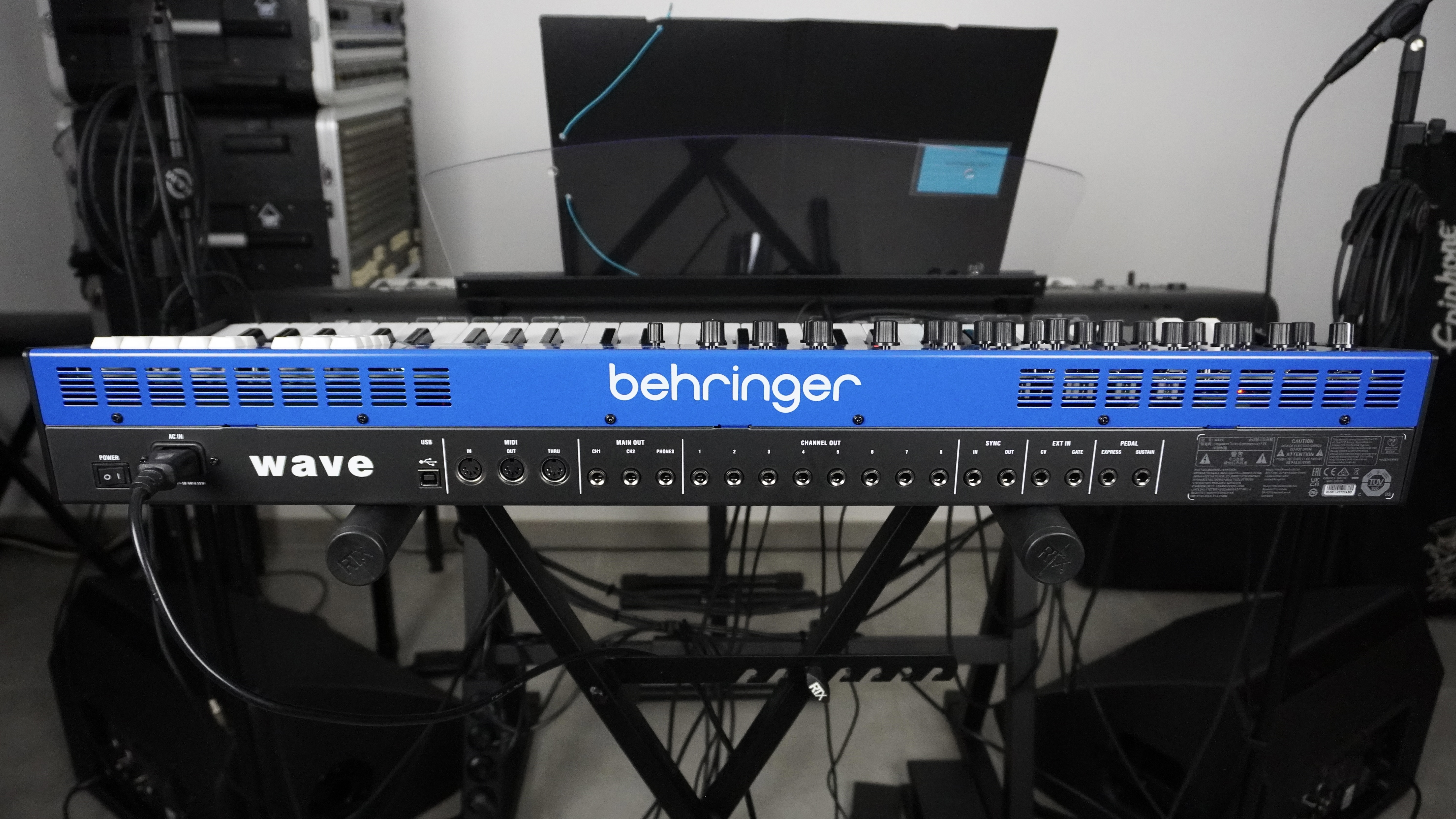
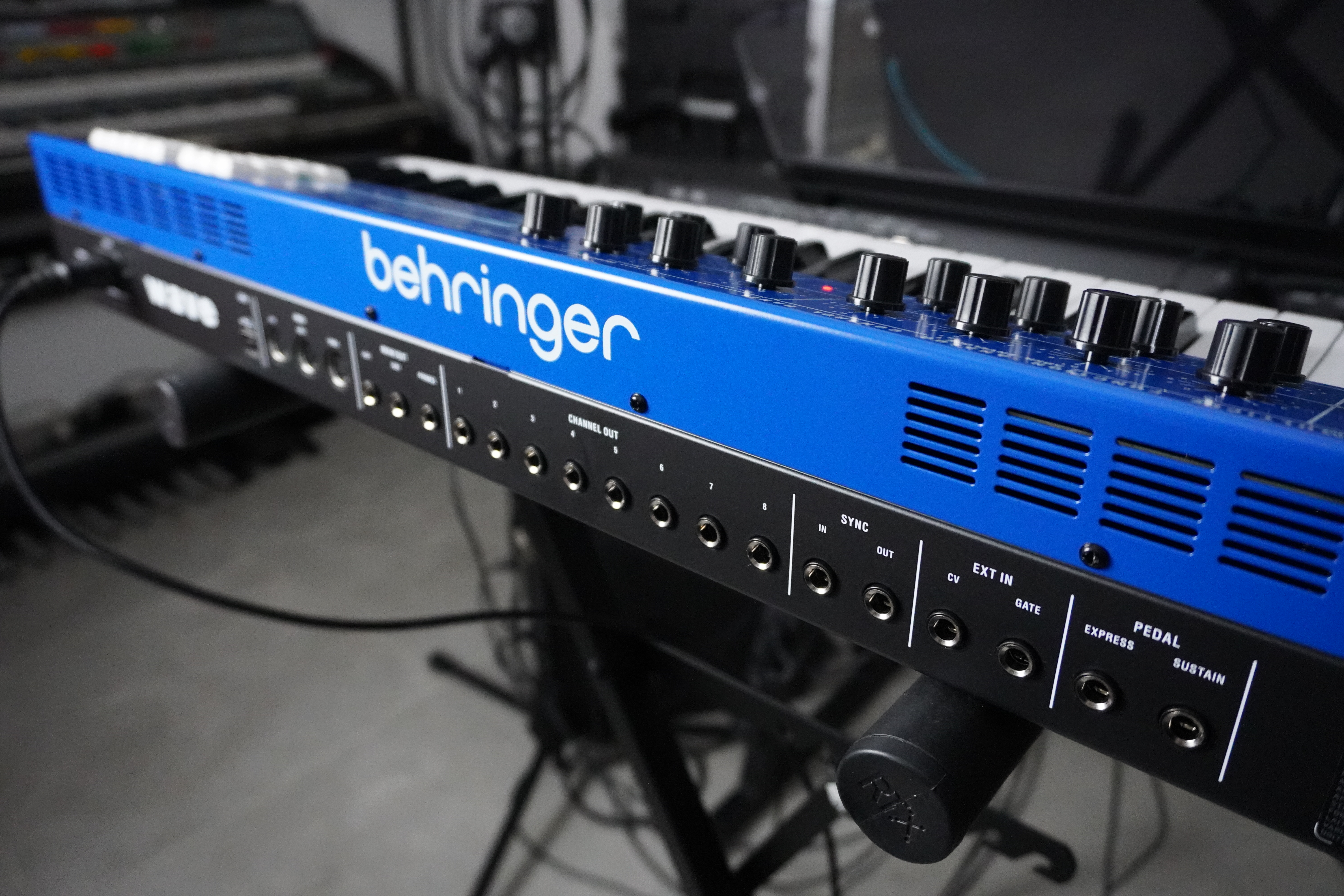
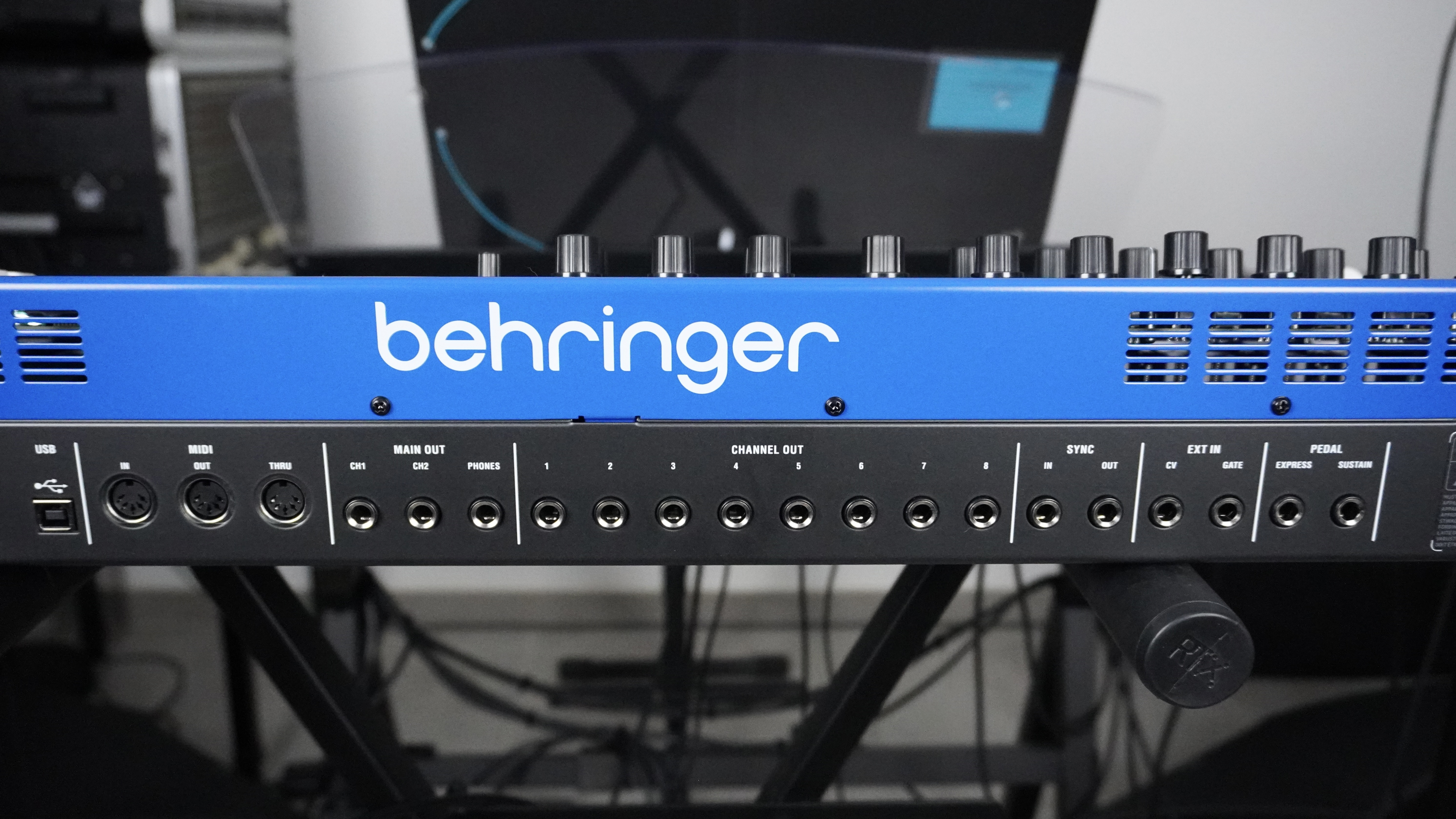
Question: Why reproduce the eight individual outputs of the PPG Wave 2.3 when the synth is only bi-timbral? As much as the PPG Wave 2.3 could assign a different program to each of its voices (this is the Combi mode — added on the latest OS revisions, which could also run on the Wave 2.2, which doesn’t have the physical individual outputs), the Behringer Wave is incapable of doing so to date. No doubt a function originally planned, but left aside during development to release the product. No info on Behringer’s willingness to put the work back in.
Classical modulations assignable via a matrix to the least cryptic
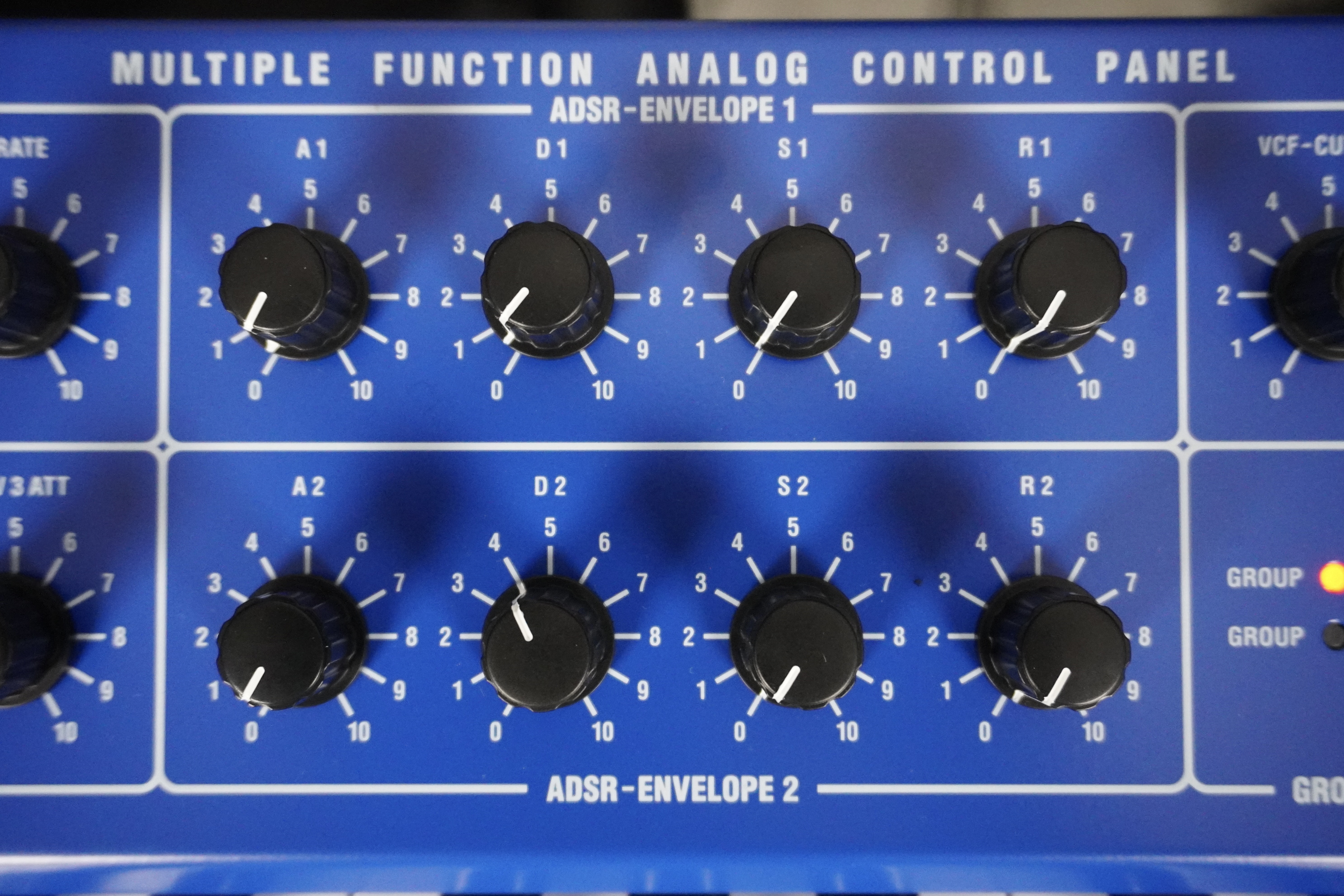
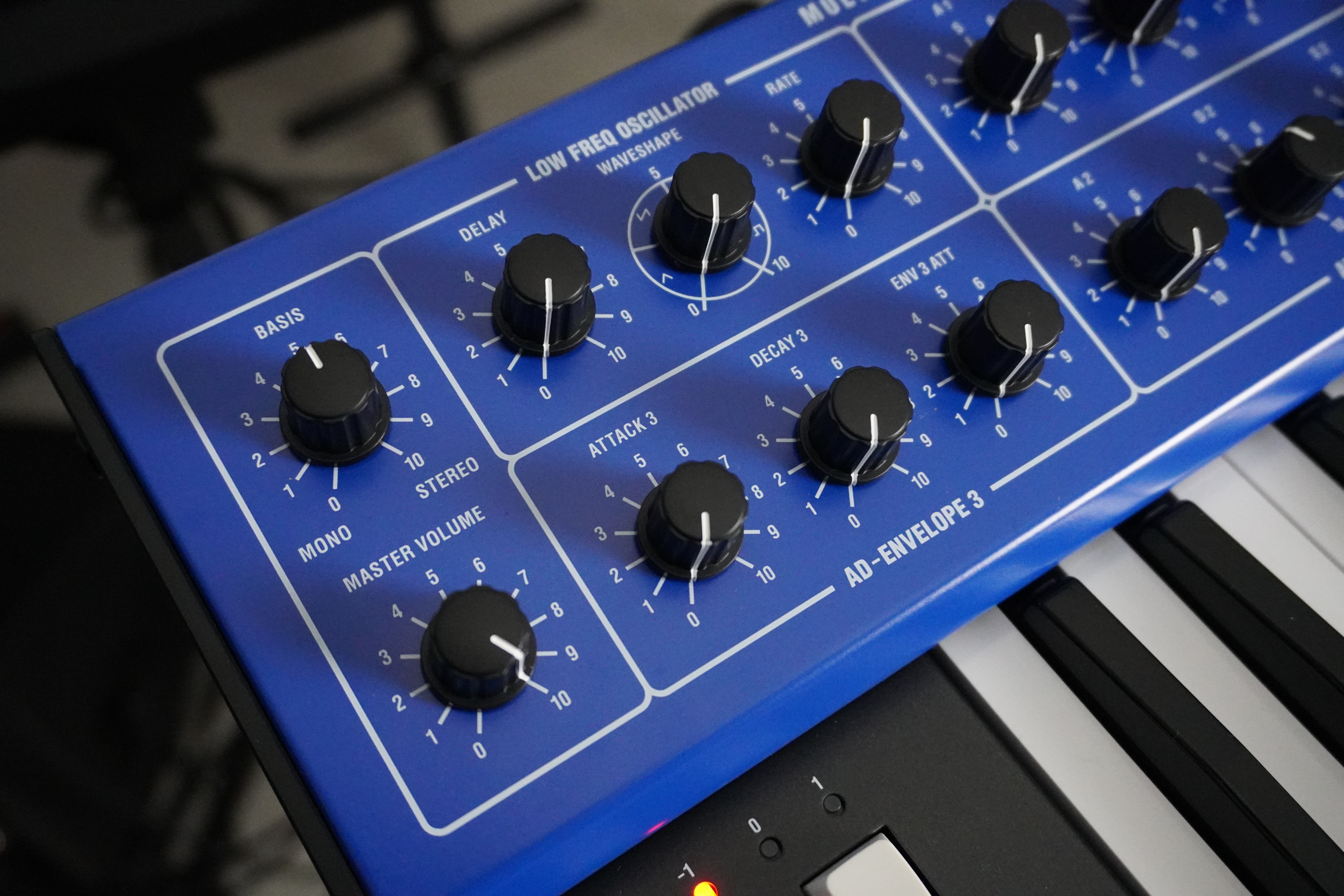
You can also set the delay and choose the waveform (triangle, ramp, sawtooth, square… period!). It can be assigned to each oscillator’s pitch, wave position, filter cutoff and volume. Its action can be linked to the modulation wheel position, which is saved in each program. There are also three envelopes. The first, ADSR-type, modulates filter cutoff and wave position (positive modulation only). The second, also ADSR, is dedicated to volume. Above 47, the ADSR envelope attack continues its full course in the event of early release.
There are three envelope curves to suit all tastes: original, linear, and exponential. The third envelope, type AD, can be routed to the pitch of each oscillator (bipolar modulation) or to the wave position of the oscillators (positive modulation).

VCF cutoff can be modulated by the knobs, LFO, keyboard tracking, Envelope 1, velocity, pressure and an expression pedal. VCF resonance can be modulated by the modulation wheel and an expression pedal. The VCA can be modulated by LFO, keyboard tracking, Envelope 2, velocity, pressure and an expression pedal. It’s a little better than the original, but given the computing power of today’s processors, the designers could have done with a complete source/destination matrix. Similarly, a list display with full names would have been a welcome addition rather than the often confusing two-letter source/destination abbreviations and the modulation amount coding, as we’ve already discussed.
A small arpeggiator or sequencer shared by both program layers
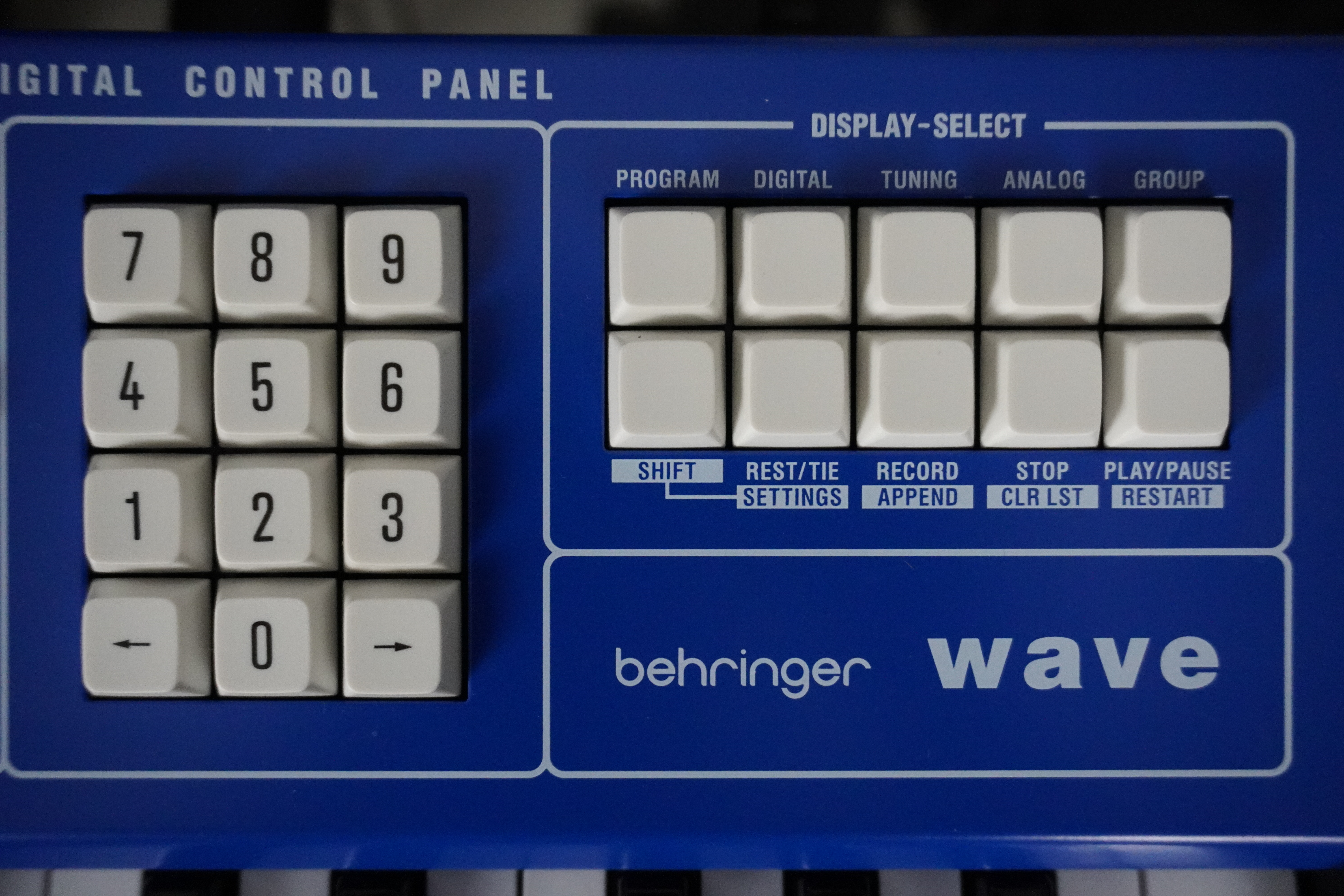
The last mode alternates the starting point of the arpeggio between held notes, of interest. Arpeggios can be performed over one or two octaves. Sequencer mode offers 64 steps of eight voices, programmable step by step. Steps can be linked, or silences entered. After recording, you can add notes to any step or insert steps (up to a maximum of eight notes and 64 steps). You can also delete the last note entered or all the steps.
We’d have liked a little more editing finesse, but it’s no worse than the original PPG sequencer. In playback, you can opt to transpose sequences in real time or play over the sequence. Volume velocity is taken into account. There is no option for triggering the sequencer from the keyboard or changing the playback direction. Gate time and time division of arpeggios/sequences can be modified, with MIDI or analog sync. Arpeggiated/sequenced notes are transmitted in MIDI. Arpeggio/sequence settings are saved in each program.