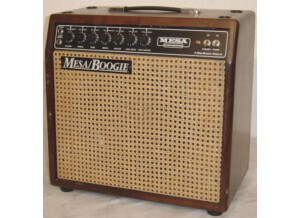
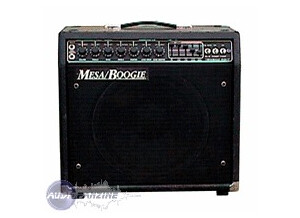
The Mark III was released in 1985 and lasted until 1992. It was the first Mark series with three channels - A clean, crunch and lead channel. It had various revisions (stripes/dots) and came with your choice of a 5 band EQ, reverb or both. The revision list on the Mark III series is pretty long, so it would be best to refer to Google to get the history on the revisions. The Mark III came in either Simul-Class or non Simul-Class. The Simul-Class allows you to run EL34s + 6L6s. It also has a switch to bring the amp into Class A mode. In the non Simul-Class model, this switch is replaced by a 60/100 watt switch. Other features include an effects loop and a ground switch. You can also choose between the long head or small head. My personal Mark III is a small head Simul-Class blue stripe with the 5 band EQ and no reverb, so I'll be basing everything off of that. UTILIZATION One thing about Mark series is that if you're not used to the EQ, it's going to sound awful. You need to learn how to dial in the Mark series amps. For my personal settings, I usually set the Volume around 9, Treble around 9, Bass around 1, Middle around 5, Lead Drive around 7 and Presence around 3. I then set the graphic EQ in a V pattern. Each knob has a pull/push feature that allows for even greater versatility. One thing about this amp is that the controls are extremely sensitive. A very small movement in the sliders can drastically change the tone. Tip - Pulling the Middle knob while in the Lead channel enables another gain stage. This isn't talked about in the manual, I don't think. SOUNDS Despite its looks, the amp is crazy versatile. It can get pristine cleans, a decent crunch, a ripping rhythm tone or a smooth lead tone. The problem lies in the shared EQ. If you set the amp to get a good rhythm tone, your clean tone will suffer a bit. The reverse is true as well. The Rhythm 2 channel also has issues with a volume drop (can be fixed via a mod). Rhythm 2 is the weakest channel in this amp, and I personally feel it needs to be boosted to bring out its true character, but most people buy the Mark III for the Lead channel anyway. The Lead channel in this is absolutely gorgeous. It can get extremely aggressive Lamb of God rhythm tones to buttery smooth Dream Theater lead tones. Learning how the 750 Hz slider acts is key to shaping your overall sound, and it's probably what you'll be moving the most, along with the presence knob. While my amp is Simul-Class, I actually run all 6L6s in it as I feel it sounds better this way. OVERALL OPINION If I were to recommend a version to search for, I'd recommend a red or blue stripe with the 5 band EQ. Simul-Class is really optional as I feel it sounds best with all 6L6s in the first place. Anybody looking for the classic Mark sound without breaking the bank should really look into this amp. It's truly a highly versatile gain monster. The only real drawbacks are the Rhythm 2 channel and its shared EQ. For an amp from the mid 80s, this thing was really a revolution.
I've been dying for a Mesa Mark III for about 6 years now. Been close to having one but having sellers back out, want too much for the condition, and not having funds held me back many times. I sold a few things so had spare cash so I finally decided to buy one of these. $650, 1989 Blue stripe, fully loaded with graphic EQ, reverb, simul class, custom tolex, and fully functional condition. No scratchy pots or sliders or anything. The amp says it's 100 watts and 60 watts in half power mode but all over the internet I'm seeing 85 watts, 75 watts and a few others. 3 channels, rhythm one (clean), rhythm two (crunch), lead (high gain). UTILIZATION Mesa's are well known for not being easy to dial in a good tone. To some that's a problem and makes them look elsewhere. To me it says it's a picky amp and wants to sound good, if you can't set it up it won't sound good. But once you find the right settings it's amazing. The manual is great, explains each control in depth and gives recommended settings after each. The only downside is all 3 channels share the same EQ controls so for some people it's hard to get a nice clean, rhythm 2, and lead tone that's footswitchable. I happen to like all 3 channels with the same settings so it works for me, but it being a downside to most people is the only reason I gave it a 9 instead of 10. SOUNDS This of course is the best part. After 6 years of dreaming, watching countless videos, audio clips, pics... I finally got to experience the amp for myself. I bought it sight unseen without ever hearing one in person before. I was certain it was exactly what I wanted and I was totally right. It's common for people wanting Early MetallicA and Dream theatre tone to buy Mark III's as a cheaper alternative to the coveted Mesa mark IIC+. They're well known as the holy grail of mesa amps, and many amps all together. I didn't buy one to try and copy MetallicA. Although it nails the Master of Puppets and And Justice For All tone it can do so much more. It's the tightest amp I've ever played. Even with the gain cranked to 10 it's still articulate and smooth sounding. Many high gain amps have more gain than you could ever use and once it gets past a certain level it turns to mush. Not with this, I don't have the gain dimed but it's nice to know if I did I can still get very nice not mushy tone. This amp is the most aggressive mesa ever made, it's like a chainsaw, cuts and rips but also has a gracefulness to it. It's like the lead channel has 2 modes, and it switches automatically. Of course it doesn't really, but it seems like it. On rhythms it's very heavy, crushing, and aggressive. Very thick and stands out, you can't NOT listen to this amp. But when you play leads it smooths out and gets very creamy. Santana was known for using Mesa Mark amps and he has some of the bluesiest leads ever. The reaction between the guitar and the amp is just amazing. The cleans are very sparkly, almost fender-ish. The best example is MetallicA's cleans. They used a mix of the Mesa and a Roland JC120, but this can nail it perfectly. Listen to the song "One", intro to "And Justice For All", and intro to "Enter Sandman". Another great thing is this has a 3rd channel, the Mesa Mark III was the first 3 channel amp. In between the rhythm 1 (clean) and the lead channel, rhythm 2 has more of a crunch to it. It's the biggest complaint by people but personally I like it quite a bit. It's by no means a high gain channel so it's not good for metal but for blues and classic rock it's great. Or put a boost in front of it and basically get a second, but different sounding, lead channel. OVERALL OPINION Overall I'm super happy with this amp, totally worth the 6 year wait. I've bought, sold, and traded gear for quite a few years always trying out new things hoping to find the one thing that's perfect. I may have found that. Since I bought it I've lost almost all desire to even try different amps. It just does everything I wanted, but better, and even more than I wanted. It's like it was designed for me personally. I'd recommend it for anyone playing any style cause it really is that versatile.