



If you’re having trouble choosing between an optical or FET compressor, Rupert Neve has the solution! Introducing the OptoFET, which combines both of those compression technologies in a single 1U rack unit.

The OptoFET is the first Rupert Neve Designs product we’ve tested in quite a while, and it does not disappoint. In addition to dual compression engines, it offers plentiful controls and options. Let’s start with a quick overview of the machine.
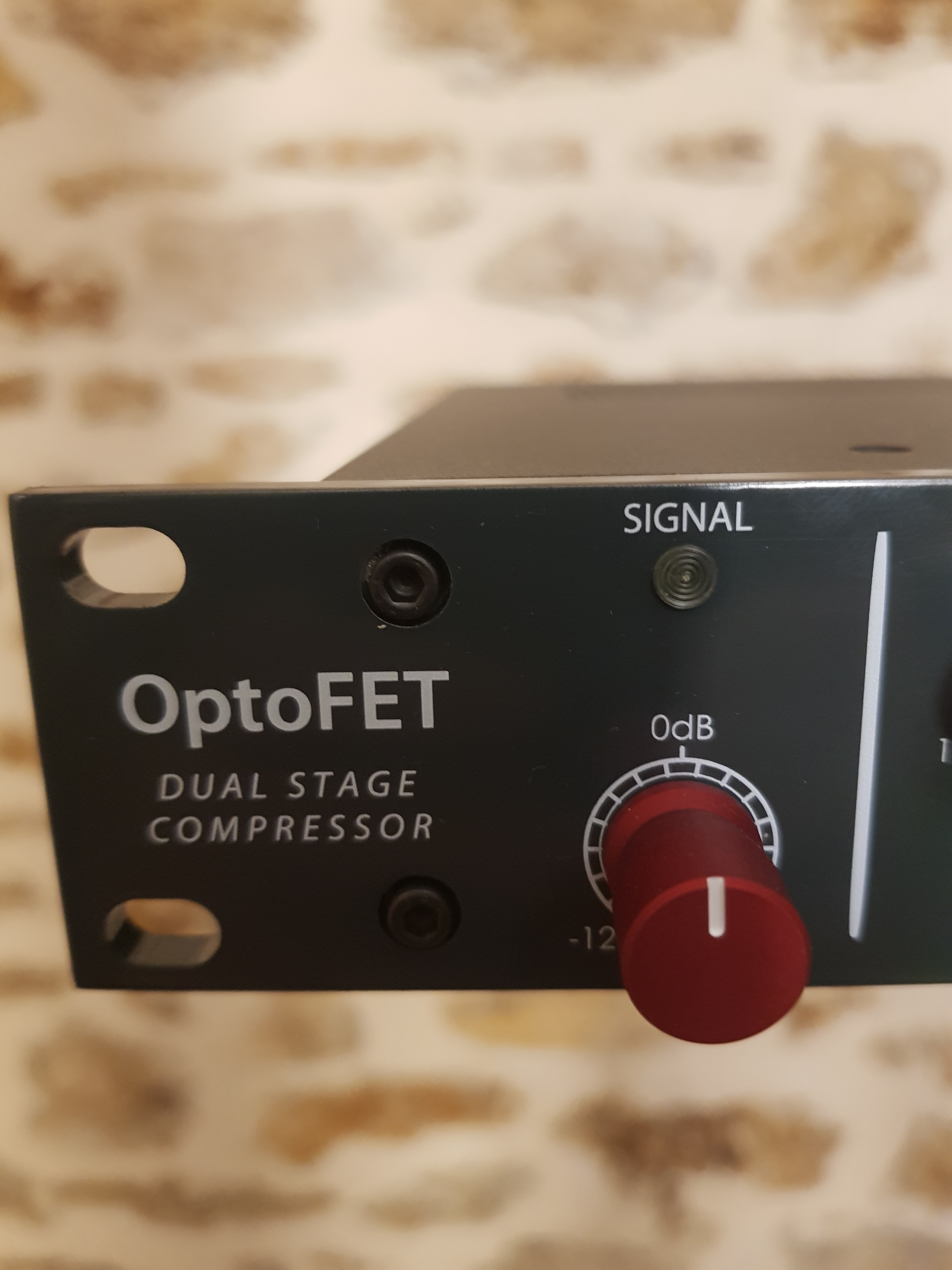
Overview of the OptoFET and its control setup
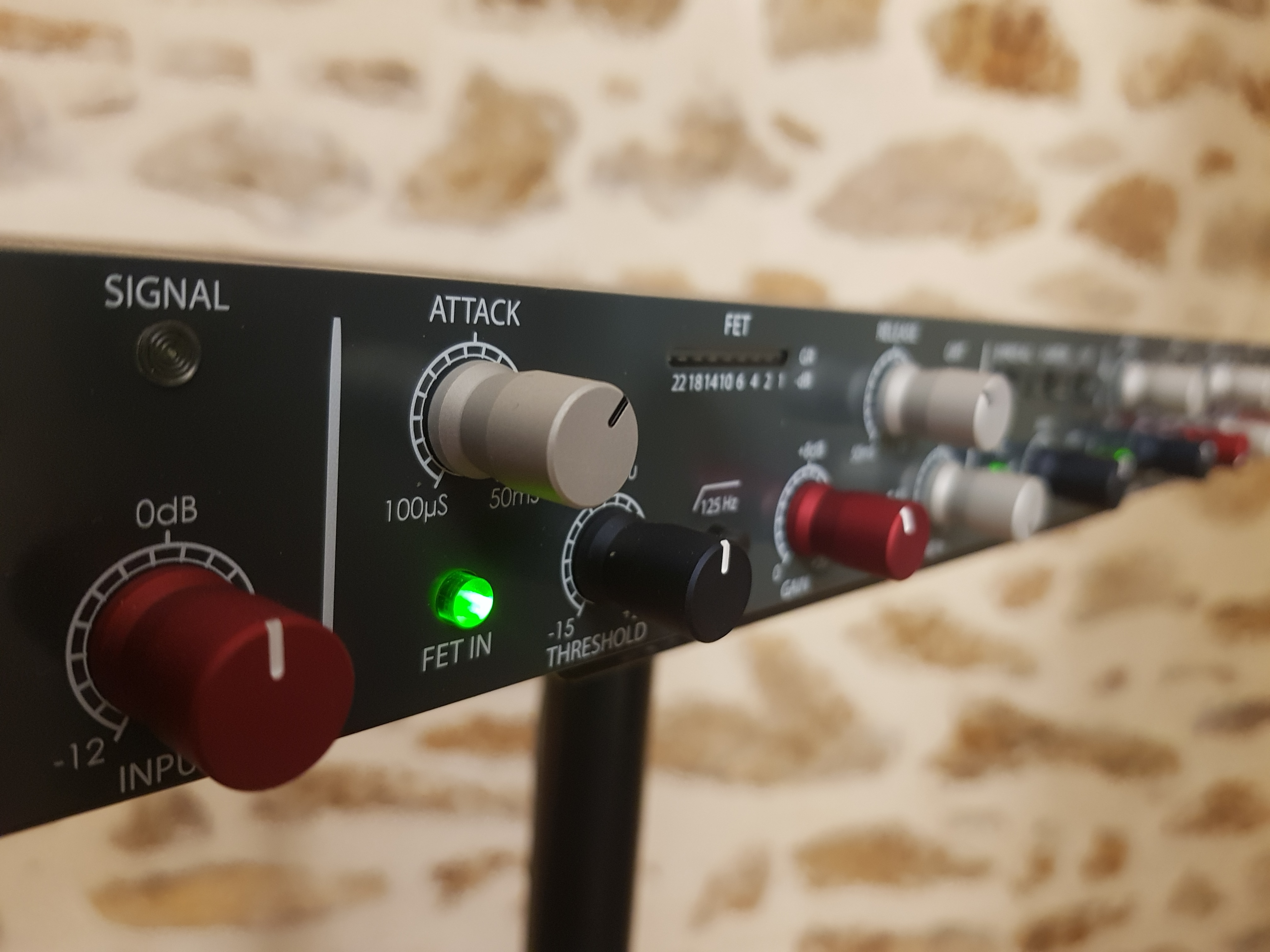
The OptoFET comes in a 1U rack and features numerous controls on the front panel, including:
- An input and output stage (both with –12/+12dB trim)
- A FET compression stage featuring FET In (switch in/out), Attack, Release, Threshold, Gain, Sidechain, Ratio, Blend and Grit controls.
- An Opto compression stage including OPTO In (switch in/out), Attack, Release, Threshold, Gain, SC HPF (sidechain high-pass filter), Ratio Blend and Bloom controls.
- A central section with a Bypass, a mysterious X-Over In (crossover) switch that we’ll talk about a little later, a Crossover (frequency) knob and a Flip switch for changing the signal order.
Each of the unit’s knobs has a 31-step detent, and despite the abundance of front panel controls, the OptoFET’s labeling remains highly legible. No doubt the (impractical but understandable) reason why the On/Off switch is placed at the rear of the rack, alongside the ground switch and XLR input/output.
Yes, the OptoFET may contain two compressors, but the machine is monophonic and can only process one signal at a time. And that’s where its originality lies: the ability to apply two different compression styles to the same audio signal. This provides a de facto replication of a setup that many engineers prefer: using FET compression to smooth out transients, combined with optical compression to level things out.
Analysis of the functionalities of the OptoFET compressor
As the possibilities of the OptoFET are quite enormous, let’s get to the heart of the matter and explore all its features with a few TR808 samples.
FET compressor operation and behavior
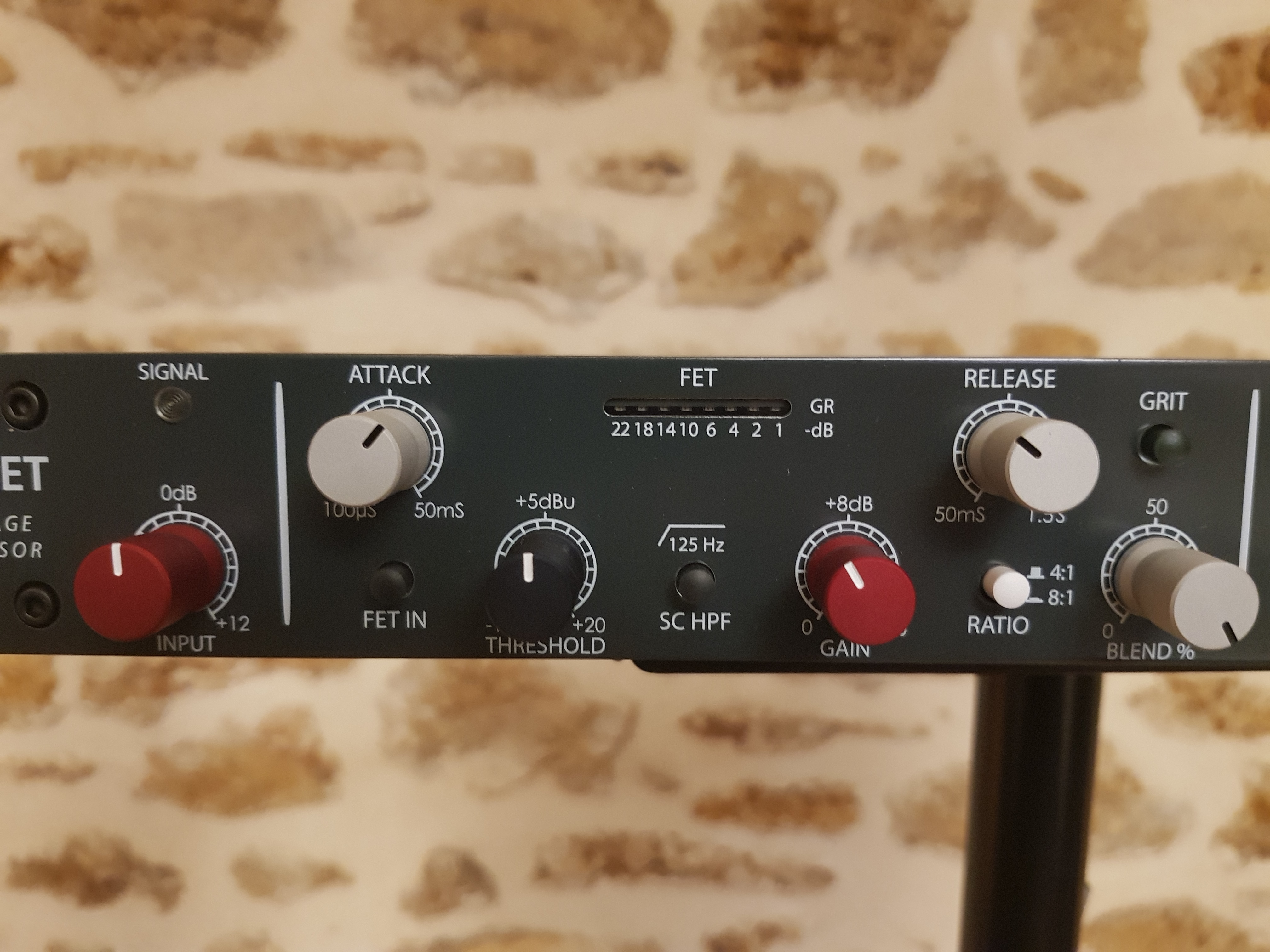
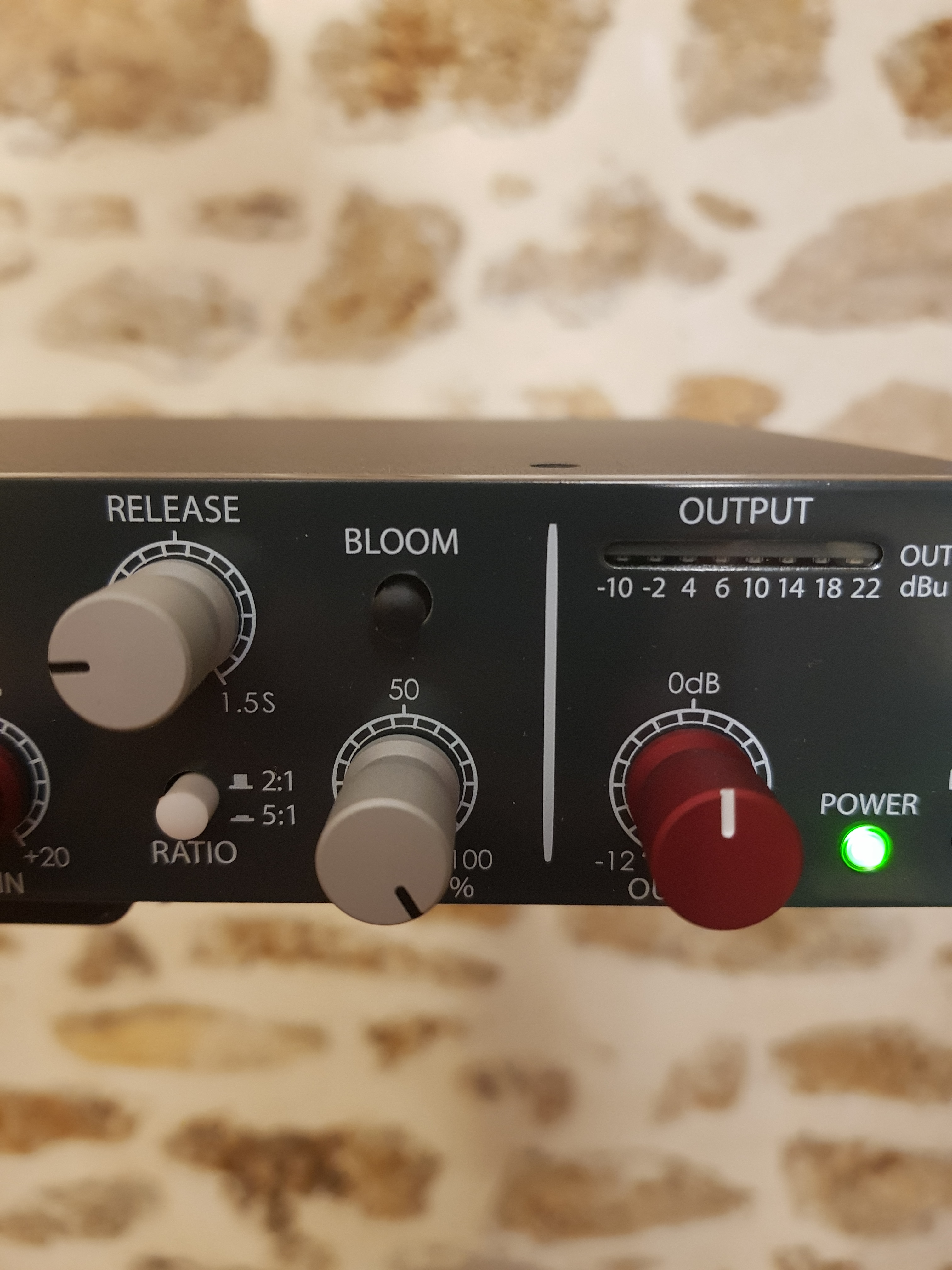
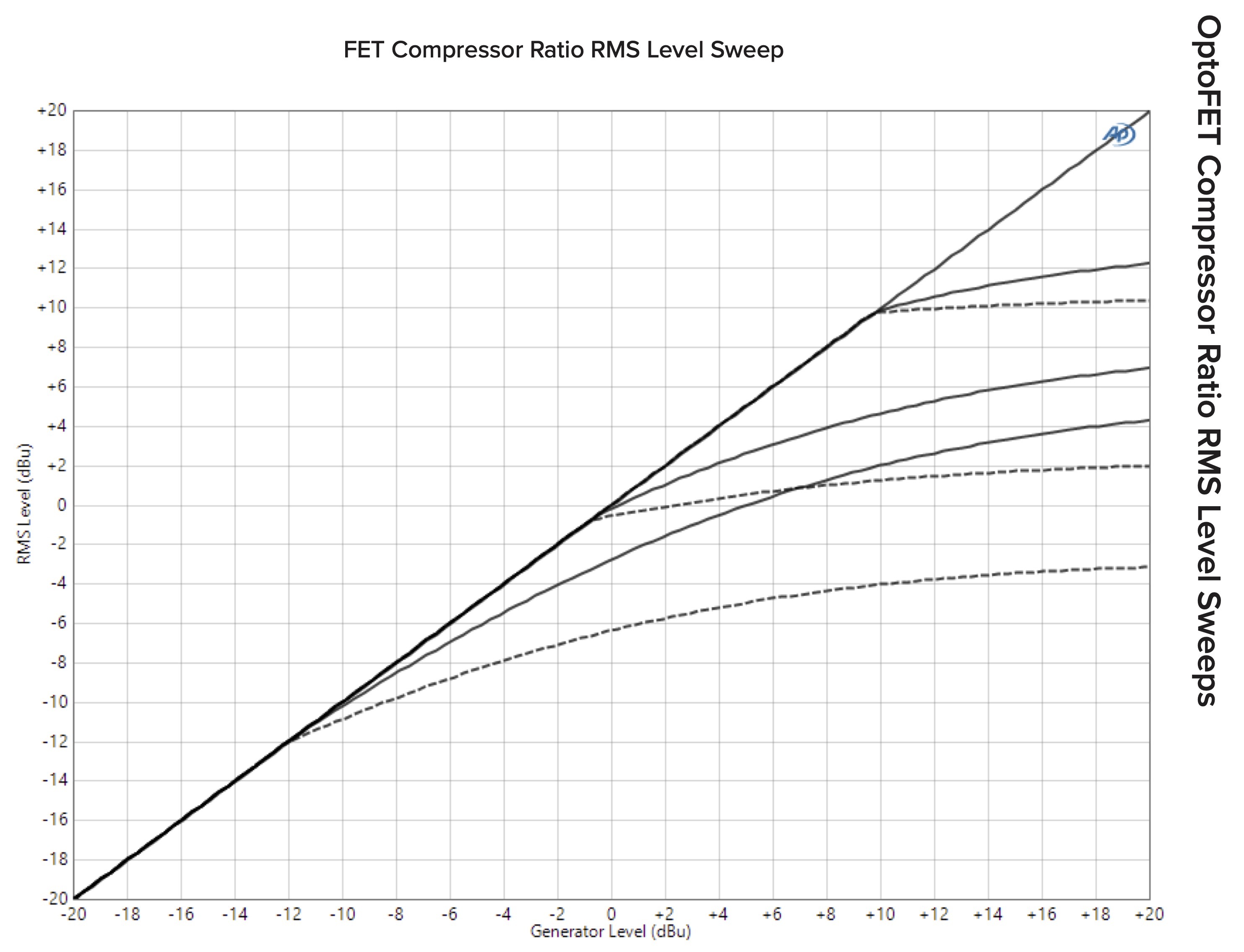
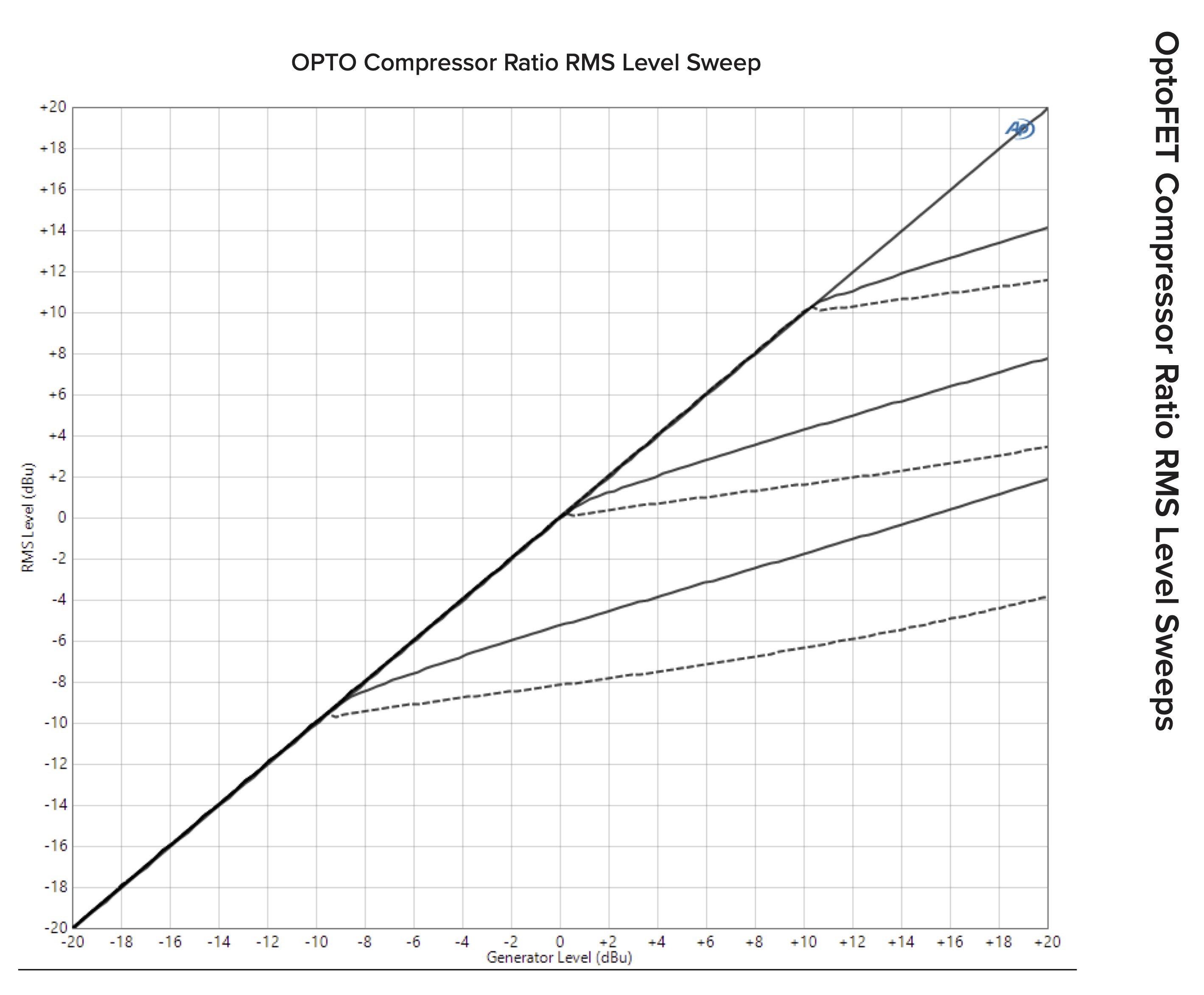
Like most FET compressors, this one features very fast attack times, ranging from 100 μs to 50 ms. Release times can be varied between 50ms and 1.5S. Although this module has only two ratios (4:1 and 8:1), the compression possibilities remain abundant, and the presence of both the sidechain and the blend potentiometer (allowing modulation between the dry and compressed signals) plays a predominant role. The pleasant, smooth feel of the knobs allows you to easily dial in your settings. The LED Gain Reduction meter (with eight steps from –22dB to 0dB) is perfectly legible despite its size.
The image to the right shows the FET section with its compression set to add a nice “snap” for a compact, punchy result.
Grit mode: harmonic saturation and aggressive compression
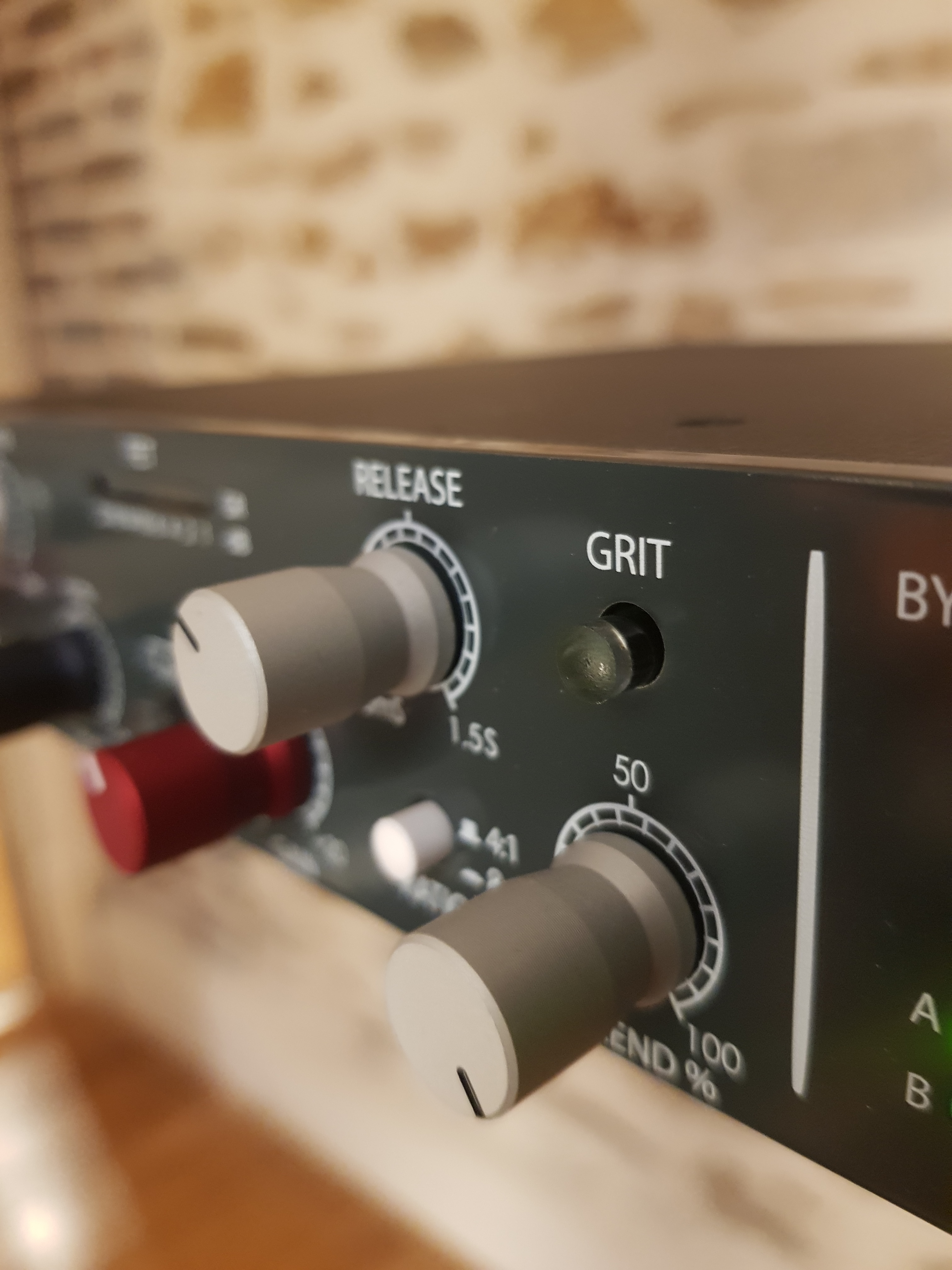
The FET section’s Grit switch changes the sidechain detection circuit with even faster attack/release times, generating more harmonics in the upper midrange and upper spectrum. The HPF sidechain becomes inactive, and the peak meter starts to react more erratically (slightly reminiscent of the VU-meter behavior of an 1176 in “All Buttons In” mode). These harmonics result in a distortion that colors the signal without making it too fat or slobbery. We’re not dealing with a Thermionic Culture Vulture or a bit crusher: the distortion is audible but doesn’t heavily squash the signal. The result is subtle and controlled, with the unit acting mainly on the upper midrange and treble. The blend potentiometer is therefore invaluable for setting the desired level of distortion. You’ll notice in the audio extract that 50% Blend is already more than enough to modify the dynamics and color of the signal.
FET settings: attack 13h, release minimum, hpf in, blend 50%, ratio 8:1, gain +6, Output: –2dB
Opto operation, behavior and additional features
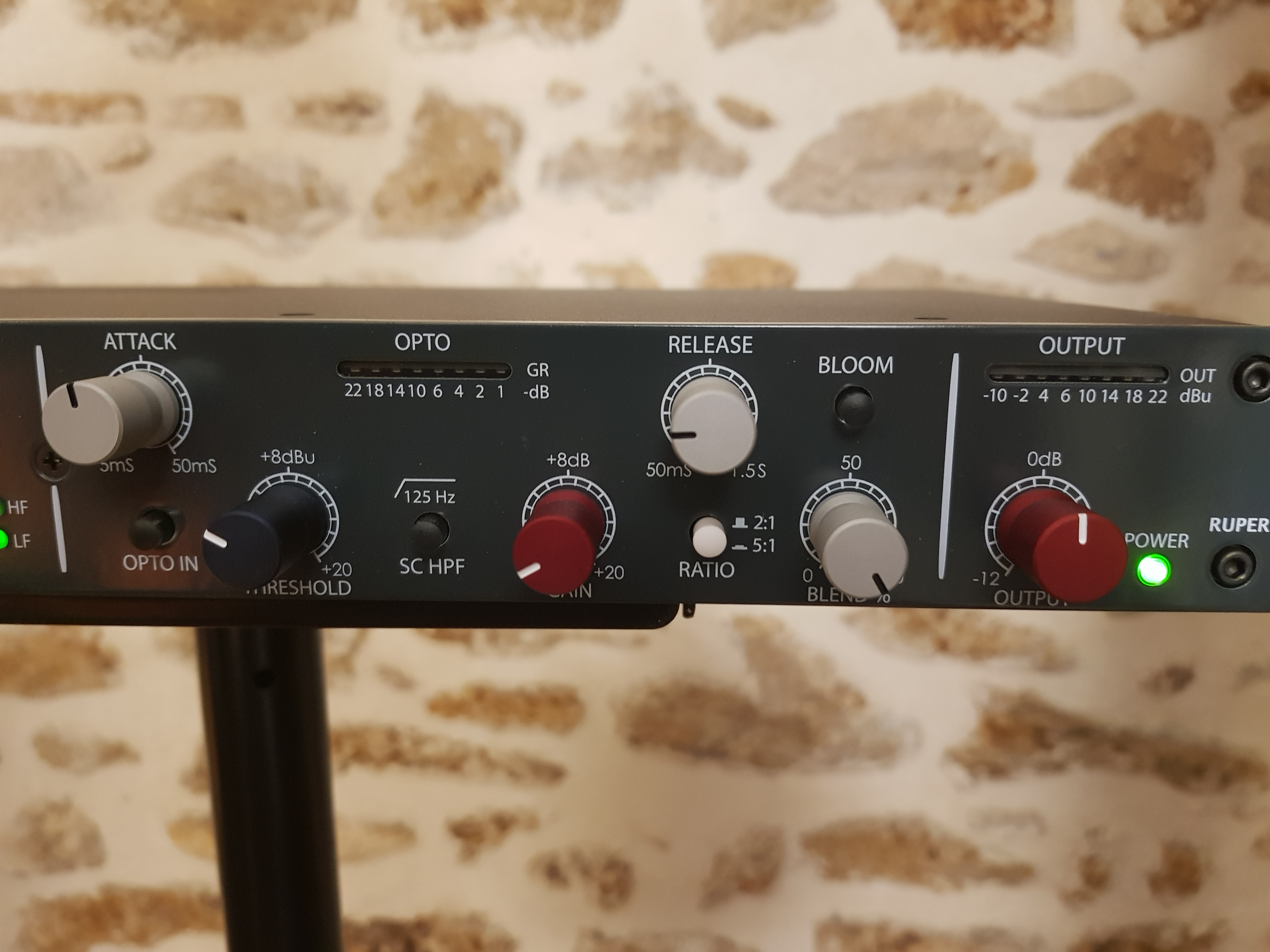
Two ratios, 2:1 and 5:1, are available. As you can hear in the Opto example, the result is a different yet quite complementary sound. Where the FET delivers a clean attack, the optical compression is softer and more encompassing. This is particularly evident in the kick attack and snare/clap sustain. The result is just as controlled as on the FET, but turned in a completely different direction, softer and less dry.
Bloom mode: bass enrichment and signal coloring
The Opto mode’s Bloom circuit functions differently from the FET’s Grit effect. It adds low harmonics, producing a slightly more subtle coloration. When you switch it into the circuit, the effect is almost like an output transformer impacting your signal, and I strongly recommend listening through headphones to fully appreciate it. The subwoofer becomes rounder, and the thicker bottom end is modified. The kick becomes slightly more imposing while sticking more easily to the rest of the spectrum. As a result, the overall sound is more homogeneous and full-bodied.
While Grit and Bloom are reminiscent of the brand’s cherished Silk mode, neither reproduces quite the same sound. Regular users will quickly find similarities, but with very different sound colors and harmonic management.
Opto settings: attack 13h, release minimum, hpf out, blend 100%, ratio 2:1, gain +6, Output: –2dB
Combining FET and optical compressions: interactions and results
And now comes the moment we’ve all been waiting for: activating the two compressors together! Their complementary nature is undeniable: the FET brings a punchy density, while the Opto levels and rounds everything out (note that, in the audio extracts, the gains were not intentionally rebalanced).
The designers, being quite playful, also incorporated a switch labeled Flip to swap the order of the compressors. With it engaged, the OptoFET’s sonic signature instantly undergoes a metamorphosis, with the position of each compressor directly influencing the sonic character. The range of possibilities is enormous. Shaping the signal with just a few manipulations becomes extremely enjoyable, and I confess to having spent the first hour of use doing nothing but playing with the different sonic textures offered by the machine.
As you would expect, varying the output gain of whichever stage comes first will inevitably affect the next stage (and its compression level).
CrossOver section: use in multiband compression
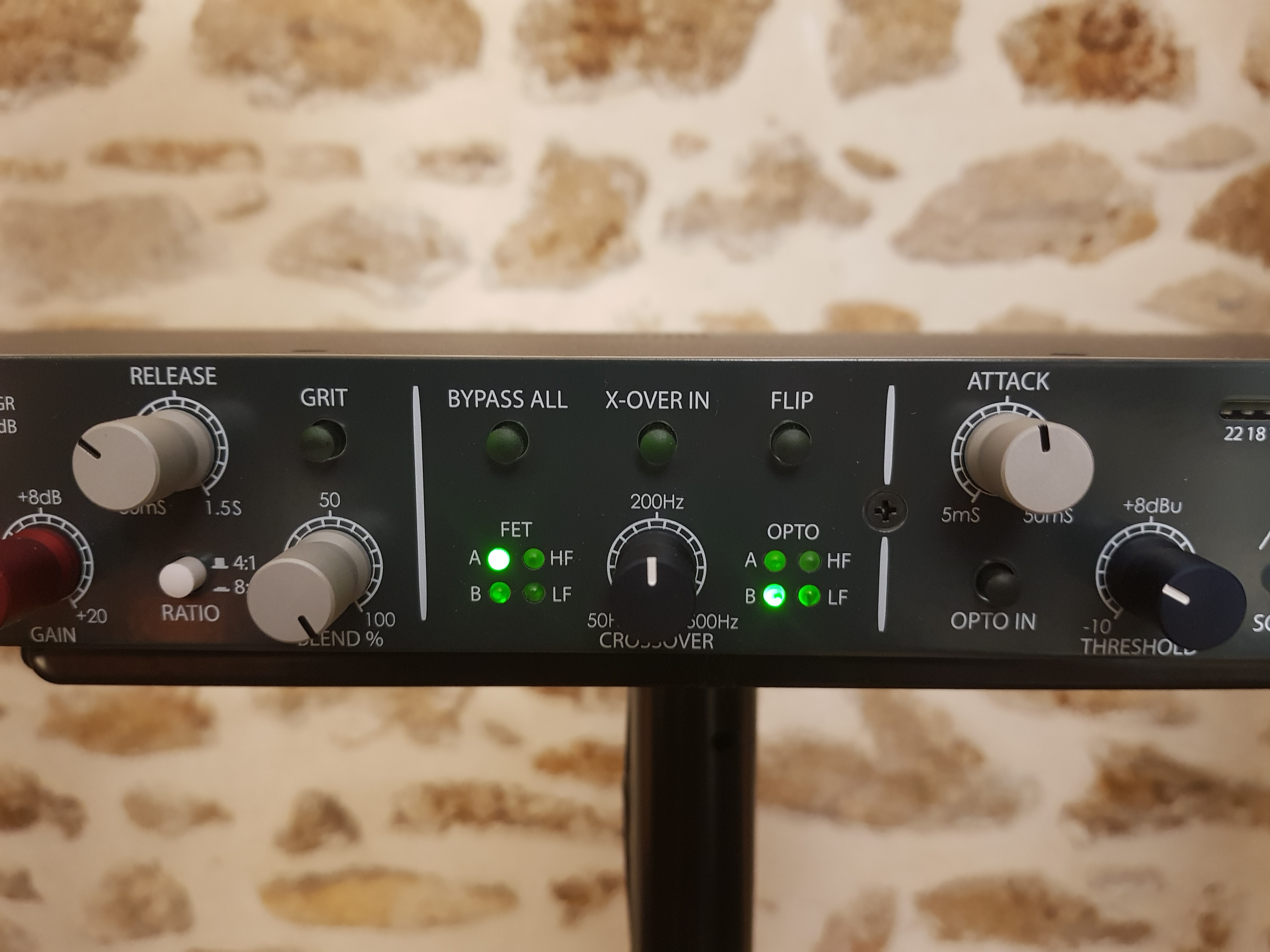
For example, you can manage the lower end of the spectrum with the FET and let the Opto handle the rest. Or simply go the other way and apply a little Grit to the upper mids and highs. The possibilities are once again multiplied and, let’s face it, terribly fun!
Crossover: same settings as before with X-OVER On, crossover frequency @ 500Hz, Fet on LoFreq and Opto on HiFreq.
Example of using CrossOver on a TR-808 loop
Since we’re on the subject of the Crossover feature, let’s apply three very different settings to a TR808 loop. You’ll notice how dissociating the processing and volume of two frequency ranges offers a variety of directions: the signal becomes a veritable modeling clay that’s definitely a lot of fun to play with.
X1: Crossover with FET LF, Opto HF, Cutoff frequency 200Hz
FET: attack 12h, release fastest, ratio 8:1, HPF on, Blend 100%
Opto : attack 13h, release 11H, HPF on, Bloom on, Ratio 2:1, Blend 65%
X2: idem but FET HPF (with sidechain off and Grit On) and Opto LF
X3: ditto but input + 2,
FET: attack and release at minimum, Grit on
Opto: attack minimum, release 3h
If you’re a fan of parallel compression, here’s something you should know (prepare yourself, it’s a bit technical…):
To separate the signal into several frequency bands, all analog multiband processing induces crossovers via filters — in this case, a 12dB/octave filter, which, for the designers, remains the most natural choice. A phase rotation at the cutoff frequency (and its vicinity) will appear on the signal. This is the normal and expected behavior of multiband processing, but inevitably a little limiting if you ever want to mix your “pure” dry track with the OptoFET-treated track. This is because you risk crossover phase cancellations when summing the two signals (Dry + OptoFET). To avoid this, it’s imperative to use the built-in Blend knobs (one for OPTO and one for FET), which allow you to keep this compression set parallel without suffering any sonic alteration… and therefore any phase shift. Phew!
Audio tests and scenarios of the OptoFET compressor
But enough of the technical stuff! Let’s move on to other audio tests to explore the full potential of the OptoFET (for the next extracts, I’ll refrain from pointing out all the rather off-putting settings).
Processing a mono drum kit
You can also create heavier, more noticeable compression with the OptoFET. Without producing a “squashy” sound a la 1176, you can push the input by 6dB (an LED indicates when you’re approaching the saturation level of the input stage) and play with high compression levels, making it immediately more aggressive. To get grittier, turn on the Grit circuit.
Compressing an electric bass
With powerful compression, a bass also quickly gains in punch and precision. It becomes less moving and more focused. Listen especially for the compressor’s work on the long-held note, which seems to never want to stop.
Processing an acoustic guitar
The X-Over, meanwhile, once again proves incredible at rebalancing the signal frequency-wise, a little like an equalizer, without distorting the instrument’s timbre.
In the following set of examples (5A-D), engaging the Grit again revives the upper midrange/treble. The result is a little less natural, but not uninteresting for getting into a mix more easily. The Rupert Neve Designs team mischievously told me that, by setting the Blend to 10–20%, you can use the Grit as a “lift” to slightly open up the upper spectrum and bring a little more clarity to your track.
.
Managing transients on an arpeggio guitar
Use of OptoFET on vocals in mixing
Double compression is a widely used trick for mixing vocals. And the OptoFET is an ideal tool for directly and quickly reproducing this effect. Levels are rebalanced in the same way you’d expect using two compressors chained one after the other: one smoothes out dynamics and fast transients, while the other levels out the overall volume. In fact, the different ratios of the two stages complement each other perfectly: one just planes what the other couldn’t contain. The signal gains in impact, for a more compact result with reinforced, well-structured low mids. Whether in pop, folk, jazz or rock, vocal intelligibility is enhanced, and follow-ups are no longer superfluous.
And speaking of rock, the Grit is fantastic for accentuating the singer’s already snarling timbre. Dynamics are well slashed, but the track gains greatly in power. We love it!


 I'd love to see the option of linking two of them together, maybe it'll make an interesting buss compressor as well. Also, does anyone know if the knobs are stepped? - that would help for sure.