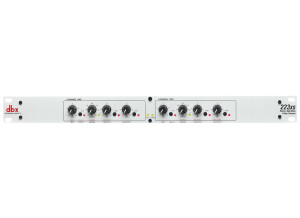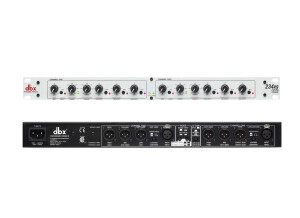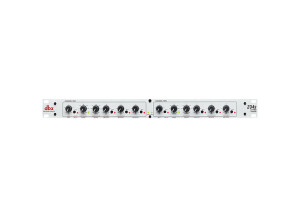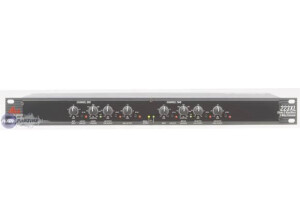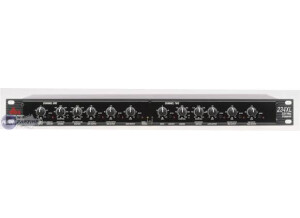
The Dbx 223 is a stereo 2-way or mono 3-way crossover designed for live sound use and for DJ's. It allows you to easily switch between two or three different sources, depending on the way you are using it. I'm not a DJ or anything like that, but we have one of these in the studio where I work, as sometimes we'll do some live shows. I've only had a need to use it once, and don't think I'll be using it again since we just sold it. As far as the characteristics are concerned, each of the two channels on the Dbx 223 have 1/4" connections for input, as well for both high and low summing. It also has a button for setting your crossover frequency, which is essentially either a low or mid range set of frequencies. It also has buttons in the back for using the unit in either mono or stereo, and for setting low frequency sum options on or off. The front panel of the 223 has parameters on each of the two channels for input level, low/mid or low/high (depending on if you're using it as a 2 or 3 way crossover), low output, and for high output when necessary. There's also a button between the two channels on front to link them up as a stereo pair if you so choose. In theory the 223 shouldn't color your sound at all, and in my time using it I've found this to be the case. There is a new version of the 223, the 223XL, although I don't know too much about the differences between the two. I don't claim to know all that much about this sort of equipment, but for what I needed it for it got the job done just fine, so I'd recommend it for anyone in need of a simple crossover unit with a good amount of flexibility and a low cost...