Log in
EN
FR

Active Filters

94 products found

Filter
Sort by
Evaluation
  • Reviewed or not
  • Editor’s award
  • Reviewed by Audiofanzine
Availability
  • Available or not
  • Sold new or used
  • Sold new
  • Sold used
Must-have products
  • All products
  • Flagship products
  • Best rated products
  • Hot products
  • Popular products
Price
  • Freeware
€
Clear
Sort by
  • Popularity
  • User ratings
  • Price - low to high
  • Price - high to low
  • Used price, increasing
  • Used price, decreasing
  • Name (from A to Z)
  • Name (from Z to A)
  • Added on
Sort results
  • Popularity
  • User ratings
  • Price - low to high
  • Price - high to low
  • Used price, increasing
  • Used price, decreasing
  • Name (from A to Z)
  • Name (from Z to A)
  • Added on
Filter results 94 results found
Evaluation
Availability
Must-have products
Price
  • Freeware
Show results

The best Active Filters reviews

The reviews Audiofanzine members found the most helpful.
  • « Great analog gear »

    The Klark Teknik DN800 is an analog active filter conceived for sound reinforcement, recording studios and fixed installations. It may be configured as a four-input, two-way systems or as a two-input, three or four-way system. Klark-Tekink includes interchangeable cards to adjust the frequencies and slope to the speakers. If Klark-Tekink doesn't have the card corresponding to your speakers, a technician can install the adequate capacitors and resistors for the filters recommended by the speaker manufacturer. The manual of the DN800 lists the capacitors and resistors per frequencies. It has no buttons to choose the frequencies nor slopes, on the other hand, it's extremely precise, it doesn't move and it's as silent as a tomb. The input and output levels, as well as the mutes, are accessible on the front panel. The phases and limiters are on the rear. It's not as versatile and comprehensive as the DN8000, but it's 10 times cheaper (secondhand, because it's not manufactured anymore). Four-channel, Two-way LEDs Indicate: 2 WAY Input 1 : Output 1 Low / Output 2 High. Input 2 : Output 3 Low / Output 4 High Input 3 : Output 5 Low / Output 6 High. Input 4 : Output 7 Low / Output 8 High. Two-channel, Three-way LEDs Indicate: 3 WAY Input 1 : Output 1 Low / Output 2 Mid / Output 3 High / Output 4 Direct Input 2 : Output 5 Low / Output 6 Mid /Output 7 High / Output 8 Direct Two-channel, Four-way LEDs Indicate: 4 WAY Input 1 : Output 1 Low / Output 2 Low Mid / Output 3 High Mid / Output 4 High. Input 2 : Output 5 Low / Output 6 Low Mid / Output 6 High Mid / Output 8 High

  • « fantastik speakers »

    I am a competent DJ and have used several loudspeakers from competing brands. I have used the Mackie SRM 450s and found them to be too harsh. The dB loudspeakers I had tend to be similar but the bass was muddy. The Bose Panaray 802 Series III loudspeakers I use now deliver a clear, clean sound throughout the room. They are also really easy to tear down, and the portability makes them a cinch. The only drawbacks I've found is the bass response can be poor. The rooms acoustics seem to affect it a fair bit, but it's difficult if you need the 802s in a specific place for high-mid coverage. The way I resolved this was to purchase the MB4 bass units. I was looking at 502B - but they were big and didn't extend deeper than the 802s. From experience of them in the past the omni directional nature tended to cause bar staff to go crazy at the level of bass. The MB24 was another consideration, had the sound but was too loud and too heavy to take to mobile DJ events. I settled on the MB4 because of portability and performance for the size. Together the 802/MB4 system provides great sound for about 500 people, even at nightclub volume levels (110dB A) The 802s tend to have a warm, less harsh sound than their counterparts. However I have found them to require a huge amplifier to cope with the extra EQing the Controller puts out. Overall through, the system never fails to perform and 802s have always been reliable for me and many of my DJ buddies who have used them for years. I use a QSC 2450 RMX to drive these speakers - and have found it a good match. I think a lot of the time with the 802s you just need the right set-up, correct placement and good amplification to get those cones moving. They do the job very well

  • moosers's review

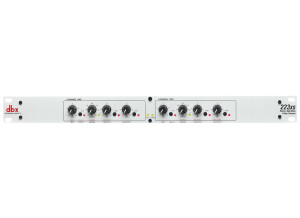
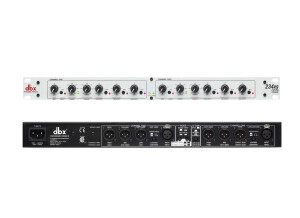
    The Dbx 223 is a stereo 2-way or mono 3-way crossover designed for live sound use and for DJ's. It allows you to easily switch between two or three different sources, depending on the way you are using it. I'm not a DJ or anything like that, but we have one of these in the studio where I work, as sometimes we'll do some live shows. I've only had a need to use it once, and don't think I'll be using it again since we just sold it. As far as the characteristics are concerned, each of the two channels on the Dbx 223 have 1/4" connections for input, as well for both high and low summing. It also has a button for setting your crossover frequency, which is essentially either a low or mid range set of frequencies. It also has buttons in the back for using the unit in either mono or stereo, and for setting low frequency sum options on or off. The front panel of the 223 has parameters on each of the two channels for input level, low/mid or low/high (depending on if you're using it as a 2 or 3 way crossover), low output, and for high output when necessary. There's also a button between the two channels on front to link them up as a stereo pair if you so choose. In theory the 223 shouldn't color your sound at all, and in my time using it I've found this to be the case. There is a new version of the 223, the 223XL, although I don't know too much about the differences between the two. I don't claim to know all that much about this sort of equipment, but for what I needed it for it got the job done just fine, so I'd recommend it for anyone in need of a simple crossover unit with a good amount of flexibility and a low cost...