Log in
EN
FR

Ampex

17 products found

Categories
Filter
Sort by
Evaluation
  • Reviewed or not
  • Editor’s award
  • Reviewed by Audiofanzine
Availability
  • Available or not
  • Sold new or used
  • Sold new
  • Sold used
Must-have products
  • All products
  • Flagship products
  • Best rated products
  • Hot products
  • Popular products
Price
  • Freeware
€
Clear
Sort by
  • Popularity
  • User ratings
  • Price - low to high
  • Price - high to low
  • Used price, increasing
  • Used price, decreasing
  • Name (from A to Z)
  • Name (from Z to A)
  • Added on
Choose a category
Sort results
  • Popularity
  • User ratings
  • Price - low to high
  • Price - high to low
  • Used price, increasing
  • Used price, decreasing
  • Name (from A to Z)
  • Name (from Z to A)
  • Added on
Filter results 17 results found
Evaluation
Availability
Must-have products
Price
  • Freeware
Show results

The best Ampex reviews

The reviews Audiofanzine members found the most helpful.
  • moosers's review

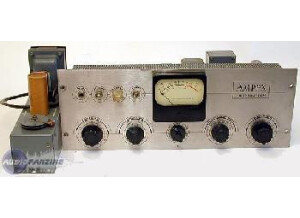
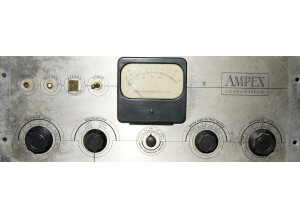
    The Ampex 351 is a single channel tube based preamplifier. The studio that I used this in had four of them, which was really awesome as it allowed you to have two stereo pairs of use with the 351 if you wanted to. We did indeed have all four of them going at a time for a drum session. I'm unsure of the connections that it has since they were already racked in the studio that I was using them in, but it does have a 1/4" headphone jack in the front of it. The 351 is made up of analog components and real tubes, and will take up a hearty four spaces in a traditional sized rack casing. UTILIZATION Using the Ampex 351 isn't too difficult, but it does have more parameters than you would expect from a vintage piece of gear like this one. The main knobs include parameters for record and playback level, as well as for equalization, and choosing your metering and your input source. So while there isn't too much to know with the 351, it does have some extra parameters not often found on today's preamplifiers that you will need to get used to. I don't know anything about the manual as I never had a need for one and is one that would definitely be hard to find anyway. SOUND QUALITY The sound of the Ampex 351 is extremely thick and warm, making it great for applications of all types. It definitely has a 'vintage' sound to it, producing that certain level of thickness and grittiness all in one. I've used the 351s for recording both drums (snare drum and kick drum) as well as for both acoustic and electric guitar. While I didn't like the sound as much for acoustic guitar, for electric it sounded beautiful and the same goes for the drums. In general I think the 351s are best for heavy sorts of sounds rather than for bright acoustic instruments, but I'm sure that other users have found uses for it beyond what I've done. OVERALL OPINION I wouldn't really know where to start if I were looking to purchase an Ampex 351, as they are pretty hard to come by. I've been lucky enough to do some work in a studio that has four of them, but I haven't really seen them anywhere else. If you come across an Ampex 351 I would definitely recommend not hesitating and using it to see what you can do with it as it is definitely a worthwhile experience for engineers who love vintage tube gear...

  • moosers's review

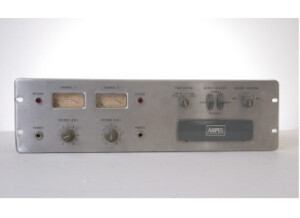
    The Ampex MX-10 is a vintage analog preamplifier/summing mixer. It's got six separate channels that are bused down to a single channel. I don't really know the types of connections that it has since the one that I've used is already hooked up to the patch bay at the studio where I work. This is a tube based piece of gear, and we often only use a single channel of it like a traditional preamplifier. It is rack mountable and will take up two spaces in a rack casing. UTILIZATION There isn't much that you need to know about using the Ampex MX-10, as it's simple and easy to understand. There are a series of knobs (six of them in total) for controlling the levels of each of the mic inputs, as well as a master volume knob as well. There are also switches to choose with of the inputs you want to use at any given time. A manual would surely be hard to find for the MX-10... SOUND QUALITY The sound of the Ampex MX-10 is definitely the type that you would define as vintage, as it's got a gritty sort of feel to it that is certainly lacking some clarity. We use it at the studio where I work for getting this exact type of sound. We don't use it at all really as a traditional preamplifier, and mostly just in situations that really call for a kind of garage band type of sound. When using only a single channel of this it helps to give you a better idea of what a single preamp on here sounds like, but most of the time we send a couple of signals in a once. OVERALL OPINION You're definitely not going to find many Ampex MX-10's out there any more. I don't know the exact year that these were being made, but it's definitely been a long time since one was. I can't say that this would be something I would recommend seeking out, but if you do have access to one it's definitely worth messing around with a little bit. It can get some really cool sounds that will work when used properly and in the right situations. Sadly, it doesn't see very much use at the studio, but it's still cool to have around just in case some one is going for that garage band kind of sound...

  • « decent sounding mic »

    We were deciding between the blue bluebird and Ampex 436. psychologically I could not get past the hundreds dollar difference and I assumed the blue bottle was worth the increase in price. My assumption was not accurate. Both mics sound great, however, the blue bottle sounds like a lot of mics I have heard before, while the blue bird has a unique tone of its own. The blue bottle is a much "hotter" mic and it tends to break up a lot easier, it kind of has a tube thing going on. Ampex 436 is a lot more natural and has a true to life sound, in other words its not trying to be anything, it just is, and that is where it works beautifully. I will mention this mic is extremely tight sounding and has low noise, you will be impressed. The 436 has a lot more clarity and detail than the blue bottle, while the blue bottle has more full and bassy tone. The bluebird is an amazing mic for the money. One thing to remember don't ever use any mic without a channel strip, your quality will go up ten fold. OVERALL OPINION Buy this mic if you are on a budget I tried a ton and this mic sounds like some higher end mics, no joke. I am not sure how they made this mic with a $$$ price tag, it is very impressive. Don't waste time, just use this one over the blue bird or the baby blue bird. The people at guitar center wanted me to get the Blue Bird, but the Ampex 436 just worked better for us and with our acoustically treated space it sounds amazing especially when recording live drums and guitars. It really give the kick drum a nice thump without having the stomp the kick pedal down really hard.