Log in
EN
FR

BluGuitar

12 products found

Categories
Filter
Sort by
Evaluation
  • Reviewed or not
  • Editor’s award
  • Reviewed by Audiofanzine
Availability
  • Available or not
  • Sold new or used
  • Sold new
  • Sold used
Must-have products
  • All products
  • Flagship products
  • Best rated products
  • Hot products
  • Popular products
Price
  • Freeware
€
Clear
Sort by
  • Popularity
  • User ratings
  • Price - low to high
  • Price - high to low
  • Used price, increasing
  • Used price, decreasing
  • Name (from A to Z)
  • Name (from Z to A)
  • Added on
Choose a category
Sort results
  • Popularity
  • User ratings
  • Price - low to high
  • Price - high to low
  • Used price, increasing
  • Used price, decreasing
  • Name (from A to Z)
  • Name (from Z to A)
  • Added on
Filter results 12 results found
Evaluation
Availability
Must-have products
Price
  • Freeware
Show results

The best BluGuitar reviews

The reviews Audiofanzine members found the most helpful.
  • « Authentic Sounding Speaker Response from Private Collection »

    SOUND: With dozens of DI/IR devices on the market, some are exceptional while others leave much to be desired. Some of the best come from the Axe-Fx II unit in my studio, whereas some of the worse have been from inexpensive pedals (the DigiTech CabDryVr being the worse of the lot, and I like several DigiTech offerings). The BluBox’s position holds firm along with my Axe-Fx II and in some ways sounds better insofar as authenticity is concerned. With the Axe-Fx II there are several cabs that I like and which gives me the sound I want, but the BluBox sounds like it is pushing air – less digital and more authentically analog, although the IRs were captured digitally. There are a few reasons why the BluBox’s cabinets sound so visceral and authentic. Its designer, Thomas Blug, has years experience working with (playing through) and mic’ing cabinets in the studio, and so hands-on familiarity from an actual musician and recording artist helps (and he has spent years designing and building amplifiers). Second, since analog technology (to date) is unable to capture all the acoustic complexities possible from a speaker, Thomas has implemented a digital process called Convoluted Technology to ensure exact replication. These replications have something for everyone, from pristine cleans to Metal cabinets. The sixteen cabinets are from Thomas’ collection and include two of his own creations (NanoCab and FatCab), Roland Jazz Chorus, 1957 Fender Tweed Deluxe, Fender Princeton Silverface, Fender ’64 Vibroverb, Fender Twin Reverb, 60s Fender Super Reverb, a Vox AC30, several Marshalls (1965, 1970, 1971 and 1980), a Park 1967, Mesa/Boogie Rectifier and a custom 4x12 with Celestion Classic Lead 80s. The accompanying demo goes through all these options with clean, crunch and high-gain tones. The Mic Position makes the BluBox a no-brainer in achieving a quality mic’d cab sound, and the Mic Position makes it possible to add some deep end or high end to match your tastes and your gear. GENERAL USE: The BluBox was designed as a speaker or cabinet emulator IR (a cab with mic DI box) that can be used for gigging (going to an FRFR speaker or mixing desk) or for direct recording in a studio or via home computer. It operates on either a 9VDC or 18VDC standard (negative tip) power supply (200mA draw). The input can be the Line Input when running from pedals and a preamp or into the Speaker Level In when going from an amp’s speaker out (with up to 100 watts). Prior to powering up set the Signal Level to Low, to keep from clipping and causing damage – if playing level seems low you then can flip to Moderate or High output. The Clip LED can go on some of the time, but if it’s on constantly while playing then lower the Signal Level. Choose the Cab Type preferred (with several common and a few not so common) and then adjust the Mic Position for a preferred tone. A flat response has the knob at 12-noon, whereas more bass/low end requires turning the knob counterclockwise (mic toward the edge of the speaker) and more treble/high end requires turning the knob clockwise (mic toward the center of the speaker). The Line Out can go to a monitor speaker or headphones, whereas the Balanced Mic Out would go to a mixer (then to a PA system, recording device, etc.). There’s also a Ground Lift switch that should be turned on in the event of signal hum; this detaches the earth from the XLR output. It should be noted that the BluBox is not a load box, and that valve amps should never be used without load. There is a Speaker Level Thru for passing through the input signal, but the connection must be made using a speaker or necessary load resistance. Consequently, a speaker or load box must always be connected to the Speaker Level Thru socket whenever using the speaker output of a valve power amp with Speaker Level In. Other cautionary notes and setup diagrams are included in the user manual. The BluBox requires a 9VDC standard power supply (negative tip) while drawing 200mA of current, although it can operate with an 18v connection as well. It has ultra low latency (approx. 1ms) and includes an internal transformer to prevent hum. OVERALL IMPRESSION: Although the BluBox is a pricey DI/IR device, it comes with a host of quality German-engineered features. First, the cabinets/speakers come from the private collection of Thomas Blug, a world-class guitar player and recording artist. He hand-selected sixteen of his finest cabinets to accommodate anything from clean to Metal. He even included his two popular NanoCab and FatCab, which he developed himself. It does sound authentic and superior to DI/IR devices that may be half or one-third the cost, but you get what you pay for. The sound quality is very much how speakers respond and with fullness and breadth in tone you expect from an actual cab, and at a price of $299 USD you would expect a decent degree of sound quality.

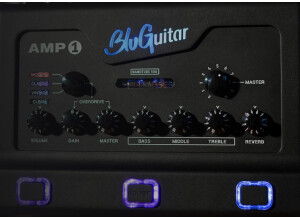
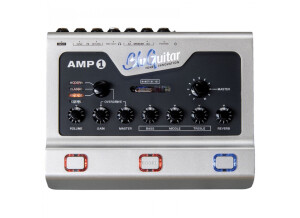
  • « Four Channel, 100-Watts with different Hard Rock/Metal Voicings »

    SOUND If you’re into various genres of Hard Rock and Metal, this is such a great solution for achieving a myriad of tones in such a small package. Having access to Rock, Hard Rock and Metal tones (that range from the 1970s to current) in a four-channel setup definitely puts the challenge to all other amp manufacturers. This may be a 100-watt system (and it is loud!), but its custom power soak technology allows you to get that hi-gain saturated tone with the Master dialed back to under 1-watt – absolutely no loss in tone. The tones themselves are inspirational; clear and cutting best describes it, and the amp does have tube characteristics and dynamic responses, although having but a single nanotube under its hood. Its clarity is not as ‘warm’ as you would find in a traditional tube amp, which is good for remaining clear in the mix, but which may sound a tad ‘sterile’ or ‘cold’ to some ears (particularly the gain channels, although I think it sounds fantastic). The Clean channel ranges from modestly warm to shimmering, depending how high you place the Volume (since more volume gives you more drive) and whether using the Boost. On that note, when engaged the Boost operates at only one level (a bit louder than without and a decent amount for soloing, etc.); but when turned low you get a clean boost (some note fattening and added overtones) and when turned up there is more drive and note definition. This is likely one of the most ‘useful’ boosts I have used and tend to use it a lot with this amp since it adds such diversity and richness in the tones. The Vintage channel offers up that classic British rock sound and somewhat Marshall Plexi in nature; ideal for Hard Rock, e.g., AC/DC and even Soft Rock when dialing back your guitar’s volume. The Classic channel has that Brown Sound, with rich grain that simply pops. However, this channel also has a separate Tone control that ranges the sound from woody and edgy to hot-rodded rich and modern. Factor in the Boost and you can go from thick and well-rounded crunch tones to a tone that sizzles and bites. The Modern channel, based on American high-gain sounds, is likewise diverse and is very tight in its delivery. Those who play 7- and 8-string guitars, or use drop-tuning will appreciate this ‘no-mud’ channel. The separate Tone control will have you playing fat screaming leads and hi-gain, all the way to Ultra- and Industrial Metal. The Amp1 Iridium has some other features that contribute to the sound. The 3-way EQ (Bass, Mid and Treble) is very touch responsive and was designed so that one setting would be very complimentary no matter what channel you’re on. In other words, unless you want a big mid-scoop on one of the channels, you likely will find something pleasant to your ears and it could very well work with all channels, e.g., Bass 7, Mid 5, Treble 6 is my typical setting). Certainly some fine-tuning and tweaking will open up other tonal variations, but they will not be extreme. The Noisegate works exceptionally well. It can be turned off, set to ‘soft’ or ‘Metal.’ The Metal setting is a fast acting noisegate, although it does not cut off lead notes unless you hang there too long. Definitely suitable for heavy chugging and riff work. Using the Metal noisegate setting also automatically shuts off the Reverb (to avoid any premature and unnatural reverb trail endings). The Reverb, based on a spring reverb (although it has some plate qualities to my ears), is very subtle, even when turned all the way up. It was designed to be complimentary and to add fullness to the tone, which it does, rather than be dominant and excessively wet. The Amp1 Iridium includes its own cab sims, supporting the clear and sparkling nature of the Clean channel, as well as an incredible amount of energy and saturated warmth with the hi-gain channels. This can be bypassed by running the Amp1 Iridium (via the speaker out) to a separate cabinet or cab/IR device. Although I did get some decent alternatives with different sources, including BluGuitar’s BluBOX, I keep going back to the internal cab options. FEATURES: Designed for pedalboard/floor operation, this is a full-fledged 100 watt amplifier. The channels include Clean, Vintage, Classic and Modern (with those genres geared toward the Metal musician). The Clean channel is reminiscent of Fender, whereas the Vintage offers classic British tones, the Classic that ‘brown sound,’ and the Modern a heavy to ultra/industrial quality. The Classic and Modern channels can be adjusted in tone so that you can get a more ‘vintage’ to a more ‘modern’ sound quality under each channel/preamp. You can adjust the Gain and Master Overdrive to your liking and then adjust the Master volume to an appropriate level (without losing tone quality) so that your output ranges from less than 1-watt to 100-watts. Both the Classic and Modern channels also have independent volume controls so that they can be matched with the Vintage and Clean channels (which has a separate volume control). There is a basic EQ (bass, midrange and treble) control, which works well as a whole and when working among channels (unless you want a lot of mid scoop, there isn’t much tweaking required once you find the tone you like). You select Channels via the left footswitch (from Clean to a gain channel), although you need to dial select which gain channel you want (Vintage, Classic or Modern). Dial-selecting a gain channel can be avoided if you go into Preset mode and use the three footswitches to change channels and settings (an optional dual footswitch allows you to switch to Clean and to engage/disengage the Boost). The middle footswitch is for Boost, which stays at one level (loud enough to know there is a boost), but which can be adjusted to further develop your tone (turned low = clean boost, whereas turning it up adds more drive and note definition). The right footswitch adds Reverb. The Noisegate function can be left off, turned to ‘soft,’ or to ‘metal,’ the latter of which is more abrupt and ideal for hi-gain chugging (this setting also shuts off the Reverb if you happen to have it on, so that you don’t get odd cutting of the reverb trail). The back panel includes the usual power in, guitar in, line/headphone out and effects loop (that you can run is parallel or series). There’s also an 8 and 16 ohm output for a speaker cabinet (which you also would use if not wanting to use the built-in cab sim and when going to a different cab/IR source). There’s also a Remote in for a two-way footswitch (as described above), a MIDI system or if using the optional Remote 1 controller (for presets, looping, etc.) offered by BluGuitar.