Log in
EN
FR

SeriesCaparison Dellinger

13 products found

Filter
Sort by
Evaluation
  • Reviewed or not
  • Editor’s award
  • Reviewed by Audiofanzine
Availability
  • Available or not
  • Sold new or used
  • Sold new
  • Sold used
Must-have products
  • All products
  • Flagship products
  • Best rated products
  • Hot products
  • Popular products
Price
  • Freeware
€
Clear
Sort by
  • Popularity
  • User ratings
  • Price - low to high
  • Price - high to low
  • Used price, increasing
  • Used price, decreasing
  • Name (from A to Z)
  • Name (from Z to A)
  • Added on
Sort results
  • Popularity
  • User ratings
  • Price - low to high
  • Price - high to low
  • Used price, increasing
  • Used price, decreasing
  • Name (from A to Z)
  • Name (from Z to A)
  • Added on
Filter results 13 results found
Evaluation
Availability
Must-have products
Price
  • Freeware
Show results

The best Caparison Dellinger reviews

The reviews Audiofanzine members found the most helpful.
  • « The standard Dellinger »

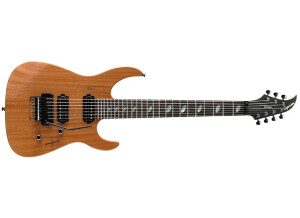
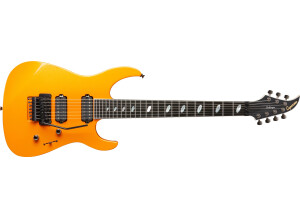
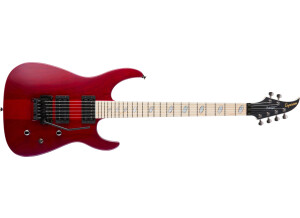
    Caparison is a small company in Japan that makes hand crafted guitars. The Dellinger was one of the models that was released shortly after the first successful run back in 1995. There are some variations in the Dellinger series, but the Dellinger I have has an oiled mahogany body, HSS configuration, maple neck with an ebony fretboard, 24 jumbo frets, a Schaller floyd rose, a 5 way switch with a single volume and push/push tone to split the bridge/neck pickups. UTILIZATION Since Caparison is a small company, they tend to pay attention to detail a bit more than the average guitar company. The body and layout itself is very similar to the Jackson Soloist, and that should be no surprise considering the company's founder was a luthier for Jackson. The oiled finish feels very nice on your wrist, too. One thing that's different about Caparisons compared to most guitars is that the bridge is actually raised more than a normal floyd would be. It feels more like the old school Chavels where they used to route out the flush mount bridges. The neck is a medium D shape, so it's not a paint stirrer neck like certain other necks tend to be. SOUNDS Outright, I'm not a huge fan of Caparison pickups. They can work, but I prefer swapping them to something else. That said, the guitar is extremely resonant and has this great low-mid kinda sound that some other guitars don't exactly get. Caparison is very particular when it comes to the finish as the finish has a direct affect on tone. By using a thinner finish (in this case, an oil finish), it allows the wood to breathe more. The HSS configuration allows tons of versatility, and the push/push tone knob allows for even more tonal variations. OVERALL OPINION Like all Caparisons, this guitar sounds amazing. A pickup swap will probably need to be in order, but it all depends; some people love the stock pickups. The PH-R is a pretty good bridge pickup, and the neck isn't too bad. The push/push pots can sometimes go flaky, so you might want to get a push/pull pot instead for the bridge tone. Aside from that, it's definitely a guitar worth considering and probably my favorite brand.

  • « Caparison's 7 String »

    The Dellinger 7 was Caparison's first ever seven string. It was brought into production thanks to Nils Norberg of Nocturnal Rites. Aside from it being a seven string, nearly everything is the same as the original Dellinger II. One thing worth noting is that it has an Original Floyd Rose instead of the standard Schaller. This is due to the fact that Schaller doesn't offer a seven string bridge. The neck is also a five piece neck similar to the way Ibanez makes their Prestige necks. Another thing is that Caparison has a push-push pot in the tone control to allow for splitting the pickups. UTILIZATION Caparison did an awesome job at making their first seven string guitar. Coming from an Ibanez seven string, this guitar will feel right at home. The neck feels very familiar, but it's just a touch more round and a touch thicker. It is not, however, obnoxiously thick like some other seven string necks out there. Access to the controls for on the fly switching is pretty good, and access to the higher frets is a breeze with the sculpted neck joint. Everything feels just right, and anybody coming from an Ibanez seven string should feel right at home. SOUNDS I never got to try the original pickups with this model as I bought it used, and the previous owner replaced the pickups with some DiMarzios. I wasn't really feeling those, so I replaced them with a 59-7 and a Custom-7. While it's a mahogany body with a rosewood fretboard and maple neck, the guitar is actually a touch bright. It cuts through nicely, but it's not quite as thick as my two Horus guitars. I didn't really like the push-push split as the middle position was out of phase, so I disconnected the tone (like I do in almost all my guitars) and replaced the switch with a proper 3 way switch. The middle position on the 3 way switch allows for a split coil sound similar to the way John Petrucci has his setup. Despite there being only three sounds, these three sounds are extremely distinct and allow for a very versatile setup. OVERALL OPINION If you're looking for a different take on the Ibanez RG seven string series, I highly recommend checking out the Caparison Dellinger 7. They can be hard to find and get ahold of considering only a few were imported into the US, but if you're willing to wait, you should be able to find one pop up on the used market.