Log in
EN
FR

Danelectro

189 products found

Categories
Series
Filter
Sort by
Evaluation
  • Reviewed or not
  • Editor’s award
  • Reviewed by Audiofanzine
Availability
  • Available or not
  • Sold new or used
  • Sold new
  • Sold used
Must-have products
  • All products
  • Flagship products
  • Best rated products
  • Hot products
  • Popular products
Price
  • Freeware
€
Clear
Sort by
  • Popularity
  • User ratings
  • Price - low to high
  • Price - high to low
  • Used price, increasing
  • Used price, decreasing
  • Name (from A to Z)
  • Name (from Z to A)
  • Added on
Sort results
  • Popularity
  • User ratings
  • Price - low to high
  • Price - high to low
  • Used price, increasing
  • Used price, decreasing
  • Name (from A to Z)
  • Name (from Z to A)
  • Added on
Filter results 189 results found
Evaluation
Availability
Must-have products
Price
  • Freeware
Show results

The best Danelectro reviews

The reviews Audiofanzine members found the most helpful.
  • « Transparency »

    American analog boost and overdrive pedal. Made in China. Two 1/4" metallic jacks for the input and output. One connector for an external 9V PSU with negative center. It can be operated with a 9V (6F22) battery (located under the pedal). One 9V Danelectro "Vintage Power Source" battery included. Electric current measured by myself: 4.52 mA inactive and 5.80 mA active. One True Bypass switch. One LED (blue). One gain knob, one volume knob and one concentric control to adjust bass and treble. Analog built-in circuit: One wide bandwidth dual JFET input LF353 op-amp. 4 DIP switches inside the battery compartment to activate blue or red clamping diode and JFET-type clamping pairs. The last one provides 6dB of additional boost (12dB in total). Surface-mounted components (SMC) (see pictures under "Media"). Cool Cat series: Aluminum case. The bottom of the pedal is covered with rubber. User manual. USE It's relatively easy to use, except for the DIP switches. It won't take you hours to find THE sound. The concentric control for treble and bass is a very bad idea and it's very unfortunately placed (between the gain and volume pots), making it difficult to set. The small DIP switches at the bottom of the battery compartment can be adjusted with a pick. The housing seems sturdy. SOUND QUALITY Light and effective overdrive that responds well to string attack. 6dB or 12dB boost with DIP switch 4 engaged. I use the boost with a bit of gain (the knob set to 11 o'clock or less) to get a light crunch with a solid-body equipped with single-coils and plugged into a solid-state amp. I don't use DIP switches 1, 2 and 3 right now. The pedal's major strength is its transparency. The output doesn't lack anything, from the lows all the way to the highs. Not being a fan of TS-like pedals, it was precisely this characteristic that made me go for it (besides the price). OVERALL OPINION I've been using it for six months. I hate the design of the Treble/Bass knob. I love its great transparency, which makes it worthy of its name. I really like its '50s household-appliance look and I think it's much more original than the usual square boxes. Truly UNBEATABLE value for money! If it ever breaks, I'll get another one.

  • « Great Fuzz Pedal for Cheap »

    This is a great little Fuzz pedal for the price. It's all analog. It has a volume knob, a tone knob, and a fuzz knob. It's in a plastic case, which is a downside for me, but it's a thick, heavy case, so I think it will stand up to heavy touring, as long as you don't stomp too hard or jump on it. It uses a standard BOSS style 9V DC center negative power jack so it can be daisy chained with other pedals. It also gets along with others very well and doesn't add much noise when daisy chained and on. UTILIZATION This pedal is super easy to use. Plug in, turn up the fuzz, set the tone, set the volume, and you're ready for some fuzzy goodness. The volume knob is touchy, and this pedal gets very loud, so you have to be careful with it. SOUND QUALITY This is where this pedal shines. It is a nice, thick, trebley fuzz, just how I like it. It sounds somewhat like a thicker, gainier Fuzz Face. The Fuzz knob takes it from a tiny amount of fuzz, to heaps of it. The tone knob goes from thick, bassy fuzz, to thick, trebley fuzz. Set it right and you have Hendrix. Set it right and you have Muse. Set it right and you can get an almost Big Muff sound from it.This is one pedal that does not disappoint despite the cheap price tag. OVERALL OPINION In the realm of cheap fuzzes, this one reigns supreme. For $25 this is an awesome pedal. It is an awesome fuzz. They may have cut corners in the casing to keep costs down, but they did NOT cut corners in the circuit, where it matters most. It's a great sounding fuzz, for an even greater price. What more could you want?

  • « Nice, shimmering tones »

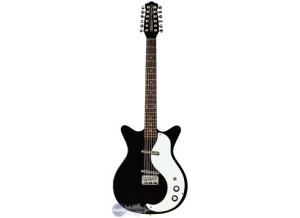
    The Danelectro 12 string is a fun guitar as it is 12 string electric, not semi-hollowbody or acoustic like a lot of 12 strings. It has a smooth neck, the tuners do a decent job staying in tune, and it's great for playing '60s style music. There are two volume knobs for each of the two lipstick pickups (neck and bridge) which both have inner tone knobs on top. There is a pickup selector to choose all pickups, the bridge, or the neck. I'm not sure what wood the neck is made out of, but it is exceptionally smooth, especially for a more budget friendly guitar. UTILIZATION This guitar is very easy to play all over the neck, and really not difficult to master considering it's a twelve string. It is well weighted and therefore fairly well balanced. The shape of the guitar, while not earth shattering, fits the style of music in which a 12 string guitar would be used. SOUNDS The Dano 12 strings will produce some really cool tones when an amp is set to clean or crunchy. While dialing in distortion is not a conventional way to play this guitar, it is still useful, especially if you want it to sound like you're playing really fast solos. OVERALL OPINION This was a cool guitar while I owned it, but it didn't see a lot of use. When I played in a band, I think I used it onstage only once for a ballad we played, but to have to switch through guitars is a pain, especially for a guitar that's only going to be used once in a night. It never made it onto any of my recordings, and while I kind of regret this fact, the truth is it just wouldn't have been the proper fit. If I remember correctly, I bought it to learn how to play Bon Jovi's "Dead or Alive" but never really got the hang of that riff. I ended up selling this guitar to a friend a couple of years ago. It's gone to a better, more respected place.

  • « Cheap, quiet, reliable. »

    The Danelectro Fish and Chips pedal is a 7 band EQ pedal with an overall volume slider. The pedal has 7 sliders that can cut or boost that frequency by 15dB. The bands available are 100, 200, 400, 800 1.6k, 3.2k, and 6.4k. The pedal can be powered by 9 volt batter or external AC adapter. The pedal is very small when compared to a Boss sized pedal. A mono input and a mono output are available. UTILIZATION This pedal is another pedal from the Dano Food series. Like all the other pedals from this series, it is a pedal that is made of plastic. This worried me at first glance but after owning a few pedals from this series I haven’t thought about it since. It is a very reliable pedal and I’ve never heard of any one crushing the shell of the pedal or footswitches breaking. People have lost the tips off the sliders, but that’s no big deal and can be remedied with a little glue. For a plastic pedal these little guys can take a beating. It’s a very straightforward layout and the sliders seem sturdy and hold your settings well. SOUND QUALITY The Fish and Chips really lets you shape the tone of your gear. It lets you craft your sound to the exact frequencies you hear in your head. I love low powered tube amps, but once you get down to 10 to 15 watters, they really start cutting back on features. A lot of micro amps cut back on the EQ sections, and that’s where an EQ pedal really comes in handy to make these amps useful. It is also good in the loop of larger amps to help shape the overall tone. The pedal makes a great solo boost because you can not only adjust the overall volume of the solo using the volume slider, you can also boost the frequencies that really let your guitar cut through a dense mix and stand out like a solo should. This pedal does have a buffered output and there may be a little bit of high end loss, but it’s very slight. This pedal is no where near as noisy as the GE-7 from Boss. I much prefer the Danelectro version. OVERALL OPINION Overall this is a pretty good EQ pedal, and a great one at this price. It does do a great job of shaping your tone and allowing you to boost your volume or certain frequencies. The MXR offerings are very nice EQ pedals, and I use one now, but my Danelectro has lasted for years and I had no real complaints with it other than opting for something different. The Boss GE-7 that I had previously been using was bumped for the Fish and Chips because the Danelectro is a much quieter operating pedal, at least in my different rigs. For 30 US dollars, there isn’t much else in it’s marketplace, and it’s probably because a company would need to do a lot of research to figure out a way to make a better EQ pedal for the price. Great tweakability on the cheap.

  • « Cheap Fun »

    The DJ-15 Chicken Salad is a vibe pedal from the Danelectro “Food Series”. The pedal has two knobs,; one to control the intensity of the vibe and one to control the rate of the vibe. The pedal can be powered by 9 volt batter or external AC adapter and features an on/off red LED. The pedal is very small when compared to a Boss sized pedal. A mono input and a mono output are available. UTILIZATION This pedal is another pedal from the Dano Food series. Like all the other pedals from this series, it is a pedal that is made of plastic. This worried me at first glance but after owning a few pedals from this series I haven’t thought about it since. It is a very reliable pedal and I’ve never heard of any one crushing the shell of the pedal or footswitches breaking. People have lost the knobs, but that’s no big deal and can be remedied with a little glue. For a plastic pedal these little guys can take a beating. It’s a very straightforward layout and the switch is solid. SOUND QUALITY For under 30 US dollars I was really surprised with the sounds that were coming out of this thing. It does a very convincing Uni-Vibe tone and you can really nail those classic Hendrix and Trower tones. It’s an overall quiet pedal in the signal chain and the bypass works well, there is no bleeding on your dry signal. This thing can get nice and subtle, and far out and throb. This thing can really warble on the low end and middle frequencies. There is a bit of a mid boost when engaged, but I think that’s partially the nature of a lot of vibe pedals. OVERALL OPINION Overall this is a great vibe pedal for the player that doesn’t rely heavily on vibe tones. No more than I use this sound, it would have been a waste to have bought a more expensive pedal. The pedal operates quiet, is built sound, and doesn’t take up much space on my board. There is an added fun factor to this pedal if you open it up or drill a hole in the casing to reach the internal trim pot that can be adjusted to get even more sounds out of this pedal. Overall it’s a fun pedal and well worth the low price they ask for it.

  • « Nice sounds, some QC issues. »

    The DE-1 Dan Echo is a delay pedal from Danelectro. This delay uses a four knob and a toggle layout. Mix is used to set the volume of delay, Speed is used to set the amount of time between delays, Repeat sets the number of repeats after the initial signal, and Hi Cut allows the high end to be rolled of the frequencies of the repeat in order to simulate an analog delay/echo. The Hi and Lo toggle switches between short and long delay times. The pedal can be powered by a 9 volt battery, but is better powered by a 9 volt power supply. UTILIZATION This pedal has a solid metal casing and sturdy knobs (though they appear to be plastic), so it appears to be pretty durable. I’ve had no issues with reliability. This pedal works great at the end of your pedal chain before the front end of the amp, or even better in my opinion in the loop of the amp. The Hi Cut knob on this pedal is a great addition, all delay pedals should have that. SOUND QUALITY The sound is pretty good for a digital delay. With the Hi Cut knob rolled down you are really able to get those old analog tape delay echos from older recordings. I wish all delays had this option. All together the tone of this pedal is very nice and warm sounding with natural sounding echoes and there is plenty of delay on tap to go from slap back to long and lush. This pedal has been pretty notorious for having a high end hiss develop but I have not experienced this myself. OVERALL OPINION Overall this is a pretty warm sounding digital delay. It does a good job at recreating natural sounding echoes and the hi cut knob is responsible for that. This is a larger Danelectro pedal and it has a substantial bypass switch and metal casing with some real weight to it, but stories of others developing the high end hiss overtime worried me into picking up something else. I’m happier with my DL-4 and Nova Repeater, but for a basic warm delay the Dan Echo may be worth checking out.

  • moosers's review

    The Danelectro Dan-O-Wah is a cool wah wah pedal for your electric guitar. I’ve only had the chance to use this pedal in the studio since I don’t own one for myself. One of the studios that I work out of a lot has one and this is where I’ve used it since my Cry Baby wah is getting fixed up. This is a pretty straight forward pedal and should be easy to use for anyone regardless of experience with wah wah pedals. It’s easy to set up since it has ¼” connections for input and output and runs on a 9 volt battery or power supply. It’s not rack mountable since it’s a foot controlled pedal. UTILIZATION There aren’t really any parameters or controls to be aware of with the Danelectro Dan-O-Wah. You control the effect with your foot via the expression pedal. You also turn it on and off this way. Those who have used a wah pedal before will know what this means. One thing about it is that it isn’t the easiest pedal to engage the effect as you have to push down somewhat hard to get it to go on. Other than this, it’s super easy to use and a manual shouldn’t be necessary. SOUND QUALITY I really like the sound of the Danelectro Dan-O-Wah. It seems to have more of a sweep and be more precise with it’s filtering than many of the pedals that I’ve used before. I probably would prefer it to the simple Cry Baby, but both are good for what they are. I’m not huge into using wah, but it’s definitely a nice thing to have for any guitar player. If you’re using it a lot I’d probably recommend springing from the Dan-O-Wah since it has a superb tone. OVERALL OPINION While not as popular as the Dunlop Cry Baby, the Danelectro Dan-O-Wah is a fine choice for a wah pedal. It’s definitely got a cooler design and color as it’s quite retro, which seems to be a theme with Danelectro gear. I’ve found Danelectro pedals to be pretty hit or miss, but they are usually nice for the price you will pay. The Dan-O-Wah is definitely a hit in my book and should be checked out for any prospective wah owners.

  • « Lives up to it's name... AND the hype! »

    The Danelectro Transparent Overdrive (TOD) is a gain pedal with just enough of the good stuff to fill a particular niche. Unlike the “Food” series of pedals from Danelectro this pedal has a metal housing, metal input and output jacks and is true bypass. These are great upgrades without putting the price through the roof. The TOD runs off of 9 volt battery power or a power adapter. Also these pedals have a new look and the design is much more professional looking. Mono input and mono output, a knob to adjust the gain, volume and a two level knob that works as a two band EQ. Simple overdrive layout, but the two band EQ is a nice touch. UTILIZATION This pedal goes great in front of a clean amp, or an already overdriven amp as a boost. The two band EQ allows you to tailor the sound to your liking, though the stacked tone knob may be harder to adjust than a two knob version would have been. The jacks are located on the top of the pedal as opposed to the sides like most pedals, which makes it a tight squeeze getting the power plug in when using a One Spot with right angle plugs. Having all this at the top of the pedal is no big deal to me because I find it’s more of a set it and forget it pedal. SOUND QUALITY The first version of this pedal is no longer available due to the fact that it was a close clone of another more expensive overdrive. This shows in the sound department because it sounds very, very good. It works great as a solo boost, but I love it for that slightly overdriven tube amp on the verge of breaking up type of sound. You can get some rocking tones out of it with the gain maxed, but it sounds so good at low gain levels. This pedal lives up to its name because it is very transparent. It’s like taking the tone of your guitar and instead of covering it with distortion; it’s like just turning up the gain on a nice tube amp. It’s what I’ve always looked for in an overdrive, what you put in is what you get out only with more gain. OVERALL OPINION This pedal just rocks in everything that it’s meant to do. No it doesn’t do metal or fuzz, but its warm overdrive, slight tube sounding breakup, or a versatile boost is just plain great. Would I buy this again? In a heartbeat. These pedals are great at three times the price, but getting one at this price point is just awesome. I haven’t had any issues with the pedal whatsoever and the tones are great and all within a gigging musician’s budget. Great job Dano!

  • « Totally cool... »

    The Danelectro '67 Hornet was released by the revived Danelectro company as a limited run recently. In the 1960s there was a guitar called the Coral Hornet that looked nearly identical to this and they're getting to be quite sought after, especially when linked to players such as Pete Townshend who had one in his home studio in the late sixties. This guitar is basically a reissue of that, and it was available in regular and long scale versions in a variety of whacky colours. It features a lightweight basswood body, a rosewood fretboard with 21 frets, dot inlays, 24 3/4" scale length, original style Danelectro bridge with tremolo and a pair of classic lipstick pickups for that Dano sound. They're built overseas now as compared to the USA models of the sixties, but they're still very true to the original designs. UTILIZATION The design is fairly ergonomic overall. It has a sort of offset vibe to it like certain short scale Fenders, and the body is aptly contoured. The guitar is very light and due to the satin finish it's got a certain slick feel that is true to the original cheap Danos. They don't feel classy or top notch by any means but that's part of the charm and I'm glad they kept that certain mojo for the reissues. The upper fret access isn't great on these guitars but the guitar only has 21 frets anyway and they weren't really designed for flying over the fretboard in the first place. Getting a good sound is fairly simple. The guitars are really equipped to do that signature trashy/jangly Danelectro sound. It doesn't sound quite as bright as a Strat nor does it have the refined nature and strong low end of a Les Paul. The tones that this guitar gets are much more of that era - bright, brash and loud. SOUNDS The guitar definitely sounds better in clean to lower gain applications. The pickups are fairly low output and don't have the great tolerance for overdrive I find. However, for surf or rockabilly type clean or very mildly driven tones, that's where this guitar excels tonally. The pickups are fairly bright and jangly and for those styles where you need a loud and clean sound guitar this one is a good choice. The guitar's tone might be considered a bit too brash for some tastes, but Danos have always been a bit outside the norm tone wise so it's kind of something you learn to love/deal with. If you're going for a really fuzzed out and trashy tone the pickups work reasonably well with distortion or fuzz, but they don't offer the greatest articulation or dynamics - it's pretty much on 11 all the time. OVERALL OPINION All in all I think the Danelectro '67 Hornet is a great reissue of a really classic looking guitar. Ever since I saw a pic of Pete Townshend with one I wanted one and when Danelectro announced the reissue I was over the moon. They can be found for about $350 new in general which is a pretty cool deal for someone just looking for a flashback to the sixties, in looks, feel and tone.

  • moosers's review

    The Danelectro DC 3 is an electric guitar in the style of a vintage 60's guitar. These were made for a few years in the late 90's, but you can still find them around on the used market. It's a unique guitar because of the tone knob that allows you to set the pick up configuration in seven different ways for different sounds. It's got three single coil pick ups and a super sparkling cool finish. UTILIZATION Using the Danelectro DC 3 isn't hard at all, whether we're talking about the feel of the neck or setting your tones. What makes the DC 3 so unique is it's seven way tone knob, which gives you different configurations of the pick ups. One of them allows you to put all the pick ups on at once for a huge sound, but you can also choose between them manually. The neck is pretty smooth and easy to play, although it doesn't jump out at me as having a super low action. Getting a good sound couldn't be easier because of the unique tone knob. SOUNDS I really like the different sounds you can get with the Danelectro DC 3, as it's definitely a versatile guitar. It has a vintage 60's tone as advertised, but this doesn't mean it's lo-fi or anything like that. I have to say that I probably like the all pickups on mode best for leads and the others for different types of rhythm parts. The bottom line with the DC 3 is that it's great to have options in sound! OVERALL OPINION The Danelectro DC 3 is a really cool looking and sounding guitar. While it's not a vintage guitar, it definitely has the look and sound of some of those old Dano guitars, while still incorporating modern ideas and technology with the seven way tone knob. It's a very inexpensive guitar, which is somewhat surprising, but if you know a little bit about Danelectro you'll know that they're guitars have always been at low prices. The DC 3 is definitely worth checking out for guitarists looking for a vintage sound in the modern guitar.

  • « Cool guitar! »

    This is a double-guitar with a baritone guitar on top and a standard 6 string on the bottom neck. Each neck has two Danelectro "lipstick" pickups and there is a switch to change from one neck's pickups to the other's. There is a volume knob for each pickup, and on top of each knob is a control for tone for each pick up as well. There is also a three-way pickup selector, to change from the neck pickup to the bridge bickup, or to play with both simultaneously. Both the guitar and baritone necks can not be simultaneously selected. UTILIZATION Double-guitars by their very nature are more challenging to play due to the additional weight and the awkwardness of playing a guitar with multiple necks. That being said, Danelectro did a good job with the weight distribution of this guitar, and although it is not as easy to play as a standard "single-guitar," it is not that challenging, either. As with all double-guitars, it is difficult to play the highest frets due to the immense size of the guitar's body. The lipstick pickups deliver a decent tone, but I always liked the way the baritone neck sounded over the standard guitar neck. This may be because I have no other baritone guitar to compare it to, but the baritone tone that is delivered is very rich. SOUNDS I wouldn't bother with much distortion on the baritone neck, it would get way too muddy. The standard guitar is a decent guitar, but not a great guitar. OVERALL OPINION Double-guitars look really cool, but when used live are seldom played for more than a single song. In spite of playing probably a couple hundred shows, this guitar has only ever made it onto the stage once. The only reason I've ever used it in the studio is because I don't own another baritone guitar. I was lucky to get it for a steal for $99 at one of the Guitar Center sales events. There was a terrible snow storm that morning, so I'm sure somebody else would have snatched before me otherwise. Unfortunately, I didn't have enough money at the time to buy the matching case for $80, and by the time I had enough money the standard price was $150... costing me more than the guitar! If you have written a song that calls for a quick switch over from a baritone guitar to a standard guitar, look no further than this double-neck!

  • « Amazing rendition of an old favorite »

    Like it says on the box, this is a vibe pedal. Amazing wobbly tones can be had from it. It is different than most vibe pedals and I think it is a simulation of an actual vibe but it sure sounds great. Speed and intensity controls are typical for vibe pedals, the mix control certainly isn't and this is what I really like about this pedal. Great work Danelectro!! When you switch it on, it actually takes a bit of time before it actually is on. This does not bother me because I have it in a looper so it's always on, I just switch on/off the loop. UTILIZATION There are a lot of cool vibe pedals out there and I own(ed) a bunch of them. There's a lot of discussion going on on the internet about vibe pedals but in the end, the sound is what matters. Setting this one up is easy, set your speed and intensity with the mix all the way up. BTW, I think that unlike trems and delays, the speed on a vibe should NEVER match the tempo of the song. When you have the speed and intensity dialed in, dial back the mix control a bit. You will notice that the wobble won't stand out as much so turn the intensity up a notch. Why would you do this? Well, it will make the vibe work better in the mix. A lot of people like dark sounding vibes because they sound great when playing alone but when you are playing with a band, the wobble might get lost in the mix. The mix control allows you to dial back some dry tone and turn up the intensity which lets your vibe just work better. SOUND QUALITY The vibe sounds fantastic, in fact, it replaced one from a well-known boutique builder because it just sounds so good in the mix. I'm not using it all the time obviously but when I do, it's hard to stop using it. I can get a great vintage vibe tone out of it, think Hendrix, Trower but you can easily get a more phaser-like, more modern tone from it. Thanks to the mix control, I also find that the vibe works really well with humbuckers without getting to muddy. The mix control gives you clarity and that's what you need, clarity and fat tone! OVERALL OPINION I know that it is far from being vintage correct and some of the pedal snobs won't even look at it but bottom-line is the sound and that is pretty darn fantastic.