Log in
EN
FR

Kurzweil

148 products found

Categories
Series
Filter
Sort by
Evaluation
  • Reviewed or not
  • Editor’s award
  • Reviewed by Audiofanzine
Availability
  • Available or not
  • Sold new or used
  • Sold new
  • Sold used
Must-have products
  • All products
  • Flagship products
  • Best rated products
  • Hot products
  • Popular products
Price
  • Freeware
€
Clear
Sort by
  • Popularity
  • User ratings
  • Price - low to high
  • Price - high to low
  • Used price, increasing
  • Used price, decreasing
  • Name (from A to Z)
  • Name (from Z to A)
  • Added on
Sort results
  • Popularity
  • User ratings
  • Price - low to high
  • Price - high to low
  • Used price, increasing
  • Used price, decreasing
  • Name (from A to Z)
  • Name (from Z to A)
  • Added on
Filter results 148 results found
Evaluation
Availability
Must-have products
Price
  • Freeware
Show results

The best Kurzweil reviews

The reviews Audiofanzine members found the most helpful.
  • « Huge sound and quality behind the puritanical plastic exterior. »

    Usage: In a rock band. Currently: Home studio, rehearsal room. I tested before: Korg Nautilus, Dexibell Combo J7, Kurzweil Forte 88, Kurzweil PC3 and PC4 88 instruments. PC4-7 advantages: Very dynamic sound, excellent piano, EP organ and other sounds. Only 10kg weight, compact and portable. Huge user flash-based storage (2GB) Disadvantages: Plastic casing, unprofessional switches, external desktop power supply. Overall, the instrument was a positive disappointment. I am alien to instruments mounted in plastic casings, but the PC4-7 made me forget about this with its huge sound, compact appearance and the fact that it was built with a usable keyboard. I strongly recommend it to everyone who likes the Kurz sound.

  • « Simple and affordable »

    The Kurzweil SP4-7 has semi weighted keys with 128 different presets. It is a rather easy board to understand and use as well, most of the effects are pretty basic and there are none that will really “wow” you. The feel of the keys on the SP4-7 are the best part about it, the keys feel good enough to play out your piano parts but if want to switch it over to play some of your melodies with synths or whichever instrument you want to play them with the keys are light enough to really be able to play them. All of the sounds on the SP4-7 are from the Kurzweil PC3 line of keyboards, and the SP4-7 is one of the lighter keyboards that Kurzweil makes. It only weighs about 25 pounds and it is pretty easy to move from place to place if you need to. I have been using the Kurzweil SP4-7 since 2010, and it is a very good performance keyboard. UTILIZATION Using it is very easy, and picking your presets and patches are easy as well. There are 128 of them, and you an add effects all in real time. The pitch and modulation wheel is pretty good to, it is nice and loose even when the unit is brand new. SOUNDS The piano patches are decent, I have heard a lot better from Kurzweil though. But for the price of this digital piano you really can expect a lot more. It is one of the more affordable Kurzweil keyboards that they have come out with. My favorite sounds on the SP4-7 are the organ patches. They are very realistic and rich, I am pretty sure that Kurzweil has released a new update for this keyboard that will allow you to load more sounds from outside sources, I have not had a chance to test it out yet though. OVERALL OPINION Overall, you will love what you get with the SP4-7 . Only thing that it is missing is a sequencer which you really will not need for this style of digital piano. The board is very well built and everything seems to be able to hold up, the knob and buttons don’t seem to be as well built and I would be scared that over time they will not hold up.

  • « Lush reverbs in a simple package for a song »

    The Rumour is a stereo in, stereo out, 24-bit, 44.1 or 48khz digital multi-effects unit. Analog connectivity is via 1/4" TRS. XLRs would have been a nice touch, but no biggie there. Analog output operating level is switchable between -10dBv and +4dBu at the back of the unit. RCA-type S/PDIF digital i/o is also available, as well as MIDI i/o and a jack for a pedal which I have never used. The Rumour has a good variety of large and small room, hall and plate type reverbs separated into banks, as well a additional banks of gated/reverse/compressed verbs, "unusual" effects (examples: "acid trip room," "cabinet in room"), a Kurzweil party piece bank called "LazerVerb" which I find rather gimmicky and not often very useful, and banks of delays and delay/reverbs, choruses, and flagers. There are 192 presets in all. In addition, you can save your own edits in four banks of 16 each, which is a nice touch for recall or personal go-to presets, particularly as the unit will NOT save your edits when the power is switched off at the end of a session. You either save it or lose it. The unit also has a 3-band digital EQ on the output which can be bypassed by a master bypass switch which will also allow you to bypass the effects, or both EQ and effects. UTILIZATION The presets are generally ok starting points which I always like to go in and edit/tweak. This is quick and easy to do thanks to a straightforward and simple parameter selection interface based mainly around a pleasant-feeling stepped rotary knob and a jogwheel. It's a fairly intuitive unit to navigate, menus are straightforward and the display is easy to read. The settings can be edited fairly deeply, though if you prefer a simpler menu and don't want to go really deep with the editing, you can set the unit into a mode that shows fewer editing options. This is a nice touch to help the Rumour suit the tastes of a broader variety of users. I will nitpick that the 3-segment LED input metering is completely insufficient. There is a yawning chasm of decibels between -48, -12, and "CLIP" which makes gain staging through the unit tricky. Fortunately, the output trim is a different story as its position in 0.5db increments is visible on the display. Kurzweil includes a perfectly satisfactory, simple manual although users already familiar with other hardware rack effects should be fairly comfortable navigating the unit right away. SOUND QUALITY It's nice to have the other effects, but I mainly reach for the reverbs on this unit. The medium and longer/bigger rooms, halls and especially plates are very good. Extremely short reverbs can take on a bit of a metallic sound; the unit doesn't excel there though the bright, metallic character can be finessed a bit, but otherwise I would describe the sonic character of the Rumour as having a pleasant lush sparkle. The delays are also useful and tapping in a tempo is a piece of cake via a pushbutton that functions with an audible click. The digital 3-band EQ works well enough but I prefer to EQ my reverbs on analog console channel returns, so it's not a feature I use very often. The digital converter quality is quite decent and you can indeed leave the EQ and effects bypassed and use this unit as a stereo digital audio converter, which is a nice little trick. It's not ultimately neutral and refined as with high end audiophile quality converters, but certainly better than you'd expect in a mid-priced effects unit. OVERALL OPINION The Rumour excels at my most-used reverbs, has a number of addition effects for icing on the cake, and has a pleasantly colored, generally high quality sound sound that is unique compared to other brands I use such as Lexicon, Yamaha, TC Electronic. My few complaints about it are mainly aesthetic, though I would prefer it to be be a bit smoother with short reverbs. The unit is well built and has never given my any trouble in some 7 years of routine use. The chassis is vented, it does give off a bit of head and it's a good idea to give it a bit of breathing room in the rack. Kurzweil has discontinued the Rumour (and its class-mate, the Mangler), but still makes basic info and the manual available on its website. I considered it to be a very good value at its new price, and even moreso on the used market which will sadly now be the only option for purchase.

  • « I could use my .KRZ sample files with this board »

    I have been using Kurzweil boards for a long time now and I love the PC3k7, it was just so darn expensive when it first came out. I remember paying over 3 grand for it and really second guessing my self if it was worth it or not. But after using it for about an hour or so I soon realized that I would get more than my monies worth out of this workstation because of sounds and the ability of loading the .KRZ sample files that I have accumulated over the years. Being able to load up sounds from other boards was great because that actually allowed me to sell some of my other Kurzweil keyboards to cover the cost of the PC3k7. UTILIZATION Getting started with the PC3K7 was very easy because it was just like some of the other Kurzweil boards that I have used in the past. Most of the layout and menus are all the same but the sounds are so much better. This board gave me the ability to have up to 32 layers on each program, I was able to get some really great sounding instruments by utilizing that features. SOUNDS The sounds are very good, and by using the oscillators I was able to get the exact sound that I was looking for every single time without any issues. I would spend hours on hours playing around with the sounds on this keyboard until I got was I was happy with. OVERALL OPINION Using the PC3K7 has really helped me out sound wise because I was starting to really over use some of the sounds on my other keyboards and needed something fresh to create with. I have so many more sounds now I don’t think I will ever use them all. I am able to create my own sounds and be unique! The keyboard has 76 touch sensitive keys, though it is not the full 88 key version it is still very heavy and I do not think that I will ever want to take it anywhere with me!

  • « The K2000 has a great layout »

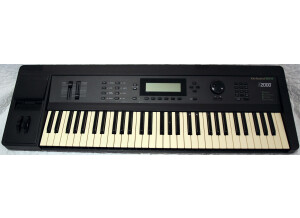
    The Kurzweil K2000 is a professional looking as well as a professional sounding synth. The layout of the synth is very well organized and put together. The workflow of the Kurzweil is very simple an that was the reason that I loved using it. The Kurzweil K2000 has a lot of on board effects, including flange, rotary simulation, re verb, chorus, delay, and multi-tap just to name a few. It has an on board sampler with 2MB of RAM and you can even expand the Ram to 64 MB for a reasonable price. Though the Kurzweil K2000 came out in 1991 it still has all of the up to date specs to still make it a great board in the current music industry. The Kurzweil K2000 is a 61 key board with velocity and after touch. UTILIZATION You will have full control over the patches on the Kurzweil K2000. The manual is clear and easy to understand, you will need to glance at the manual a few times until you get the flow of the keyboard down. It is set up different from other popular keyboards and plus with it being over 20 years old, there are a lot of changes. It comes loaded with over 200 patches. SOUNDS Sounds are realistic and they have warmth and depth to them. The effects are pretty standard for today's music, but at the time when the Kurzweil K2000 came out the effects were great and up to date. After touch and velocity on the Kurzweil K2000 are pretty good, as they are on most all of Kurzweil’s boards. OVERALL OPINION The quality of the Kurzweil K2000 is one thing that you just cant deny, that is the best part of the board. It is well built and well design. You will have no problem using it, and its built like a tank. I have used a lot of Kurzweil boards over the years and they have all been well built. So anything from Kurzweil is a good idea to purchase. The K2000 is a great choice.

  • « Kurzweil PC3X »

    Its main features -at least those that caught my attention- are as follows : *the heavy touch type keyboard: -the keyboard is pleasant to use with a quick rebound (quicker than on Yamaha heavy touch keyboards) -it seems the Fatar mechanical parts (TP40L) are sturdier than the previous generation keyboards used on Kurzweil products such as the PC88 (which is known to be quite fragile) -the keyboard features aftertouch (which is not the case of Roland’s RD700GX, which keyboard is otherwise very good) *elaborated MIDI features, including: -2 midi out plugs -5 pedal ins - 1 breath controller - 9 sliders -feature allowing (I think) to program your own velocity curves *the price is neither negligible nor excessive: €2000 to €2300. *weight is 25kg (compared with the Yamaha Motif XS8 and Roland G8). USE As a piano player, I often play duets with my singer using only a few sounds (acoustic piano, electric piano and pads) in a soul/jazz genre. As I use a laptot computer with very good acoustic ands electric software pianos, I was after a good 88-key control keyboard with heavy touch, a nice look, rather advanced MIDI features and a weight not esceeding 25 kg. Also, the fact is features internal sounds has to be a real asset. It’s quite practical in case of a computer crash (never happened to me so far), or if I forget my computer’s cord (this HAS happened to me already…), or when you have very little time to set your gear up. So, if these internal sounds are good, it can only be better. By the way, since I have it I tend to play more often as you just turn it on and here you go. This wasn’t the case with my Yamaha KX88 which had to be plugged to my computer for any sound to come out… Plus, its 30 kg weight was growing to be a problem for my back. All in all, playing the PC3X is more spontaneous. I didn’t believe it at first, but as far as I’m concerned it has proven true. SOUNDS There are several variations of the acoustic piano sound, all derived from a single sampled piano (three different sample layers). I wasn’t impressed, even though it sounds quite good. I’ll admit I’m quite demanding as I own Synthology’s Ivory (featuring 10 velocity layers: no sich thing in the hardware world). Actually, these samples are the same basic ones that Kurzweil has used since the 1980s. I believe they’re from a Steinway. This is why you always get the same "Kurzweil" sound color, even if the samples are better edited on the PC3X compared with the PC2X for instance. The feelings while playing are better with the PC3X. Electric piano sounds are better with a lot of expressiveness. I was pleasantly surprised. I own the CEP software from www.scarbee.com (best samples Rhodes sound IMO) and you really get close to it as far as musicality’s concerned, thanks to the possibility yo stack up to 30 different velocity layers for a great sound dynamic. I play a little funk and also use the following sound types : Hammond-type organs, but I don’t like the the PC3X’s which sound too synthetic. I prefer by far www.native-instruments.com’s B4. Still, the Clavinet sounds are quite varied and can be used with an auto-wah or wah pedal : what a sound ! Classical synth sounds (basses, leads, pads) are great, especially those using the integrated VA module that simulates the warmth of analog sounds. to conclude : The sounds that imitate real life instruments are nice, but they’re not my kind. I prefer a good analog brass sound to a sampled brass section that is bound to be under par compared with real instruments. The same goes for strings such as violins. So I prefer not to spend too much time detailing these. The multi-effect section seems powerful but I haven’t got into it yet. OVERALL I hesitated before choosing this keyboard, as the following choice were offered to those seeking a quality midi keyboard with good piano sounds: - Roland RD700GX : features nice acoustic piano sounds, though a little too electric-sounding to my taste. Electric pianos are nice but nothing exceptional. Very good touch again. Too bad it lacks aftertouch… Price is correct, around €2000. - Clavia Nordstage 88 : + : good acoustic and electric piano sounds, When you play you can feel the lack of velocity layers but to the audience it all sounds natural. For such types of sounds, this was undoubtedly the best haredware available. + : warm organ sounds (better than the PC3X’s) + : same reactive touch as the Kurzweil PC3X, also with aftertouch, + : perfect weight (18 kg), as little cumbersome as an 88-key can be. - : its price (2600 € taxes in vs 2000 € for the PC3X) - : polyphony for piano sounds : 40 notes… for such a price, it’s a bit hard to accept, - : synthetic sounds are less elaborated than the PC3X’s. - : interesting midi control functionalities, yet inferior to the PC3X’s. Had the Nordstage 88 been available around 2000 € I might have opted for it for its weight. - last possible configuration I considered : A VMK 188 plus (with TP40H) Fatar keyboard : approx. 600 € (don’t like its look too much but hey, at this price, you don’t get too picky) associated to a Macbook computer with 4GB RAM ; approx. 1200 €, a good sound interface : 300 € at least, and finally a good external hard drive (200 € at least). Ivory licence : around 250 €. Total : a good 2500 € overall price, that is almost the same as a Clavia Norstage 88, for a really excellent acoustic piano sound but also a lot of cables to plug... I finally opted for the PC3X as : - engineer Dave Weiser from Kurzweil is a really nice guy and easy to reach. You feel this instrument cas conceived by people with a real passion for what they do. - synth sounds are warm and have a real character, making it a great complement to my software sounds (Ivory’s Steinway and Scarbee’s Rhodes). Also, that kind of devices with an important synthesis capacity keep up to a certain price on the used market, which is not the case with those involving classic sampled sounds (especially piano sounds) which quality gets outdated quite soon by software sampled sounds. A few regrets (but you can’t get everything) : - no audio in that would have allowed getting a voice through the multi-effect section, - the memory card reader only uses xD format, which is not the most common. An SD card reader or USB port would have been a real must, but it seems that it would have been more expensive to include according to Kurzweil. Hopefully my opinion will be helpful. Olivier. Nancy, France.

  • « Piano for everyone »

    This is what I call a "piano for everyone". Although it's not a "piano" in the sense of an 88-key hammer-action instrument (like its bigger brother SP88X), it still has that piano-y feeling. The sound, although considered outdated today (just to mention: it comes from the MicroPiano module, manufactured in 1992), is still great. I think every pianist/keyboardist could play it, no matter the skill level. Beginners could use it to start studying piano; professionals could use it on studio, gigs and as a master controller for modules and VSTi. Versatility is the name of this board.

  • « Kurzweil K2500 X »

    I bought this baby second hand for *price converted from German Marks* about $1500. My main motivation in buying it was that I needed a synth with 88 keys and the good reviews I had read about it before. I also heard the 2500 rack in a band I play with. Give me an S - S Give me an O - O Give me an U - U Give me an N - N Give me an D - D What`s that spell? SOUND!!!!! The K 2500 is the most amazing synth I`ve ever played, the flexibility and the pure power of the synth can make about 99% of all other synths obsolete. With my K being nearly maxed out memory wise and having all three expansion boards installed there are literally no limits to the sounds you can create. It loads samples in Akai format too, so that you won`t run out of sounds no matter what. also, the action of the keyboard is very good, a little heavier than most weighted synths, definitely feels very piano-like Err, did I say it feels piano-like? It also WEIGHS according to that. The K2500 X is so damn heavy that you can`t possibly carry it around on your own...at least you`re not gonna want to. Although once you get used to how menus and soft-buttons work it`s a breeze to use I think in future updates the display could be a bit bigger. Other than that I couldn`t ask for much more in a synth than my K offers me The Kurzweil is built like a tank. This ain`t no kiddy toy, its rugged housing takes the stress of "being on theroad" like there ain`t any. The quality as I mentioned above is absolutely superior, be it the sounds or the action of the keys, I have not played a better synth to date and it`s not like I didn`t try The Kurzweil is not a synth to begin with, its multitude of possibilities and controls will surely overwhelm and maybe even scare the synthesizer-neophyte. But once one has overcome the c*sio-level (no offense ever!!!) and want to play with the big boys, the Kurzweil is the way to go. This review was originally published on http://www.musicgearreview.com

  • « Kurzweil PC88MX »

    I recently purchased the Kurzweil PC88mx from an American Music Supply catalog. I have had experience playing this particular keyboard and fell in love with it, the only problem was that I couldn't find a store that carried them. I soon learned that Kurzweil was no longer making them and that they had sold the last of the PC88mx inventory to American Music Supply. I was able to get a great deal on this keyboard. I was able to buy it out of the AMS catalog for 999.99 + shipping. It was definately worth every penny In my humble opinion, there's not a keyboard out there that delivers the rich piano sounds that this particular keyboard does. The piano sounds are incredible, particularly the stage piano sound and the stage piano/strings sound. I haven't played a keyboard whose piano string sound even compares. Sure, a lot of keyboards may have hundreds of sounds, but you know that with the PC88mx, the sounds are going to be quality where as others gear more for quanity. The playability of this keyboard is like none other, the response I get from keys when I play them is fantastic, I feel like I'm playing a grand piano. This keybord is easy to operate as opposed to many others, it's geared for performance use so you can quickly change sounds while playing and no one would ever hear a sudden end to the sustain pedal, like you would with many other keyboards. This keyboard is very user friendly, you don't have to be rocket scientist to figure it out. I love this keyboard and I would recommend it to anyone who loves playing the keyboard The one main thing I don't like is that they DON'T MAKE THEM ANY MORE!!! Kurzweil replaced the PC88mx with the PC2 and yes it may have more sounds, but it just doesn't have the classy look that the PC88 did, plus the quality isn't any better. The PC88 and the PC88mx is what put Kurzweil on the map-like my dad said-"if it aint' broke, don't fix it". If I were to complain about the keyboard itself it would be the lack of a good B3 sound, the rock organ and the jazz organ are decent but Kurzweil should have put the B3 in it. It is by far the most demanded organ sound out there. When Kurzweil built the PC88mx, I think they built knowing that somebody might just take that keyboard on the road with them. Trust me I know, I travelled with one for three years when I was in college. These keyboards are built to last. The casing is made out of metal, not plastic, so chances are it'll hurt you before you hurt it (it's not kind to toes). This quality of this keyboard is unbeatable. Kurzweil may not make a huge line of keyboards, but what they do make is second to none when it comes to quality. To any keyboard player who has been looking for the ideal 88 weighted key keyboard, look no further: The Kurzweil PC88mx will meet and surpass your expectations. I'll never look for another keyboard, there's no need to. This review was originally published on http://www.musicgearreview.com

  • « great feel and sound »

    The Kurzweil SP 88 is a quality instrument. It has various piano sounds and the other limited choice of basic sounds like organs, harpsichord, strings etc. The sounds can be edited and saved. The instrument is multi-timbrel. If memory serves me correct it doesn't have a sequencer. It has facility for splitting the keyboard into parts where different sounds are triggered on different sections of the keyboard. It has some cheesy drum sounds. There are the usual line outs, pedal outs, midi in/outs. The keyboard feels like a real piano. The piano is heavy. UTILIZATION The one drawback of this keyboard is that it is not user friendly when accessing the deeper functions which requires the manual to figure out. It is also very heavy but it is transportable. SOUNDS This digital piano sounds great! It sounds very much like a real piano. And the fidelity of the output sound is extremely good. All the output sounds sound very solid and strong with very low if any background noise. On recordings it sounds like a real piano. Not all of the piano sounds are great but there are a few great ones. OVERALL OPINION I was fortunate enough to be able to borrow one of these from a friend for a while when they didnt have space for it. Eventually I had to return it to the owner. I deeply miss the it now that its gone. However I am not a true piano player. I do most of my stuff in midi in a daw. The best thing about this digital piano is that it feels and sounds like a real piano. I like to play in a beautiful romantic style using the damper pedal. With this piano I could easily get into and feel inspired by the sound. I have looked for another digital piano since losing this one but I have been looking in the to find one in budget.

  • webbkline's review

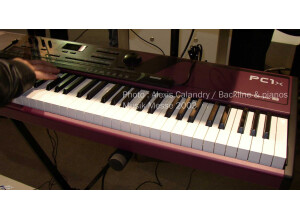
    Full 88 key weighted keyboard. Typical no-frills stereo analog outputs, midi-in, out, through, 2 ports for damper and volume pedal. Nice, diverse bank of effects which are easily edited or disabled when necessary. 4 rotary controls which perform a variety of functions-octave shift, reverb density, 3 band EQ control, and 2 assignable switches which will do just about anything you need them to do. Acoustic piano sounds are my first priority and the ones on the PC1X don't disappoint. I wouldn't rate them as the best out there, but they do a fine job of cutting through a less-than-perfect stage mix and crowd noise. Like all stereo acoustic piano samples, they won't satisfy unless they are played in stereo. But, I can always find one that matches the room I am playing in well. Rhodes and Wurly sounds are decent--not the best but decent. Strings are a mixed bag. My personal favorite is the "Intense Strings" patch which is rich and full, with plenty of attack, yet offering excellent dynamics. You can set up your favorite programs from the 6 available preset banks and 2 user banks so that you can access them on-the-fly from their assigned buttons. The PC1X is also very easy to do splits on, as well as layering up to 4 sounds. One of the songs I perform with one of my artist gigs requires 10 program changes within the same song and the Kurzweil gets it done effortlessly. UTILIZATION The action sold the PC1X to me. It is lighter than a Yamaha, Korg or Roland, and even significantly lighter than it's more developed sister, the PC2x. I could have bought either,but opted for the PC1X because I flat-out loved the performance of the keyboard. I'm 52 and have been playing all my life. I can play just about as fast as anyone, but the Kurzweil's keyboard keeps up with me no matter what I throw at it, yet it is extremely dynamic. To me, it is the single most inspiring aspect of the instrument. If I am doing session work and the producer or engineer wants a piano sound that the PC1X is not capable of, I still use its keyboard to play their sample of choice. I can outrun any Yamaha or Roland, so I hope Kurzweil never lets go of this action. However, if you are a classically trained Steinway fan, you might not appreciate the lighter action as much as I do. The manual is big and complete, although not always easy for this technophobe to understand. SOUNDS I think the horns and organs leave a lot to be desired. The strings are deceptive. Many of the string settings don't sound that good by themselves, but most of them sound surprisingly fine in a mix. I've often been amazed by how well some of them lay in a recording mix when I listen to the playback. This makes me believe that there are--or at least were--some brilliant sound designers under the employ of Kurzweil. The Rhodes samples are kind of funny. It really seems that the PC1X's action sucks as badly as an old Fender Rhodes suitcase piano when using any of the Rhodes patches. I find that the Rhodes and Wurlitzer samples have about a 3 octave limit in the center of the keyboard. If you go beyond that zone in either direction, the sound is both unconvincing and unplayable. OVERALL OPINION I still manage to glean a lot of inspiration from this board after over 3 years of owning it. There are several things you should be aware of, however. 1. There is a tiny screen contrast knob on the back of the board, which is very necessary, especially if you are going to be using it outdoors. If you try taking this keyboard to a gig in a soft case or with no case, I promise you that you will eventually break that knob off of the circuit board that it is soldered to. It will get pushed back in to the body and the screen will be rendered unreadable. After the 2nd time this happened to me, I glued a large rubber grommet around the knob to prevent this from happening. I'm not the most mechanically inclined guy to come down the pike, but this girl was a bear to get inside of to solder that control knob back on to the circuit board. It took 3 of us wrestling with it to get the job done. This was a terrible engineering oversight. 2. Another completely idiotic afterthought is the fact that you have to scroll down through 16 pages of the global menu to find the transposer. Fortunately, I can make all the setups I need prior to a performance so that I can just keep the screen set on page 16 of the global settings. For someone who plays with the same band all the time, this might not be a problem, but I have as many as a half dozen different gigs, many times having some of the same songs in different keys. A transpose button is a Godsend in those instances. What were they thinking?? 3. You have to periodically go around the keyboard and tighten all the screws. It seems that they come loose rather easily. 4. While I haven't broken any yet, the 4 multi-task rotary knobs I mentioned earlier are very spindly and I know quite a few guys who have broken them off, so that is another thing which requires a little TLC. Well, nothing's perfect. But, overall it is a great board. Mine is over 3 years old and I will likely buy a new one soon and keep this old girl around for a spare. I ride 'em hard and have put 'em away wet more than once and this one has yet to let me down. Kurzweil has had some hurdles in its transitions between companies, and hopefully they have been able to maintain the integrity. Those questions aside, it's a fine tool.