Log in
EN
FR

GHS

37 products found

Categories
Series
Filter
Sort by
Evaluation
  • Reviewed or not
  • Editor’s award
  • Reviewed by Audiofanzine
Availability
  • Available or not
  • Sold new or used
  • Sold new
  • Sold used
Must-have products
  • All products
  • Flagship products
  • Best rated products
  • Hot products
  • Popular products
Price
  • Freeware
€
Clear
Sort by
  • Popularity
  • User ratings
  • Price - low to high
  • Price - high to low
  • Used price, increasing
  • Used price, decreasing
  • Name (from A to Z)
  • Name (from Z to A)
  • Added on
Choose a series
Sort results
  • Popularity
  • User ratings
  • Price - low to high
  • Price - high to low
  • Used price, increasing
  • Used price, decreasing
  • Name (from A to Z)
  • Name (from Z to A)
  • Added on
Filter results 37 results found
Evaluation
Availability
Must-have products
Price
  • Freeware
Show results

The best GHS reviews

The reviews Audiofanzine members found the most helpful.
  • « Thunderous tone, but at what cost? »

    In 1985 I started playing with heavy picks and light strings 9-42. By 2002, I changed to light picks and heavy strings, the ZW 10-60. I have a Gibson Gothic Studio Les Paul from 2001. I saw Black Label Society in a local bar supporting the disc Stronger than Death. The venue was small as the band was not yet established; I was right up front to watch Zakk belt out awesome tone...I was immediately driven to acquire such a lethal, brutal, and clear sound. I slapped these 10-60 strings on my Les Paul. At first, I played in standard E with lots of drop D tuning; eventually I went down to standard D# with lots of drop C#. I stayed there for about 5 years, then settled into standard D/dropC. The tonal value was increased dramatically for heavy hi gain rhythm riffing. I went from wondering where Zakk got that tone to being immersed- all due to the string gauge. lighter/medium gauges just don't cut it- not enough power and too much floppiness. The heavier gauge really provides a tight modern metal sound. Lead tones ooze with fullness and quality. I play with an aggressive approach, so adjusting to the thickness was not a big challenge- it actually kept my vibrato in check and prevented the over bending I usually wander into with lighter strings. But there is a huge negative side...all these years, I tried to set my guitars up on my own. I'm no expert, but I understand the basic mechanics of intonation, string adjustment, truss rod, etc. But I couldn't get my Les Paul into proper intonation. The band I was in played a lot of straight ahead pop/punk/rock, so I basically tuned for the song I was playing. A few times I played with other people and attempted to play larger 6 string and jazzier chords- the intonation was so awful it made it impossible. I finally brought my guitar in for a pro setup. The luthier- well respected in the area and works with top pros- said that the guitar would not ever be intonated properly with these strings, unless I was willing to drill new holes. I believed this to be accurate due to my own explorations into not having enough room on the adjustments for intonation. Instead, I choose to go with 10-52 gauge and that solved the problem. Now the guitar plays like a dream! I asked how Zakk can do this, and the reply was that Zakk probably has a fleet of techs making custom adjustments. Bottom line, I have about 50 packs of these 10-60 in storage; while I love the tone, it looks like they are going to eBay. Yes, I miss the bold thick strings, but 10-52 is not too far away, and I do not wish to drill new holes. Knowing what I know now, I would NOT buy again.

  • « Good strings »

    Nice clear, precise, and crisp tone. Bright on the treble, but not overly so. They're very warm on the bass strings, but they still have some punch and bite. Very easy to string, and easy to fret. The tension is great. Not too loose, and not too tight. Anything under Drop D and they're really floppy in my opinion. Too floppy for my tastes anyway. Very easy to bend 3 steps or more. Easy to vibrato on, and just a joy to play on. Very easy to set the intonation for and harmonics ring out great too. They're not the longest lasting strings, at least not in my opinion. They last around 2-3 weeks, then start sounding dull and lifeless. They also, at least in my opinion, break very easily. I always broke my G and High E when bending them. I checked over, and it wasn't because there was a burr. It was a weakness in the strings themselves, whether it was due to bad production or just bad quality metal I'll never know, but I've stopped using them because of it. It happened with more than one pack as well, so it was because of the way the strings were made. I haven't had the problem with any other string band or gauge I've used. I switched strings because I got tired of them breaking. Maybe it's just me, but they didn't seem to cut it. Many other people use them without problem, so I must just finger harder than most or something. Overall, they're decent strings. They can do Jazz to country to metal if you put them on the right guitar. All in all, except for them breaking a lot, they're ok strings, but there are much better for the price in my opinion. I've switched to Ernie Ball and haven't looked back since.

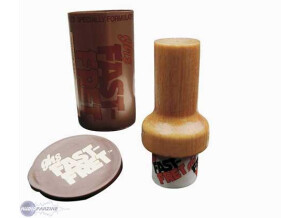
  • moosers's review

    GHS’ Fast-Fret is a unique guitar string cleaning device. It’s also designed for cleaning your neck, fretboard, and the back of the neck as well. It helps to not only keep your guitar fresh and looking good, but can add life to your strings and help them last longer than they normally would. It’s a really simple little cleaner that I both have at home and we’ve got some on hand in the studio where I work. Clients really like using this and most have never heard of it, as I hadn’t before I used it at the studio. You really can’t go wrong with Fast-Fret, as it’s an incredibly cheap way to keep your guitar and strings looking good and in good general shape. There really isn’t a lot that you need to know about Fast-Fret, other than what it does and that it won’t harm your instrument in any way since it’s specifically designed for this kind of use. The best part about Fast-Fret is definitely the price, as it’s the cheapest possible way to maintain your guitar. I’ve been using it at home on my Fender Jazzmaster and other electric and acoustic guitars and it’s really been a good investment. Your strings will certainly feel better after putting this on them and although I haven’t had this long enough to really tell yet, it seems to be keeping my strings in great shape. GHS says it will add some time to the life of your strings and I have to agree with them based on my use with it. It’s really a no brainer at the price, as comparable cleaning systems will definitely run you a good amount more than this. So if you’re looking for something that will keep your fretboard, neck, and strings in the best shape possible, Fast-Fret is it!