Super Slinky strings from American brand Ernie Ball were introduced in 1962. They quickly became a standard and are still in great demand by professional and amateur guitarists alike. Let's see if these strings live up to their promise in terms of sound, performance and durability.

Ernie Ball Super Slinky: history, materials and design
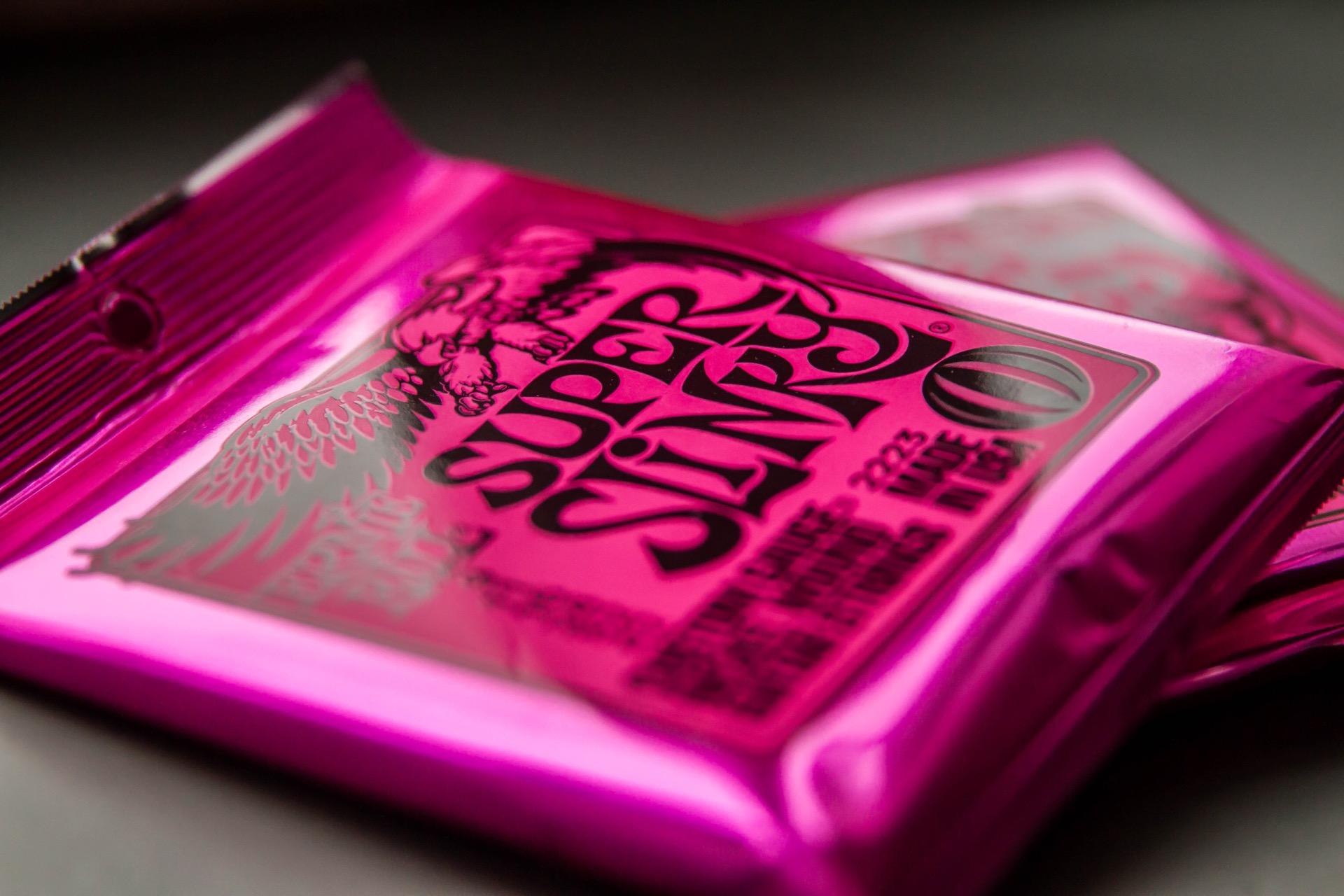
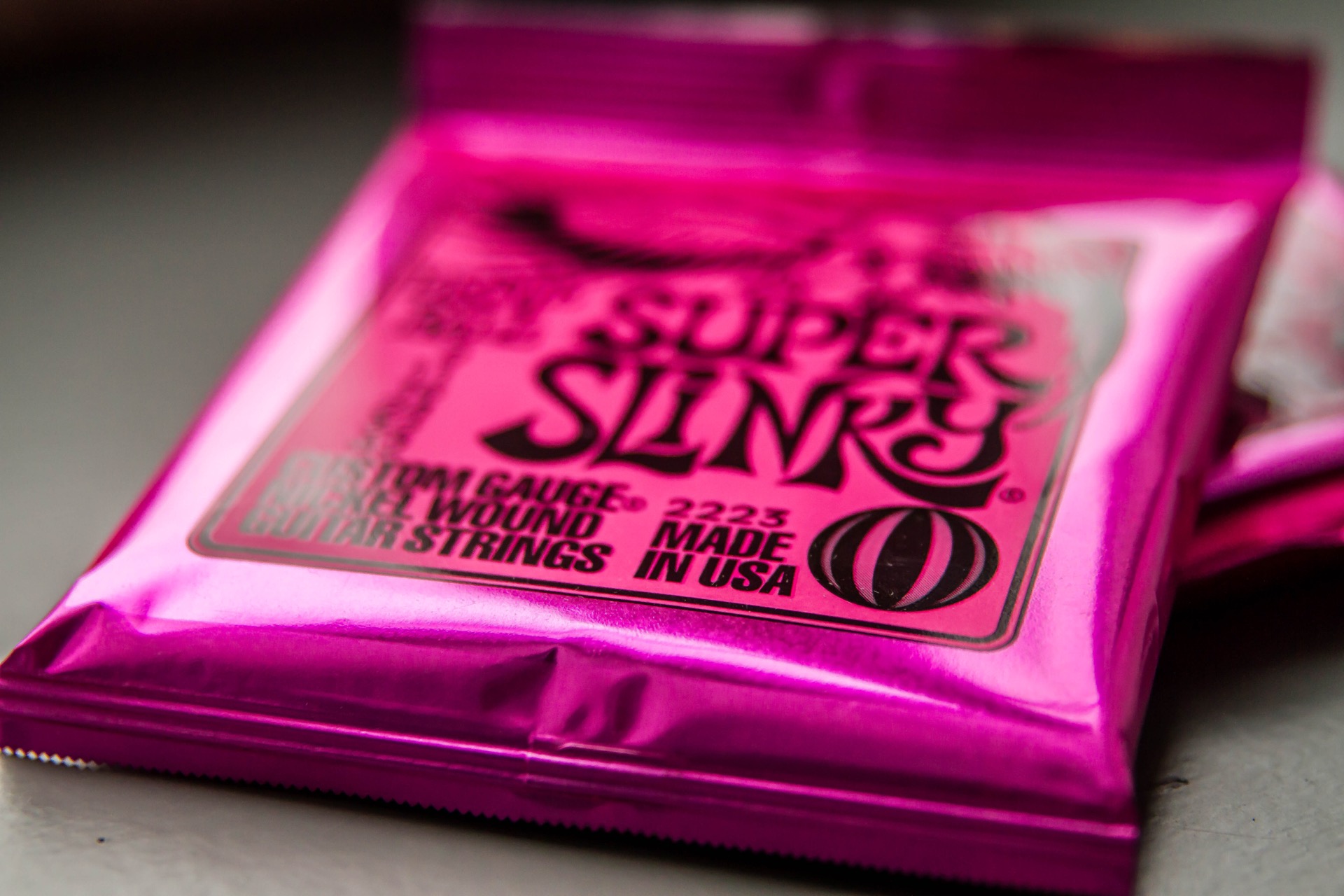
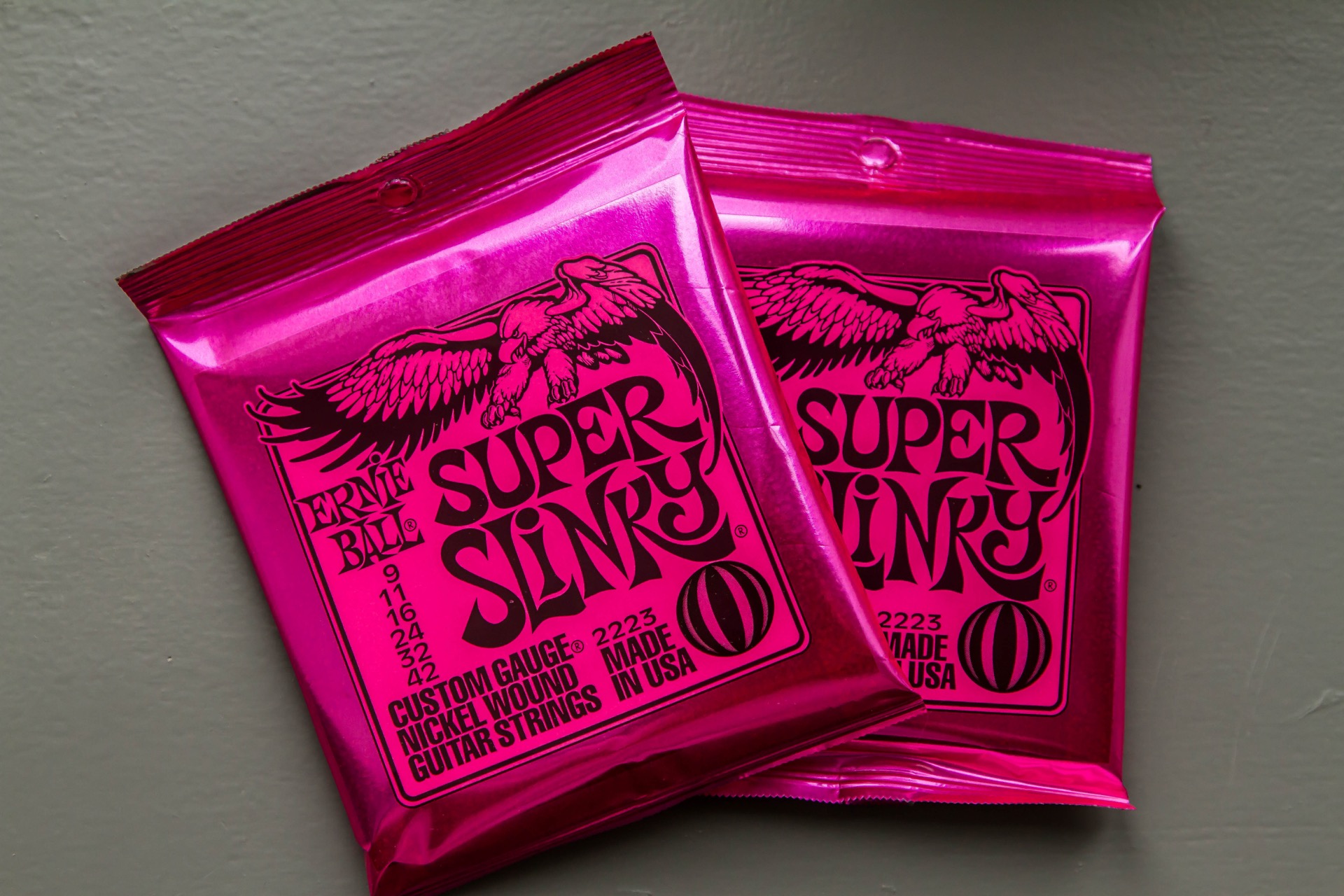
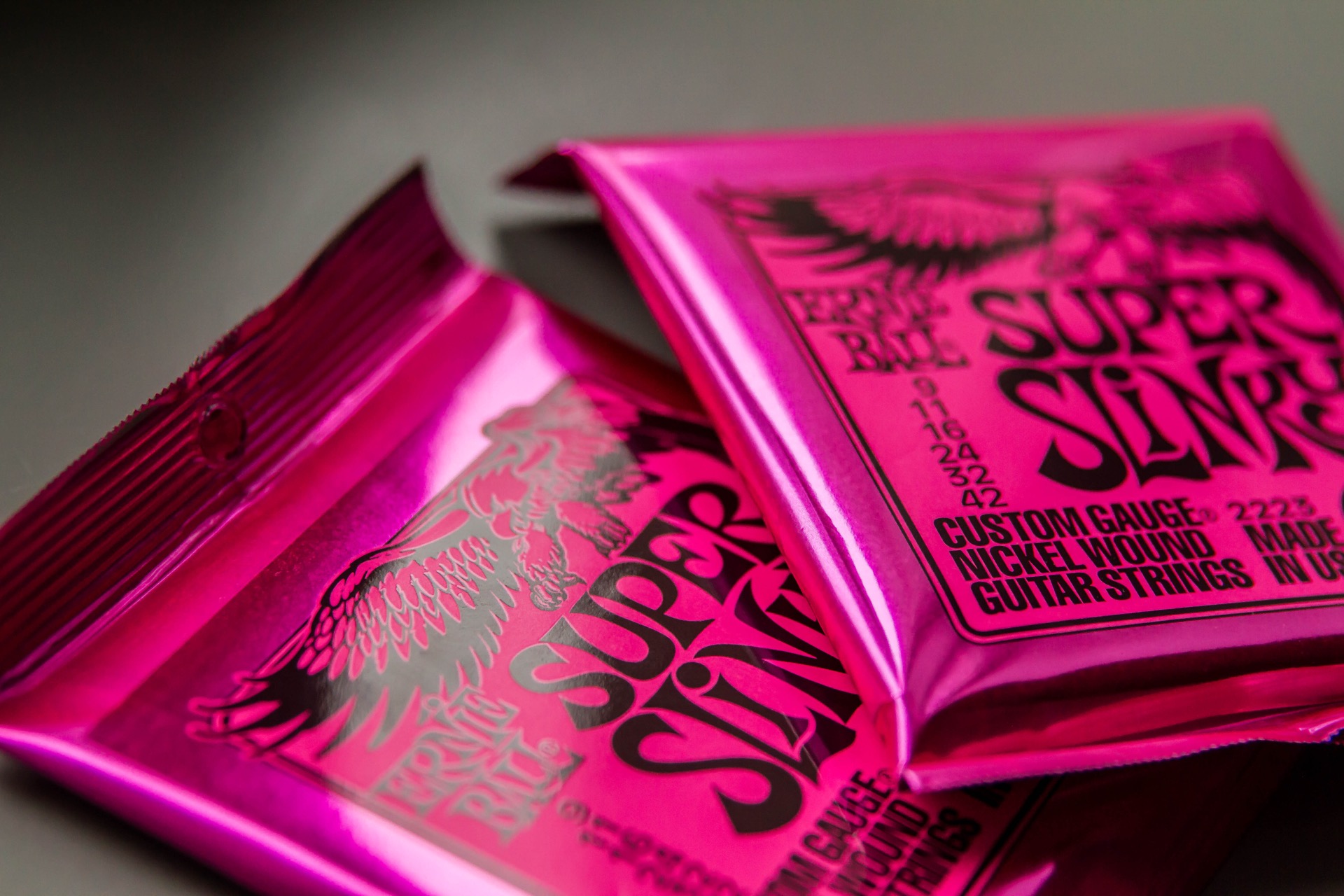
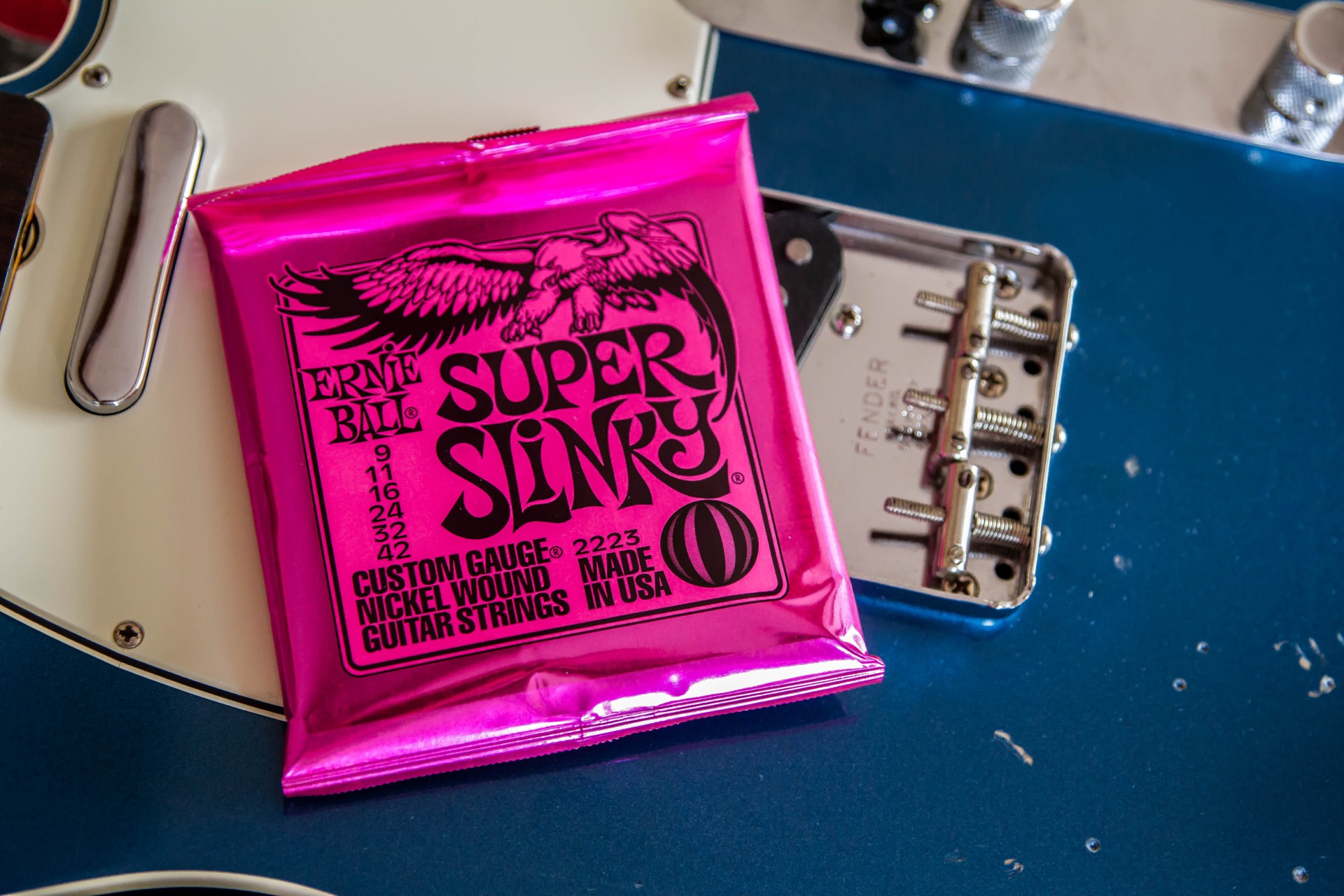
For this test, the brand sent me a set of Super Slinky (which comes in the famous neon-pink package). It includes string gauges of .009, .011, .016, .024w, .032 and .042. The three wound bass strings are made from nickel-plated steel with a hexagonal core. For the treble strings, the manufacturer chose hardened, tin-plated, high-carbon steel. The ball ends are made from brass wire cut and treated to the brand’s specifications. The balls are then deburred and cleaned before assembly.
Packaging: Element Shield and individual packaging of strings
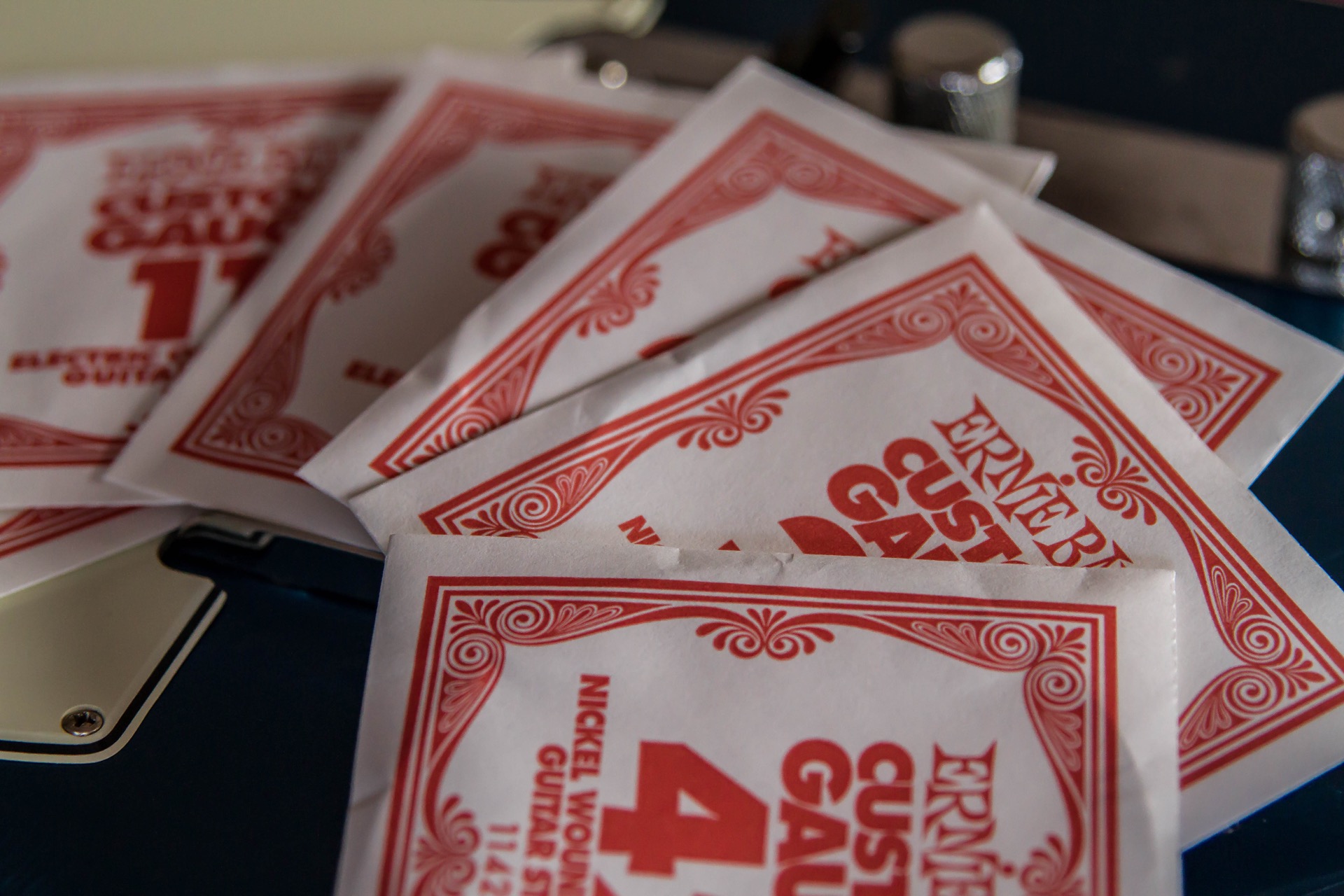
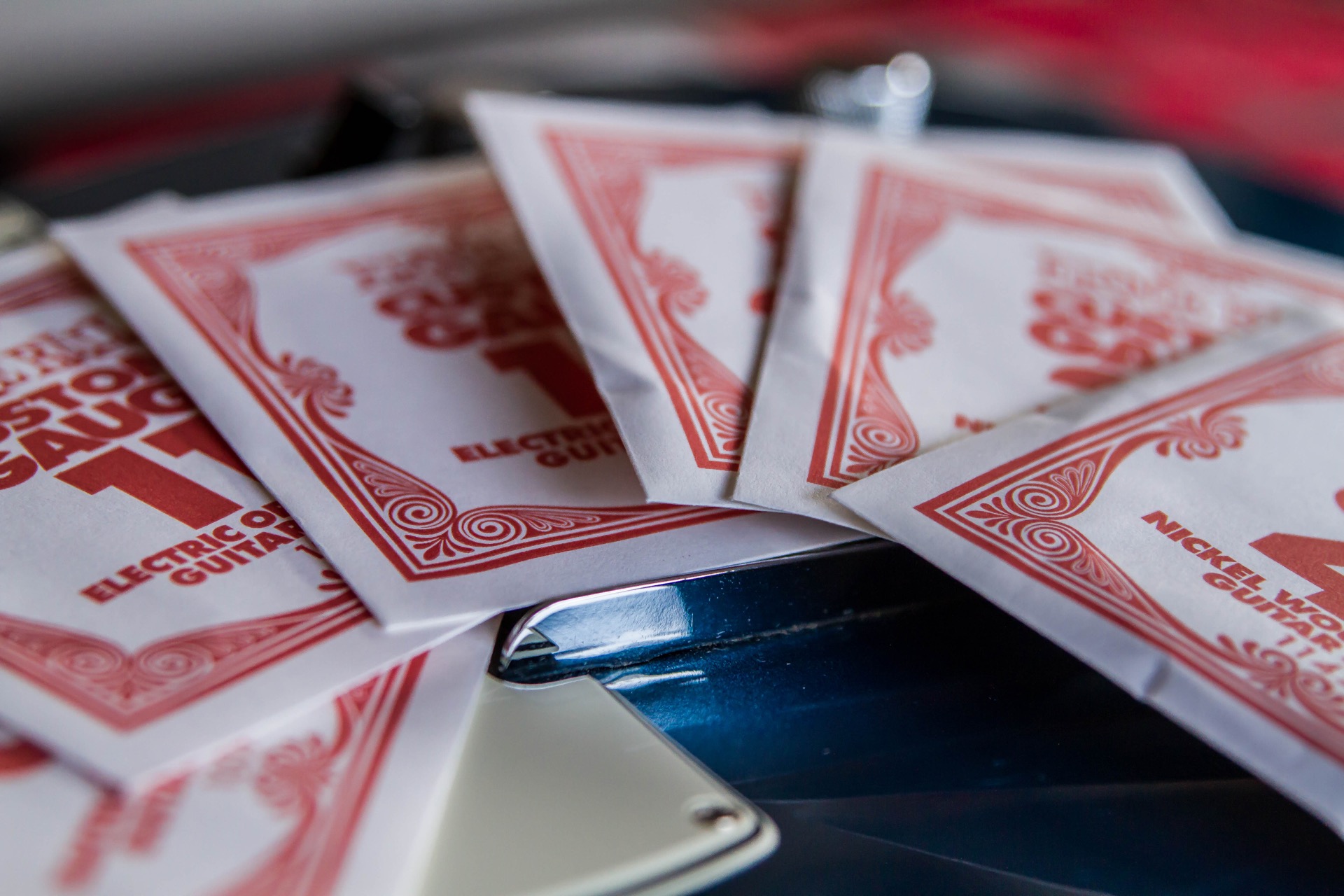
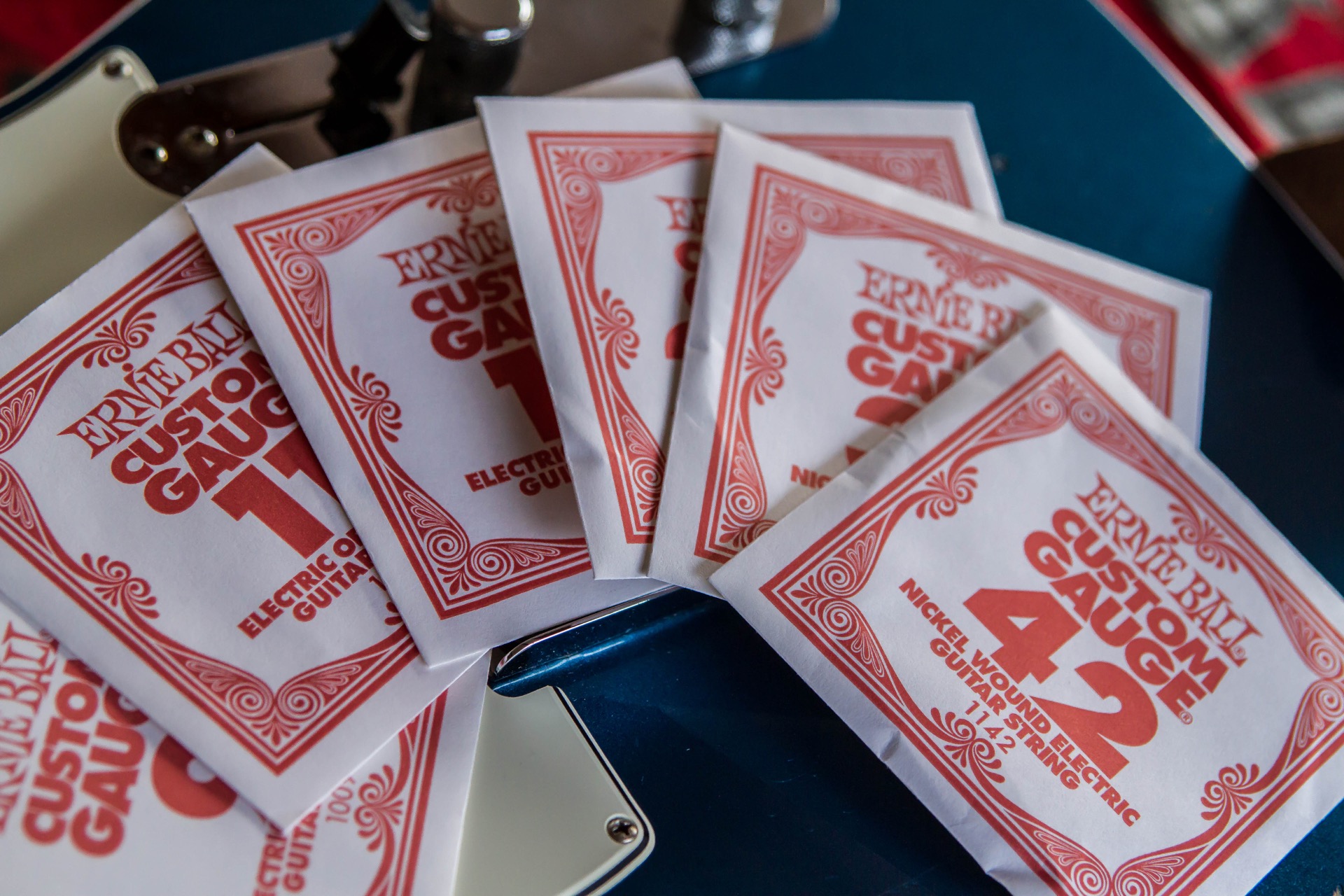
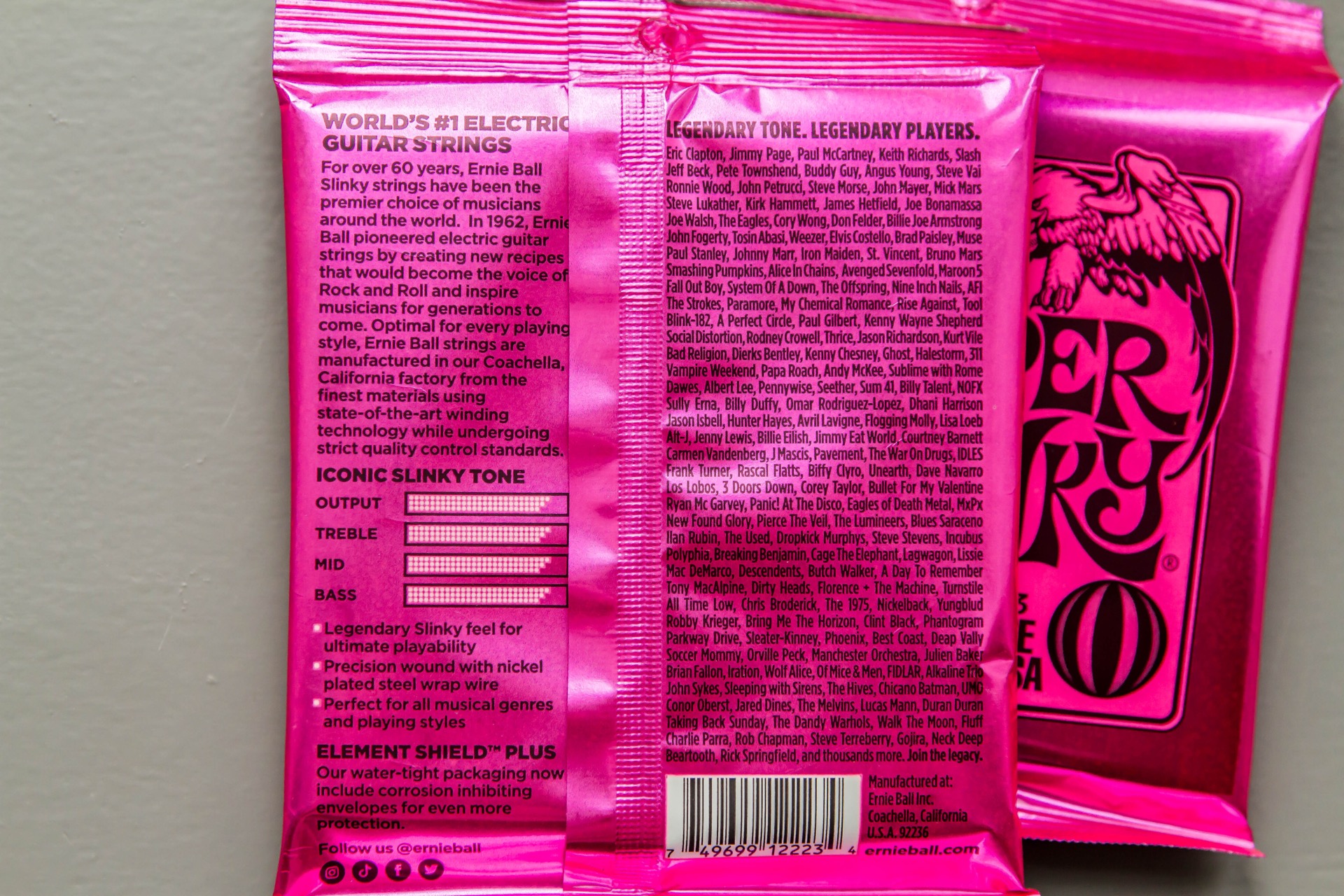
The Ernie Ball strings are individually wrapped and packed in order. The complete sets are then wrapped in airtight packs, called Element Shield packs, which use a waterproof film that offers maximum protection against corrosion. The tightness of each pack gets checked with a pressurized water dispenser, which tests the quality of each closure. Because the strings are individually wrapped, they are not color-coded; each ball is brass-colored. In my opinion, this packaging method makes string changing easier because you don’t have to untangle two strings that would be wound together, as with Savarez or D’Addario, for example. The string package carries the usual information: string gauge, graph with EQ and output level and a non-exhaustive list of famous guitarists playing on Ernie Ball strings.
Super Slinky assembly and tuning stability over time
I’m used to Ernie Ball strings, so stringing my guitar with the Super Slinkys was easy. Once again, the individual string packaging saves precious minutes. The process of stabilizing the tuning took me eighteen minutes. This is longer than with the D’Addario NYXL and Ernie Ball Paradigm. After this obligatory step, the Super Slinky retain their trueness.
Sound tests on Telecaster: balance, versatility and feel in clean, crunch and lead
Being once again accustomed to Ernie Ball strings for over fifteen years, I wasn’t bowled over by the sound or playing sensations. On its website, the manufacturer emphasizes the balanced sound generated by the Super Slinky. If you pay particular attention to the sound of the strings, you’ll hear a fine balance between them. Bass, midrange and treble sound at equal volume, as the packaging indicates. You can feel this fine balance when unplugged, too, with each string sounding at the same volume.
After ten days or so, the balance remains, but the sound changes and loses precision. This precision begins to disappear gradually from the third day after stringing the guitar (in my case, the guitar is played between three and five hours a day). The touch changes from the fourth day. You can feel some impurities settling on the strings and traces of corrosion appearing in places. Although Ernie Ball emphasizes the durability of Super Slinky strings, they don’t last that long. Personally, I’m used to changing strings every 8 to 11 days, but guitarists with several instruments may have different habits. They are, however, very versatile and sound great, whether clean, crunch or lead. The balance of sound between the strings is a big part of this.
Wear, oxidation and evolution of their feel after several days of play
For the purposes of this test, I left the Super Slinkys on my Telecaster for twelve days, and played it every day. At the end of those twelve days, the strings seemed worn and didn’t sound at all like new strings (which is normal, especially when playing the guitar three to five hours daily). Despite the audible and obvious wear, the sound balance remained true.
To maintain a good gliding feel for longer, you can apply Fast Fret (a small, soaked pad that cleans and lubricates strings to improve durability and playing comfort) after each use. This will push back the point at which Super Slinky strings start to oxidize. Finally, I’ve noticed a very slight change in the strings’ elasticity over time. The bends are slightly harder to make from the sixth day onwards, as the strings gradually lose their elasticity (it’s very slight, almost imperceptible, and has never bothered me). Beyond using Fast Fret, I’d simply advise you to clean your strings thoroughly after each playing session (a soft cotton cloth will do).