No matter what level of guitarist you are - beginner, intermediate, advanced or professional - you need the right accessories to optimize your setup.

Musicians have always needed to maintain their instruments so that they offer the best performance, both in terms of sound and playability. From tuners to strings to covers and cases, this buying guide lists ten essential accessories that help guitarists optimize the condition, playability and use of their instruments.
Tuners
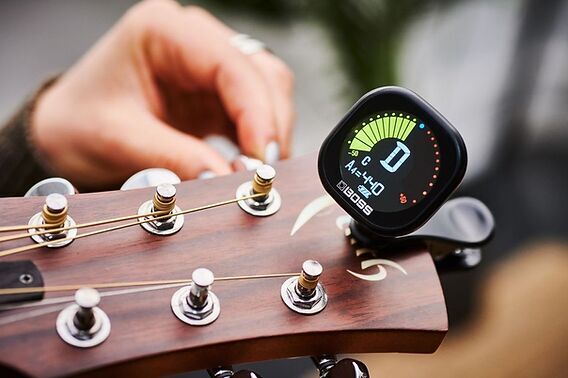
Mechanical tuning devices have been around for centuries, but nowadays we’re fortunate enough to have some very practical electronic tuners. They come in a variety of forms, the two most common being pedals and clip-ons. A pedal-style tuner can be very handy if you’re using several effects pedals together on a pedalboard, but you’ll need to have it handy to tune your guitar. A clip-on tuner offers the advantage of being compact, so you can slip it into your guitar case easily and always have it to hand.
Beyond tuner pedals and clip-on tuners, you can also opt for a less expensive solution, a 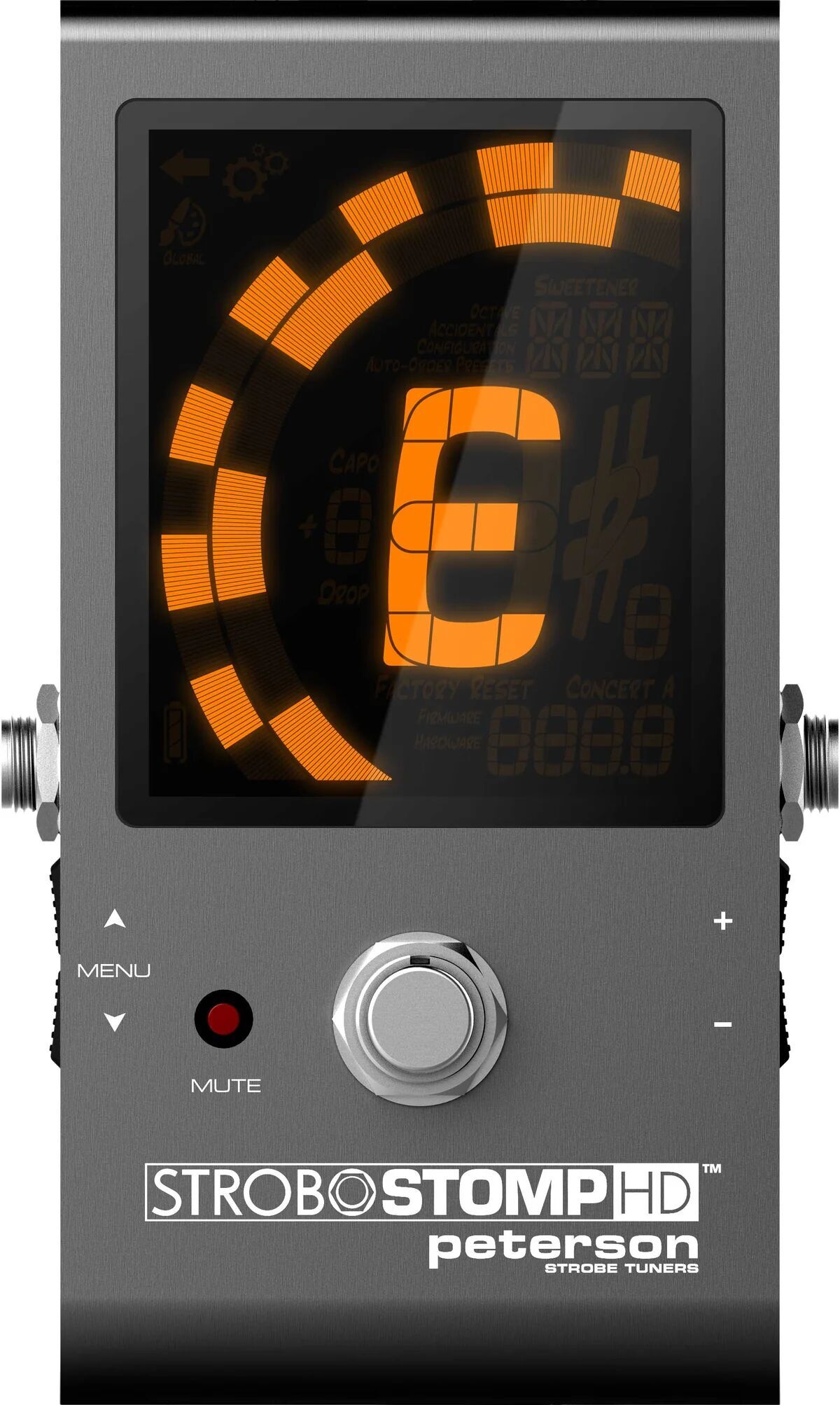
In a live context, you’ll likely prefer a pedal-style tuner that mutes the sound while you tune, but a clip-on tuner can do the job just fine (think American guitarist Popa Chubby, who always has a Snark hanging from the head of his Fender Stratocaster onstage), and they’re relatively inexpensive. As you can see, a tuner is a major and indispensable tool for guitarists. In fact, many musicians, including myself, own several: a pedal-style tuner installed on the pedalboard, and one or more clip-on tuners.
Stands
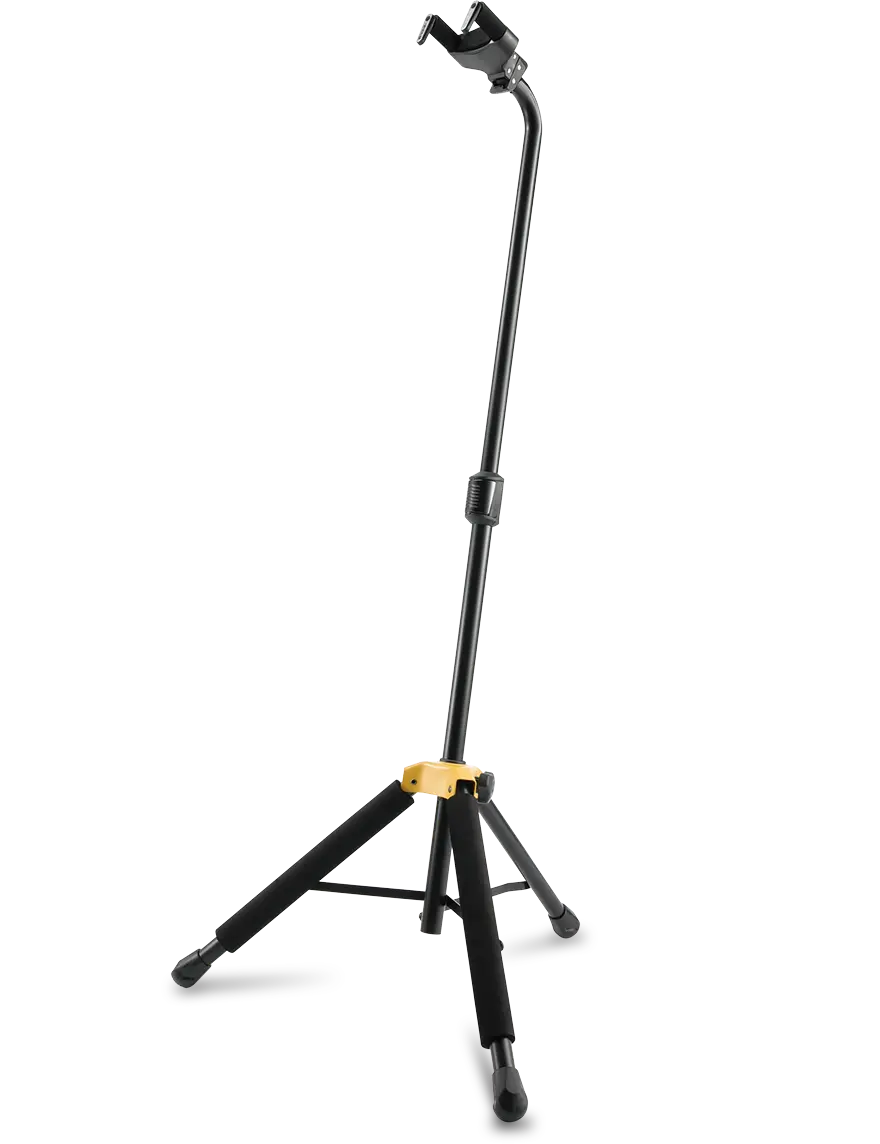
If you have a lot of guitars, wall-mounted stands can be an ideal space-saving solution, and a great decorative feature (depending on individual taste). Beyond this practical aspect, seeing your guitar on a stand is also an excellent way to motivate you to play more.
When buying your guitar, we advise you to choose an instrument you feel comfortable on, that sounds good and, above all, that you find beautiful. A guitar you find beautiful will make you want to play much more than one whose looks you’re not enamored of, even if it does sound great. By setting up your guitar on a stand instead of storing it in its case or bag, you’ll feel more like playing and progress more quickly.
There are a few aspects to consider when choosing your stand. The amount of floor space it occupies is worth considering, especially if you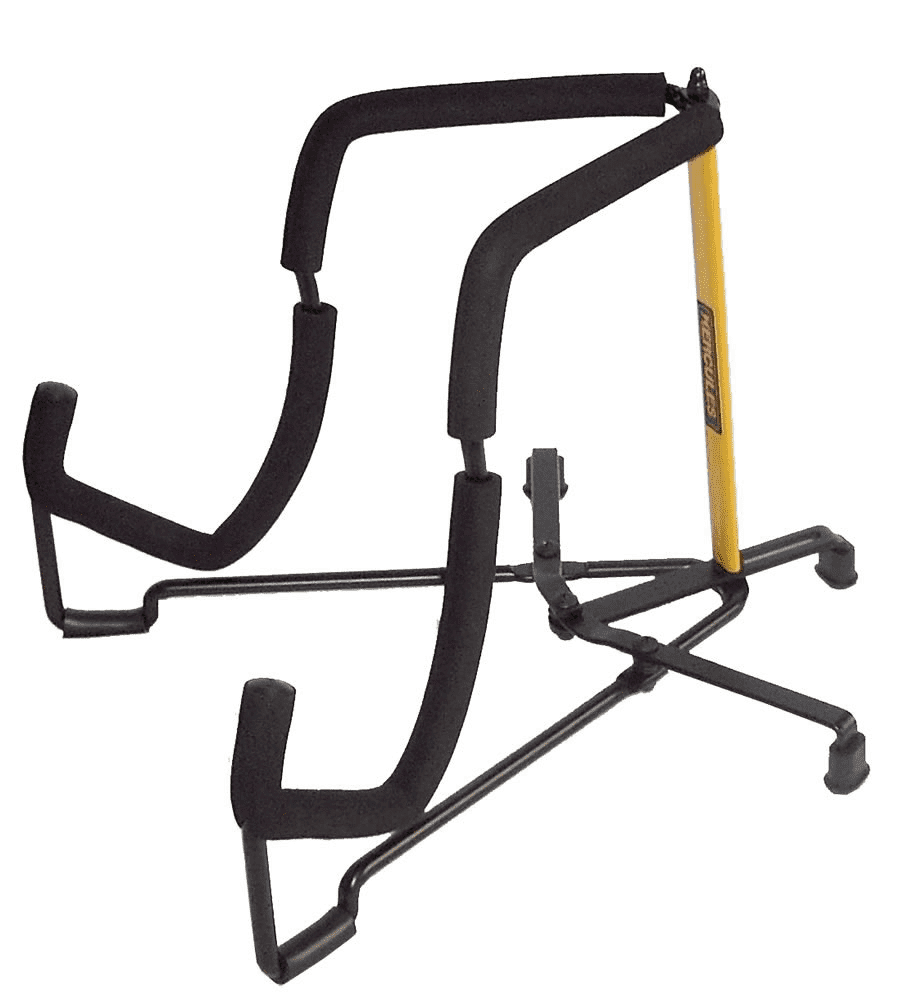
Beware, however, of the type of finish applied to your guitar. If it’s coated with a polyurethane, all the stands on the market will be compatible. On the other hand, if it uses a very fragile nitrocellulose varnish (this is the varnish that equips Gibson guitars, among others), the foams and rubbers of certain stands can react chemically with it and leave irreversible marks. The K&M 17650 uses felt contact points, so it’s compatible with nitrocellulose varnishes. Whether for storage, decoration, onstage use, or simply to keep your guitar close at hand, acquiring one or more stands is essential.
Capos
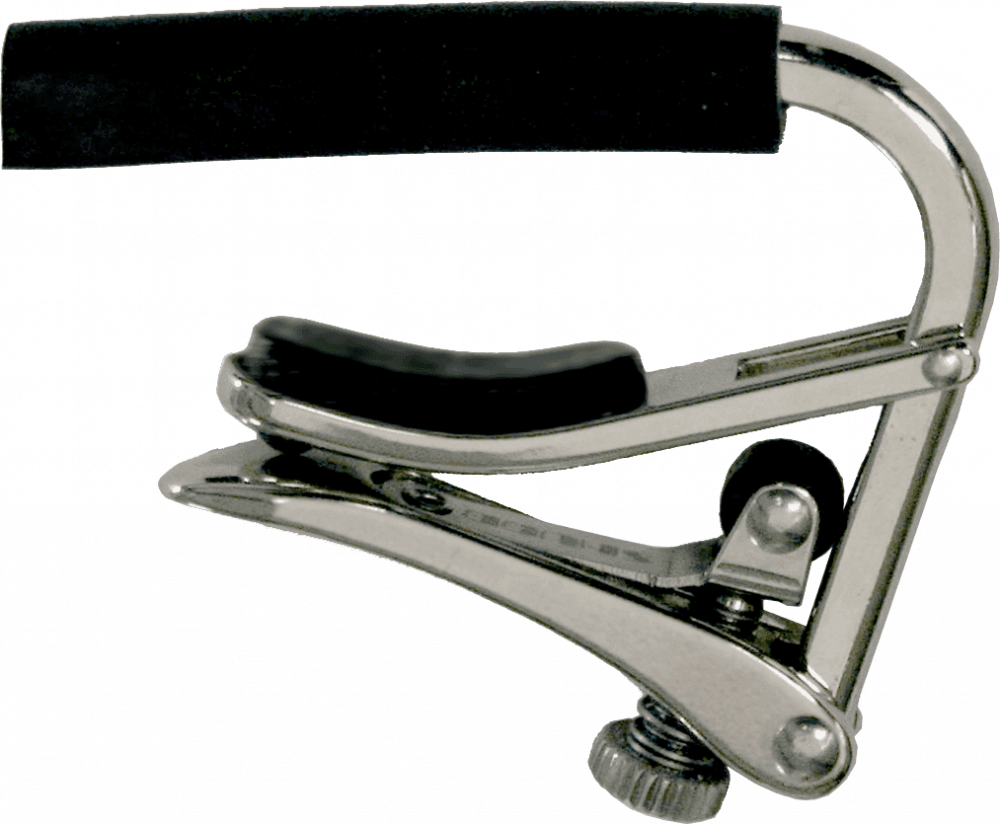
In a production and arrangement context, a capo can be a very useful tool for changing the color of the sound without changing the harmonic progression of the piece. For example, a D major chord can be enriched by playing it in A position with the capo in fret 5. The result is a different voicing and a brighter sound that can add a pleasant folk touch, depending on the context. Many songs are written and played with a capo, such as the hit “Wonderwall” by Oasis.
When it comes to choosing a capo, you have several options, but first, you need to know the radius of 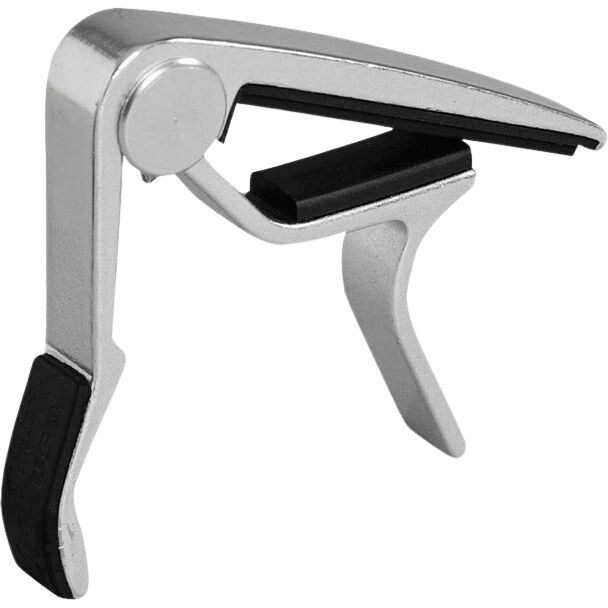
An electric guitar, like a folk guitar, has a rounded fingerboard with a radius that varies by brand (Fender is known for a fairly pronounced fingerboard radius of 7.25 inches, while Gibson guitars feature a much less rounded 12 inches). To ensure that the capo fulfills its function and places the six strings firmly on the fingerboard, you need to choose one whose radius roughly matches that of the fingerboard. For this reason, there are models dedicated to classical guitars and others that are compatible with folk and electric guitars.
As with the stands, you’ll need to be careful about the materials that come into contact with the guitar so they don’t damage its finish. Two types of capo are worth mentioning: adjustable-pressure capos and spring-loaded capos. Spring-loaded capos are practical and apply strong, constant pressure. But if left on the neck for long periods, they can potentially leave a mark.
Adjustable-pressure capos incorporate a micrometer screw for fine adjustment. This means less unnecessary pressure on the handle and, therefore, more controlled support. Models from Taylor, G7th and Shubb are renowned for their reliability and precision. As for spring-loaded capos, you can opt for the classic Dunlop, or the company’s Trigger Fly model, or the Quick Change by Kyser. It should also be noted that there are capos dedicated to 12-string guitars, which have a wider nut to accommodate the extra strings.
Footrests
The footrest is a simple but important accessory, especially in classical guitar. It’s a small, raised plate on which you come to rest your foot. It therefore raises one leg to position the instrument in the classical guitar tradition inherited from Andrés Segovia. A footrest gives the guitar greater stability and tilts the neck upwards, resulting in a more precise posture for the left hand by improving the angle of the wrist (or right for our left-handed friends). The classic academic position is ideal for technique and precision, as it prevents the guitar from slipping, reduces shoulder tension and therefore allows you to play longer.
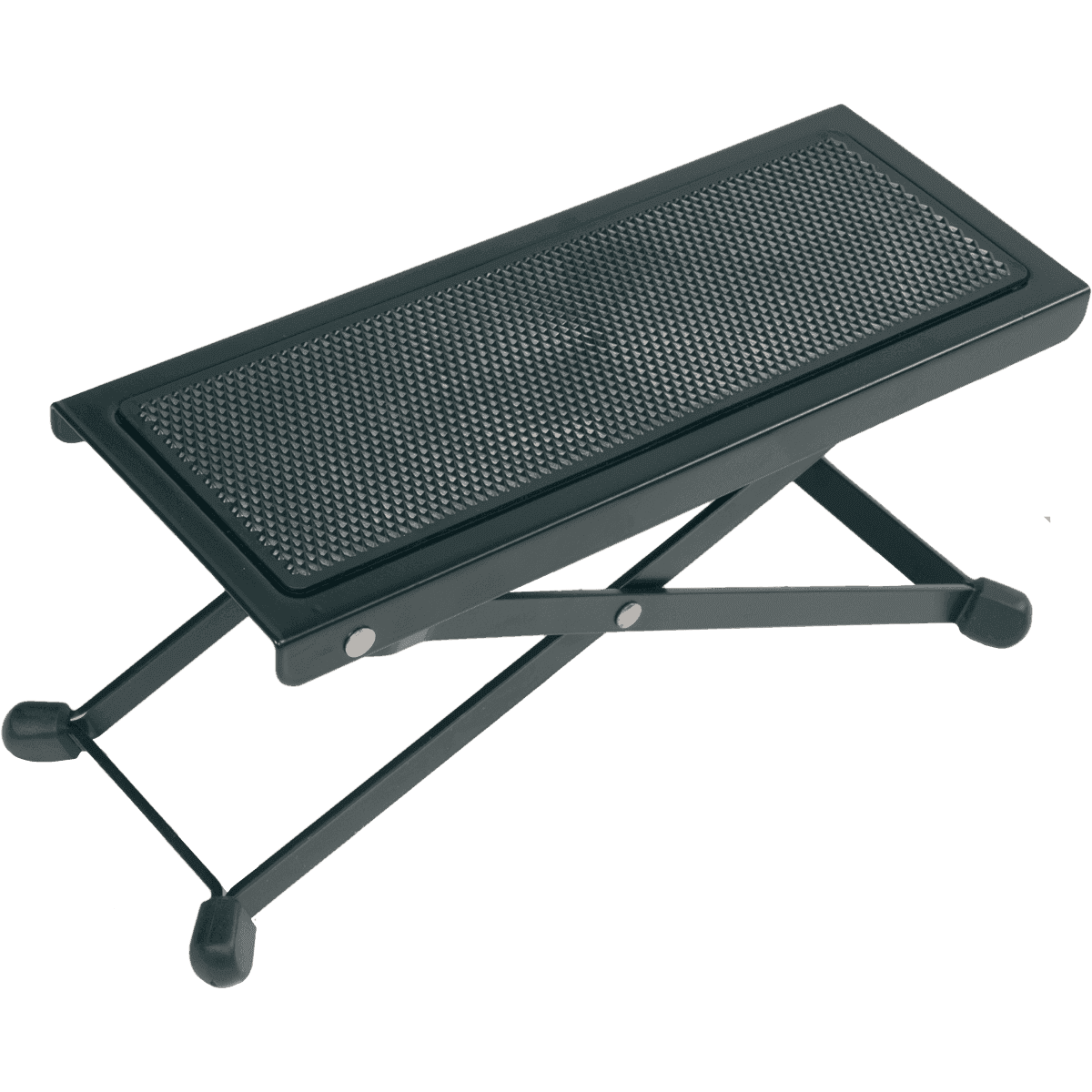
Beware, however, that repeated and prolonged use of a footrest can lead to an imbalance in the pelvis as you play with one leg higher than the other. This can also lead to back strain and even lumbar pain. Some teachers and physiotherapists advise against its use for these reasons. Alternative supports, such as the Gitano Ergoplay or the Guitarlift, allow you to maintain an academic position while keeping both feet on the ground. In short, a footrest is a must if you play classical guitar according to a strict academic method. However, don’t hesitate to switch to an alternative solution if you experience discomfort and/or pain.
Maintenance kits
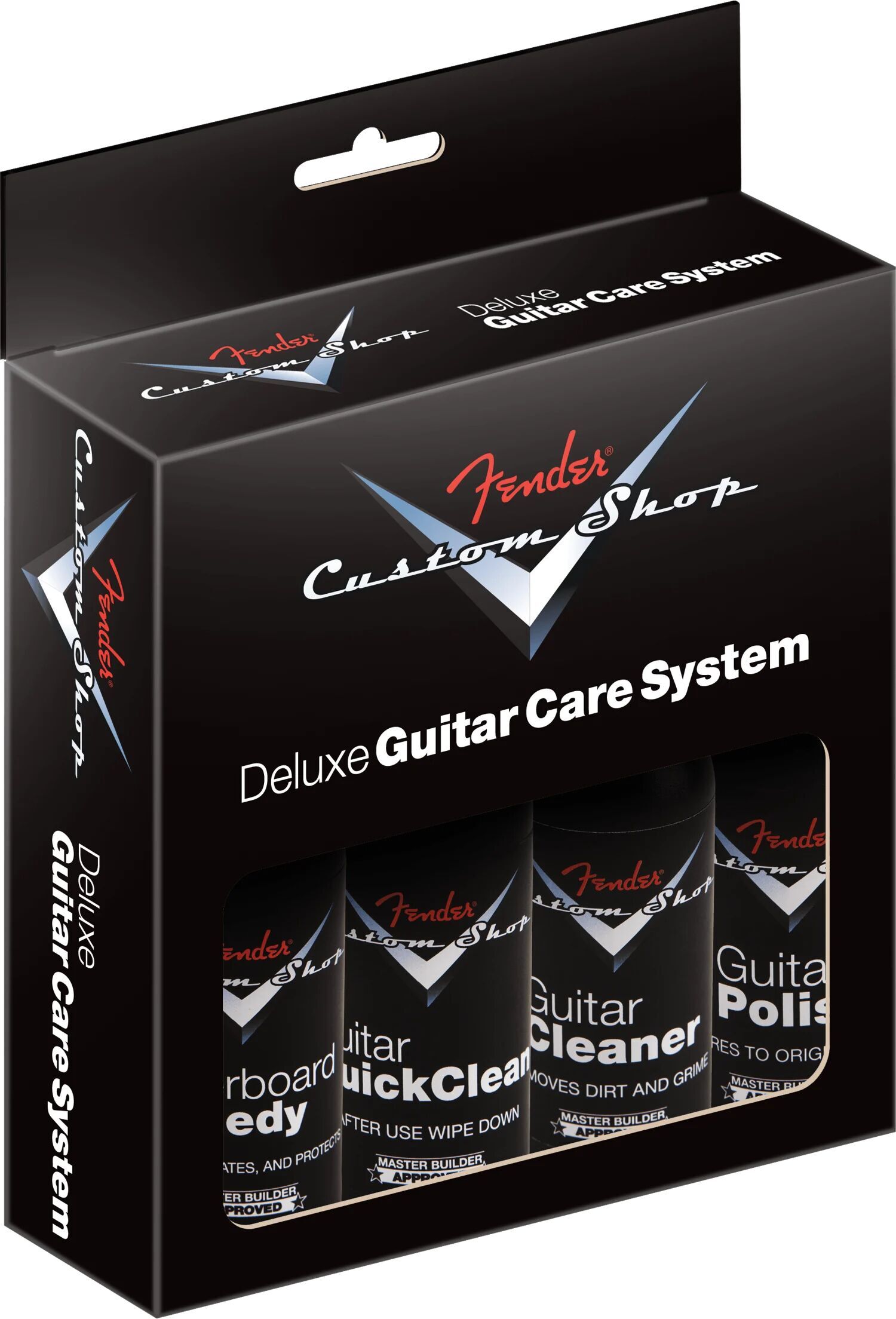
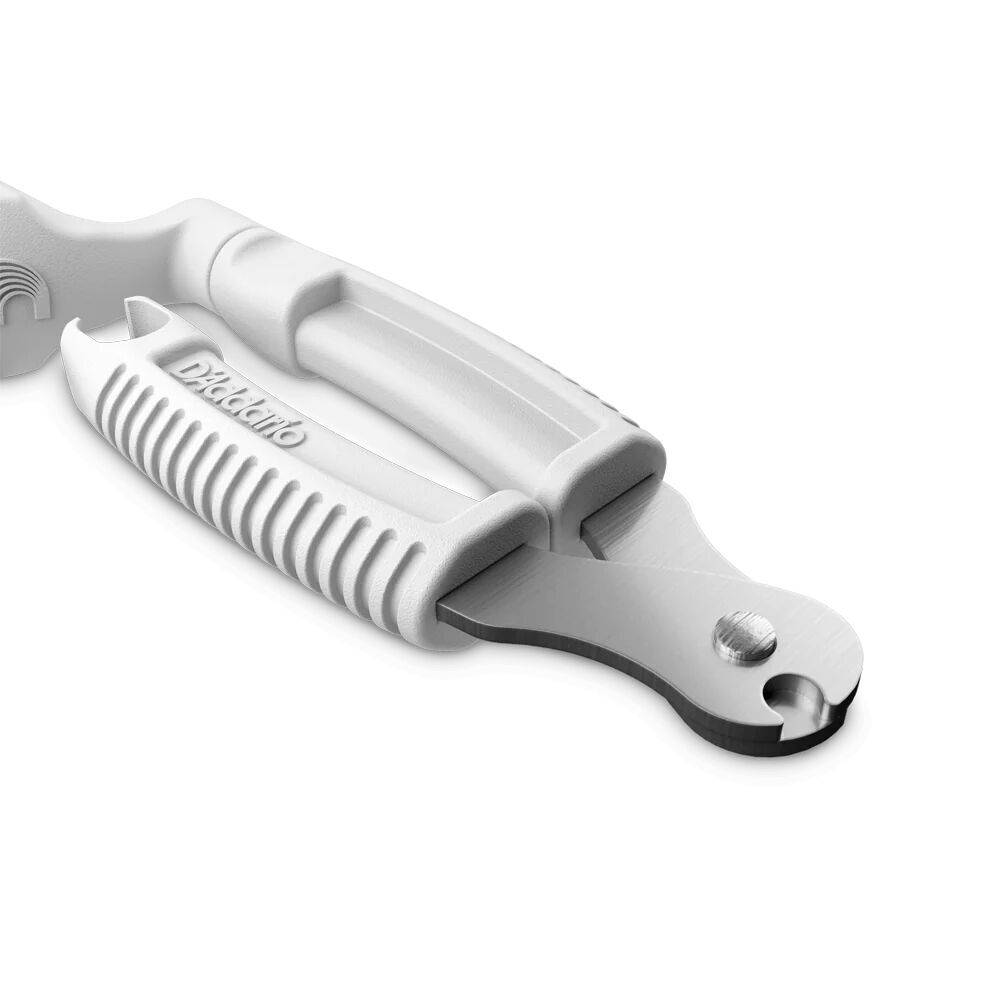
For cleaning, we’ll need several specific products: body cleaner (polish, beware of compatibility with nitro varnish), oil for the fingerboard and a microfiber cloth. These components remove dirt and sweat and protect the fingerboard wood if it is unvarnished. Some cleaning kits also include tools designed to simplify string assembly/disassembly. These include a string cutter (a kind of small wire cutter) and a peg extractor for steel-string acoustic guitars.
To take your guitar maintenance even further, brands offer kits with screwdrivers, sets of Allen wrenches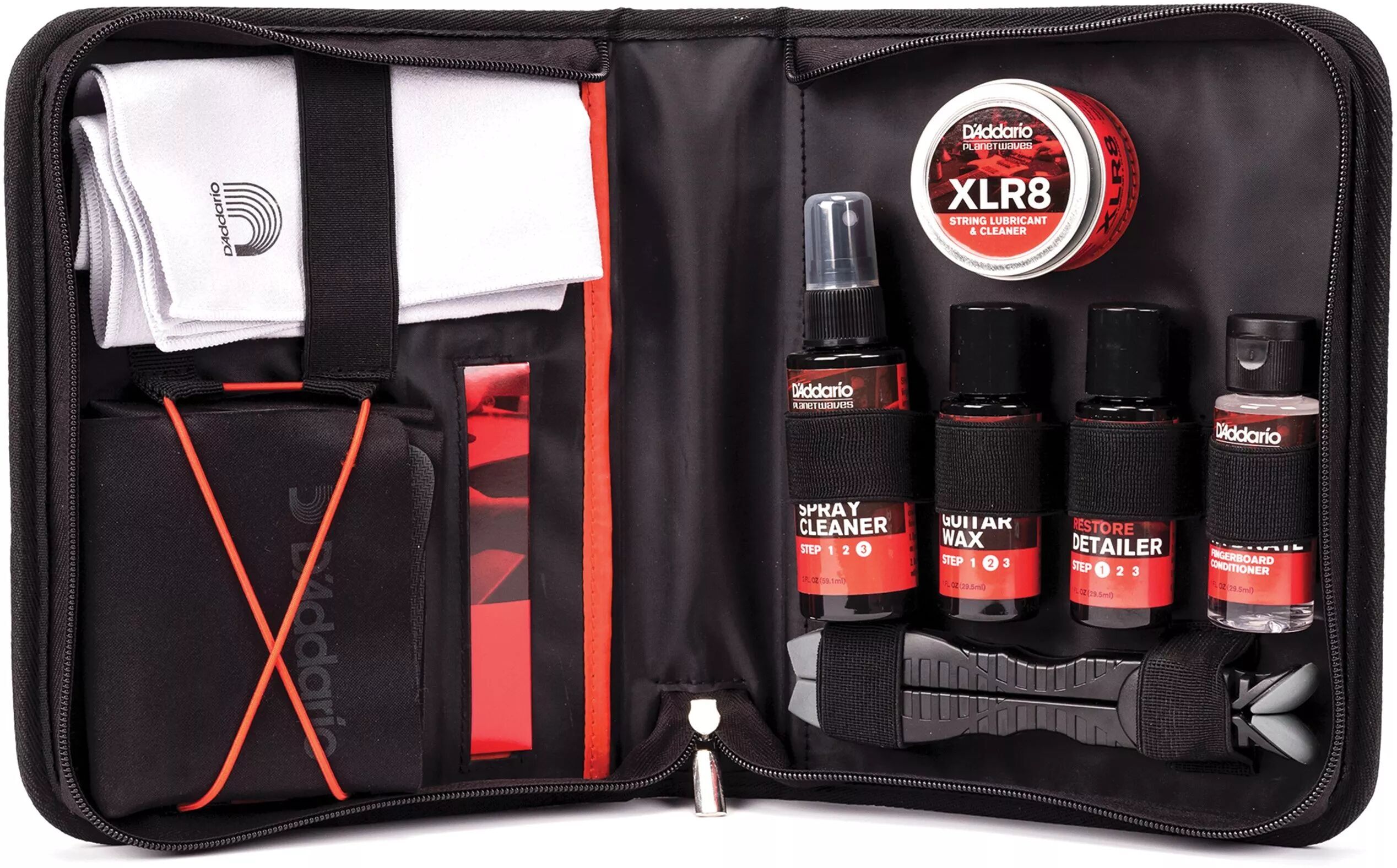
Some products bring together everything needed for a specific maintenance task. For example, the Dunlop Guitar Fretboard Kit focuses on the fingerboard and frets. It includes a cleaner for the fingerboard, a bottle of oil to nourish the wood and a small piece of sandpaper to polish the frets and prevent them from snagging during bends.
Some brands, such as D’Addario, have an entire range dedicated to guitar maintenance and offer useful accessories, including a protective mat and guitar-neck support to use when working on your axe. A maintenance kit of any kind is essential to keep your instrument clean and pleasant to play. If you don’t want to perform these operations yourself, we still recommend purchasing one or more microfiber cloths to quickly clean your guitar after playing.
Strings
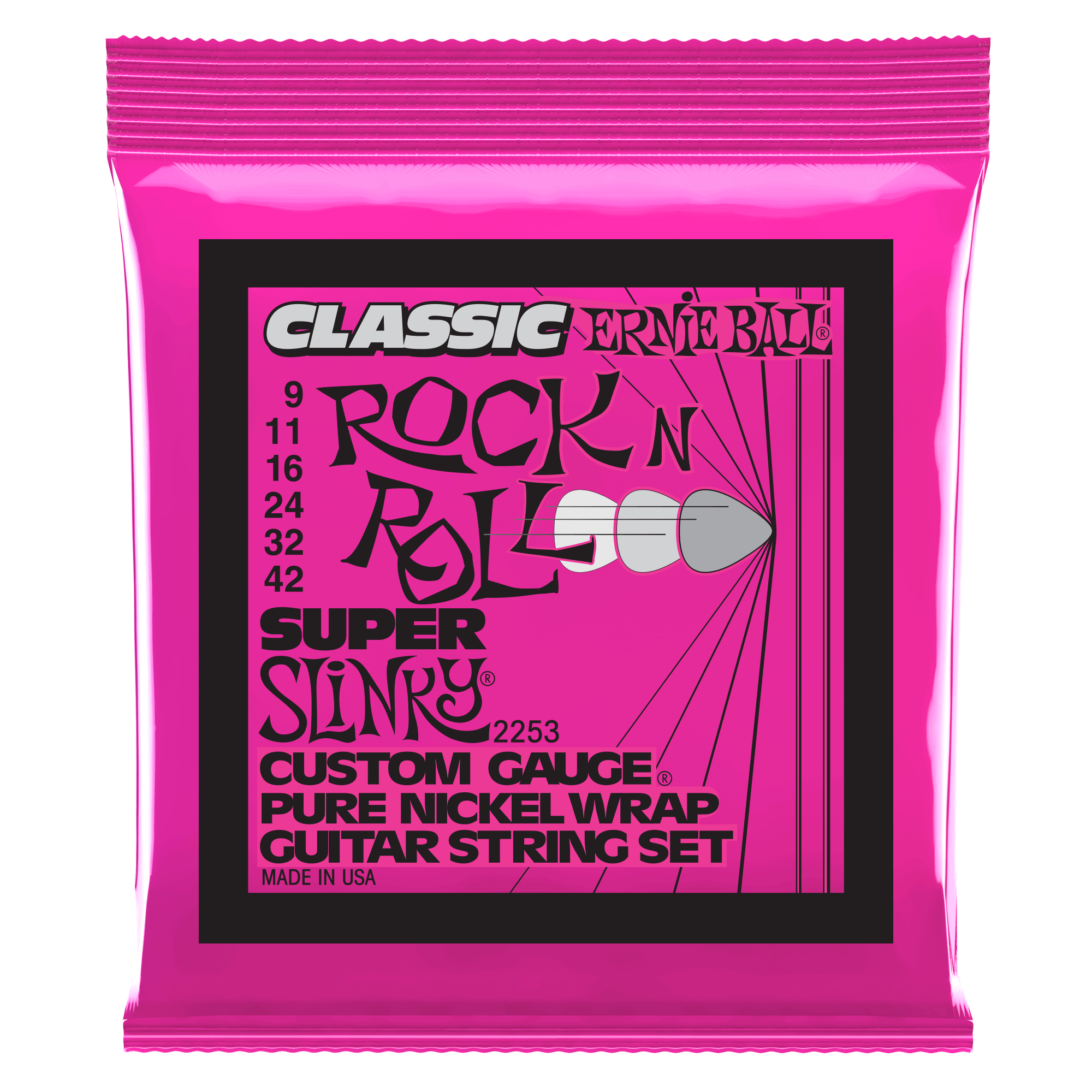
A guitarist who plays every day will need to change his strings every one to three weeks; a guitarist who plays two to five times a week will be able to keep his strings for three to six weeks. Worn strings produce a duller, less brilliant sound and slip out of tune more easily than new strings, as their elasticity is less pronounced. Depending on how worn the strings are, a rough feeling under the fingers can occur, which is unpleasant.
Nowadays, string manufacturers employ a variety of technologies to give their strings more power, more treble or simply a longer life. They offer different sounds, playing sensations and longevity, at different prices. Companies such as Elixir specialize in the design and manufacture of strings coated with a variety of finishes. Their aim is to protect the string and extend its life. However, some guitarists, including myself, don’t appreciate the very smooth contact created by these different coatings, so you’ll have to try them to make up your own mind. Regardless of their tension or method of manufacture, the strings on your electric, folk or classical guitar will regularly need replacing. We generally use the following adage: “ When the sound seems less alive, it’s time to change strings.”
Picks

If you’re just starting out, we recommend starting with an assortment of several picks to test out various thicknesses, shapes and materials. Over time, you’ll find your favorite models and styles, which you can then acquire in larger quantities. Picks are objects that disappear very easily, so it’s vital to have plenty on hand. If you’re an experienced guitarist, you already have one or more 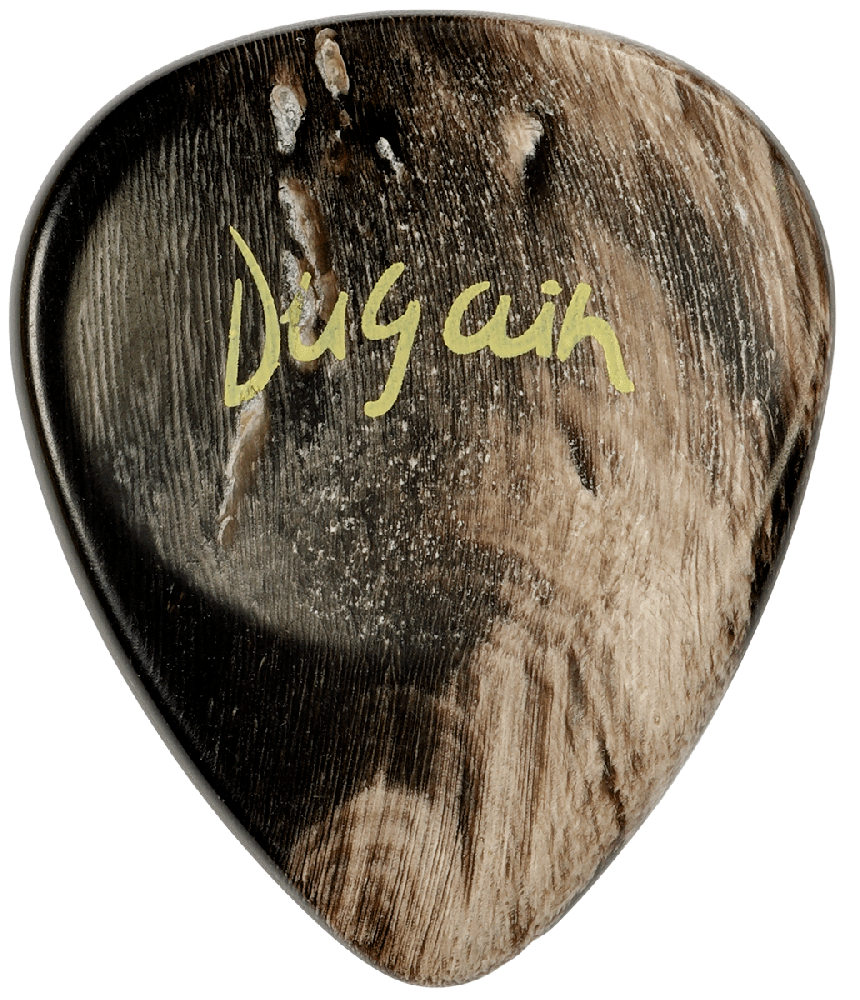
A pick made of wood, horn or bone can bring a particular sound color or provide a playing comfort different from your usual habits. Don’t hesitate to experiment, especially considering that picks are relatively inexpensive. The American brand Dunlop has a vast catalog of dozens of different picks. Dava also specializes in this field, offering original models with metal tips, for example. Finally, manufacturers like Dugain specialize in the design and manufacture of picks in wood, bone or horn. Some luthiers like Raphaël Le Breton also make wooden plectrums, most often from luthiery scraps.
Straps
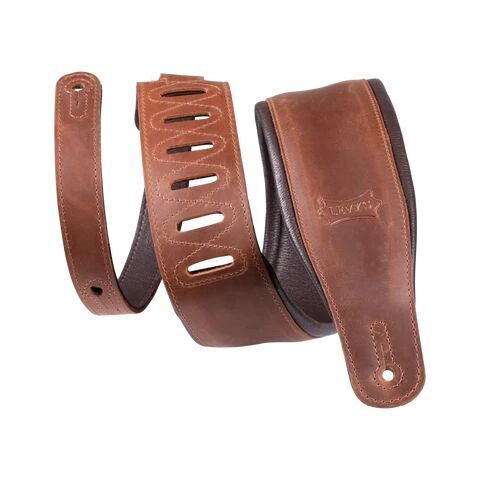
To make the instrument as secure as possible, some straps incorporate locking systems. These secure the guitar to the strap, preventing it from coming loose. These systems, known as strap locks, are particularly useful on stage, virtually eliminating the risk of the strap coming loose and your precious guitar hitting the floor rather violently.
On a non-locking strap, you can add a device called a strap block, a rubber washer that prevents the strap from slipping off the post (“strap button”) it’s attached to. Both Fender and Ernie Ball both offer strap blocks. They ensure a good lock if you don’t do too many acrobatics on stage. This is the system Joe Bonamassa uses to secure all his priceless vintage guitars on stage.
The choice of strap will be dictated by personal preferences (look, particular diet…), but there are some general points to note: the wider the strap, the more the guitar’s weight will be distributed. The wider the strap, the more comfortable it is. The standard width is 5cm (about 2 inches), but many manufacturers offer wider models.
Cases
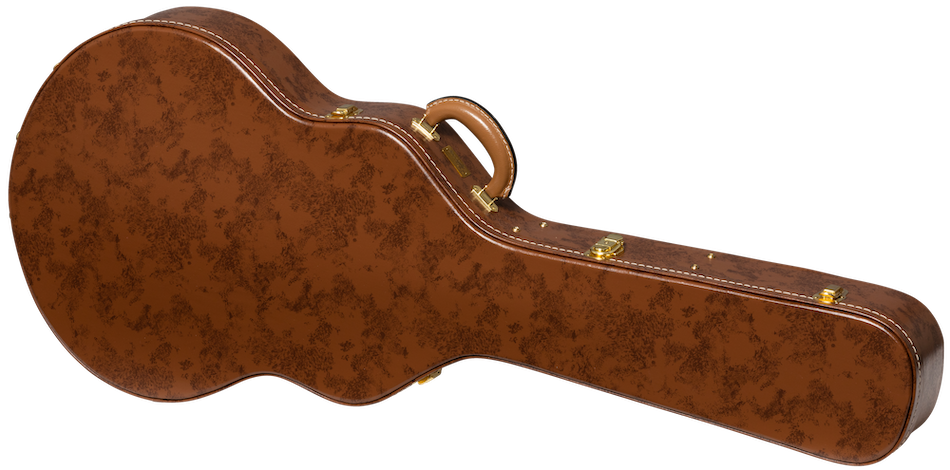
Hard-shell cases offer more protection but aren’t as easy to carry. You can’t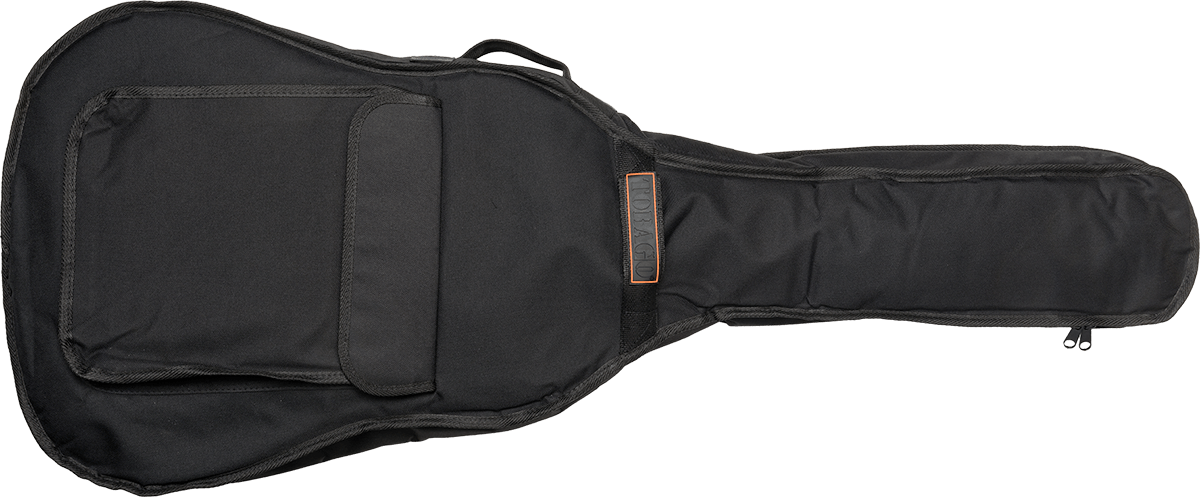
Some cases, like those offered by the Japanese brand Ibanez, are made of ABS or fiberglass. They feature an interior molded to the guitar’s shape, which keeps the instrument immobile in the case when you carry it.
Finally, if you absolutely must take your guitar on a plane, you’ll need a flight case made of thick multi-ply plywood with a PVC-type laminate coating. These cases, designed for transporting equipment on tour, also feature profiled aluminum metal reinforcements on the edges and metal-reinforced corners. Their custom-cut, high-density foam interior guarantees excellent shock absorption. Another, much more expensive solution used by Joe Bonamassa (again) for transporting his vintage instruments is to buy another seat on a plane or train, especially for the guitar, which can then travel in a traditional hard case. Don’t forget to fasten your belt!
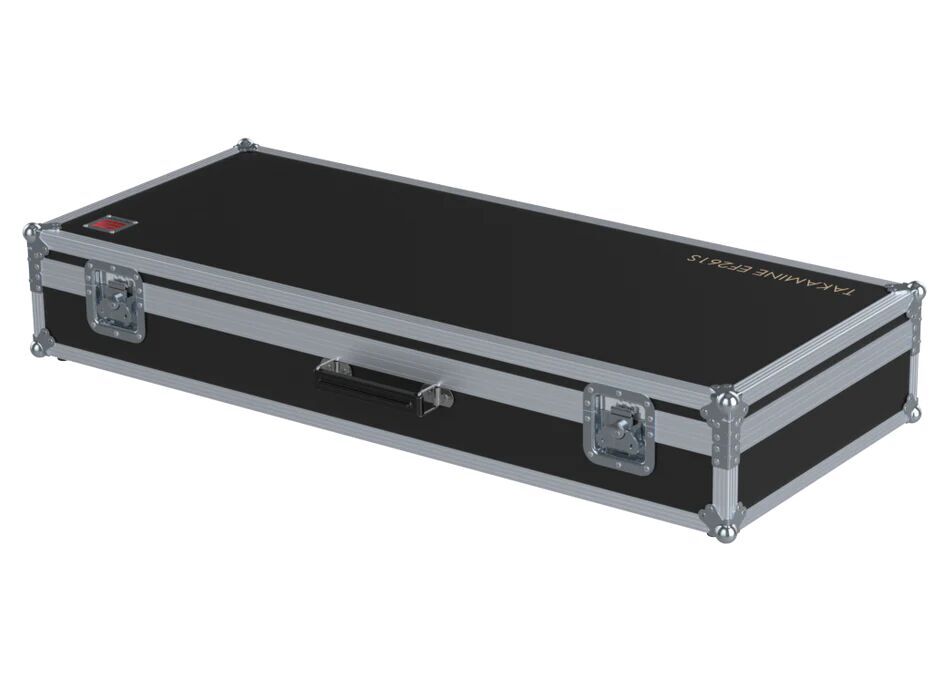
For everyday transport, a soft padded gig bag will suffice. For longer car journeys, for example, a hard case will offer better immobilization and cushioning of the instrument. Finally, for long plane journeys or touring conditions, a flight case is mandatory.
String winders
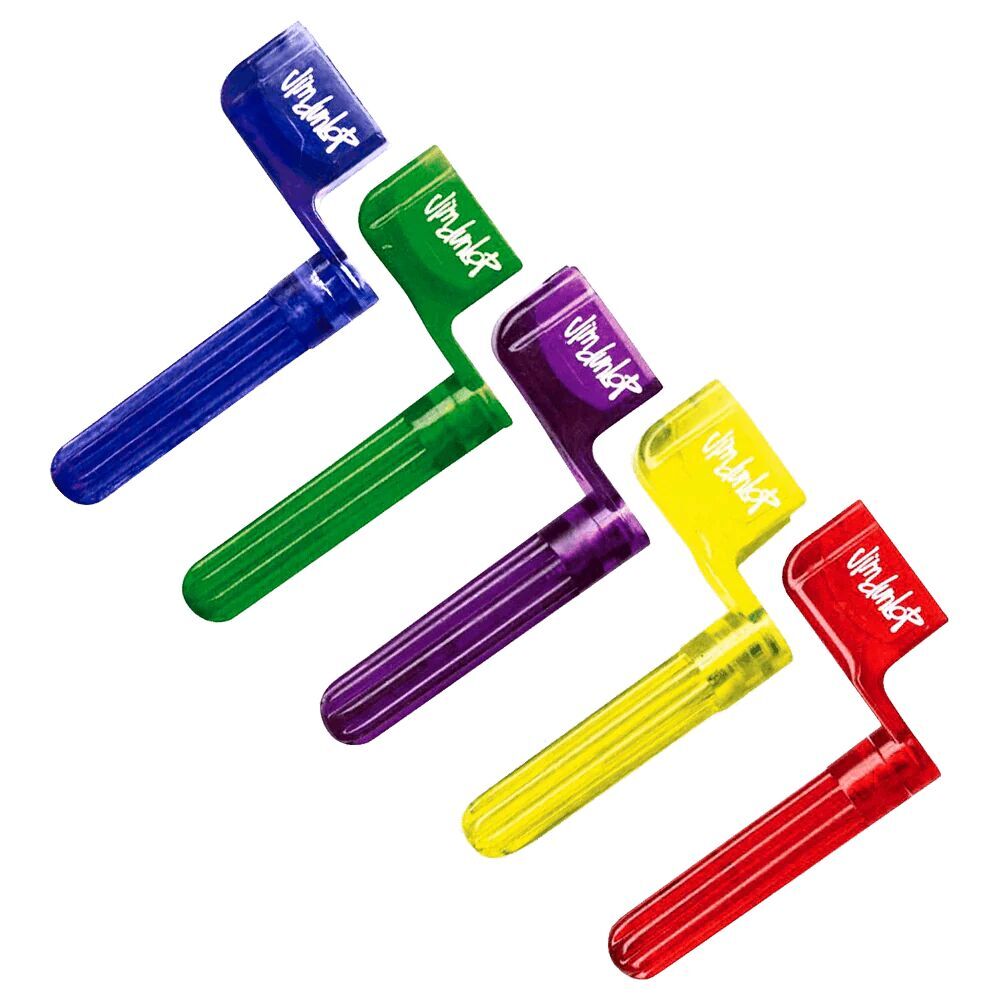
Let’s end this roundup of must-have accessories for guitarists with a little tool that may not look like much, but can save you precious time: the string winder. It’s a crank whose end slips over the tuners on your guitar. It allows you to tighten and loosen your strings much faster than when turning the tuners by hand.
Particularly if you change your strings often, a string winder can save you time. We recommend an all-in-one tool like the Pro-Winder from D’Addario, which combines a string winder, a pair of cutting pliers with hardened-steel blades, and an acoustic guitar peg extractor. It’s a handy tool to have on hand, especially if you have to quickly change a broken string onstage.