



Making music at home has become the norm. But between the accumulation of gear and the myriad possibilities available, a home studio can also feel like a complicated mess. What if the problem isn’t the number of tools, but the way we use them?

Choose or play: How computer-assisted music creation has changed things
You only need to look back a few years to see how far we’ve come. Today, a laptop can serve as a full-fledged studio. You can record a multitude of audio tracks, play with a wide variety of virtual instruments, process each sound with high-quality effects, mix, and even master—all without needing anything more than an audio interface and a few peripherals.
Even top-of-the-line hardware—the kind that has inspired generations of musicians and producers—has become accessible through incredibly faithful software emulation. Fewer machines to plug in, fewer cables to manage, and fewer physical constraints mean everything should be simpler. But this hardware simplification has brought a proliferation of possibilities, thus complicating the workflow in significant ways.
The problem often begins when you have to choose. For example, to produce a synthetic bass sound, there are hundreds of virtual synthesizers. To process it, there are just as many effects. To record and arrange a track, we have several techniques at our disposal. And even once we’ve chosen our tools, each one offers a multitude of parameters, operating modes, and customization options.
This abundance can be a blessing. It almost always allows us to find a tool suited to a specific need. But it also turns certain stages of the creative process into an exercise in selection. Even before playing a note or recording a take, you often have to decide which tools you’ll work with. That part has now taken on disproportionate importance.
Another layer of complexity is how the tools relate to one another. Software must communicate with an audio interface; a MIDI keyboard must communicate with the software; often, multiple devices must be synchronized; and the signal may flow between different devices or applications.
None of this is complicated on its own. It’s the accumulation of these elements that can make the whole system difficult to grasp. The modern home studio thus faces a paradox: It’s never been easier to gather the tools you need to produce a track—but it’s also never been easier to end up with far more than you need. And all of this deserves attention, so we can try to understand why some musicians today feel like they spend as much time—if not more—managing their studio as they do making music.
Fewer constraints, more choices?
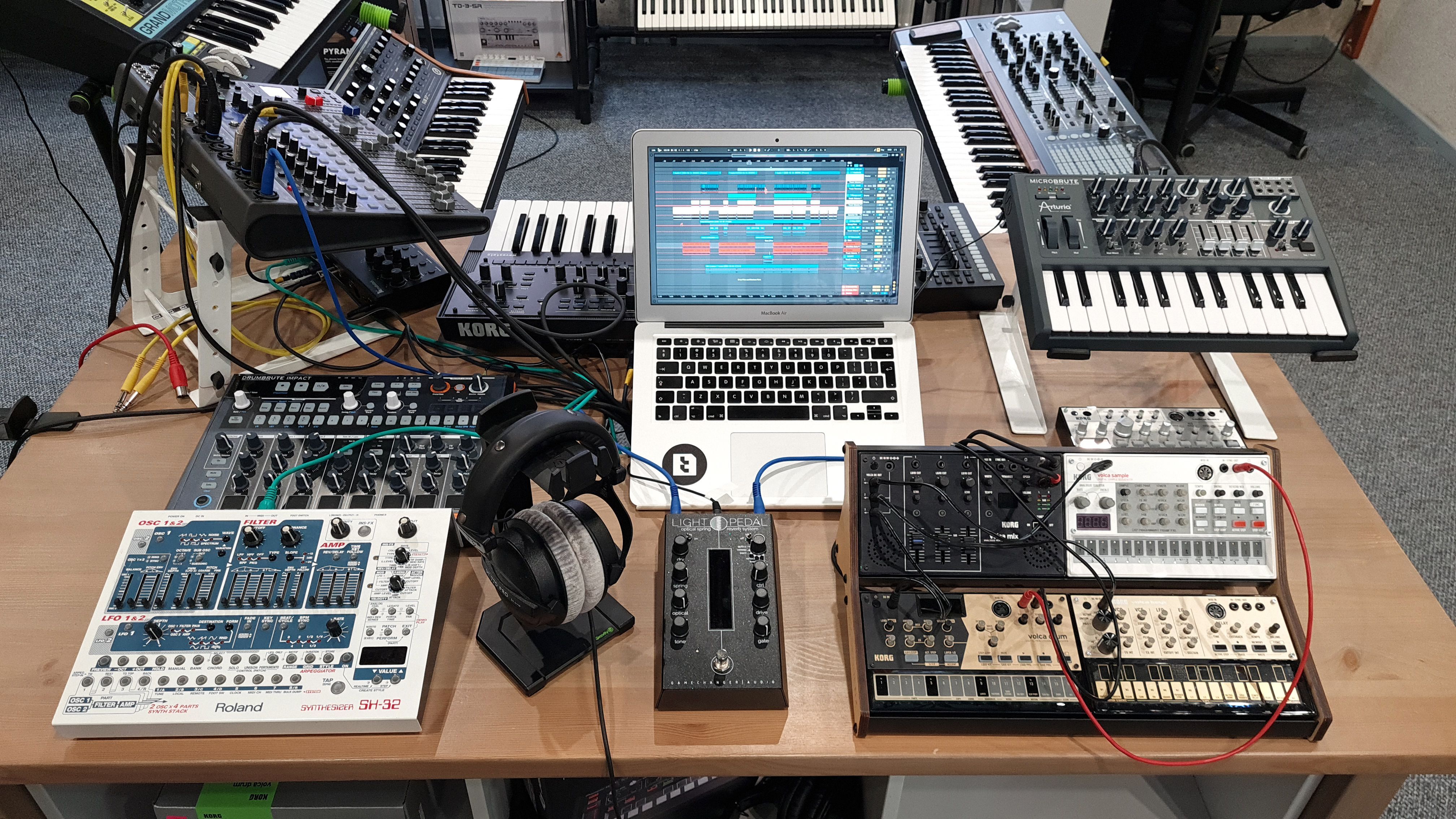
Take recording, for example. With limited equipment, the number of available tracks forced you to make choices. You had to record, keep what worked, and move on to the next take. With a computer-based setup, it’s much easier to keep multiple takes, duplicate a track, modify an arrangement, or go back and make changes. This flexibility is clearly useful, but it also creates a problem: it becomes tempting to keep everything—or almost everything. And we don’t hold back.
The same is true of instruments and effects. In a hardware studio, each new piece of equipment requires space and connections. On a computer, you can add an instrument or effect without changing your workspace. So it’s much easier to accumulate more options.
Of course, having choices can be really freeing. The problem arises when choosing becomes a mandatory step in every session. You quickly realize this when you want to add a synthetic bass to a track. You can use a synthesizer you’re already familiar with, find a preset that works, and move on. Or you can open several instruments, browse through different sound categories, compare the results, wonder if you might have gotten something better with a different plug-in, and sometimes, after all that, go back to your first choice.
At that point, technology isn’t stopping us from making music. It’s simply giving us too many choices—and slowing us down. The problem with the modern home studio isn’t necessarily that it requires more technical knowledge. The problem is that it’s become time-consuming; it requires us to spend time on decisions that simply didn’t exist before.
And this proliferation of choices isn’t limited to software. As soon as you start adding external hardware, the possibilities multiply even further. Keyboards, peripherals, audio interfaces, and mixing consoles that handle multiple sources, with synchronization and MIDI at the heart of it all. All of these allow you to build a highly flexible environment, but each new possibility also adds another relationship to understand and manage.
This leaves us with a strange situation: hardware has become more accessible, software can do almost anything, and technical constraints have decreased, but the overall studio workflow can become harder to keep track of. While technology has simplified the home studio, it has also made it much more open, and an open environment inevitably offers more possible directions. Above all, the problem arises when all these directions start to present themselves at the same time.
The never-finished studio syndrome
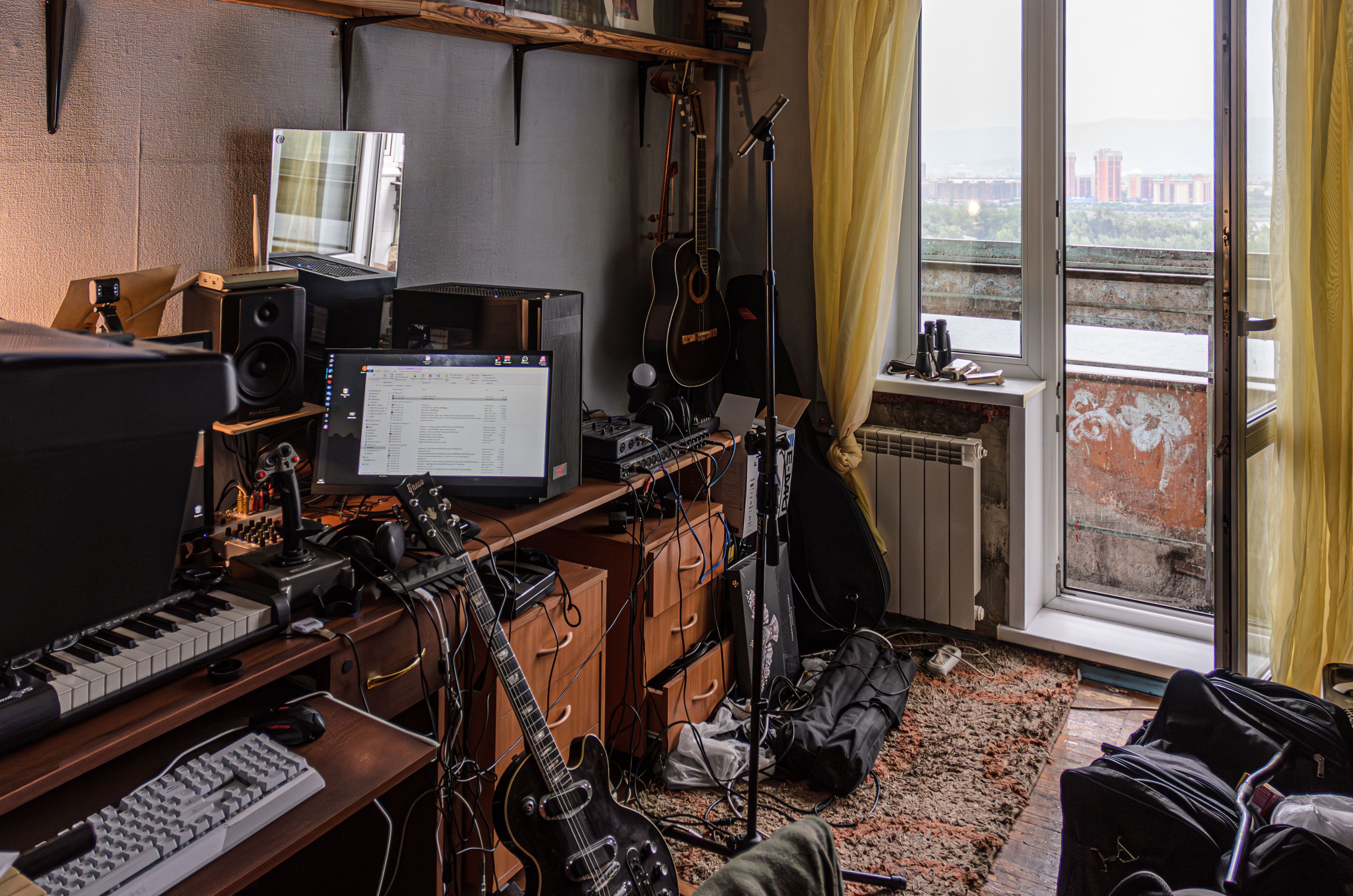
A new interface could open up more possibilities, a new controller could make certain tasks more convenient, and a new plugin could offer different sounds. You might also discover a new way of working and wonder whether it’s more efficient than the one you’ve been using for years.
Over time, the studio can become a project in and of itself. We spend time installing, updating, organizing, testing, or comparing. These activities are perfectly legitimate—and sometimes even fun. But they have little to do with actually finishing a track.
One more thing to keep in mind about this constant evolution is the adjustment period. When you replace a tool you’re familiar with with a new one, you have to find your bearings again. The buttons or menus aren’t in the same place anymore, and the settings work differently. Even when the new tool is objectively useful, it can slow you down for a while.
This explains why an older, imperfect setup can sometimes be more pleasant to use than a constantly updated configuration. You know how it works, know its limitations and have developed habits around it. There’s an important distinction between upgrading your studio because a need arises and upgrading it because it always seems possible to do better. In the first case, the change addresses a problem. In the second, it risks becoming an ongoing endeavor.
When the home studio becomes an obstacle
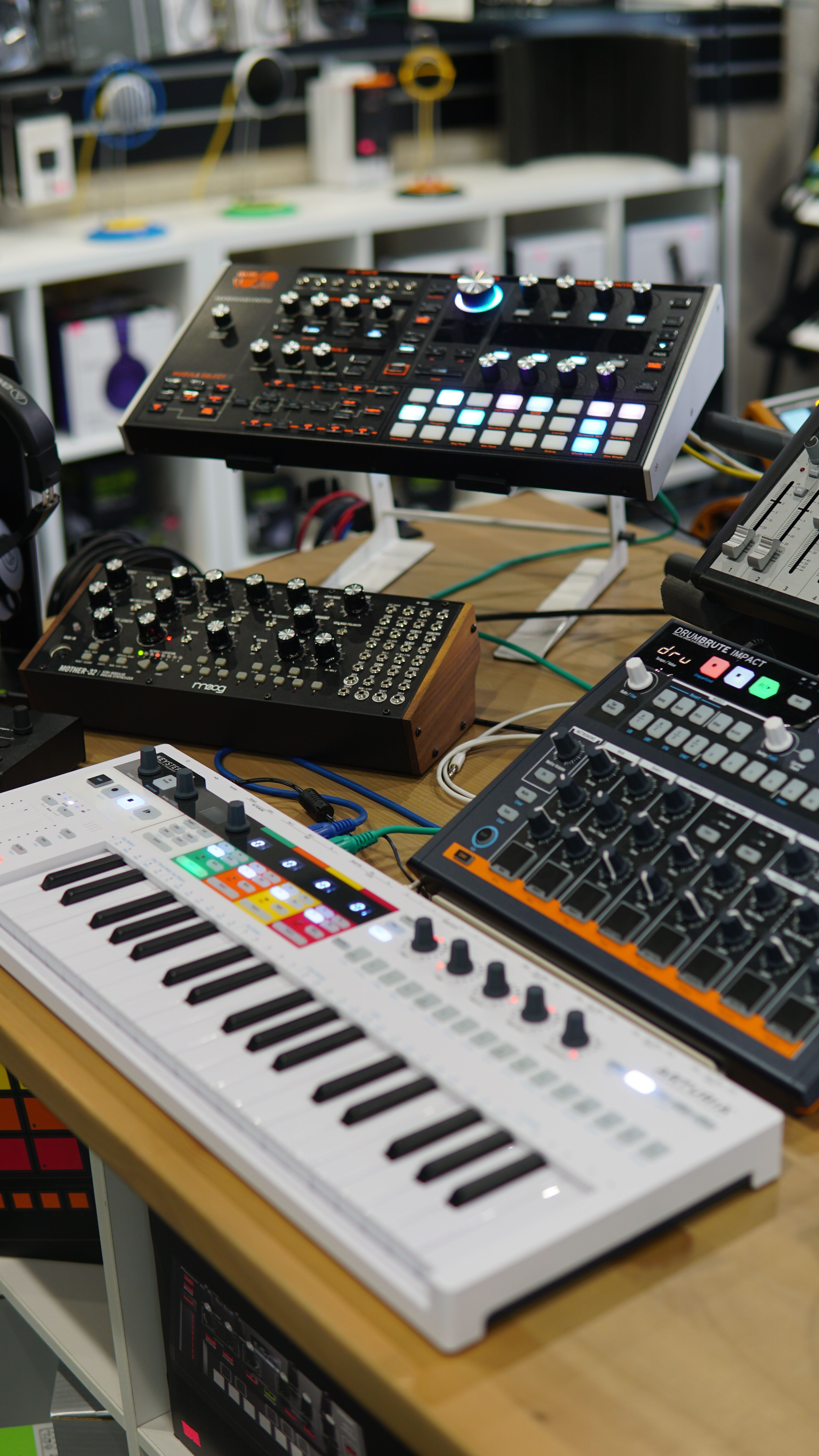
This can happen even if the setup isn’t elaborate. A connection issue, an unselected audio input, a MIDI device not assigned to the right instrument, or a project that can’t find a plugin is sometimes enough to interrupt a session. These minor glitches are rarely serious. However, they can significantly affect the creative process.
A musical idea can be very fleeting. If it strikes and you then have to spend several minutes resolving a technical issue, it may simply vanish. In fact, a studio can feel too complicated, even when you know exactly how to use it. You also have to ask yourself how many steps it takes to achieve the desired result.
Take, for example, a musician who wants to record a guitar. If their setup allows them to plug in the instrument, start a project, and play immediately, it’s fulfilling its purpose. But if they have to choose an input, check several software options, change a routing setting, adjust a device, figure out why they can’t hear anything, or search for a jack hidden in a corner… the same equipment becomes much less user-friendly.
Simplicity doesn’t necessarily mean less gear. It can simply mean fewer steps. This is where certain habits can help significantly. Connections you use regularly can stay in place. You can clearly label inputs and outputs with small colored stickers. Frequently used settings can be saved.
You can prepare the initial setup with templates so the most common tasks don’t require thought. You don’t have to start from scratch for every session. That doesn’t mean you have to turn your studio into an automated environment, but you do want to eliminate the minor configuration hassles that have nothing to do with the creative process.
Basically, a good home studio should ultimately require as little attention as possible when you start a session. The more you can forget about how it works, the more you can focus on the music.
Building your ecosystem: Start with what you actually do
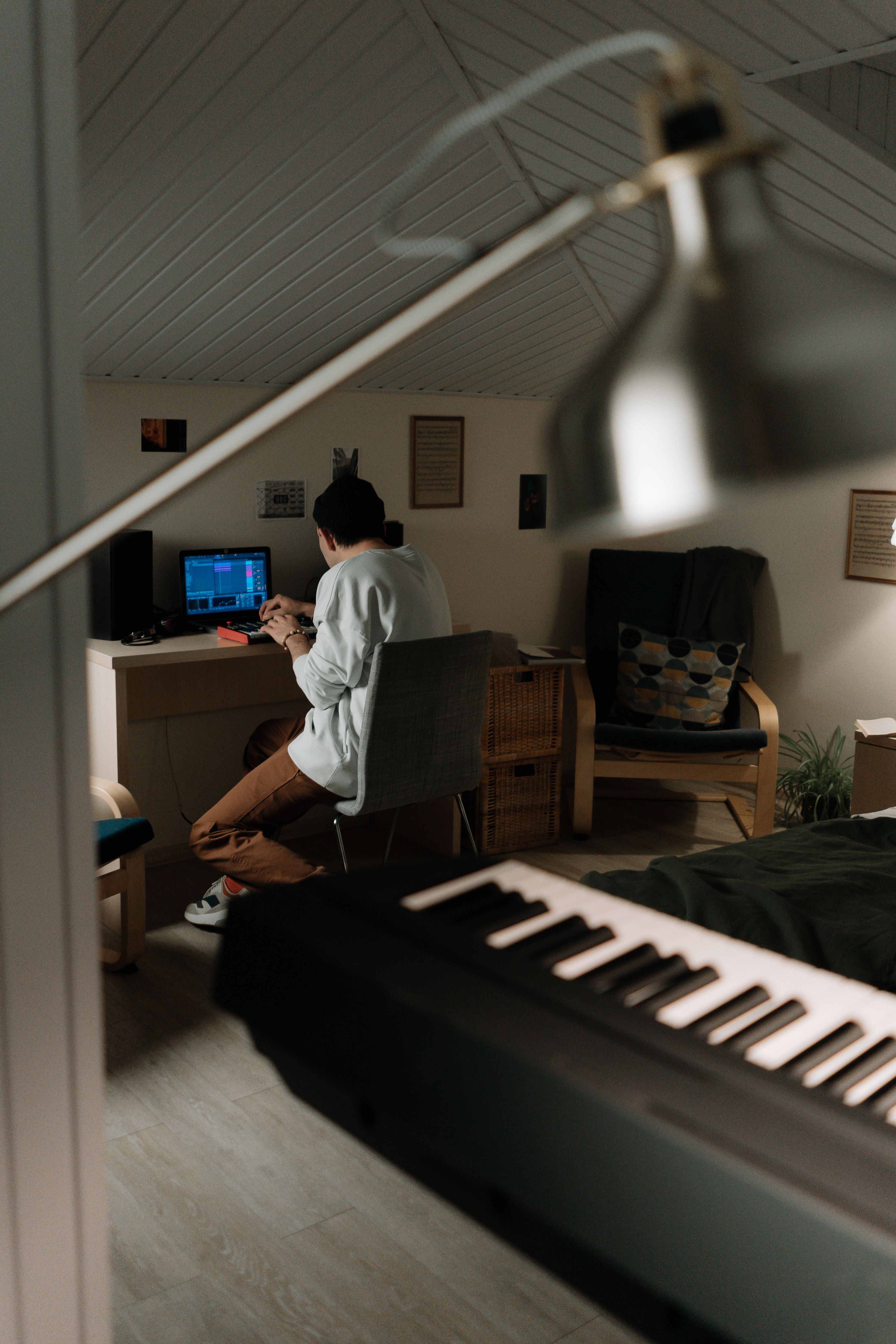
If you mainly compose on a keyboard, record a guitar from time to time, and work primarily on a computer, it might not be worth designing your setup around needs you’ve never had or hypothetical or very rare scenarios. This also lets you choose your tools for the right reasons.
You might prefer a guitar for its look, a DAW because you know its shortcuts, or a synthesizer because it makes you want to play. You have to know how to treat yourself. Not every choice must be dictated by a comparison of technical specifications.
This is actually an area where the modern home studio can sometimes lead us astray. It’s so easy to compare products that we end up looking for the one with the most features or the best specs. However, a personal setup can perfectly well include choices that wouldn’t be considered optimal on paper. What matters is that they align with our approach to making music.
It’s also okay to leave some features unused. A synthesizer doesn’t need to be integrated with every other piece of equipment in the studio. An audio interface doesn’t need to utilize all of its inputs and outputs. Software doesn’t need to be configured to handle every possible scenario. The goal isn’t to make the studio capable of everything; it’s to make it efficient for a few well-defined uses.
This doesn’t mean you have to give up on experimentation. On the contrary, a simple environment is often even more effective for experimentation. You can also step outside your usual routine when an idea calls for it, then return to your standard setup without having to rebuild everything. Of course, the ideal home studio isn’t a one-size-fits-all setup. It exists primarily as an environment where you know where to find what you need and, above all, what you can do without.
Simplifying your home studio: Fewer steps, but not less gear
Has the home studio become too complicated? In a way, yes. Not because the tools have become incomprehensible, but because they now let us do an enormous amount. This freedom has eliminated many constraints, but it has also created an almost innumerable number of choices.
That said, if an instrument, a plugin, or a piece of equipment adds something to the way we make music, there’s no reason to do without it. Complexity is only a problem when it slows us down or distracts us. Perhaps the most important thing is knowing what we really need. Keeping a few tools you know well, setting up the configurations you use regularly, and accepting that you won’t use every available feature can already make a big difference.
You can also have a well-equipped studio but typically work with just a small fraction of what it contains. The goal is efficiency and enjoyment. After all, the purpose of a home studio isn’t to demonstrate its technical capabilities—it’s to let you make music.