Log in
EN
FR

IdiotBox

10 products found

Categories
Filter
Sort by
Evaluation
  • Reviewed or not
  • Editor’s award
  • Reviewed by Audiofanzine
Availability
  • Available or not
  • Sold new or used
  • Sold new
  • Sold used
Must-have products
  • All products
  • Flagship products
  • Best rated products
  • Hot products
  • Popular products
Price
  • Freeware
€
Clear
Sort by
  • Popularity
  • User ratings
  • Price - low to high
  • Price - high to low
  • Used price, increasing
  • Used price, decreasing
  • Name (from A to Z)
  • Name (from Z to A)
  • Added on
Choose a category
Sort results
  • Popularity
  • User ratings
  • Price - low to high
  • Price - high to low
  • Used price, increasing
  • Used price, decreasing
  • Name (from A to Z)
  • Name (from Z to A)
  • Added on
Filter results 10 results found
Evaluation
Availability
Must-have products
Price
  • Freeware
Show results
  • IdiotBox Aquabox
    IdiotBox Aquabox
    Octaver/Harmonizer/Whammy
    (1)
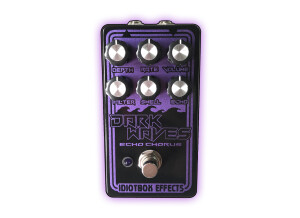
  • IdiotBox Dark Waves
    IdiotBox Dark Waves
    Chorus for Guitar
    (1)
  • IdiotBox Death Master
    IdiotBox Death Master
    Distortion
  • IdiotBox Han-Taun
    IdiotBox Han-Taun
    Overdrive pedal
  • IdiotBox Redrum
    IdiotBox Redrum
    Distortion
  • IdiotBox Death Ray
    IdiotBox Death Ray
    Other guitar saturation effect
  • IdiotBox Wild Kyle
    IdiotBox Wild Kyle
    Distortion
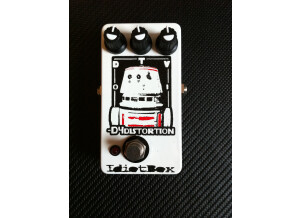
  • IdiotBox D4 Distortion
    IdiotBox D4 Distortion
    Distortion
  • IdiotBox Dungeon Master
    IdiotBox Dungeon Master
    Distortion
  • IdiotBox Blower Box Bass Distortion
    IdiotBox Blower Box Bass Distortion
    Bass Distortion/Overdrive

The best IdiotBox reviews

The reviews Audiofanzine members found the most helpful.
  • « Fat Distortion + 3 Octave Variations »

    SOUND: The Aquabox can sound heavy to downright massive, although it depends how far you want to push any of the octave controls and the Drive. The drive is very organic and raw sounding, and so it needs to be coordinated with a clean channel/amp or definitely an amp that is very low gain. This is important to realize since there is no volume unless you turn up the drive to some extent, e.g., quarter-way; and so, if you like the distortion of your amp or other pedals, the Aquabox will not be your cup of tea. But if you want to add a different slap-in-your-face tone with some gnarly octave layering that can turn a clean (or slightly driven) amp into a death metal box of rock, then the Aquabox will fill that quota in spades. The Drive can be used alone and without any Octave, but what fun is there in that? Adding any octave voicing will increase the output volume, and some tweaking is required with your amp or guitar volume knob. All three octave knobs can be very subtle to big and powerful. The Octave Up seems to make the Drive cut through the mix more, and you can add a little (barely audible) or a lot. The Octave Down and the Two-Octaves Down knobs produce a lot of bottom end, which sound pretty huge with a six-string guitar, but massive with a 7-8 stringer or a bass. OVERALL IMPRESSION: If you combine the colors blue and green you get aqua. In effect, the Aquabox is a combination of MXR’s Blue Box and Green Ringer circuits. However, the overall result is superior as you get some heavy distortion while being able to tweak the degree of mix among three added octave controls (one octave up, one octave down and two octaves down). As a result of mixing this blue with green you get aqua, or the Aquabox. When initially seeing this pedal I thought it might be a chorus or something shimmery (watery) with such a name, then quickly understood why it was called the Aquabox and by combining the best elements of two other well-known pedals. At $129 USD the price is very reasonable and the epdal extremely fun to use. You may be limited by the Drive’s tone (it’s very overpowering for use with other drives or distortions), but once you start riffing some Death Metal barre chords you will understand the marriage between the Octaves and the nature of this Drive. Very ‘heavy stoner’ sounding. GENERAL USE: Each of the four controls affects a different parameter, but all four control volume as well. There is a Drive knob, which produces thick distortion-type fuzz (it’s not fizzy and it’s not exactly a fuzz, but the demo will clarify that). You do need some Drive in order to hear the signal and it is fairly thick and fat sounding even when turned up a little – I doubt many would use the Drive full bore. There are three other knobs that control the Octaves. The UP knob controls one octave up and how much you hear that octave (the more you turn it up, the more it is in the mix). The DOWN1 knob does the same, but one octave down from what you’re playing. And the DOWN2 knob does likewise, but two octaves down. Now, the more you turn up any one of those knobs, the louder the signal becomes and the more apparent the effect. Let’s suppose you had the Drive at 12-noon, the Octave Up at 3-o’clock, the Octave Down at 12-noon and the Two-Octaves Down at 9-o’clock: if the volume was perfect for your playing and you decided you wanted to have less Octave Up, then your volume would drop slightly. This is not a big deal, but you may need to adjust your guitar or amp’s volume control to compensate. Another option is to increase the Drive slightly if you turn one of the Octave knobs down or vice versa. The one thing I would change with this pedal is the ability to use the Octave knobs independent of the Drive – that way you could use that tone of the pedal’s Drive if desired, but also use the Octave controls with a different amp/distortion tone. OTHER DETAILS: The Aquabox guts are encased in a 125B solid steel chassis and is of a standard pedal size, measuring approx. 122 x 62 mm (4.7 x 2.6 inches). The paint is a good quality in an obvious shade of Aqua and it has a nice blue LED ‘on’ light to match. The four control knobs and their pots are of high quality and smooth when turned. The foot switch produces a solid click under foot while remaining noiseless in the signal when switching on-and-off. The footswitch also is far removed enough from the control knobs that damage should not occur when stomping vigorously; nonetheless, the knobs are of solid construction and will take some abuse. Both input and output are located in the back, whereas the power input is located along the right side and next to the footswitch (some modest care needs to be taken, although it is set lower toward the base). The Aquabox pedal accepts a 9V battery or it can be powered by a standard 9V DC ‘center negative’ 2.1mm BOSS style input while drawing a paltry 6mA.

  • « Warm and Lush while Blending Chorus with Echo »

    SOUND: A cross between classic and ethereal, Dark Waves allows you to add echo… or chorus… or both. Considering the Echo first, it is not an expansive delay with long tails; rather, it produces a warm delay that stands out in the mix without sounding muddy. The best way to describe it is an extensive and modified slap back response (you can hear 3-4 repeats), although it is not snappy in its delivery. It very much coordinates well with its Chorus counterpart and how they respond together. The Chorus aspect is very good and not shrill. Some chorus pedals, particularly as you increase the mix, depth and rate can sound somewhat edgy and even grating to the ears – settings you likely would never use. With the Dark Waves chorus feature up full (with Depth, Rate, Volume/Mix up full and the Filter completely counter-clockwise) you get a strange ray-gun-like sound, as though some vibrato had a bout of nervous laughter. Lastly, the Volume knob controls the extent of the chorus, which is very much a mix knob since the loudness of the pedal does not seem to increase (or if it does, it is subtle). OVERALL IMPRESSION: Sounding great with guitar, Dark Waves also has been engineered for use with Bass and Keyboards. At a very reasonable price of $129 it is an excellent buy considering you get two effects in one that work very well together. The Echo is straight forward, but it performs as intended (you will not get a spacey result, but it is solid sounding and its pulse synchronizes with the Chorus). The Chorus is rather good and in a number of ways. First, as with any quality Chorus, you can make the effect rather subtle and barely audible, which is ideal for lead playing when you want to add some dimension or thickness to a tone. Second, there are some very nice parameters and usable ranges with the Rate and Filter knobs, to control how rapid the chorus sounds, but also how smooth or edgy you would like it. Third, even with all the knobs turned up full you still get interesting chorus results that don’t sound unpleasant. Idiotbox produced the Dark Waves Echo/Chorus pedal with a focus on ‘Instant Death Rock’ (and there’s a good in-house demo video on its site) although it likewise sounds awesome with acoustic strumming and traditional or classic rock playing. The warm yet punchy echo certainly compliments the chorus and Dark Waves definitely is worth considering if you’re in the market for a highly-functional Chorus with the added bonus of an Echo. GENERAL USE: You get a nice hint of the Chorus effect with volume set at 12-noon, while remaining behind the main signal and without overpowering it. With Volume up full there seems to be an equal mix of the original signal and Chorus. The Depth knob controls how deep the chorus effect is or its ‘reach,’ whereas the Rate controls the speed or shimmering of the Chorus (up full and it still sounds good rather than a chorus out of control, if you know what I mean). The Filter shapes how subtle or extreme the chorus effect is: fully clockwise produces a very smooth sounding chorus, whereas fully counter-clockwise creates more aggression in the effect. There’s also a Swell knob that produces a quick rise and a slow fall in the effect (fully counter-clockwise), a slow rise and quick fall (fully clockwise) or anything between. The Echo knob is what it is, and about 12-noon produces a nice subtle effect that floats softly in the background, whereas cranked full makes the echo very noticeable, but not overpowering. A setting of about 12-noon to 1-o’clock works well when playing some heavy riffs, whereas slower more ambient passages sound good with the effect up full or nearly so. OTHER DETAILS: Dark Waves Echo/Chorus is a standard pedal size, measuring approx. 122 x 62 mm (4.7 x 2.6 inches). Encased in a 125B sized solid steel chassis, the purple sparkle paint on black gloss appears to be of good quality and its looks certainly portray the atmosphere of this pedal. Likewise the six control knobs and their pots are both smooth and of high quality when turned. The foot switch produces a solid click under foot, but remains noiseless in the signal when switching on-and-off. The footswitch also is far removed enough from the control knobs that damage should not occur from a stomping foot; regardless, the knobs feel very solid and should take some abuse. Both input and output are located in the back, whereas the power input is located along the right side and next to the footswitch (exercise some modest care, and so no heavy drinking and stomping). Dark Waves accepts a 9V battery or it can be powered by a standard 9V DC ‘center negative’ 2.1mm BOSS style input while drawing 100mA.