Log in
EN
FR

Little Labs

23 products found

Categories
Filter
Sort by
Evaluation
  • Reviewed or not
  • Editor’s award
  • Reviewed by Audiofanzine
Availability
  • Available or not
  • Sold new or used
  • Sold new
  • Sold used
Must-have products
  • All products
  • Flagship products
  • Best rated products
  • Hot products
  • Popular products
Price
  • Freeware
€
Clear
Sort by
  • Popularity
  • User ratings
  • Price - low to high
  • Price - high to low
  • Used price, increasing
  • Used price, decreasing
  • Name (from A to Z)
  • Name (from Z to A)
  • Added on
Sort results
  • Popularity
  • User ratings
  • Price - low to high
  • Price - high to low
  • Used price, increasing
  • Used price, decreasing
  • Name (from A to Z)
  • Name (from Z to A)
  • Added on
Filter results 23 results found
Evaluation
Availability
Must-have products
Price
  • Freeware
Show results

The best Little Labs reviews

The reviews Audiofanzine members found the most helpful.
  • moosers's review

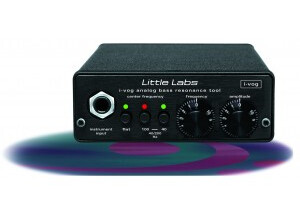
    Little Labs' VOG (Voice of God) Analog Bass Resonance Tool is a 500 series module that is a unique bass processor. It's designed for use with bass instruments, but it's definitely suitable for use for other applications as well. Since it's a 500 series module, it doesn't have any of it's own connections or power supply and is only rackable in a 500 series rack casing. UTILIZATION The make up of the Little Labs VOG isn't complex at all, but it did take me a couple of minutes to get used to how the parameters will actually affect your sound. These parameters include knobs for amplitude and frequency, and switches for adjusting the frequencies. I haven't seen any manual for the VOG, so I can't speak about it, but it might be a good idea to have some specs around when getting acquainted with this. SOUND QUALITY I couldn't possibly say enough about how cool sounding the Little Labs VOG is. It adds a huge amount of low end clarity and fullness to bass guitar and other low end applications. It's hard to describe the sound without actually hearing it, but basically it enhances the low end a great deal to where it sounds rounder and fuller. This is almost one of those 'instant' type of enhancers, only with more to work with. The only thing I can think of to could compare it to would be something like Waves' R-Bass, which is also a bass enhancer, and the VOG sounds a lot clearer and fuller. OVERALL OPINION The Little Labs VOG is really an amazing piece of gear. It's the first 500 series module to be made by Little Labs as well. It's easy to use and offers up a whole helping of tone. If I had access to it all the time I'd be using it on all of my mixes, but alas I don't yet own one of these. The price is actually really inexpensive for a processor of this caliber. Even though the VOG maybe isn't a necessity, it's an awesome luxury to have in any studio.

  • moosers's review

    The Little Labs LMNOPre is a limited edition, single channel microphone preamp. It has very unique parameters for a mic pre, with plenty of control over your tone. In the front, it has an XLR input as well as both an active and passive 1/4" input for using it as a DI. It also has all the XLR connections you could ask for in the back. It is rack mountable and will take up only a single rack space. UTILIZATION The make up of the Little Labs LMNOPre is definitely a bit more complicated than most single channel mic pres out there, which for me is a good thing as they are giving you a whole lot of control over your sound. The LMNOPre has parameters for lo gain and hi gain level adjustment, a low frequency resonance control, phase degree, and output level. It also has buttons for polarity and phase. I haven't seen the manual for the Little Labs LMNOPre, so I don't know how helpful it might be, but if you're unfamiliar with these parameters, I recommend having it around. SOUND QUALITY The Little Labs LMNOPre is overall one of the most impressive sounding microphone preamps that I've used. It has an incredibly clean sound quality and offers up a ton of versatility, probably more than any other mic pre that I have seen. The setting controls are not only vast, but unique. It really brings a lot to the table, as I find that I have a whole new set of controls to get new sounds. This is definitely a rare thing to see from a mic pre, which is what makes the LMNOPre such a great pre... OVERALL OPINION I'm not sure that I'll ever get to use a Little Labs LMNOPre again, as they are a limited edition and are very hard to find. I don't know if they are still making them, but even if you can get one, this is a very expensive pre, and for a good cause. I will say that if you ever have the chance to use the LMNOPre, do yourself a favor and use it!

  • moosers's review

    The Little Labs STD Instrument Cable Extender is a simple and unique device that allows you to extend your instrument cable without losing any quality. If you didn't know, using really long instrument cables can actually cause you to lose some tone, so in the studio it's especially important to be aware of this. That's where the STD comes in handy. While it's not always necessary, in larger studios it's going to help you out. I recently used it in a studio where we wanted the guitarist and bass player to play in the control room and mic'd up the amp in an iso booth that was a decent distance away. Instead of connecting two instrument cables together or using a really long one (which we didn't have at the time anyway), we used the Little Labs STD, which saved time setting up and was helpful in the situation. In theory it isn't supposed to change your tone at all, but the house engineer at the studio who was helping us set up mentioned that it actually adds a bit of drive if anything, possibly overcompensated for losing signal. This can be a good thing, but if you're worried about any changes at all with your sound, definitely A/B with and without STD to make sure truly sure. At the price of a bit over $100, the Little Labs STD Instrument Cable Extender is a good thing to have around larger professional studios. It's not something that is necessary for live shows or home studios (unless you've got a huge one), but professional studio owners should check out STD to see if it's something that might be helpful to them in the longer run. Since I don't own a studio, I won't be looking at getting one of these any time soon, but do hope that the studios I work at have one when I need it.

  • moosers's review

    Little Labs Multi Z PIP (Professional Instrument Preamplifier) is a versatile piece of equipment that is basically a DI box with a number of awesome added features that make it so much more. It is made up of analog parts, with connections for an XLR output, and a slew of 1/4" connections for instrument input, summing amp input, re-amping input, hi-z output, a balanced only expansion output, and another optional output. It also has a 1/4" input in the front for your instrument input as well. It isn't a rack mountable piece of gear as it sits in a box. UTILIZATION Using the Little Labs Multi Z PIP isn't very hard - the only confusion can be caused by making different types of connections and figuring out new things to do with it. So while doing a few basic things with will come quickly and easy, diving a bit deeper with it can take a few uses with it. In terms of control settings, there are knobs for level and input selection, which has hi-z, mid-z, lo-z, and speaker to choose from. It also has a few switches for controlling different routing options. If you're new to something like this, which I would imagine that most people would not be if you're reading this, then a manual might be needed, but I don't think that most users will need one. SOUND QUALITY The sound quality of the Little Labs Multi Z PIP is absolutely superb. It reproduces your signal in the exact way that you send it to the box. I've used the PIP with both electric guitar and bass guitar, both of which I found to be great options for it. I used it with an electric guitar in tandem with a guitar amplifier miked up, and then I blended the two signals after adjusting the sound from the PIP to my likings using signal processing and occasional effects. I've also used the PIP for re-amping, which is probably the most convenient feature, as it allows me to then send that original clean guitar sound back through an amplifier if I wasn't happy with it the first time or just want to try a different amp for a different sound. It makes the possibilities endless and extremely flexible! OVERALL OPINION If you're looking for a very handy little box that will allow you to make all sorts of useful connections and also offers up a great sounding instrument preamp, the Little Labs Multi Z PIP is probably the best one that you can get. The price isn't very cheap, which is why I'd really recommend this for professional studios, who will most likely be the people using this anyway. I'd urge you to check out the specs to see if it would be worth the price for your to get it for your studio.

  • moosers's review

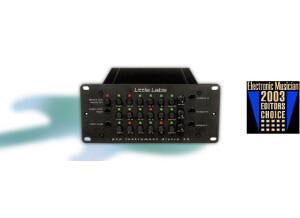
    The Little Labs PCP Instrument Distro is a unique device that I have used in the recording studio, but can be used for both studio and live show scenarios. This is a routing device that allows you to split off your signal in an endless variety of ways. You send your original signal to this, and you then have the ability to send it out of three different outputs. Each of the outputs also has a variety of parameters including phase reverse and ground lift. The PCP Instrument Distro isn't rack mountable in a traditional space, but can be racked and will fit in some sort of other casing. UTILIZATION Using the Little Labs PCP Instrument Distro can definitely take some time to get used to, as the possibilities in terms of routing are really endless. However, after examining the unit a little bit, I was able to understand pretty clearly everything going on without the assistance of a manual. You can literally send your signal to any sort of combination of outputs, making it great for all sorts of studio and live show applications. I have used this to re-amp guitar sounds, as well as for a variety of other purposes... SOUND QUALITY While the Little Labs PCP Instrument Distro doesn't actually make any sounds of its own, it will absolutely maintain your signal without adding any noise or losing any sound quality. I've only used this device with electric guitar, but it can certainly be used for any electronic instrument and beyond if you have the right connections. Not too much else to say about the sound quality beyond that you have nothing to worry about as far as if this will reproduce your signal faithfully. OVERALL OPINION Unless you've got a pretty large studio or live rig, the Little Labs PCP Instrument Distro probably isn't necessary, but when working in these sorts of settings, this comes in quite handy. I don't personally own one of these, but have used one pretty extensively in one of the studios that I've worked at. As I said earlier, I haven't used this for a live show, but have read and heard that it works great for this application as well. The Little Labs PCP Instrument Distro will cost you about a grand in USD, but if you've got a large set up, it will be of great help to you for sure...