Log in
EN
FR

Neo Instruments

7 products found

Categories
Filter
Sort by
Evaluation
  • Reviewed or not
  • Editor’s award
  • Reviewed by Audiofanzine
Availability
  • Available or not
  • Sold new or used
  • Sold new
  • Sold used
Must-have products
  • All products
  • Flagship products
  • Best rated products
  • Hot products
  • Popular products
Price
  • Freeware
€
Clear
Sort by
  • Popularity
  • User ratings
  • Price - low to high
  • Price - high to low
  • Used price, increasing
  • Used price, decreasing
  • Name (from A to Z)
  • Name (from Z to A)
  • Added on
Choose a category
Sort results
  • Popularity
  • User ratings
  • Price - low to high
  • Price - high to low
  • Used price, increasing
  • Used price, decreasing
  • Name (from A to Z)
  • Name (from Z to A)
  • Added on
Filter results 7 results found
Evaluation
Availability
Must-have products
Price
  • Freeware
Show results

The best Neo Instruments reviews

The reviews Audiofanzine members found the most helpful.
  • « Authentic Leslie Effect for Organ, Guitar and Bass »

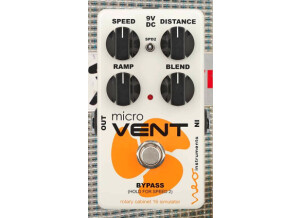
    HOW IT SOUNDS: The Micro Vent 122 nails that vintage Leslie 122 sound, perfect for keys, guitar and bass. The sound is clearly defined, whether blended in a small amount or mixed full (although at full you still have the instruments tone coming through), an impressive feat since including an effect to an analog signal can result in some mud, but not with the Micro Vent 122. In essence the 122 compliments and augments the original signal. What you get is a more organic outcome, rather than one that sounds overly-processed. You can vary the effect in different ways. Speed varies the rate of the rotor, from a subtle and swirling wave, to a tremolo-like pulse. The Blend knob controls how obvious the effect sounds (how much Leslie mix you want), and the Distance knob adjusts how close the mic is to the cabinet (turned low and the sound is less three-dimensional and softer versus up full for that full-on Hammond sound). The Micro Vent 122 sounds impressive with keys (watch demo included with the review), but certainly works with guitar or bass. It works best with a clean(ish) guitar/bass signal, although the pedal produces some very unique qualities (phaser-like in some respects) when blended low with an overdriven signal. GENERAL USE: How fast the speaker rotates, from a slow swirl to more of a fast tremolo-like pulse is controlled by the Speed knob. Mixing between the instrument’s signal and the effect is controlled by the Blend knob, with a 50/50 mix set at 12-noon. Distance (mic distance from the simulated cabinet) ranges from less intense (full counterclockwise) to more obvious (full clockwise). The Ramp knob controls the rotors’ acceleration and deceleration when shifting between Speed 1 and Speed 2 (via the footswitch); this can provide an abrupt or smoother change, depending on the selection. For example, when switching between a very pronounced Leslie effect to shutting it off completely (Ramp all the way down counterclockwise), there is a sudden termination of the effect versus the Ramp all the way up with an apparent slowing of the rotors. The footswitch combined with the Speed 2 toggle switch produces some very useful combinations. With the Speed 2 toggle switch flipped up, and the footswitch engaged, the speed of the effect reaches maximum, thus allowing a slow speed followed by a fast speed. On the other hand, with Speed 2 flipped down the effect produces the slowest speed of a Leslie 122, and this allows you to play with a faster effect followed by a slower speed. Next, with the toggle switch in the center position, there is a stop of the effect altogether, although depending on the Ramp (see paragraph above) there may be a sudden stop, a slow gradual stop or something between (depending on the setting). Another important operation of the Micro Vent 122 is the Global Settings (instructions outlined in the pamphlet). For instance, you can have the pedal operate in buffered or true-pass when off, or use the footswitch in a momentary or latched manner when shifting into the Speed 2 settings. The footswitch also has three modes of operation – when it is on, what happens when engaged once and what occurs when stepped on and held. As with any pedal, the LED lights when the pedal is on (solid red). However, with Speed 2 engaged, Global Settings can produce various changes by clicking the footswitch again or if holding for 1.5 seconds (again, see the pedal’s pamphlet). As well, you can turn the pedal off either by a single click of the footswitch or holding it down for 1.5 seconds. Depending on your needs and how you use it in a live setting, you can customize the footswitch. OVERALL IMPRESSION: The Micro Vent 122 is based on the Leslie 122, a famous speaker system designed originally for organ. Similar to the Micro Vent 16 (that emulates a Fender Leslie guitar amp), the 122 model produces very authentic rotary sounds, although more pronounced than the 16 model. Neo Instruments did a superb job in replicating the Leslie sound, but also with its flexibility. There is a wide range of speed, intensity and how the imitative rotor behaves when gearing up or down – as well as being turned off. However, one of the best features is the Blend control, which allows a modest amount of Leslie to creep into the mix, as opposed to turning it up for a very flagrant swirl that almost sounds three-dimensional. Priced at $349 USD, the Micro Vent 122 is somewhat costly for a pedal, but it does produce a high quality and realistic result. Comparably, there are less expensive Leslie emulators, but for those Leslie aficionados, the Micro Vent 122 is the crème de la crème. The pots turn smoothly and without any background noise. The footswitch is soft (no hard clicking) and silent (no ‘click’ in the signal when engaged). The toggle switch for Speed 2 has a solid feel and shifts into each position well. The signal processing uses a very powerful 32-bit SHARC DSP, which is the same one found in the larger Ventilator II, by Neo Instruments, thereby producing the same great sound in a smaller package. Both the analog digital and digital analog conversion is 48khz, 24-bit, with a -90dBA noise level. Current draw is 180mA and requires a standard 9VDC power supply.

  • « Realistic Sounding Leslie in a Pedal »

    OVERALL IMPRESSION: The Micro Vent 16, by Neo Instruments, is based on the Fender Vibratone, the latter of which has a 10-inch Leslie speaker. The signal processing uses a very powerful 32-bit SHARC DSP, which is the same one found in the larger Ventilator II. This pedal can be used with bass and keys, but certainly was developed with the six-stringer in mind. Although contained in a small stomp box, this pedal does emulate that rotary quality very well – and it does so in mono. Being able to blend a little of the Micro Vent 16 with a lot of the raw signal, so that the Leslie effect barely is audible, adds a new dimension to one’s guitar tone. Of course, you can blend in a lot of the Leslie for the swirling effect. The Micro Vent 16 retails for $349 USD, making it an important investment for most musicians, but for an authentic and realistic emulation, the Micro Vent 16 is at the top of its class. Consequently, if a quality Leslie effect is important to your sound and pedal board, the Micro Vent 16 is a no-brainer. Further on that point, hundreds of dollars can be spent on less authentic Leslie-based pedals as you search for the one that beats them all, and so do consider going this route first. Besides a great tone, there are several features that I’ll address in the Sound and Use section, including being able to customize Global Settings, e.g., able to bypass (either true bypass or buffered bypass) the effect or alter speeds (momentary or latched), and adjusting output level, all of which makes the Micro Vent 16 applicable for both studio and live use. SOUND: Smooth and lush definitely describes the Micro Vent 16. What I like about this pedal is that the effect is not overpowering, even at full blend, and remains very complimentary to an underlying guitar tone (do refer to the YouTube video for both sound and settings). No matter the mix, the Leslie effect remains clear, pristine and very organic in texture – and it does sound more realistic than other high quality Leslie effects I’ve tried (including those from Eventide). There are various elements that influence The Micro Vent 16 sound, with Speed being one of the most obvious. When slow it sounds like a smooth wave washing over the tone, whereas its fastest speed is more of a rapid pulse. What makes the Micro Vent 16 cool is that you can change rotary speed via the Footswitch (in conjunction with the ‘Speed2’ toggle), as explained in the General Use section. The Distance knob refers to ‘mic distance,’ which adjusts the strength of the Leslie effect – from subtle to intense. The Ramp knob adjusts acceleration and deceleration of the (simulated) rotor when switching between Speed 1 and Speed 2 (via the footswitch), so that you can cut off the effect suddenly or gradually (as though the rotor is slowing). The Blend knob is one of the best features, as you can determine the mix of a guitar’s analog signal with that of the Micro Vent 16. Mixing in a Leslie with a regular guitar tone has been used extensively by Stevie Ray Vaughn and David Gilmour, which gives a guitar tone a thicker and lush result. Even in a high-gain setting the Micro Vent 16 is very applicable, producing fatter and more sweeping rhythms, as well as full-bodied, melodic leads. GENERAL USE: You can create different Global Settings, as outlined in the user pamphlet, such as having the pedal true bypass or buffered bypass when off. You can alter the Leslie speed of the Micro Vent 16 by clicking or stepping on the footswitch (whether preferring a latched or momentary control). There are several ways to set this up, but this is my preferred method of operation: Upon initial operation, the pedal is on, as per its solid red LED. With a click of the switch (without having to hold it) it goes to Speed 2, which I’ll address later, as the red LED flashes. And then if I hold the switch for 1.5 seconds, it goes to bypass mode. Again, this can change, in that Speed 2 only engages if you hold the switch, whereas a click of the switch results in bypass mode. The various global and operational options make the Micro Vent 16 very customizable. The main footswitch is multi-functional and works in conjunction with the Speed 2 toggle switch. In the up position Speed 2 provides maximum speed of the Vibratone, so that you can switch from a slow(er) Leslie effect to one that is vivacious. In the middle position, Speed 2 causes the Leslie effect to stop (it may take several seconds to come to a full stop due to rotor inertia and Ramp setting). In the down position, Speed 2 slows the speed to the slowest of the Vibratone, so that you can switch from a fast(er) rotor to smooth wave. Again, the footswitch controls the shifting between speeds. Speed ranges from very slow to rapid. Blend control, which mixes how much of your analog signal you want to hear and how prominent you want the Leslie effect within that signal. At 12-noon the Blend is 50/50. The Distance knob controls the mic distance from the simulated cabinet, with full clockwise being the closest distance and counterclockwise the furthest distance. Think of that control as how intense you want the Leslie effect (which can vary further with how much Blend you have). The Ramp knob controls the acceleration and deceleration of the rotors when shifting between Speed 1 and Speed 2, providing either a smoother or more abrupt change between the speeds.

  • « Nails the Leslie 122 - on guitar but...on full B3 organ? »

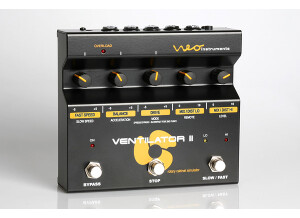
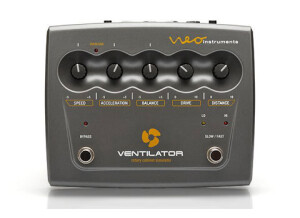
    Having used the old Ventilator for quite some time now, I got fed up with it in the end. Some reasons, it shares this with ALL Leslie speaker simulator pedals, so this is not really a stab at Neo instruments as such. Here's my caveats with it, which hasn't been brought up in other reviews, professional, and amateur alike. 1. It is not true bypass, although it says so in the manual. A signal that is "true" bypass should be able to pass through even with the power adaptor removed completely. This doesn't. While this is important to you or not I don't know. To me it is. Especially at that charging price for brand new item. 2. You have to use exclusively their power adaptor. It says nothing on the actual box/pedal what kind of current it needs and neither does the polarity. This has CENTER POSITIVE, and 12v and requires less than < 300 mA it states in the manual, and the actual adapter says it delivers something like 2.5 A (!). Which is my concern, but read on, later on. 3. The remote input didn't even remotely work (ha!) with their own remote pedal. You had to do a fix. When using it the rotation stopped as if it was a BRAKE on real leslies, that you stopped the rotors but did pass through the speakers anyway. For a product at this price, this should be returned to the manufacturer, and withdrawn instead for modifciation. This was not a warranty defect. Above some serial numbers this had been fixed. Also, their own remote has their own foot switches which still gives a huge mechanical sounding clunk when turning off and on, and when using organ volume pedals and frequent shifts between chorale/tremolo settings on the switch, the clunk can be heard over the music big time and annoying. If there would be any sense to this, release a remote pedal with switches from - like - the Lehle company, or way more silent switches that holds up abuse. Now, I happened to buy the older ones, which nothing was said of, since the former user didn't use the remote. Now, for the current, voltage and input overload, and gain on normal organ B3 sounds. And especially on a real fully equppied Hammond B3, two manuals, and pedalboard. The B3 organ has a huge travel volume pedal range, and can put out a tremenduous amount of input at the Ventilator side, especially when using both manuals, full drawbars PLUS (this is important) a bass 16 foot pedal note. When using this setting in any organ it taxes the input on the Ventilator so you have to turn down the master volume so much (or volume pedal) at the other end, that the headroom leaves not much more than raised floor noise. The headroom is too low on this pedal. In order for not getting the overload led to light up you have to turn it down so much that it is useless. On a real Leslie, the tubes takes cares of any kind of "too much" input and distorts and compress in a nice way. This doesn't. It shares this with Lex Strymon, Leslies own pedals too, so it may not be a thing of Neo only. However, if you had to use their own ugly and unwieldy power adaptor which will scare guitar pedal boards owners off, I think, while they were at it, they could do an analog input that could take and cope with all that power from a B3 and a full keyboard and bass pedalboard onslaught. In order to cope with that you have to use a voltage of maybe 24 v or a 48v and a built in limiter before you go to do A/D converter. Or equip the pedal with an 12AX7 tube or something similar. You can't put this on a regular guitar pedal board and use the wires to power it form a regular Voodo Labs power station, say. But on guitar, the overload don't light up as it is a different beast. It can very well take the signal there. When the overload led lights up on organ, it sounds butt ugly and has this very unpleasant digital crackly distortion. They need to make a larger headroom or built in a limiter of some sorts. And I have tried all settings on the input/output LO/HIGH knobs at the back. To absolutely no avail. So, you are limited to using one manual keyboard organ, and no bass pedals at all (not even on the manual keyboard). The DRIVE (distortion) knob on this pedal is just average and resembles nothing of a tube. It does have its uses though. It's the actual swirl and rotation that makes this pedal the top of the heap. But competition are piling up. No problems there, but read the other reviews about it, then. Who hails it as the best thing since sliced bacon. I don't know their new pedals, the Vent II, but they have smaller footprint which makes them even better for guitar pedalboards but still you have to use their unwieldy and uncommon power supply which refutes the purpose in the end. You just have to make a pedal (or at least showing what polarity and current it needs) on the front of the pedal jack, so one can tell. It's bad business conduct to leave such things out, and if the power adapter should fail, (which it actually did once) you can't test it with another, and rule things out when troubleshooting. If it was a Behringer and/or at a Behringer price I would certainly have no quibbles. But at this price I except some more foolproof things. Just a liiitle more! They would most certainly have to resort to common power supplies when doing their new mini Vents and so on, which are geared towards guitarists anyway. The more it costs, the more right you have to be snarky and prickly about it. The less it cost, the more concessions you can make, and condone more than you condemn. EDIT: Instruments tested on: Hammond xk-3, xk3c and a friends real, full Hammond B3.