Log in
EN
FR

Peluso

13 products found

Categories
Filter
Sort by
Evaluation
  • Reviewed or not
  • Editor’s award
  • Reviewed by Audiofanzine
Availability
  • Available or not
  • Sold new or used
  • Sold new
  • Sold used
Must-have products
  • All products
  • Flagship products
  • Best rated products
  • Hot products
  • Popular products
Price
  • Freeware
€
Clear
Sort by
  • Popularity
  • User ratings
  • Price - low to high
  • Price - high to low
  • Used price, increasing
  • Used price, decreasing
  • Name (from A to Z)
  • Name (from Z to A)
  • Added on
Choose a category
Sort results
  • Popularity
  • User ratings
  • Price - low to high
  • Price - high to low
  • Used price, increasing
  • Used price, decreasing
  • Name (from A to Z)
  • Name (from Z to A)
  • Added on
Filter results 13 results found
Evaluation
Availability
Must-have products
Price
  • Freeware
Show results

The best Peluso reviews

The reviews Audiofanzine members found the most helpful.
  • « Bright done right, with a couple caveats »

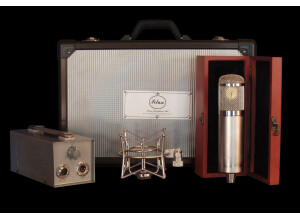
    The Peluso 22 251 is a variable-pattern tube condenser microphone best utilized in the controlled environment of the recording studio. Its name alludes to the classic Telefunken ELA M 251 by which it was inspired. It comes in a complete kit that includes a padded wooden box, 7-pin tube mic audio cable, screw-in type spider shockmount, power supply unit with IEC-type detachable power cord, and a medium-quality carrying case which conveniently houses all of the above. The power supply unit is basic and sturdy, with a strong metal case, a quality toggle power switch, and a stepped variable pattern rotary switch that works with great feeling, solid "clunks" at each step as you turn it. There are 9 polar pattern positions to choose from, varying from omnidirectional to cardioid to figure-8, with three steps "in between" each pattern. This makes the mic very flexible both tonally and for positioning and is one of my favorite features. The mic itself consists of a gold diaphragm, 6072 tube and custom output transformer housed in a basic, sturdy and familiar looking but unusually tall and slender gray metal housing with a strong metal grill that helps reduce plosives. OVERALL OPINION There seems to be a market perception of tube mics typically sounding "warm, smooth and fat," but the 22 251 proves that this needn't always be the case! This is a very bright sounding tube mic. Often, especially with low to mid-priced mics, "bright" can translate to "thin" or "strident," but I am pleased that this is not particularly the case with the 22 251. I would call it "bright done right," as although there is an emphasis on the top end response of this mic, it is a pleasant, tight and grippy (rather than strident and obnoxious) top, with a very crisp sheen for color--very well suited for dense mixes, particularly male and female rock vocals, drum overhead and acoustic guitar. The lows are tight and fairly clean, not "big" and certainly no hint of bloating. The low end does of course change some depending on the selected pattern due to increasing proximity effect (increase of bass) as the pattern becomes more directional. The midrange continues the grip of the top end, is slightly scooped and clear. I have rarely found any need to cut mids and lows out of vocal tracks done with this mic, though it does take both additive and subtractive EQ well. Despite its exaggerated high frequency response which with other mics would make me very cautious with such a recorder, this mic can be great to digital platforms such as ProTools and isn't very choosy about preamps. Its crisp sheen on top and good, clean manners in the midbass also make it a fantastic mic to hit analog tape with. Great care should be taken when placing this mic for a vocalist prone to sibilance. Although this is has been a workhorse microphone in my studio, I would stop short of calling it general purpose due to its brightly colored character particularly in the upper and upper-mid frequency range. I generally find it either will or will not work well for a given source. As for quality...I own four Peluso mics, and my experience with Peluso's tech service has been hit or miss. In the case of the 22 251, the only problem I have had is that the 7-pin audio cable failed (as did the one for my other Peluso tube mic). I attempted several times to contact Peluso about the problem but never heard back. In the end, I resolved the problem by buying expensive (but nice) Mogami 7-pin cable, and was disappointed with the experience. The wooden case has a fairly flimsy clasp which broke after a few years, though it lives in the larger carrying case, this wasn't a big deal. The mic itself has been reliable, as has the power supply unit. This said, it must be considered that Peluso is a small mic maker and does not have the staff or resources of much bigger corporations. One must also consider that mics in the popular-but-tricky $1,000-$1,500 price bracket do need to make concessions in price vs. quality ratio; this can be seen in the flimsy hardware found on the carrying and wood cases and the 7-pin audio cables provided. Where your money really seems to go on this mic is its electronic components and sound quality and, let's be honest, that's what counts the most! In all, this mic stands out to its competition by offering a different flavor of voice--particularly for a tube mic--and a generally high quality of sound that indeed makes it worth the price. Despite certain niggles mentioned, I would still have this at the top of my shortlist for a bright sounding but well behaved, mid-priced and well-featured microphone.

  • moosers's review

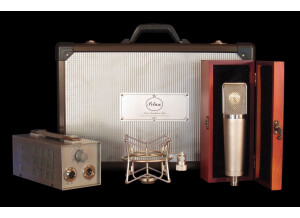
    The Peluso 22 47 Vacuum Tube Microphone is a Neumann U47 tube microphone clone. This review is for the “short body” version of this microphone as it’s worth noting that there is also a longer body version of Peluso’s 47 although I’m not sure what the differences in sound would be. The 22 47 has it’s own power supply since it’s a tube mic, on which you can choose between 9 different polar pick up patterns including cardioid, figure eight, and omni-directional, with six spots in between these for further options. The mic has a 20 Hz to 22 kHz frequency response and also includes a hard case and shock mount. OVERALL OPINION The Peluso 22 47 Vacuum Tube Microphone is probably the cheapest way to get a bona fide U47 tube microphone, or at least is the best bang for your buck that I’ve seen with this style microphone. A vintage tube U47 will cost you a ton of cash and you can get the Peluso 22 47 for a fraction of this cost and with fewer aging problems since these mics will be brand new. Another factor is that older U47’s can sound different from microphone to microphone so with the Peluso you’re also cutting down on this risk. The Peluso 22 47 Vacuum Tube Microphone is a top flight tube microphone for any and all applications but excels greatly for recording vocals and is the go to vocal microphone for most singers at one of the studios that I work from. It’s also great for acoustic guitar and will sound pretty good for almost any application. I’ve used a real tube Neumann U47 and while I’ve never had an opportunity to shoot them out against each other, from memory the Peluso version is pretty damn close in sound. If you are reading this you probably already know all about the U47 and it’s legacy so just know that the bottom line with the Peluso 22 47 Vacuum Tube Microphone is that it’s a legit 47!

  • « Clean, high value, musical SDCs »

    The Peluso CEMC-6 is a solid state phantom-powered condenser microphone suitable for live sound or studio use. The microphones allow for the use of interchangeable small-diaphragm capsules available from Peluso. The variety of patterns include cardioid, wide-cardioid, omnidirectional, and hypercardioid. The mics also feature a nice pad switchable between -10dB and -20dB, and a three-position high pass filter switchable from no rolloff to 75hz and 150hz. I personally own the stereo kit along with the stock cardioid and optional omnidirectional capsules. In addition to the pair of mics matched to within +/- 1dB, the stereo kit also includes two standard rigid mic clips plus two elastic spider shockmounts, and a carrying case which includes space for two mics, the two clips, two spider mounts, two foam windscreens, and cutouts for a few pairs of extra capsules. OVERALL OPINION As the model name would indicate, these mics were designed with certain characteristics of the venerable (and much more expensive) Schoeps CMC6 in mind. I cannot say these mics are ruler flat as there is a gentle rise in the uppder mids and highs, but the sound is fairly clean and clear with just a bit of a sheen to the high end. With a general lack of the graininess or thin mids that is so often a deal-breaker for most low-priced SDCs, they certainly sound more "expensive" than their modest price tags would suggest, and the pads and high pass filters give them very good flexibility. These mics excel on acoustic stringed sources such as acoustic guitars, mandolin, violin, piano and so-on as well as percussion, and can be used to good effect as stereo room mics where a clean pickup characteristic is desired. I do not, however, recommend them for drum overheads particularly over rock kits as they always seem to fall short there. For that source, they don't have the excitement or grip in the mix that I can get with other SDCs in their class from Audio Technica, AKG, Shure and Josephson. I can't recall a time where the CEMC-6s have won a shootout over rock drums, though they do very well on percussion sources such as tambourines, shakers, and over congas, bells, xylophones and the like. As for other dislikes, I have found that the finish of the mic bodies does not hold up well--my pair developed a certain patina over time that makes them look like they have been used hard, even though mine always stay in the studio, are always kept in their case when not in use, and are only physically handled for the time it takes to pop them in their clips or mounts. Additionally, the spider mounts' elastics wore out very quickly within the first year and with moderate use at best. All spider mount elastics wear out eventually, but I have never seen any stretch out as fast as these did. Replacements are available through Peluso for free while covered under warranty, or for a nomical charge out of warranty, but I was disappointed at how quickly the spider mounts were rendered useless until replacements were sourced. At least there are rigid clips also included! The carrying case for the stereo kit fits everything very well but is light-duty in terms of quality. I would not expect the handle and latches to hold up well in road use, though it's fine as long as it rarely leaves the studio. The pad and HPF switches are recessed, which is nice in that they will not be accidentally moved while is use, but it dies mean that you need to use a pen to switch them. The only other caveat is that particular care must be taken when storing spare capsules, and when screwing and unscrewing capsules on the mic body. In summary, if you're after a clean, smooth, musical sounding small diaphragm condenser mic or two at a price and sound quality level that anyone from an weekend warrior home studio guru to a well-seasoned studio professional can swing, and if you primarily want them for acoustic instruments and not drum kits, and if you don't expect them to live hard-use lives, these should be high on your list of mics to consider and represent an excellent value.

  • moosers's review

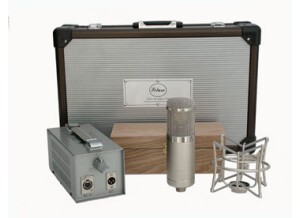
    The Peluso P 28 is a large diaphragm, pencil style tube condenser microphone modeled after classic models like the C12 and 251. The mic is new, so they are being made currently. Peluso doesn't have all that many microphones out on the market, rather I know them best for making capsules. The P 28 has a cardioid polar pick up pattern and will pick up frequencies between 20 Hz and 24 kHz. It comes with it's own dedicated power supply, as well as a shock mount, hard case for the mic, and an aluminum case for all of the components. This mic is to be used strictly in the studio and for no other purposes. OVERALL OPINION The Peluso P 28 can be used for all sorts of applications, and is the perfect replacement for those who want a microphone with this type of look and sound, but can't necessarily afford a real C12 or 251 (or something similar). I've only used the P 28 for recording vocals, and it did a damn good job for this use. I recorded a female singer, and it sounded perfect for her voice, but unfortunately I don't have anything to compare it to as of yet. It definitely captured the high end extremely well, leading me to believe that it might not be the best mic for a male vocalist, but like I said I can't say for sure. It definitely does have a bright sound, and it lacks the depth that you'd get with a C 12 or a higher end tube pencil mic. Having said this, the P 28 still sounds really good, especially when you consider the extreme difference in price between the P 28 and something like a C 12. The Peluso P 28 is definitely suitable for either a home or professional studio, as it is one of those rare mics that has a professional sound and could still be manageable in terms of price for a home studio owner. I highly recommend checking out the P 28 for anyone interested in microphones of this kind.