Log in
EN
FR

SeriesShure SM

28 products found

Filter
Sort by
Evaluation
  • Reviewed or not
  • Editor’s award
  • Reviewed by Audiofanzine
Availability
  • Available or not
  • Sold new or used
  • Sold new
  • Sold used
Must-have products
  • All products
  • Flagship products
  • Best rated products
  • Hot products
  • Popular products
Price
  • Freeware
€
Clear
Sort by
  • Popularity
  • User ratings
  • Price - low to high
  • Price - high to low
  • Used price, increasing
  • Used price, decreasing
  • Name (from A to Z)
  • Name (from Z to A)
  • Added on
Sort results
  • Popularity
  • User ratings
  • Price - low to high
  • Price - high to low
  • Used price, increasing
  • Used price, decreasing
  • Name (from A to Z)
  • Name (from Z to A)
  • Added on
Filter results 28 results found
Evaluation
Availability
Must-have products
Price
  • Freeware
Show results

The best Shure SM reviews

The reviews Audiofanzine members found the most helpful.
  • Audiofanzine FR's review

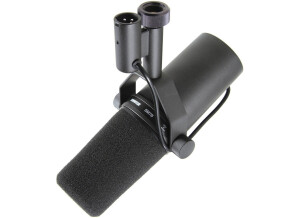
    (Originally written by InstinctCreatif/translated from Audiofanzine FR) Large diaphragm cardioid dynamic mic. Standard mic for radio and TV applications. The Shure SM7B is the ideal tool for voice recording. It's the standard mic in FM radio stations. Linear and wide frequency response ideal for all professional vocal and speech applications. Very effective shield against electromagnetic noise generated by computer screens, neon lights and other electric devices. The Shure SM7B is an update of older models and provides a better stability. Apart form the standard windscreen it's provided with a A7WS screen for sources placed too close to the mic. Shure SM7B features: â–ª Flat, wide-range frequency response for exceptionally clean and natural reproduction of both music and speech â–ª Bass rolloff and mid-range emphasis (presence boost) controls with graphic display of response setting â–ª Improved rejection of electromagnetic hum, optimized for shielding against broadband interference emitted by computer monitors â–ª Internal "air suspension" shock isolation virtually eliminates mechanical noise transmission â–ª A7WS detachable windscreen designed to reduce plosive sounds and gives a warmer tone for close-talk vocals â–ª Classic cardioid polar pattern, uniform with frequency and symmetrical about axis, to provide maximum rejection and minimum coloration of off-axis sound â–ª Rugged construction and excellent cartridge protection for outstanding reliability â–ª Switchable high-pass and mid-boost filters â–ª Mounted on swivel axis for precise mic position â–ª Frequency range: 40 - 16 000 Hz OVERALL OPINION The Shure Sm7B cardioid dynamic mic is a reference in FM radio stations. It's very rugged and looks nice (I know that's a subjective statement). It's great for many applications: radio stations, live gigs, studio and outdoor recordings. It doesn't need any phantom power so it can be connected to any mixer. It has a very low output level. I use it with an Universal Audio LA-610 and the result is great!! The sound is superb ;-) I think the Universal Audio preamp increases tenfold the mic's sensitivity and provides it a superb sound character, ideal for close miking. A well-known competitor product is the ElectroVoice RE20... For more info take a look here: http://www.microphonereviews.com/product-reviews/microphones/shure-sm7b.html or here: http://www.tweakheadz.com/review_of_the_shure_sm7b.htm https://www.sweetwater.com/store/detail/SM7B/reviews/ I also use an AKG C414 B-XL II and a SE Electronics Z5600 A.

  • « very well rounded »

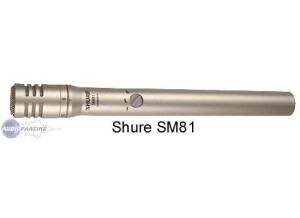
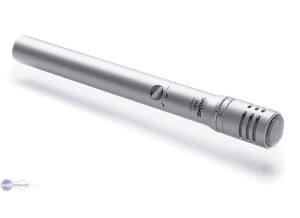
    The Shure SM 81 is a condenser mic that is similar to a few other mics made by Shure. The only difference is in this one is that it’s a smaller sleeker design and a different color. Maybe a little more stylish. This mics sound is very natural meaning that however you play and what you hear when you play is pretty much exactly how it will sound when it comes out of the speakers or when it goes to get mixed down and or mastered. It has a very natural sound that is great for overhead drum mics. The SM 81 can take the sharp punchy sounds of drums and keep them clean without any distortion like some cheaper mics will. Not that this mic is too expensive, it is a very affordable mic and will work great for you for a long time. OVERALL OPINION It really doesn’t matter wether you are recording in an acoustic environment or you are in a club on a stage. The mic will sound perfect in almost any situation imaginable. If you purchase one of these , it wont take long before you go out and want to purchase more for your over head set ups. I have first got introduced to this mic years ago from a friend who was using it, and I knew that I had to have it because of the way he talked about it. Since that first conversation with him I have then purchased a total of 3 of these and still use these to this day and will continue to use them for as long as they hold up. Even if something where to happen I would go out and purchase another one quickly , I cant live without the SM 81 it has been very good to me over the years.

  • « Shure SM-58 »

    Just wanted to review my favorite mic of all time the Shure SM58. Everyone who is anybody has used it through the years. The popular black base with the silver top you can spot the SM58 from a mile away! I was in a band that required me to sing backup vocals. I paid $89 for it brand new. It can with a clip, bag and cool sticker. I knew of their reliability and knew it was the mic for me. I like it because it is a solid piece of gear. It is the industry standard. Sound guys know how to mix them and they work for almost any application you need mic'd. I have used this microphone to mic guitar amps, bass amps, acoustic guitars, acoustic pianos, Hammond Organs as well as kick and snare drums. It may not be the best mic for each thing I just mentioned, but in a pinch it will get the job done. Nothing at all. It's a microphone to perfection. In a perfect world I'd like to see it get maybe a little bit hotter of a signal, but complaints at all. The textbook definition of road worthy. I have some beat, I mean BEAT Shure Mics. I prefer to sing through my own mic since I know what it sounds like and well germs are a big factor, you want to stay healthy on the road. I have thrown it in back packs, dropped it, spilled drinks on it, put it in front of everything imaginable and it still works. Henry Rollins can't even break this mic! If you need a mic, this is it. Best $90 you will ever spend. There are a few cheap knock offs out there. Yes, you can get them for half the price, but they are not as durable or a nice sounding. Get the real thing, get a Shure. This review was originally published on http://www.musicgearreview.com

  • Deleted member's review

    The Shure SM86 is a condenser microphone in the legendary SM line of microphones. Of course, Shure's nomenclature for its microphones is a little bit irrelevant, considering the company seems to be revising microphones and putting them in different lines all the time. This comment aside, the Shure SM86 clearly belongs in this line, with its monochromatic look, signature sound, and yes, iconic resilience to damage. That being said, it also picks up the limitations of the microphones, among them being its minimalism. There are no switches to speak of, and while the SM86 is not exactly what one would label a high end stage vocal condenser microphone, things like these are always nice to have, especially when one is dealing with microphones that are not SM58's and SM57's. But I digress. The microphone itself possesses some very impressive stats: The frequency response of the microphone ranges from 50 Hz all the way up to 18,000 Hz. Granted, it does not go up to 20,000 Hz, but the microphone itself already, sonically speaking, provides a massive improvement over the SM58; the 86 moves the vocals to the front of the mix a lot more effectively. It also has an impressive SPL rating of 147 dB. The only disappointing statistic is the self noise, at 23 dB. Despite the fact that this will not make much of a difference live, a lot of people want a microphone to transition between live and studio. This ensures that the SM86 is not that microphone. OVERALL OPINION The Shure SM86 is a decent entry into the world of stage condenser microphones, but I feel as if, having used the top tier ones, there is something not quite there. However, the Shure SM86 will knock the socks off of any $100 dynamic microphone, with one exception: the Electro-Voice N/D767a. I actually owned that one, so that review is particularly in depth. You should check the Shure SM86 out, though. At this point in the price, there are very few microphones that can be considered bad by everyone, so pick your flavor and learn to love it!

  • moosers's review

    The Shure SM94 is a small diaphragm electret condenser microphone that I have used in the recording studio. You can probably use it for live shows as well, but I haven't used it for this application as I don't do live sound and only do work in the recording studio. It wasn't until pretty recently that I had even heard of the SM94 let alone used it, as they seem to be pretty rare. In terms of characteristics, it's got a standard cardioid pick up pattern and will pick up frequencies between 40 Hz and 16 kHz. It requires phantom power, but can also be powered by AA batteries if you're using it for a live show. OVERALL OPINION My experience with the Shure SM94 is somewhat limited to date, but I have used it in a few different situations, including for acoustic guitar and scratch vocals. While the SM94 isn't my favorite sounding microphone for these applications, it does have a good enough sound to get the job done well. It doesn't have any special features, and in fact the limited frequency pick up makes it less versatile than most microphones that should be used in the recording studio. While this does have a similar look to the Shure SM81, it doesn't have the same type of sound at all. While the sound of the SM94 is quite clean and full bodied, it lacks the vibrant sound that you'd get with a more traditional small diaphragm condenser like a Shure SM81 or a Neumann KM 184. Even though the Shure SM94 is pretty rare, you can most likely find them around here and there if you're looking hard enough. However, the SM94 isn't all that noteworthy where most people will be searching for it, so I believe the price wouldn't be very much, but it won't be extremely cheap. All in all, while not the greatest sounding small diaphragm condenser out there, it's still a very good sounding microphone worthy of use.

  • moosers's review

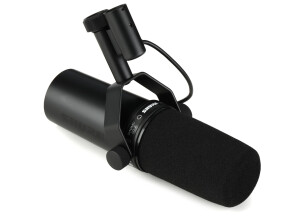
    The Shure SM7 is a dynamic recording microphone designed for broadcast speech I believe, but is also great for singers, among other things. It is built like a tank, as most Shure microphones are and can take a bit of a beating, although I wouldn't recommend beating it at all! OVERALL OPINION I've been using the Shure SM7 for about four or five years, and it has become one of my favorite microphones for male vocals. It is like a supped up SM57, with more girth and body in it's sound. This mic is extremely underrated, and to me it can sound as good or better on certain people's vocals than any mic I have used. I would compare the SM7 to the Electro Voice RE20, since they are both made for radio broadcast and for speech application and are both in the same price range. In terms of tracking male vocals, I think this is way better mic than the RE20 and is probably a better all around mic. However, I would choose the RE20 for strict broadcast and speech use. I also like using the SM7 as a kick drum mic and on a bass amp or electric guitar amp. The best part about the SM7 is that it will cost you only a fraction of some more expensive mics, but is as good as any I have used in certain situations. If you are a male vocalist and have a project studio, I would definitley at least give this mic a try to see if your voice is a fit because when it is you can really get some good results - specifically good on rock singers with a bit of a growl, or for a screamer. All in all this is a great mic that I love having in my mic cabinet.

  • « Universal legend »

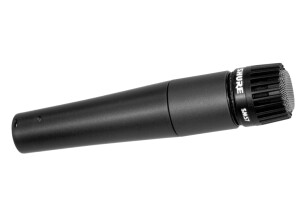
    The Shure SM57 is a modern classic microphone, and it is used more prominently in the studio that any other singular microphone. It is a legendary, but simple dynamic microphone, with a frequency response from 40 Hz to 15,000 Hz, cardioid pattern, 150 ohms rated impedance, and the basic 3-pin XLR connector on the base. It is unidirectional in nature, with a very small sound entrance and windscreen. It doesn’t have a particularly flat frequency response, but it sounds very musical, and it can be used in a variety of applications, including guitar amps, vocals, drums, wind instruments, stringed instruments, acoustic guitars, room ambience, and more. What’s great about the Shure SM57 is that it is used almost universally, and it is one of the cheapest microphones you can buy. It is still a quality product from a quality microphone manufacturer (in Shure), and that makes it perfect for so many budgets and applications. However, there are many fake Shure SM57’s floating around, particularly on eBay, and if you are not careful, you will end up with a Chinese-made fake that looks just like the real mic, but sounds thin and tinny. In fact, I owned a fake SM57 for a few months, and I didn’t realize it was fake until I started testing it against another SM57: I knew the mic was sounding bad, but I assumed it was my other equipment, bad mic placement, or phase issues, because I just assumed the mic was real and it fine working condition. Do make sure you do not fall into the same trap, and buy from reputable sellers. OVERALL OPINION Overall, the Shure SM57 is a great mic that belongs in every studio, simply because it is so universally used. Even if you have better microphones that work better for specific situations, it’s still a good idea to keep these around, because they are always useful and every musician is familiar with them.

  • « Basic Mic, gets the job done »

    The Shure SM81 LC is more than its worth. I had bought all equipment needed to start recording previously and so when I got home and hit the record button, what I got was a very clear and concise sound. I have a basic in-home studio set up in my room so I don't exactly have a "dead room" to record in but the way this carded mic picks up straight on sound and minimizes background sound is extremely useful and impressive. World-class large-diaphragm sound at a rock-bottom price!. Studio condenser has a 1"-diameter, 6-micron-thick diaphragm for high sensitivity and detailed recordings!. Uses Mogami wire for added clarity!. Balanced, low-noise output; heavy-duty brass enclosure; 30Hz-heavy-duty brass enclosure; cardioid pattern. Includes spider shock mount that also fits Neumann mics. OVERALL OPINION If I had to make a complaint though, I would say that some times in the play back my voice would be distorted and some words would be completely unheard and at other times it would be completely fine. It's kind of unpredictable and its' really just a guessing game when you hit the play button. The mic is very bright, kind of harsh on certain type of vocals. On very soft tones it works fine, but if there's a heavier voice, it gets rougher. Compared it with other 300-600 dollar mics in my studio - good extra overhead etc mic for 100 bucks, but definitely sticking to my old mics for lead vocals. I am very much satisfied with the Shure SM81LC microphone. I had been interested in MXL 2003 although while searching the internet I read that the V63M was designed in close association with the 2003. The stereo field is much more saturated than with Shure BG 4.1 that I had been using etc. There is more resolution on high frequencies. Much of the progress I have made in the past has been parametric with upgrades in recording components. The V63M is a cost effective solution for acoustic guitar.

  • Deleted member's review

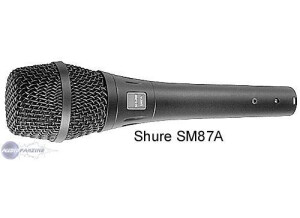
    The Shure SM87 microphone is that next little nudge the Shure gives you before shoving you into Beta condenser territory. And what a nudge it is. In a nutshell, the Shure SM87 does deliver very crisp and clean, but warm sound. I am putting a lot of emphasis on warm here. It is not imbalanced and skewed or exaggerated in the low end, like the venerable SM58 is wont to do when working the microphone up close. This is warm, but still clear and crisp. Imagine throwing a fuzzy blanket over someone instead of an entire comforter, and that is about as nice of a metaphor I can give. This being said, the Shure SM87 is not at all suited for thicker songs where the microphone needs to really cut through the mix. In testing, it had a very unfortunate tendency to get lost in a heavier sound. However, this hyper smoothness also means that it is wonderful on emptier sounds, to take the most obvious example, an acoustic guitar and voice. The Shure SM87 is a condenser microphone intended for live use, and thus unfortunately lacks a few of the refinements that a studio condenser is expected to possess. Self noise is a 24 dB, only workable in live venues. So if you are like me, and work across the live-studio barrier, then this is not the microphone for you. It has a supercardioid pickup pattern for maximum off axis sound isolation, and a respectable frequency response from 50 Hz all the way up to the wonderful standard of 20,000 Hz. It handles a rather impressive 140.5 dB of SPL's. However, with this microphone being ideal for quieter worlds, this spec may be wasted on it. It is certainly nice to have when one is mic'ing in a pinch, however. OVERALL OPINION The SM87 is a great microphone if you know what you are looking for. The microphone itself is extremely warm, and on a quieter stage, sounds fantastic. It does get lost in a heavier mix though. This is probably because unlike the SM58, whose muddiness can be compensated for by the often unpleasant but penetrating midrange honk, the SM87 is incredibly clear, and not designed to overpower any element of a performance. That is why it is a very specific microphone that needs to be tested out, more so than usual, before taking a plunge. It should also be noted that this microphone breaches the $200 mark, and several microphones in the high end line have been opened up under $300.