Microphones
Click on one of the icons above to access the different content & services related to the cateogory Microphones.
List of user reviews
Microphones

-
-
Characteristics
- The Rode Pop Shield is a uniquely designed pop filter. I'm assuming that if you're checking out this review you know what a pop filter does, but in case you don't, the purpose of it is to filter out any sibilance and harsh sounding words or phrases in the human voice. It will also protect the microphone from any spit or extraneous factors. This is something that is designed for use in the recording studio, and I'm not sure it would have any other purpose at all.
-
Overall Opinion
- While definitely the most unique pop filter I've seen out there in terms of design and make up, I'm not sure that the Rode Pop Shield is any better than your traditionally designed pop filter. While it certainly covers more ground as it is simply larger, I never felt that other pop filters didn't cover up the microphone well enough or anything like that. The Rode Pop Shield definitely does have a sturdy built and make up to it, as it is easy to attach to any stand and stays on there sturdily, which can sometimes be an issue for pop filters. While this does claim to be specially acoustically treated, I can't say that I've noticed a real difference between this and a traditional pop filter. For me the Rode Pop Shield would be all well and good and might even be my filter of choice if it wasn't for the price. It is more than double the price of most pop filters out there, which definitely isn't worth it in my opinion. Perhaps if this was a bit cheaper, I would be recommending it. However, the pop filters made by Shure and other brands have gotten the job done for me in the past without being this expensive, so I think I will stick with them...

-
-
Characteristics
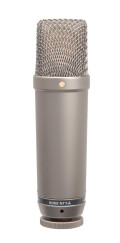
- The Rode Classic II is probably the best microphone that Rode has to offer, or is at least the best one that I have used made by them. The mic is a valve based, large diaphragm condenser, and is meant only for use in the recording studio. The mic has nine different pick up patterns including cardioid, figure eight, and omni, all of which have settings in between as well. The mic will pick up frequencies between 20 Hz and 20 KHz.
-
Overall Opinion
- I've only had a chance to use the Classic II a number of times for recording sessions, as this isn't a mic that I own myself. As I said before, the Rode Classic II is not only the best microphone that I've used made by Rode, but accordingly it is also the most expensive. The mic has a very sweet sound, and is one that will translate for just about any application that you want to use it for, making it a great all purpose microphone. It has an extremely full bodied tone, making it perfect for vocals as it will pick up the full frequency spectrum. I haven't used it for too many other applications, but judging from the top notch sound quality that I heard when I was recording vocals with it, it will translate well for most applications for sure. Rode generally isn't known for manufacturing top tier microphones like this, but it is certainly nice to see one from them as they've done a great job here. I've had a lot of experience with all sorts of different Rode mics, and none of them touch the Classic II, as it is simply the best of their bunch. When compared to other top end microphones made by other companies, it definitely stands up as well. While it is mostly professionals who will be interested in the Rode Classic II, this would be a great choice for an all purpose microphone in any studio.

-
-
Characteristics
- The SE Electronics SE1000 is a large diaphragm condenser microphone designed for home studio owners. I've only used the microphone inside of the recording studio, so this review will be on this type of application. I would imagine that most will be using it for this application anyway as this isn't suited for any other type of use. The mic has a standard cardioid polar pick up pattern and will pick up frequencies between 20 Hz and 20 KHz. The mic doesn't have a pad or anything like that...
-
Overall Opinion
- I only used the SE Electronics SE1000 one time about a year or so ago. I used it to record lead vocals on a demo for another artist, not myself, as was engineering rather than performing. This is a mic on the lower end of the spectrum, but has a nice sound for something of this price. It's diaphragm is nice and large, holding the capsule steadily and sturdily. This mic can be found under a few different brands, as it is indeed one of the Chinese made microphones that has floated around under different titles. It is also one of the better microphones of this type that I have heard, and is made well for a mic of this kind as well. This isn't to say that this is the best sounding or manufactured mic by a long shot, but when considering the price, you'll take what you get here for sure. I wouldn't recommend this mic to anyone other than a home studio owner, as it isn't up to par for professionals. SE Electronics certainly has some better microphones on the market, but many of them are not in this price range. For true budget mic seekers, I'd encourage you to check out the SE Electronics SE1000 for sure as I think you'll agree with me when I say it is a good bang for your buck type of deal...

-
-
Characteristics
- The Audio-Technica AT4047MP is one of the higher end models of large diaphragm condenser microphones that AT has to offer. The mic boosts the ability to pick up sound in a variety of different ways as it has three different pick up patterns to choose from including cardioid, figure eight, and omnidirectional. I've only used the microphone in a recording studio setting, and really wouldn't recommend using it for any other kind of use as this is what it is designed for; it's too expensive and fragile to use for live shows or anything like that.
-
Overall Opinion
- I first used the Audio-Technica AT4047MP a few months ago, and since have only used it a handful of times. The AT4047MP is supposed to be a more 'vintage' sounding microphone, as I imagine that this would be one of the most popular complaints when it comes to Audio-Technica mics, as I know that warmth is vibe is definitely something lacking in the line of microphones made by them. I can't say that it has as much warmth as the big boys out there do, but it is definitely a step up from the other models. The mic is suitable for just about any sort of application that you'd like to use it for, as the switchable pick up pattern allows for some versatility, but I've only used the mic for recording male vocals. For this application, the mic definitely did a great job of picking up the full sound of the human voice and I also felt that it the sound came in with a lot of clarity and fullness. However, they would like you to believe that you're getting a more 'vintage' sound with this mic, which is something that although generally hard to define, isn't present here. This isn't a bad thing for me, as the mic does its job well and that's really all that I can ask for. The price is a lot more costly than the other microphones that I've used from Audio-Technica. Having said this, you should definitely be comparing the AT4047MP to higher end microphones, which of course there are plenty to choose from in this price range - many of which are superior to this one...

-
-
Characteristics
- The Audix D6 is a small dynamic microphone designed for use on a kick drum. I've only used the mic inside of the recording studio, but it can definitely be used for live shows as well. It is a compact microphone, which is a big plus as far as use with kick drum go as it makes it easy to place inside the kick. The mic has a cardioid pick up pattern and will pick up frequencies in between 30 Hz and 15 KHz.
-
Overall Opinion
- My use of the Audix D6 is limited to use with a kick drum inside of the recording studio, but I believe that the mic would have some versatility if I tried it out on other drums. Having said this, this review will focus on the use of the D6 in tandem with a kick drum, as this is what the original purpose of the mic is and is what it is probably best for. They say that the mic is actually tuned and tailored for use with a kick drum, which I don't doubt as it is great for this application. While I do prefer the sound of an AKG D112 or a Shure Beta 52A, the Audix D6 is another fine choice for recording kick drum as it give you a nice and full sound, which both the low end booming and a nice attack to go along with it. I love how compact the D6 is, as it makes it a breeze to stick inside of a kick drum and place it wherever I see fit. I find that with some of the other kick drum mics that I previously mentioned, it can be a bit harder to fit them inside the kick drum and once I get them in there, it is a bit hard to move around. These problems are washed away with the D6, which makes me think that it would be great for live shows since it would only take a second to place, although I can't say I've yet had experience using this mic in a live setting. The price of the Audix D6 is right in the same range as the D112 and the 52A, so the three mics are probably a good place to start and shoot out when looking for a kick mic. While the D6 wouldn't be my first choice of the three, it is a very solid mic on its own and should definitely be the discussion.

-
-
Characteristics
- The Samson Audio DMC 100 Mic Clips usually come in a set of three. These clips are designed to clip onto drums for easy placing of microphones for live shows and in the studio. I've only used the clips inside of the recording studio, but would think that they would have the same function no matter where you decided to use them. I have used the clips for applications beyond drums, but they do work best to clip right onto drums. They clip on easily and tightly and do have a good amount of flexibility in terms of the length of the clip.
-
Overall Opinion
- I bought the Samson Audio DMC 100 Mic Clips in a set of three for only $25 USD, so I can't complain too much about these clips as they have served me well. I was hoping to get a cheap alternative to some of the other clipping accessories out there, and they did just that. While I do wish they were a bit more versatile in terms of how you could clip them, they really are supposed to be used with drums, so that is how I would recommend using them. I have used them to clip onto other mic stands and other things to try to make them a bit more versatile, and while I have been able to do so to a degree, if you're looking for something more versatile I'd just suggest getting something elsewhere as these really aren't designed for that. As far as clipping onto drums though, these do the trick extremely well as I've always found that they snap on and come off easily and hold the mics in place very well. If you're looking for a set of cheap mic clips for drums, the Samson Audio DMC 100s are a good way to go for sure, as they are some of the cheapest out there that I could find without sacrificing too much quality. These are perfect for a quick placement of any mic that will fit the clip on just about any drum...

-
-
Characteristics
- The Nady SP-1 is an extremely inexpensive dynamic microphone designed for live shows and gigging. While of course it can be used in the studio if you wanted to, I'd strongly recommend only using this for shows. The mic has an on/off switch and isn't all that well built in general. The only reason that I got the mic was because it came in a Musicians' Friend pack that also came with a cable and a stand, all at a very low price. I used the mic for band practice, and shortly after getting it I stopped using it completely. Getting this microphone was really just a bonus to getting a nice stand for me...
-
Overall Opinion
- I purchased the Nady SP-1 in the mic/stand/cable combination pack a number of years ago - I actually got two of them. I figured at the very least I'd have a few new stands and cables, and could use the microphone for band practice as an inexpensive mic to throw around. For a little while, the mics definitely did the job for me, but this was a while back and before I even had a decent PA system to use, so it was really for the bare bones type of use. I can't really say that the sound quality of the microphone is good, but within my set up at the time it got the job done for me in my situation. I'd imagine that there are a lot of people out there who might be looking for an extremely cheaply priced and designed microphone for situations like I had. However, if you're looking for any microphone halfway decent for practicing or for live shows, I would definitely look elsewhere as there are plenty of cheap microphones out there that sound way better than this and will last a lot longer as well. I'd only recommend the Nady SP-1 if you're also in the market for a stand and a cable to go along with it, as that is the only way that this microphone would really be worth anything in my opinion...

-
-
Characteristics
- The Cascade Microphones C77 is a bang for your buck ribbon microphones designed for use in the recording studio. I'd only recommend using it for recording purposes, since it is a ribbon microphone and needs to be handled with care. The mic has a figure eight polar pick up pattern like most ribbon microphones, and picks up frequencies between 30 Hz and 18 KHz. The mic has the look and feel of the classic RCA DX77 ribbon microphone, and is said to be loosely based upon it.
-
Overall Opinion
- The Cascade Microphones C77 is perfect for either the home or professional studio owner who is looking for a very reasonably priced ribbon microphone without sacrificing too much quality. While of course this doesn't sound like the original DX77, it does have a more than respectable sound quality and is a mic that will come handy in a lot of different situations. The mic is great for recording vocals, electric guitars, and piano, which are just the applications that I've had a chance to use the microphone with. The mic is built pretty well, but certainly has a cheaper feel to it than the original DX77. However, I think it should last a pretty long time as long as you treat it properly. Since of course it is a true ribbon mic, it definitely has the sound to match, making it a good choice for a reliable ribbon microphone that sounds good without having to spend the big bucks on a real RCA or a Royer. Even though it is probably more suitable for a home studio owner, I wouldn't count out using this in a professional one either, as it has a great sound quality to go along with its great price. If you're looking for that ribbon sound with the hassle of maintaining a vintage one and without the large price tag, definitely investigate the C77.

-
-
Characteristics
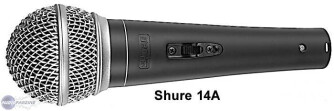
- The shure sm 57 doubles as an excellent choice for live as well as recording situations for a variety of uses such as miking drums, guitar amplifies, percussion, vocals, and even bass instruments. It is a dynamic style microphone.
-
Overall Opinion
- What I like most about this microphone is its versatility. It can be used for just about anything you can imagine. Its definitely a staple for me on drums and guitar amplifiers. It provides good clean sound and is also considered by many as the "studio standard" in recording situations. Other things I like about this microphone is what I like about all Shure products, they are very well built, can take a serious beating and still perform the same as the day you bought them and come with one of the best warranty (and out of warranty for that matter) plans I have ever heard of. Even if you bought this used, had it for 5 years and one day dropped it off a side of a building, you can send it in to Shure for a nominal fee (usually less than half of what it cost brand new) and get a brand spanking new microphone with a brand new warranty, amazing!!!! The only thing I don't like about this microphone is when you use it for vocals, it is too easy to make the dreaded "pop" noise when you push to much air on to the built in "wind screen" top. I own a couple of these and I never paid more than $60 used and $90 new. That is a great price for such a quality product. The Precision and sound quality is superb. That is why these are found in probably every serious studio in the world. I own or have used a few different dynamic mics including Audix and EV. Both of those companies make great mics (my EV's are old 40's era silver bullets) but I do find myself using the Shures more often. Yes, infact I intend to buy some more as I am starting a mobile recording business and want to make sure I have enough to cover all the needs of any band I record.

-
-
Characteristics
- This is a condenser microphone primarily used for recording. I guess you could use it live for a Bluegrass setup being that it is Omni directional. Other than that though, it is definitely a studio microphone.
-
Overall Opinion
- What I like most about this microphone is that it is not too expensive and provides a decent, usable recording. I do a lot of mobile recording for samples and such. If you live around Asheville, NC, you might see me on a trail in the mountains, or near a rushing river with my Macbook, Presonus Firebox and this mic. I own a few nicer Condensers that I wouldn't dare stick near a river or take hiking with me, so I am glad to own this little guy. Not that it is a poor mic, but the price tag is low enough that if something were to happen to it, I wouldn't be too upset. Other things I like about this mic is the nice hard case it comes with. I feel like the nicer the mic I buy, the less protection the company offers for it. What I don't like about it I guess would be that it is not anything special. If you are a serious recording engineer, than samson mics will most likely never make it in your recordings. They don't come anywhere close to my Rode NT3's and are not even in the same galaxy as say a Neuman. This is too be expected as you could buy 50 CO1's for the same price as a Neuman condenser. If I had to rate the quality of this thing in the spectrum of all mics I have used, it gets around a 4 or 5. It certainly isn't as good as the marketers would try and tell you, kind of like how Budweiser claims to be the King of beers when its more like the dirty, manure stained peasant of beers. The only reason I own this mic is because it is expendable and I can travel with it and use it in precarious places without stressing out. The bottom line is is you want quality, you have to spend more than $100 on a studio condenser. The Rhodes NT3's are around $250, and they are sooooooo much nicer. Of course, if you want really good mics, you better be ready to spend $1000's. Yes, I would buy this one again if I drop the one I have into a river, or off a cliff. (I am giving this a 7 because of its unfair to judge this mic against the nicer mics I have been able to use)