Log in
EN
FR

Moog Music

174 products found

Categories
Series
Filter
Sort by
Evaluation
  • Reviewed or not
  • Editor’s award
  • Reviewed by Audiofanzine
Availability
  • Available or not
  • Sold new or used
  • Sold new
  • Sold used
Must-have products
  • All products
  • Flagship products
  • Best rated products
  • Hot products
  • Popular products
Price
  • Freeware
€
Clear
Sort by
  • Popularity
  • User ratings
  • Price - low to high
  • Price - high to low
  • Used price, increasing
  • Used price, decreasing
  • Name (from A to Z)
  • Name (from Z to A)
  • Added on
Sort results
  • Popularity
  • User ratings
  • Price - low to high
  • Price - high to low
  • Used price, increasing
  • Used price, decreasing
  • Name (from A to Z)
  • Name (from Z to A)
  • Added on
Filter results 174 results found
Evaluation
Availability
Must-have products
Price
  • Freeware
Show results

The best Moog Music reviews

The reviews Audiofanzine members found the most helpful.
  • « The grandaddy of them all gets young again !!! »

    If you’re reading this review, you already know the Mini (well, if you don’t, please leave Audiofanzine instantly and go read something else – Garden Design Magazine, Your Horse or anything else non-music-gear-related), so I won’t detail further the various pros and cons that characterize this true legend of electronic sound... This review will mostly focus on its difference compared with its ancester. In the past, I’ve owned a 1973 Mini, so i know what i’m talking about! Out of the box, the magic is already here – it’s a real Minimoog! The machine is heavy, the woodwork is beautiful and the knobs are huge – superb! When you first plug it in, the Mini requires a few minutes to stabilize, then you start tweaking the settings. Here you are! THE Mini sound as you’d expect it to be! It sounds punchy, vibrates, provides a round, warm sound, so you get everything you like from a Minimoog! Let’s now get to what this 2016 version does better: - the keyboard is a Fatar, it may be a little harsher to play than the original one’s but it’s very pleasant to use - the aftertouch (to be plugged in on the top panel – affected to the filter cut frequency for instance) and its intensity can be set using a small wheel on the top panel (like a lag processor). It’s a great feature which obviously adds a certain expressiveness! - the same goes for the velocity – great! - an LFO (triangle or sinus) was added, its switch is located next to the Decay switch and allows to change the waveshape and to change the LFO’s speed. Another knob allows to route the modulation wheel towards the LFO or something else… What more could be said on the Minimoog? It’s a synth that goes beyond rationality, synth lovers won’t be left indifferent to it – after all others love cars, or stamps, or expensive vintage guitars… No matter if you love or hate it, this instrument has a place in electronic music history! To me, this 2016 version is particularly advisable to those looking for a Mini! The sound is here (like with its ancestor), and the addition of new features gives it quite a boost! Granted, some will say “yeah, great, but the original’s components are instable, and in the end”: all I’ll tell them is that the said components are now 40 years old and may die out anytime, or at least they won’t work long before they have to be serviced, and the sound qualities of both models (the original and the 2016 version) are objectively almost the same! The rest is just pro-analog nonsense (I’ll mention that I also use VSTs such as DIVA or FALCON to get the best of both worlds). The price is rather high (almost €4,000, but don’t expect to lay your hands on a 40 year old vintage model much under €5,000). Yes, it’s expensive, but passion has a price so if you can afford it go ahead and you’ll get a legend under your fingertips. I could afford it and believe me, I don’t regret doing it! It’s beautiful, I love it and I can’t stop playing it! One of the best purchases I ever made!

  • « A sequencer + a patch panel, resulting in… THE ONE AND ONLY MOOG SOUND! »

    For which specific applications or uses have you chosen and do you currently use this synth? I use it to produce electronic music, and sometimes sound design – all only in the studio though it’s largely useable on stage. Does it seem sturdy and well-finished? Is it easy to use? The synth seems reliable, the knobs are sturdy and the design looks retro. No problem with all that except for the absence of a power switch so you have to plug and unplug the switch – something I find a little stupid. Using it is both quite simple and natural: a VCO, an LFO, a Cutoff, a Reso and a few other knobs plus some switches. The same goes for the panel switch, which is very well described in the (English-only) manual. What do you think of its overall sound? What about the factory presets? Well, we’re talking Moog here, so you clearly get a warm, lush, powerful sound (I’ve never owned a Moog before, but I could hear a difference compared with my Arp Odyssey). The Pulse wave is very cool-sounding, with many a possibility using the Pulsewidth, LFO, chorus and the switch – and I’m not even mentioning the patch panel yet. The same can’t be said of the sawtooth wave, which is poor-sounding, reminds of a Gameboy and offers many less options compared with its aforementioned counterpart. The reso is also rather disappointing, though you can get something interesting out of it using the patch panel. As for the sequencer – well, that’s for a real killer! 32 transposable steps, easy to use, that’s a real pleasure, I can’t even take it down! The patch panel is also rather cool, though it remains quite basic and addresses beginners into the modular world – which happens to be my case. However, its biggest asset according to me is how it allows plugging another synth into the input so as to benefit from the Moog’s filter, sequencer and other features, so you got all you need to geek with it! What are the pros and cons of this product? Pros : - The warm and lush Moog filters. - The divine-sounding Pulse wave. - The very intuitive and efficient sequencer. - The very nice patch panel, which allows having another synth’s sound benefit from the Moog’s filter, sequencer and other features (use your imagination!). - The old-school design, and the overall building quality which seems reliable. - Price is rather fine. - Easy to use from the start, provided you know your basics as to analog synthesis. Cons : - THERE’S NO POWER SWITCH, HOLY SH*T!!! - I found no interest in the Sawtooth wave and tend to ignore it entirely. - A single VCO (Which is not a real problem per se). - English-only manual (not a problem for me, but other non-native speakers might have problems with this aspect).

  • « A cherry on the cake »

    I use it in an amateur, recreative context. I like: - its punch, direct controls, modulation capacities, continuous signal VCA and mini-keyboard - really compact - the metal box (in this range most products are made of plastic) - patchable modulation matrix (with an old-school mini cable) - many possible modifications detailed by Mood, which is what it owes ots name to (in German werkstatt = workshop). It allows to play live sounds easily, to add drones, and it adds a sound color. Very easy to use, ideal for an occasional jam. I'm disappointed by the quality of its knob, not so good for the price, and they can't be replaced. Moog could also have been more business-minded by providing a cable for triggering CV notes. Certainly, the name adds to the price, and in this price range you have more complex/perfected/modern products, so you'd better know what you're buying - and what you want to do with it. It's very different from the Microbrute (it's much smaller), Mopho and MFB (which are more autonomous with their mini-keyboards)and Kork Volca (it is sturdier and has a better sound, but this is quite subjective and everyone should judge, at least it's not noisy and delivers a lound signal). I'm happy I bought it, it complements well the rest of my gear.

  • « Effective »

    Moog's website is a better place to look up the technical features. The control panel is well structured: Preset>Modulations>Oscillators>Mixer>Envelopes>Output I think its clear, simple and logical. A nice point to start out in the analog world... No external PSU, a good point! And, even if it's something very personal, I think it looks very nice. UTILIZATION The one function - one control philosophy is very practical and makes the Sub Phatty easily controllable and intuitive. Especially as the pots in question seem to be of excellent quality and feel very nice. They are precise, "soft," regular, well-calibrated. There are hidden functions that you need to learn by heart. They are also accessible via the plug-in editor, which works fine. Speaking of the (VST/AU) editor, I think it's well-made and effective. The plug-in allows you to save the presets, which can save you a lot of time. Nevertheless, it sometimes interferes with Logic Pro X's MIDI control, which can result in surprises. Consider adjusting the settings in the DAW. The keyboard seems solid, it's velocity sensitive, without aftertouch. The shell (metal for the most part) and the connectors (metal and plastic) give a solid impression. The Moog know-how is obvious. SOUNDS The sounds suit me fine. It can sound fat for basses or be really acid and make itself heard in the mid/high ranges. The envelopes and filters are fast, which allows you to make percussive sounds. The sub does its job well and reinforces the low end of the spectrum. The possibilities are pretty wide and aren't limited to the basses and sub. This synth loves to roar under the effect of HardSync/Resonance/Multidrive…it's fantastic! Looking for a sound is a real treat with this synth, and you can expect some surprises...It has potential, that's unquestionable. I modified my review after six months of use. I said I was a bit disappointed, but that's not the case anymore. This synth is definitely as fun as can be, it has a powerful sound and fits my songs perfectly, in all registers (lows, mids, highs). I'm not disappointed anymore, I've become a fan now after having used it more. It has no built-in effects. OVERALL OPINION I bought it for $1100, and I would buy it again. What I like most is its "efficacy," you plug-in, play, you have (almost) all controls at your hand. Immediate, direct, physical access. No menus and sub-menus...And it sounds fine! What I like the least is the integration with the computer world, it's OK but it can be perfected. The limited saving of presets without a computer. No screen.

  • « Fabulous! »

    Subtractive synthesis Irreproachable manufacturing quality! Hyper-responsive MIDI No effects 6 soundbanks + 1 user bank On the rack version there's a switch on the rear to change to balanced level with a 600-ohm impedance, which is indispensable for consoles or to go directly into a converter! The panel lights up blue for live performances...Wow, it's simply perfect. When the luminosity is set to max you can hear some noise. It's the same with all Voyagers, so it's a defect, but it's not really annoying. UTILIZATION There's an excellent plug-in to integrate the Moog with a DAW (soundtower plugSE). It's absolutely awesome. All synths nowadays should have a control VST. Bye-bye to having to look up in the user manuals the CC numbers, or to configure every control by hand. automation has become child's play and the curves are displayed with their own names! You can record anything you want be it with a mouse, a controller or, preferably, with the Moog! Even the presets are saved with the DAW files! What else could you ask for? The best of both worlds combined. It's perfect for a standalone application, live, for example. There's almost 1 control per function. By the way, the controls are big, solid and feel nice to the touch. SOUNDS The sound is incredible, it rocks! It's round, fat, powerful, clear, and even moving! The basses and sub are wonderful! I don't use it that much for leads, but you can certainly find something that pleases you among the 6 original banks of 128 sounds (plus a User bank, because it's a treat to dig into the synthesis of the Moog to create your own sounds).! There are enough modulation possibilities to make the filter howl. If you reduce the envelopes to the minimum on certain bass sounds, the result is awesome, I think that's one of the differences between the plug-in and the TRUE Moog. etc etc OVERALL OPINION To mention some minor defects, personally, I think the update is a bit bizarre. It might lack an entire arpeggiator, since it's a mono synth, it would've been perfect. And the cherry on the cake would be a built-in analog delay! This synth is expensive (although secondhand not so much), but I for one do not regret my purchase in any way!

  • moosers's review

    The Moog Music Opus 3 is an analog synth that isn't too much like the other synths that Moog has to offer. Unlike other Moog synths, this one actually emulates acoustic instruments. While it does have standard synth parameters, the main sections on the Opus 3 are for strings, organ, and brass emulation. The keyboard of the synth spans about four octaves, which is bigger than most Moogs out there. The synth has a pitch wheel but not a modulation wheel and is a fully polyphonic synth, which is rare for Moog... UTILIZATION Controlling the Moog Music Opus 3 only took me a little while to get used to as everything can be taken at face value. If you are familiar with synths, this will be no problem for you and even if you don't have much experience with synths I think you will still be able to figure out how to use this pretty easily. The synth has sections for strings, brass, and organ, and then has more traditional synth sections like modulation, chorus, articulator, a voltage controlled filter, and an output mixer. I've never seen the manual for this synth so I can't say if it put together well or not. SOUNDS The Moog Music Opus 3 is definitely a unique sounding synth and is unlike any other Moog synth that I have used. While the organ, brass, and strings certainly don't sound like spot on emulations, they contain their own unique tones that serve as a mixture of synth and acoustic emulation. There aren't any other Moog synths out there like this one, and I wouldn't expect to get traditional Moog sounds out of this as this isn't that type of synth. If you're looking for the big lead tones and fat bass sounds that Moog is famous for, this synth probably isn't for you. However, the Opus 3 contains some really cool and interesting sounds that aren't found on any other Moog synthesizer. OVERALL OPINION The Moog Music Opus 3 isn't the most readily available Moog synth, but can definitely be sought after if you are interested in buying one. The price for it isn't all that expensive, but I would suggest trying one out first as this isn't your traditional Moog synth. I wouldn't recommend this as a first Moog for those interested in getting traditional Moog tones, but if you are looking to experiment with some unique synth sounds, definitely check out the Opus 3.

  • « Run everything from the floor »

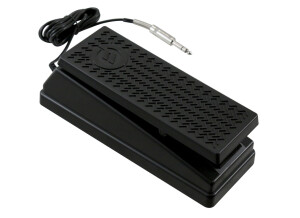
    There are many things to love about this unit. First off, it is designed and integrates perfectly for control of my Mooger Foogers and my Slim Phatty. I have hands free control of every essential parameter and the setup was very easy. Coupled with the ability to save "presets," you can now actually have presets stored for your mooger foogers. That is truly something right there. It also has the ability to convert midi to CV output which means you can sequence your analog gear from say Ableton Live or other computer based programs. On top of that, I highly doubt you will find a better constructed foot pedal with half of the options that this beast has. The foot pedal is very smooth but also provides enough resistance so you have very accurate control over the parameter you are changing. And finally, another huge aspect is that this pedal doubles as a control pedal for my computer software (or other midi gear) via the USB plug. This is truly a dream machine. It is fairly large and heavy, but in relation to how many operations can be done from this one pedal, it takes up very very little space. In fact, I only need sustain pedals and this to operate all of my midi/computer based equipment (foot control wise). What is there not to like? If there is something, I have not found it. I paid less than the $499 in all honesty, but I get a discount for reasons I can't specify. However, this unit is worth every penny if not more than what it will cost the average consumer. This unit doesn't generate sound but the build and quality are top notch. I have used a slew of midi control foot pedals including Behringer FCB, Rolls Midi Buddy, Line 6 stuff, etc.... and they all severely pale in comparison. I would definitely buy this again. I heard recently that they won't be making these much longer so I might pick up another just in case.

  • « You can not get much better than this »

    One of my favorite studios has the Voyager Select there from Moog. It has 2 TRS outputs and MIDI out in and thru. Understanding this Moog is easy if you have used one before or understand how to work with creating your own sounds and not just working with a bunch of presets. There is no way to sequence on this unit either of course so you will need to run it into your DAW in order to sequence. There are 44 semi weighted keys on the Minimoog Voyager and it also has a pitch bend and mod wheel. UTILIZATION Understanding how to use it is easy even if you are new, but you have to understand that it is not like working with other synths because it is all analog and requires a lot of knowledge working with transforming sounds to get them the way you want. SOUNDS This is very expensive and I will never be able to afford one for my own studio any time soon but one day I hope that I can. This keyboard is absolutely beautiful to play and look at. There are 2 modulation busses and 2 moog filters. There are 7 banks and 128 presets with 704 pre loaded patches but I never use any of the presets and patches on this keyboard because after working with it a lot I am able to really sculpt and mold my own sounds with it now. It has took me a lot of practice and work with Moog’s to get as comfortable as I am with them and when I got my hands on the Minimoog Voyager I felt right at home. OVERALL OPINION I recommend getting this without a doubt to anyone who can afford to purchase it. It is very expensive and probably just belongs in a larger studio. Or if you are a Moog lover I would pay any amount of money (if I had it) for this board to be in my house.

  • « A must have for multiple Moogers »

    It would take way too long to explain all the connections on this box and if you're looking into it then you should really check out Moog's website. This is an all analog control voltage generator. Basically what that means is it produces signals that can be plugged into Moog gear (or any gear using the +/-5v voltage) to automatically alter the settings. Any knob on the Moogerfooger pedals can be altered with this box to create some other wordly sounds. Construction is solid, the potentiometers feel smooth, and the inside looks like a tiny city. UTILIZATION Ease of use is very dependent on what exactly you are trying to accomplish. Control voltages are something that you don't really grasp without extensive hands on experience. The manual does get pretty in depth with information on how to use the voltages to open up the possibilities of the gear it's connected to but ultimately it takes time. I read the manual front to back before using the box and continue to reference it whenever needed. I currently own the Moog phaser, delay, murf, and freq.box in addition to the cp251. I was getting pretty wild sounds without this box but after getting the CP it's like having a whole other set of Moogers at my disposal. Any control knob on any of the Moogers can be altered with any combination of square, triangle, and saw waves as well as the amazing sample&hold circuit. If you've ever wanted a random time changing and pitch shifting delay you can achieve that with this box and the Moog 104. SOUND QUALITY n/a This box produces no sound except the white noise output. OVERALL OPINION I love this box. You can get tons of sounds with digital gear these days but sometimes it's more rewarding to just concoct something yourself with analog devices. I already loved the Moog pedals before getting this but the amount of new sounds I got after having it are definitely worth the cost. The Moog delay in particular is greatly enhanced by this. I have always loved modulated delays and a simple triangle wave into the time input on the 104 makes the most beautiful echoes I have ever heard. The sample&hold is also a favorite especially with the freq. box and phaser. As far as I know there are no other similar devices to compare this too and even if there are I would doubt they would be better than the Moog. As far as price; that would depend on what you are looking for. You have to keep in mind with this type of thing that there are no presets and sometimes you might find an amazing sound but if you don't write down notes you will have a hard time repeating it. If I lost it I would buy another, I'm thinking of actually buying a second.

  • moosers's review

    The Moog Music Prodigy is a vintage analog synth that has about 25 keys and covers around two and a half octaves. It also has pitch and modulation wheels as well as a 1/4 inch connection to send this to an amp. It also has a 1/4 inch outputs for sustain as well as for a number of different things. You can get a ton of different synth sounds from this, including all of the classic sounds you think of when you think of Moog. The Moog Music Prodigy is a monophonic synth. UTILIZATION The configuration of the Moog Music Prodigy is pretty straightforward in terms of the set up of synthesizers like this, but if you are not familiar with the settings and parameters that is has, it will take a bit of getting used to. However, if you play around with this for a little while you should be able to get a good understanding of what this does. Its capabilites are far and wide and you can get a wide array of different synth and noise sounds. I don't have a manual for this, as it is an old synth, but I never needed one. This being said, if this is your first synth, it is definitely a good idea to have a manual around if you can get one. SOUNDS The sounds on the Moog Music Prodigy contains a huge array of different synth sounds, ranging from traditional lead and bass Moog sounds to everything in between. The Prodigy is a powerful synth with a ton of parameters that makes it a truly versatile synth. The feel of the keys makes it easy to play, and the pitch and modulation wheels allow for further control of your timbre. I have used this in a number of different musical genres, but mostly for pop and rock. The Prodigy is suitable for any type of music that you would like to use it with. OVERALL OPINION I've been using the Moog Music Prodigy for about five years and it is one of my favorite synths in the Moog Music line of synths for a number of reasons. It is easy to follow and capable of getting almost an endless amount of sounds. It is a step above the Moog Rouge, but isn't as versatile as the Voyager. This makes it a good option for those looking for a real vintage analog synth from Moog, but don't want to spend thousands of (US) dollars. I'm a huge advocate of all Moog synths, and the Prodigy is one of their classics.

  • FP User's review

    This synth is 99,9 % complete. The usual Memorymoog lacks MIDI, but with this L.A.M.M. (Lintronics Advanced Memorymoog Modification) every parameter can be controlled by MIDI. There is 6-voice polyphony (let's say 6 Minimoogs), 3 oscillators per voice - if wanted you can choose mono modus (18 oscillators !!!). Only things not present here are effects and multitimbrality. UTILIZATION The manual is very simple (divided in 3 sections which you can choose along your own skill: quick guide, simple manual, extended manual). The synth has so many features that it is hard in the beginning, but after a few practising you can make great sounds. The user interface is VERY clear (very logical - from left to right: control LCD panel, OSC section, OSC mixer, filter section with ADSR, AMP section with ADSR; in the middle the modulation section). This is a quite robust synth - although you have to take care of the wooden case (watch out for scratches). The Memorymoogs are infamous for their OSC tuning troubles (but I hadn't any problems yet). Buttons are very robust; they will not break. Concerning the customer support: I bought this synth via EMC Music from Lintronics; I contacted them a few times for little questions, and they helped me out within 8 hrs (!). Great support !! SOUNDS Fat like never before & 100 % analog !!! This is a great synth for any type of dance music, as well as rock music (great dirty organ sounds). Fattest bass sounds I've ever heard, great sweeps, lead sounds, etc... Unfortunately no effects section... This is definitely the best synth I ever tried. OVERALL OPINION This is THE GREATEST synth ever. Definitely !! Originally posted on FutureProducers.com Posted by: THM ( 4-, 2003)

  • mooseherman's review

    This is an analog synthesizer, made by one of the greatest and most respected companies to make analog synths, Moog. It has three octaves and multiple controls including 896 preset sounds. It is also quite easy to manipulate and change the sounds, as well as save them, without losing the original sound. The synth has a unique (at least for me) feature called Pot Mapping, which will allow you to designate the mod wheel to affect multiple controls at once. Thus, by turning the wheel, you can control waveform, modulation, oscillation all at once. There is a maximum of three effects that can be designated to pot mapping. Another really cool feature is the ability to save the presets as well as your custom settings to a computer to recall them quickly and easily. I believe this is one of the reasons why this model is referred to as the Performer edition. It's monophonic, which is frustrating to those who prefer the polyphonic Moogs, but it's versatile in its own way, especially with the range of sounds. There are a few different connections, the computer one I mentioned earlier, also a midi and regular audio connection. UTILIZATION For me, a natural guitarist and bassist, fumbling through presets is always a bit of a hassle. With so many presets, this unit did initially frustrate the hell out of me. However, any person used to this probably wouldn't feel too bad about it. Plus, I definitely got used to it with practice. The Pot Mapping feature especially is incredibly efficient once you get used to setting it. The setup isn't too hard, it doesn't get too heavy into the software or hardware. The manual explained everything pretty clearly, unless you aren't familiar with some of the terms. With the internet's use, however, everything can eventually be understood. SOUNDS The sounds in this analog synth aren't "realistic", but they are quite nice. Beautiful even, at times. They are monophonic, which is limiting to some players, probably keyboardists or pianists, but for me, they work just fine. I usually am only looking for large pads, huge bass notes, and smooth lead lines, either in mid or high registers. Almost all of the sounds are perfect for these uses. With 2 Modulation busses, 1 Low Frequency Oscilator, 3 oscilators, 2 filters (highpass/low pass or dualing lowpass) a filter envelope and a volume envelope, there isn't a whole lot you can't do with this guy. I tend to experiment and record with it on the fly, so I can't name a preset that I really like, but the sounds work great for a wide variety of styles of music. I mostly try to imitate dance-rock groups like Justice and Daft Punk with it, but I've had great sounds that have emulated the Cars, The Police, and many others. The sounds can get anywhere from really polished to grainy and dirty (which sounds amazing to me). With so many options, there's bound to be sounds that aren't as good, but they can be avoided and programmed out with ease. OVERALL OPINION I love the versatility and innovative controls of this synth. It's one of the cooler monophonic synths that I have tried. The sounds range from good to stellar, and the ability to control them gives you an extreme precision. The only regret is that it's SOO expensive. Moog obviously knows they have the market all but cornered in this department. I can't claim to have tried that many good analog synths, but this machine has made that argument all but irrelevant. In fact, the only competition I can think of right now besides an OB-8 is another Moog. Highly recommended.