Log in
EN
FR

Antelope Audio

96 products found

Categories
Filter
Sort by
Evaluation
  • Reviewed or not
  • Editor’s award
  • Reviewed by Audiofanzine
Availability
  • Available or not
  • Sold new or used
  • Sold new
  • Sold used
Must-have products
  • All products
  • Flagship products
  • Best rated products
  • Hot products
  • Popular products
Price
  • Freeware
€
Clear
Sort by
  • Popularity
  • User ratings
  • Price - low to high
  • Price - high to low
  • Used price, increasing
  • Used price, decreasing
  • Name (from A to Z)
  • Name (from Z to A)
  • Added on
Sort results
  • Popularity
  • User ratings
  • Price - low to high
  • Price - high to low
  • Used price, increasing
  • Used price, decreasing
  • Name (from A to Z)
  • Name (from Z to A)
  • Added on
Filter results 96 results found
Evaluation
Availability
Must-have products
Price
  • Freeware
Show results

The best Antelope Audio reviews

The reviews Audiofanzine members found the most helpful.
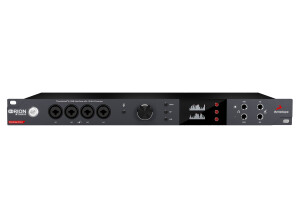
  • « Orion 32 »

    What conversions does it offer? From 32 to 192 khz What formats and what kind of conversion does it offer? 24b AD/DA What connections does it provide? madi / usb / adat / spdif OVERALL OPINION How long have you been using the product? A few days Which feature do you like the most / the least? The most: 32 conversion channels The high quality, you can easily compare it to the aurora. Great clock. Remarkable after-sale service!!! I opened a ticket due to some issues during installation and two minutes later a guy from tech support called me to help me find a solution. The least: It's a nightmare to install it via usb on a mac running osx 10.6.8. You are forced to have an internet connection to activate the online warranty, at the risk of not being able to get the unit running under any circumstances...It simply gets blocked. When I saw that the installation on my mac was blocked, I had to install it on another computer (an old PC) to activate the license. I then connected it again to my mac and everything worked fine. But apparently Antelope is already working on the problem. - You must use a short USB cable (3 ft max, like the one included), because I tested with a longer cable and had crackles, as if the clock wasn't synced or maybe some buffer noise. - And the stability of the drivers with protools 10: Continuous CPU overload, 1024 max buffer size, the Orion gets unresponsive (you need to disconnect it and reconnect it) etc., etc... I think the upcoming drivers will solve the problems, but in the meantime, it's a nightmare. - And the latency at 44.100 with 1024, I get a 1/64 delay. Did you try any other models before buying this one? Yes: RME, mytek, aurora How would you rate its value for money? Very good Based on your experience, would you buy this product again? YES, given the conversion quality, which I think is between the aurora and the mytek, but you get 32 AD/DA channels, it's incredible!!! However, I'll need to get a madi pcie card to bring the latency down and have a stable system. I'll give it a better mark once Antelope has solved the small problems detected.

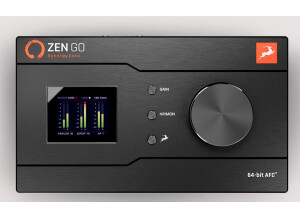
  • « Zen Tour Review and comparison with other interfaces »

    I'm an ex RME UCX user. And i have used also Apollo (the first version not the Black faced or MK2). Many times i've worked also with Metric Halo ULN8 bigger productions. I've used also Audient ID14 while mixing for a friend. I had also the Motu 8pre so i know only the preamps of that unit. And i've also worked with NAGRA VI (which is only a portable recorder). So i know these devices quite a lot to have a perspective view. I got Zen tour for replacement, while i was waiting for my Prism Sound Lyra 2. Drivers: 2/5 I use it with Win7 and USB2. For the moment the drivers are not very stable. Multiple times i got clicks. Sometimes the device got disconnected by itself without a reason. I needed a lot of time to find how to install it. In that case it's the opposite of RME. Which are the most stable drivers i've ever encountered. But i'm sure that these issues will be solved in the future. Console: 3.5/5 The routing is quite confusing and i think it could be better thought. It's a bit complicated in some stuff. It's not very usefull like the RME or Apollo. The Monitor output has no Mono, phase invertion, M/S possibilities. On the other hand, the mixer is really easy to undestand it. It's just confusing because you can't rename the channels and you have to recognise them by the colours. The reverb and all the FX's are cool. I think if anyone needs to make a live recording it's a very handy device. Convertion Quality: 2/5 The most important subject. Well... I'm quite disappointed from the result. I thought it would have been much better than my old UCX. In the convertion quality of the Main Monitor it's in the same level with my old RME UCX. A tiny bit better but it's very close. It's a bit more clear in quality of sound but worse in the sound field (it sound even more Mono than the RME). Which was my main problem. And while mixing you can have the tendency to open up the stereo-field of the mix more than it should. On the other hand, the headphone amplifier is good. Much better than the UCX. Preamp Quality: 2.5/5 It's like the UCX and Apollo and Audient on the subject. Zen is a bit thiner but less aggressive than the Apollo of the 3K-5K area, bit more flat than the the UCX. It sounds a bit plastic but the quality is correct. By the way. Motu 8pre is excellent for it's price. Whoever have worked with real preamps knows that the internal preamps of these devices are not serious preamps. They all sound a bit fuzzy and plastic. Except the ULN8. I have worked with DAV BG1, UA610 solo + MK2, UA 710, Avalon, Neve 1073, Chandler, Grace 201. I would give ULN8 3.5/5 in preamp quality next to the big boys. It's a bit faster sounding and a bit thiner than real preamps but it has this analog vibe. ULN8 is in a different category from RME, Apollo, Antelope for the moment. Overall: The price doesn't justify the sound it produces. It's a good unit if you want to record big sessions. Connect it with an external preamp via ADAT and use the internal FXs that are pretty cool. If you're an electric gtr guy then it's your thing. The sound of the internal cabinet and re-amplifier is the only thing that it's really unique in that device and it sounds very good. Here Antelope have done a great job. Apollo plugins are awful for el gtr cabinets for the moment. But in general terms Zen Tour is not the unit i would buy to mix and record instruments seperetely. The convertion sound is very mediocre. Preamps are OK but nothing special. In terms of sound quality i would put these interfaces in the row: 1) Metric Halo ULN8 = best by far from anything else. 2) Apollo version 1 & 2 = good overall quality, easy console, excellent plugins, good sound. 3) Audient = because it's really cheap and produces very good results for that price. Very good semi-pro device. I would chose it over RME for sure. 4) Zen Tour = Quite expensive, mediocore sound quality, quite good for guitarists and live recordings. 5) RME = Great drivers easy to use and superbly robust. Sound quality is close to the others except the DA convertion which it's not well. I think it's even worse than Audient which costs half. --I haven't tested the Lyra 2 yet. When i get it i'm going to tell you about it-- P.S.1: Special mention for the NAGRA VI. I compared it with the ULN8 at the preamp quality and the AD quality @ 192KHz. I can say nagra is a clear winner by far. I couldn't imagine my microphones could sound like that. The sound of this unit is incredible. It's the closest thing i've ever heard to the term "natural sound". What a pitty that it has only 6 channels.

  • « Unreal »

    The Antelope Audio Isochrone Trinity is a next generation master clock. It has 3 separate SD generators and a smooth easy to use interface. But the interface could take a few times to get use to if you are coming from a different type of unit. This is perfect to use with a Pro Tools system because of the Superclock support. You will get sample Rates up to 384 kHz in this rackable unit. This unit does take up two rack spaces though. The appearance of the Isochrone is very modern and up to day looking. It has a sort of stainless steel look to it that will look great in your rack. All of the knobs on the face of the unit are well made and have a nice resistance to them when you are turning them. You can tell why these unit costs so much after you use it just one time. I have only used the Antelope Audio Isochrone about a total of 4 times in a studio that is close by. It is set up to run with Pro Tools Digidesign. It gets its power from a 12V power supply wall plug. The unit does seem to get a little warm if left on for long periods of time, but not dangerously warm and nothing that should cause any concern. It has Atomic Click compatibility along with 3 separate HD generators that each have up to 16 separate formats. You will have jitter free control while keeping everything synced up, not just audio but video as well. I would purchase this unit for my home set up if I truly needed it. I would invest the couple grand that it cost if I needed it. But my home set up is too small for this. But working with it at the studio is great and it has never given us any problems. I do recommend purchasing it if you can afford to have it. The quality of it is amazing and after using so many other models that claim they can do the same thing as the Isochrone, I now understand why the Isochrone is so good and highly sought after.

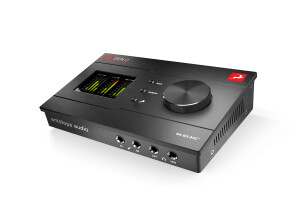
  • « Great Value and professional features »

    I bought the Discrete 4 synergy core interface two weeks ago. After performing intensive testing and professional recording (also to catch one of the great antelope audio's offers) I decided to publish this review. the interface is compact and robust, arrives well packed. I found it simple to set up and connect it, it's also easy to record to get the effects of the bundle. Moreover, those who buy it by December 31st will get the edge microphone solo as a gift, but I have not yet received it, so I can not review it. (this is not a sponsored review). the discrete 4 SC is an AD/DA interface equipped with 4 quality preamplifiers (discrete design) capable of modeling. it handles 4 analog inputs and 6 outputs, 2 of which are dedicated to monitoring. It allows the routing of the audio stream on 16 logical channels, up to 8 digital (on ADAT ports). it has internal clock and a powerful processor that performs the real time FXs. The bundle I purchased also contains 4 real-time effects (very nice ones) as well as dozens of useful effects provided (even guitar amplifier emulationcwith zero latency), a full license to install BITWIG STUDIO (an abletonish powerful DAW) I tested the discrete 4 on both Mac and Windows with latency results of less than 10 ms (even with a high buffer). preamps work with even high gain (in addition to those that can be added via FX) and ensure the right cleanliness and definition. To be honest, those who have, like me, quality outboards (as a preamp OR compressors) should prefer them connected in the rear line inputs to work with optimal gain staging... but it depends on the tastes and microphones or instruments you want to record. The Discrete 4 allows you to record microphone, line or intrument sources, get 8 channels from a digital source (via ADAT), process audio/digital material in real time and almost every combination of that channels. What I loved right away is the great flexibility of routing. I don't want to go into too much details, but you can connect virtually any channel, DAW or physical to as many analog or digital channels to perform reamping, double takes, wet and dry signal recordings, send the signal to an external chain, send to a second monitor controller, etc... I'm a big fan of reamping and external outboards so i like the real time FXs included in the interface and the cabability to assign DAW and logical channels as I want, without any latency or issue. everything can be managed through the control panel which seems clear and exhaustive. there are 4 scenes for headphones to be configured independently. you can listen with the reverb inserted in the monitoring. That feature didn't impress me too much, but it's just an extra. the effects (not all) are convincing and really work at zero latency, giving the tracks that analog flavor. There are not bunches of knobs in the fx interfaces, so you have just essential parameters. Maybe you will be not able to get huge differences soon, in terms of preamps or conversion quality (if you come from a decent product) but once you start to experiment any routing option and effect capability you will get how the discrete 4 sc is a great upgrade for a small studio e for anyone who wants to go at the pro level in the music production. on the other hand, I would have liked some more physical control, such as volume headphones and mute, mono switches accessible on the unit, but you can't ask for everything at this price (also considering the value of the included products). I wasn't used to managing everything with mouse so at first I struggled a bit, but using two displays, it's not a big limit. there is the possibility to use an app to manage the Discrete 4 remotely via smartphone, but I have not experienced it .... il looks cool. many users complain of the flaw that you cannot use FX as a plugin in the DAW (in windows) or that, only using the thunderbolt connection, to use them in DAW on MAC osx you need to buy an extra plugin costing 200 dollars. I don't know what was the Antelope strategy on that, but, for me, it is not a big miss since I have tons of plugins and I do not use, for now, the thunderbolt connection, but here Antelope Audio could optimize the standard equipment better or be more consistent. I was a little disappointed because recording the same channel in double can create phase issues when trying to sum them (DRY/WET) in the daw... anyway, there are many options to get the sound you like with the DISCRETE 4 S.C., you can't go wrong. then...I had few e-mail exchange with the Antelope Customer care and it was simply flawless. IN THE END PROS - great construction - great flexibility and routing capabilities - discrete preamps, quality converters, internal clock and real time FX and digital IN/OUT give you a complete setup in a small, portable format - the bundle is a pure bargain - there are really cool fx you could insert in your tracking process - one has a chance to achieve a great sound without struggling with infinite menus or cables. - you get the feeling of using a really powerful interface - in this price (and quality) range there are very few competitors CONS - poor physical control on the interface - not all the real time effects sound convincing - the "in The Box" users will not be fully satisfied by the potential of synergy core