Log in
EN
FR

Dean Markley

39 products found

Categories
Series
Filter
Sort by
Evaluation
  • Reviewed or not
  • Editor’s award
  • Reviewed by Audiofanzine
Availability
  • Available or not
  • Sold new or used
  • Sold new
  • Sold used
Must-have products
  • All products
  • Flagship products
  • Best rated products
  • Hot products
  • Popular products
Price
  • Freeware
€
Clear
Sort by
  • Popularity
  • User ratings
  • Price - low to high
  • Price - high to low
  • Used price, increasing
  • Used price, decreasing
  • Name (from A to Z)
  • Name (from Z to A)
  • Added on
Sort results
  • Popularity
  • User ratings
  • Price - low to high
  • Price - high to low
  • Used price, increasing
  • Used price, decreasing
  • Name (from A to Z)
  • Name (from Z to A)
  • Added on
Filter results 39 results found
Evaluation
Availability
Must-have products
Price
  • Freeware
Show results

The best Dean Markley reviews

The reviews Audiofanzine members found the most helpful.
  • « try it on the bass!! »

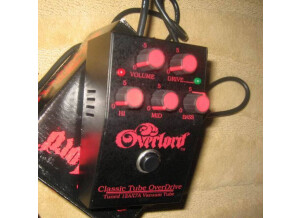
    tube overdrive and fuzzy tube sound UTILIZATION I tryed this little monster for a guitar,but finaly i use it with the bass! Put the HI pot on 1! mid on 4 or more,even on 10! bass pot on 5! AND DRIVE button ON 2!! volume level depends on your clear sound,make it even..for me is mon 3! if you have tube that is working properly,it gives you a WOODEN sound in the bass,feels GREAT.and in this settings,there is no noise or humm. SOUND QUALITY On small drive positions,sound is GREAT.more drive you push,more fuzz comming out,but also,more humm and noise.But,like i said,for me it is great for the bass! OVERALL OPINION overdrive tube sound!direct power plug!metal boxing!size!easy to open and change the tube! found one for FREE,and the second one cheap! i gues people thinks that is made only for guitar...but if you put it on a bass or rhytm machine..it is realy great!! if you have 2,you can even try it on ipod and drive that bad sounding mp3 to get loud vintage discotec at your home party :)

  • « Cheap pickup... fake sound... do not buy! »

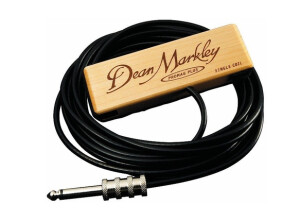
    I purchased a new Larrivee L-03 acoustic in late summer of 2009 and decided that I, for some inexplicable reason, needed a pickup for it. However, I only had a budget of about $50. The only thing I could get within that price range was the Dean Markley Pro Mag. It's basically a single coil pickup that slips into the soundhole of your acoustic guitar and from there, a long cable with a 1/4" plug on the end of it protrudes out so that you can plug it right into an amplifier. There are no controls for this pickup whatsoever. No volume, no tones, no equalization sliders, etc. All adjustments for the sound or output level coming from the pickup have to be done from the amp, and while it's nice not to have to drill into the guitar to install controls, not having ANYTHING to adjust is a major pain. Another problem was that I didn't have the budget for a proper acoustic amplifier or sound system to run into for a purer signal, so I had no choice but to run into electric amps. This produced a pretty terrible sound, but even when I was later able to try it through a Fender Acoustasonic Junior amplifier, it really didn't sound much better. The tones from this pickup could be characterized as anything but acoustic sounding. It basically sounded like a very dead, muffled, and generally un-natural tone that was not pleasing to the ear. The closest comparison I have is plugging an electric guitar into a cheap, small amplifier, using the neck pickup and rolling the tone completely off. Basically a dead sound that has no brightness or overtones. This isn't helped by the fact that it has no controls to adjust it... so what you see is what you get. Not impressive as an acoustic pickup at all... it made my $1,000 Larrivee sound like a $100 guitar from Wal-Mart when it was plugged in. In closing, this is a terrible example of an acoustic pickup. It's like putting a blanket over your guitar to completely deaden the sound, and then, just like a blanket, this pickup has no controls to adjust your tone, so again what you see is what you get. I (very fortunately) managed to sell this pickup for the $50 I paid and learned my lesson...

  • « buy em! »

    I also use the 10-46 blue steels, and, as in that review : https://en.audiofanzine.com/guitar-string/dean-markley/2556-Blue-Steel-Regular-10-46/user_reviews/r.13625.html, the thing i like most about the Blue Steel's is the tone and the longevity in which they retain the tone and brightness. These heavier strings are perfect for blues playing, and downtuned metal playing, or just in general when you need a thicker, more defined sound (maybe say when recording, or if you're using a lot less distortion for whatever reason). I use them mainly on 2 downtuned Les Paul guitars, but i've also used them on my blocked tremelo ibanez rg. They feel a little different on the thinner neck, but i was already used to the feel of the thicker string, so it just made me dig in a little harder with that guitar in relation to how i was picking. I run the 10-52 set on my lower tuned (everything from A standard through D standard) tuned guitars. The feel on the lower tunings from the lower strings is perfect and the lighter top allows me to still be able to wrangle out all my quicker runs and licks. The other nice thing about them is, i can sub any of these heavier ones in for a broken 10-46 and get away with it for the gig, if needed, cause i'm already used to them. They're a great 2 in the 1/2 punch of string choices if you require standard and lower tuned guitars. Plus, it feels to me that the heavier lower strings resonate a little better and dont sound floppy or extra buzzy like some other's i have tried in the heavier gauges. All in all, i'll keep buying these...they have a really strong, yet balanced tone on the lower end that absolutely crushes the preamp on just about any amp or rack preamp i use. As i mentioned on my other review of the dean markely 10-46 sets, these set up, stretch out, intonate and settle in really nice, and they stay put. i have graph tech saddle savers on all my less pauls, and can't remember the last time i've broken a string.... i can say though, when i switched from ghs boomers to blue steel strings i stopped breakind "d" and "g" strings about once every other set. If you haven't given these strings a try, you owe it to yourself, your tone, your guitars, and your bandmates and audience to treat them to something a little nicer than they're used to!

  • moosers's review

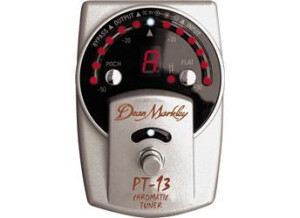
    The Dean Markley PT-13 is a chromatic tuner pedal designed for use with electric guitar and bass guitar and suitable for use with any electronic instrument you might need to tune. It's definitely designed for live shows, although it's useful in the studio or practicing at home as well. It's clearly Dean Markley's take on the infamous Boss TU-2 tuner pedal that's of a similar nature to this. The PT-13 doesn't give you as many options as the TU-2 and isn't as well designed, but it's a tradeoff in the price. The pedal has 1/4" connections for input, output, and bypass, and requires power from a nine volt battery. It's certainly not rackable in any way as it's a foot controlled pedal. You can choose the pitch you'd like to tune to or use it chromatically and have it recognize which note you're closest to. I've only used it in the latter mode which I find is quite easy. I've only used the pedal in the studio as a band on a recent session had one, but again I still think it's most useful on the stage as it's got all LED lights so you can see it in the dark easiest. For anyone playing live it's a must have to have something like the PT-13 or TU-2 that you can tune with in the dark. It's easy enough to tune with the PT-13, but you're also lacking the ability to power up other pedals like you get with the TU-2, and I also find the TU-2 just to be easier and cleaner to use in general. Of course the TU-2 is more than double the price of the PT-13, so it all comes down to that. The PT-13 isn't as sturdy or well built as the TU-2, but as always you're going to get what you pay for. If you have a lot of pedals you want to power up, I'd go with the TU-2 but if you just want a really simple tuner for a cheap price, the PT-13 will do the trick fine.

  • « Another solid acoustic pickup from Dean Markley! »

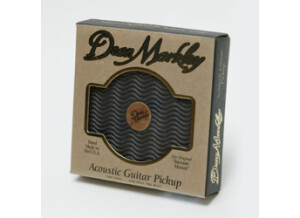
    This is an acoustic guitar pickup that is made by Dean Markley. That brand has this type of pickup down, if you ask me. The Pro-Mag is a standard amongst acoustic guitar players. This one is a little bit different, but the tone is the same. In which case I mean that the Tahoe pickup sounds just as solid and full as the Pro-Mag. They use the same single-coil technology, so the sounds aren't too different in general. The shape of this pickup is one feature that sets it apart, as it has the black pickup with the actual coils that correspond to each string visible. The one thing I've noticed with some guitars is that the soundhole doesn't always line up with the strings, meaning that the strings don't always rest in the appropriate spot below the strings. I think that this can be an issue with a lot of players, fortunately it worked fine for me. I also liked how this pickup, due to its size and a stereo jack, can be used in tandem with another. It doesn't fit with the Pro-Mag so I haven't tried it, but I'd like to see how it works in tandem with a different kind of pickup (The box suggests using a piezo pickup). The tonal varieties are pretty cool in this way, as you can send them both to amps or PA channels (or one to each), and you can adjust the tone on each channel. This thing definitely has an advantage on the Pro-Mag if you are willing to use it in tandem with another pickup. It's still fine on its own, assuming that you don't have any issues with the pickups and strings like I mentioned earlier. This is a great product for acoustic players who play gigs and need decent tone.

  • « Ok for a solid State »

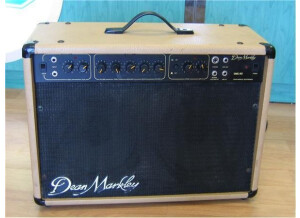
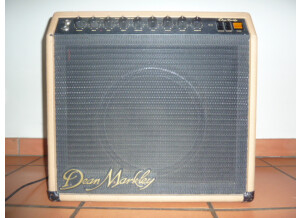
    This is a solid-state amp made by Dean Markley. That company has been able to branch out into a lot of different musical products, my favorites are their Blue Steel series of electric guitar strings. This amp has about 100 watts total, 50 for each channel (clean and distorted). There are two 1/4" inputs, and 1/4" jacks for headphones, footswitch, line in and out. Footswitch is sold seperately. There are a bunch of effects, chorus, flanger, reverb, delay, etc. UTILIZATION Getting the particular sound that you need for different genres is pretty easy with this amp. There's a lot of room to go around. Most players tend to find their sweet spot and stick with that for the most part though. The controls are comfortable. The effects are tough to get a hold on at first, but eventually you can get used to them. The manual lays out all the details of this amp nicely. SOUNDS I was expecting more out of this amp for all the good things I heard about them at the time. For the price, I couldn't believe all the features and the good reviews. I really think this is kind of a weak amp. If you are looking for very cookie-cutter, cliche tones that have minimal character, this is right up your alley. I just prefer amps that have a bright, cutting tone that captures the edge of my playing. This amp doesn't do it. And typical of solid-state amps with tons of effects, OVERALL OPINION This amp is pretty cheap, and for that it's a good deal. I just don't think it sounds that great, and for seasoned players, tone becomes very important. I would say only hardcore fans of solid-state should pick this up, everybody else should probably stick to good amps.

  • « I wish I had found this sooner! »

    I used to have a relatively crappy acoustic electric made by Ovation, and one of the many things that would frustrate me about that guitar was the fact that it would feedback tremendously when I tried to plug it in to a PA or amplifier. I think that the main reason this was so frustrating was because I knew that there was something I could do because sometimes it didn't always do that (mainly when I was at home). I eventually (well after I sold the guitar, sadly) discovered this thing. My first reaction was one of outright dismissal. I assumed that since it blocked the soundhole, that the tone would suffer tremendously. I was definitely wrong because I didn't really think about how acoustic-electric guitars work for the most part. They get virtually none of their tone from outside the soundhole, and that means that blocking it will do nothing as far as tone goes. What it will do is prevent the reverberation of your signal from entering the soundhole, thereby causing feedback. If the only problem you have with your acoustic-electric is feedback, then I suggest you look into these, they are really cheap and have proven to be a lifesaver in many situations. Considering that I bought another guitar to avoid this problem, I highly recommend going the easier route, especially if you are already happy with your guitar as it is.