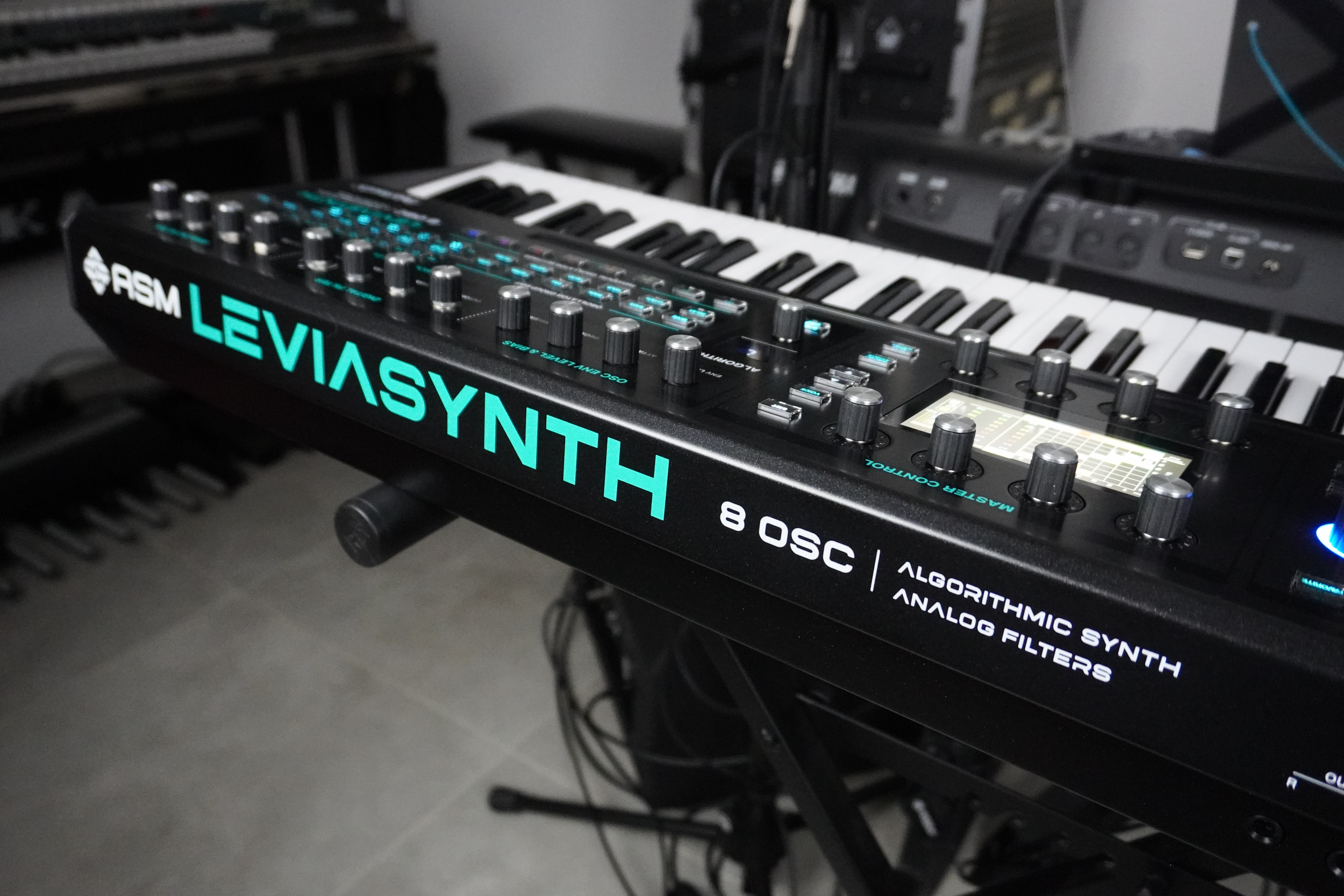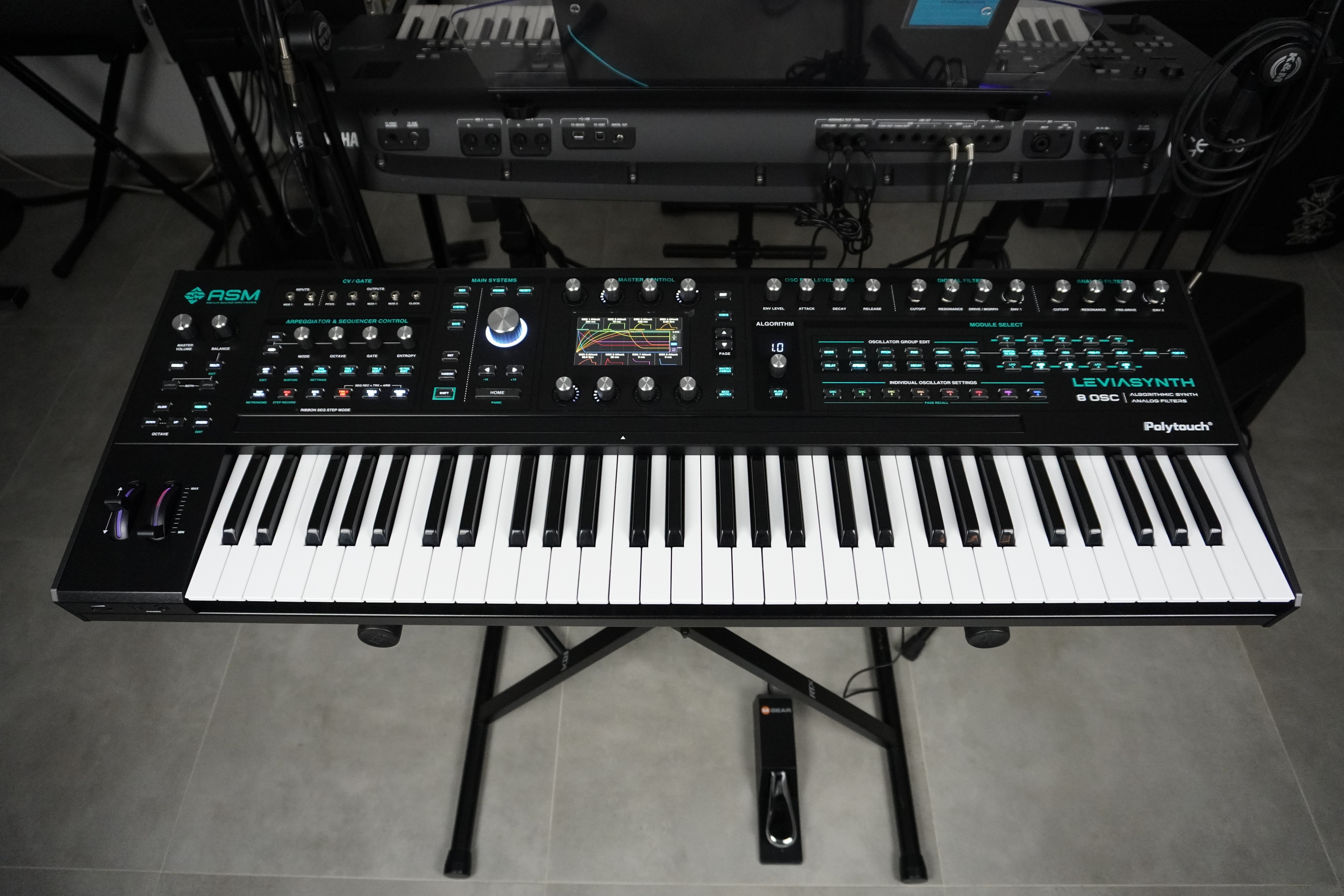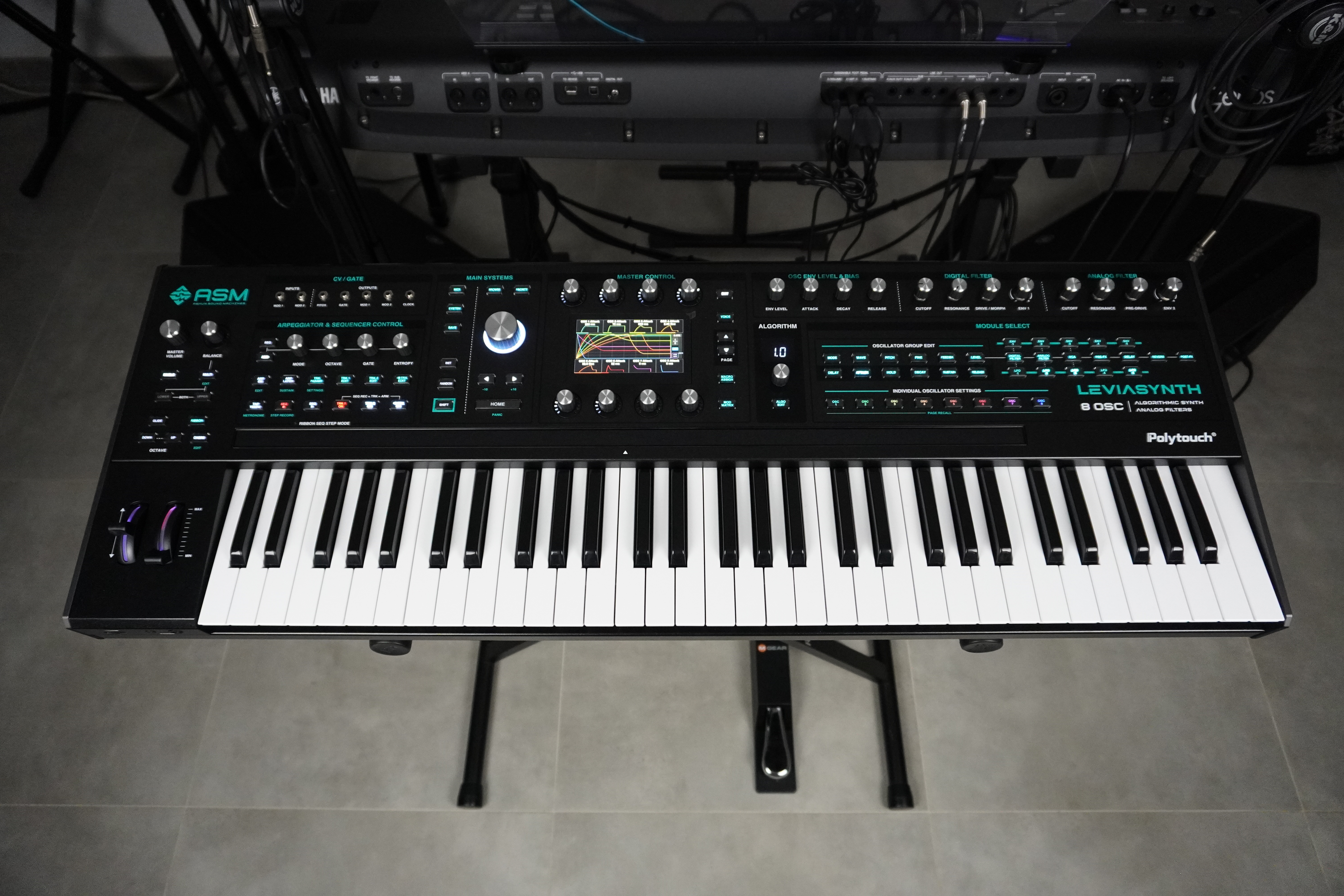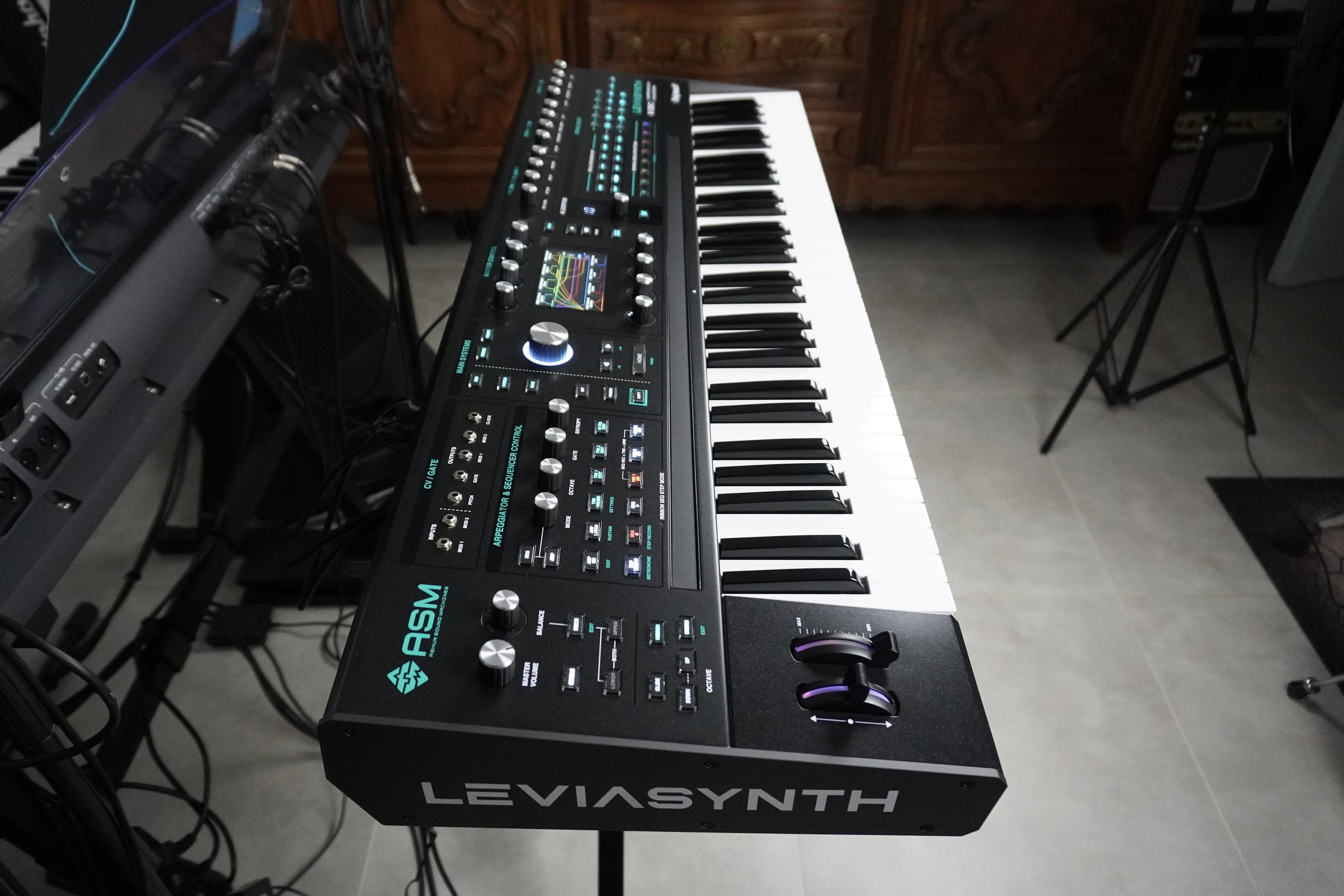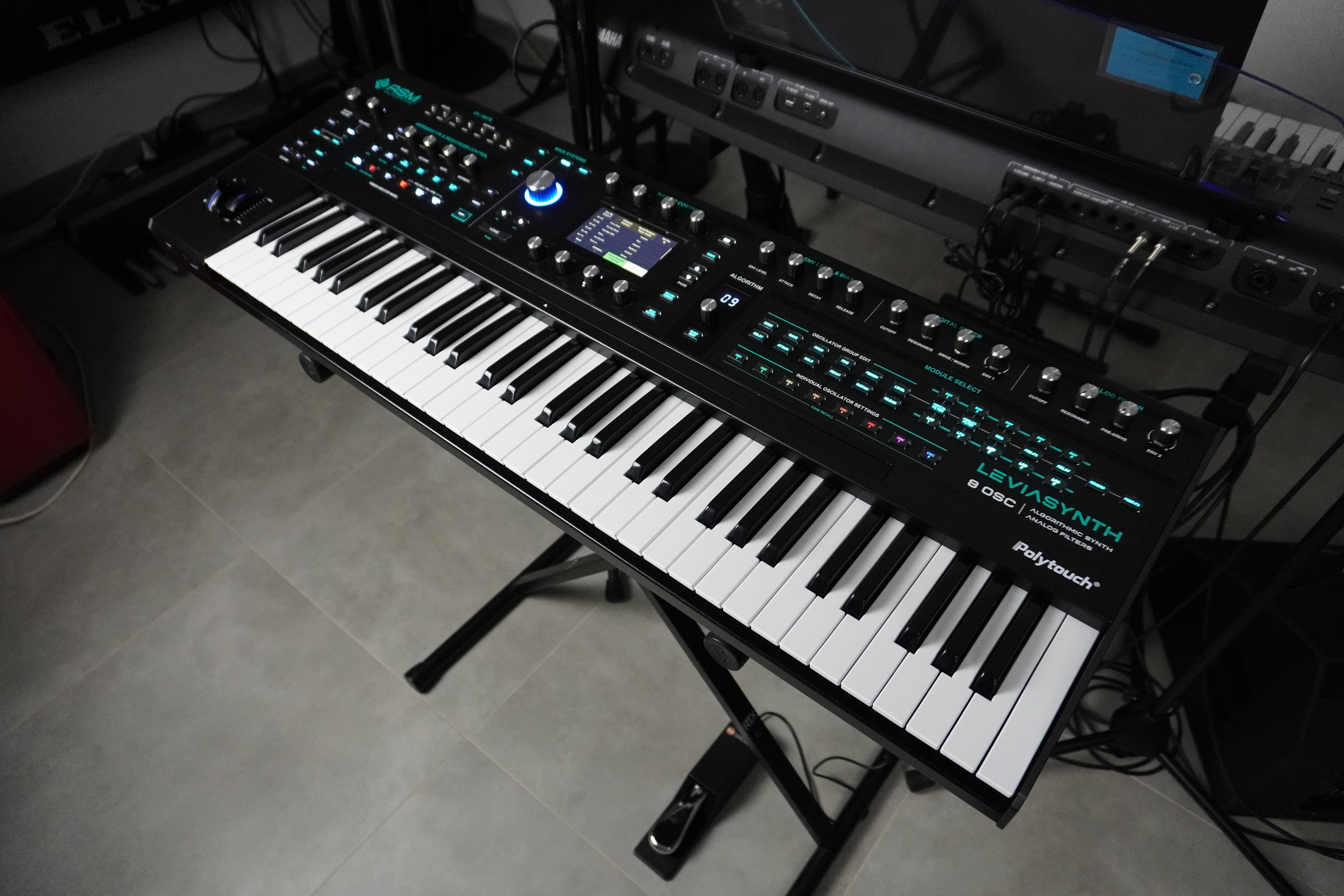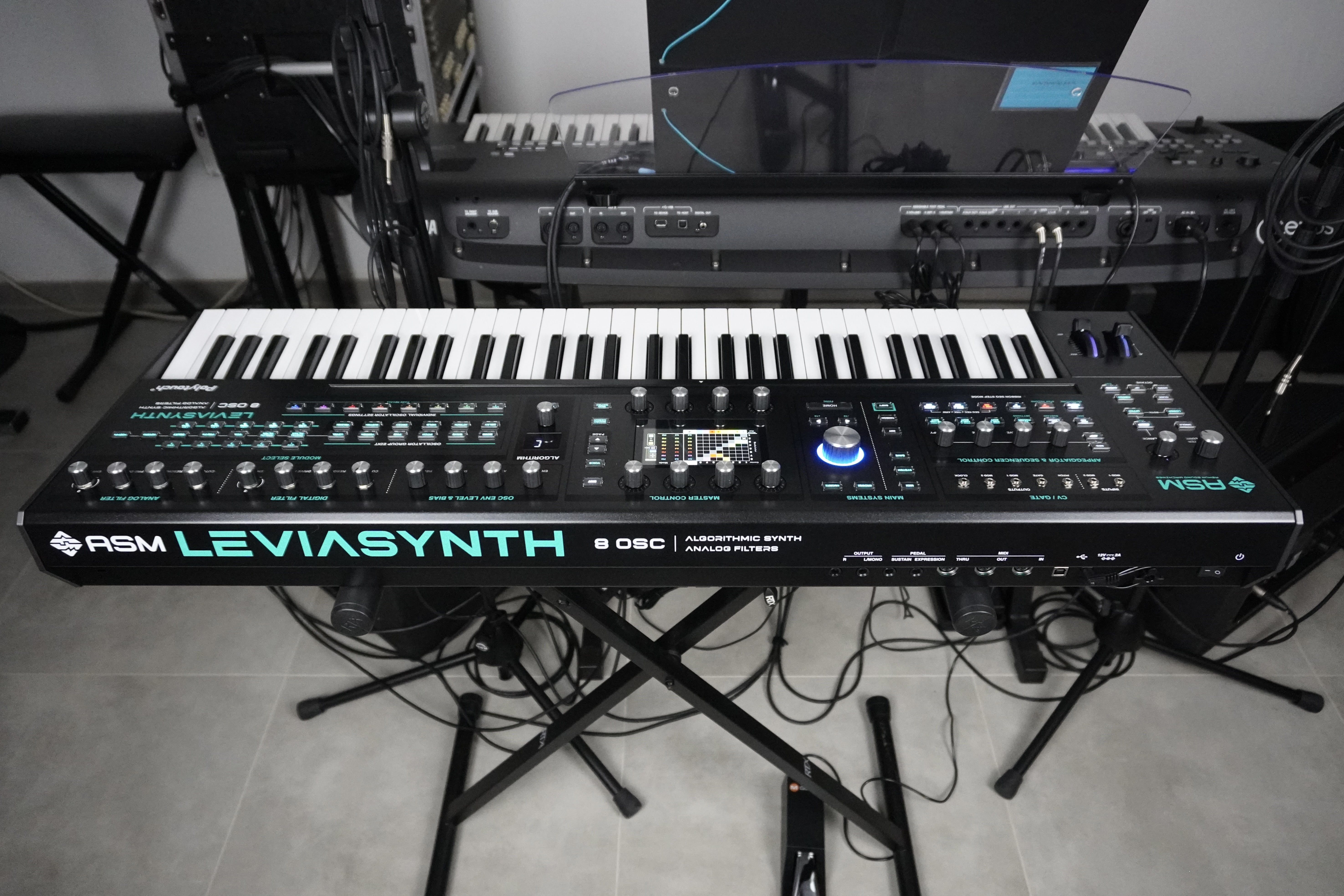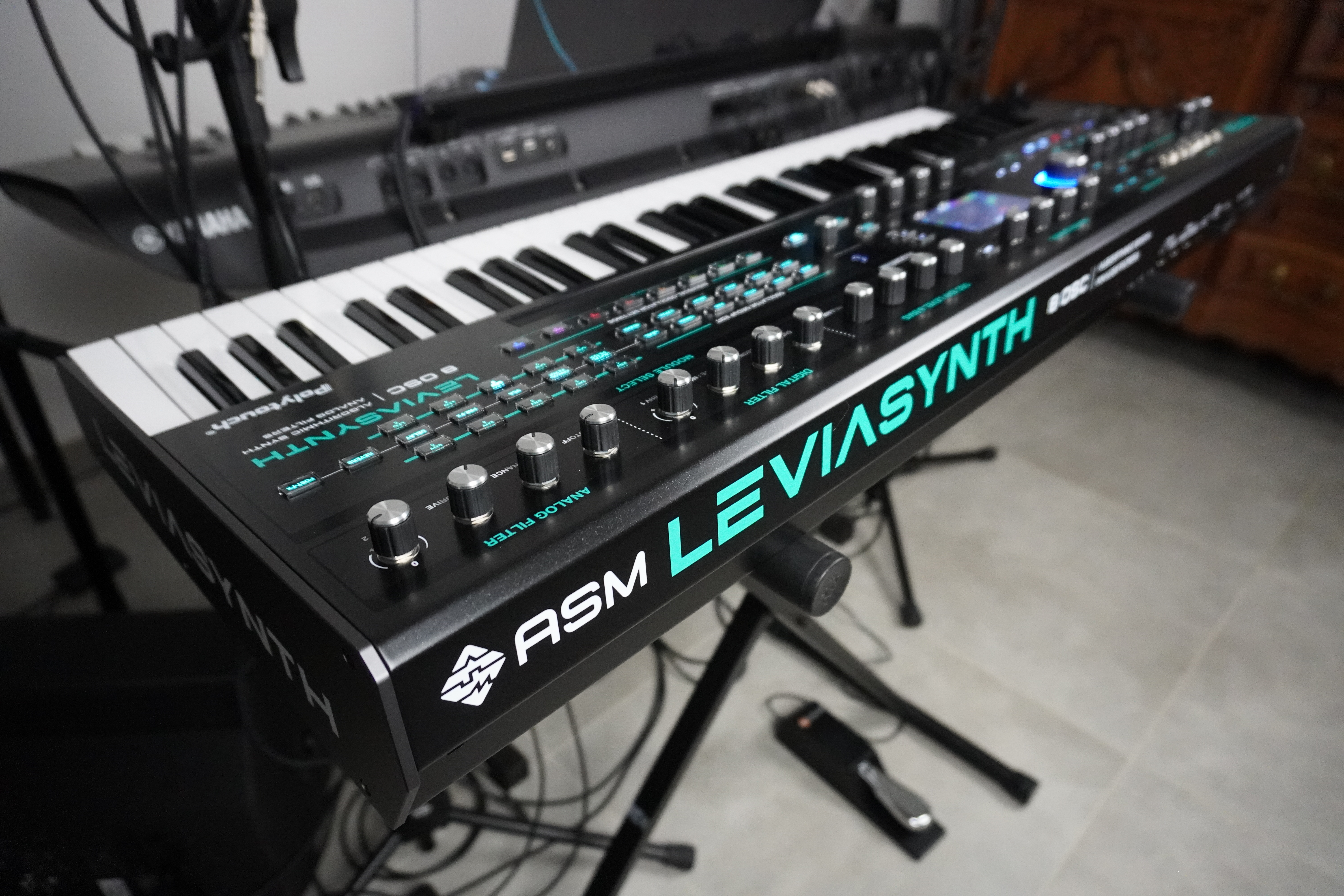
After the highly successful Hydrasynth series, ASM returns to the forefront with the Leviasynth, a hybrid polyphonic synth whose algorithms push the limits of FM, thanks to a particularly meticulous user interface. Is it enough to make us love this intimidating synthesis?

ASM (Ashun Sound Machines) made a name for itself in 2019 with the Hydrasynth, an eight-voice polyphonic digital synth. The company is part of the Hong Kong-based Medeli group, a manufacturer of electronic musical instruments founded in 1983. The company is headed by Fanny Cheng, with general management in the hands of Glen Darcey (formerly of Roland, Akai and Arturia) and sales headed by Daniel Troberg (formerly of Elektron). The team has now grown to around ten permanent employees (management, design, industrialization, communications, sales). The Hydrasynth was both a trial run and a master stroke, combining beautiful sonic versatility, a powerful synthesis engine and a remarkable user interface.
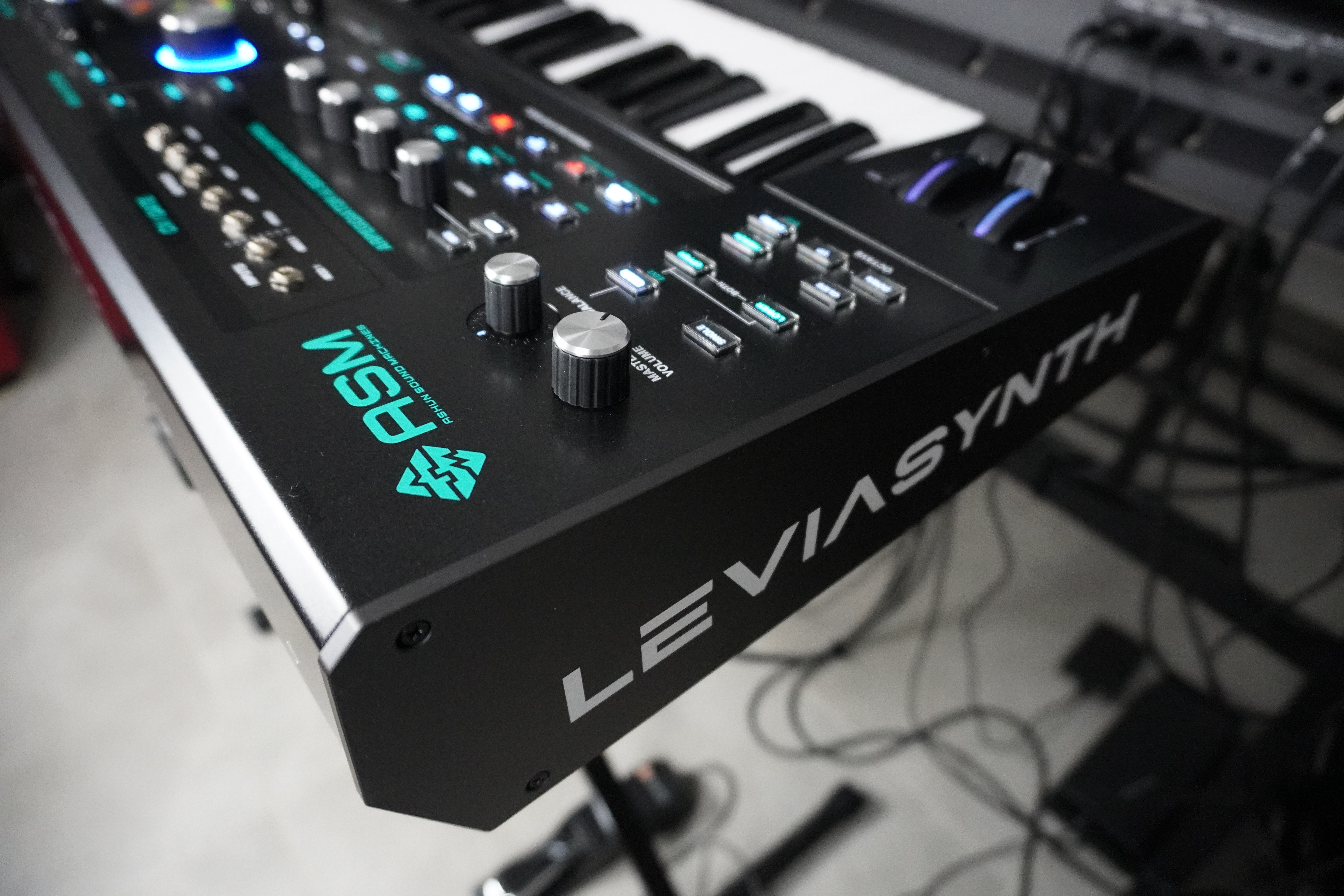
ASM subsequently expanded the Leviasynth range by adding the Leviasynth Desktop, a rack-mountable module with 24 pads; the compact, 37-mini-key Explorer; and the 73-key, 16-voice bitimbral Deluxe. All benefit from polyphonic pressure for enhanced expressiveness.
Remarkable build quality enhanced by a polyphonic pressure keyboard
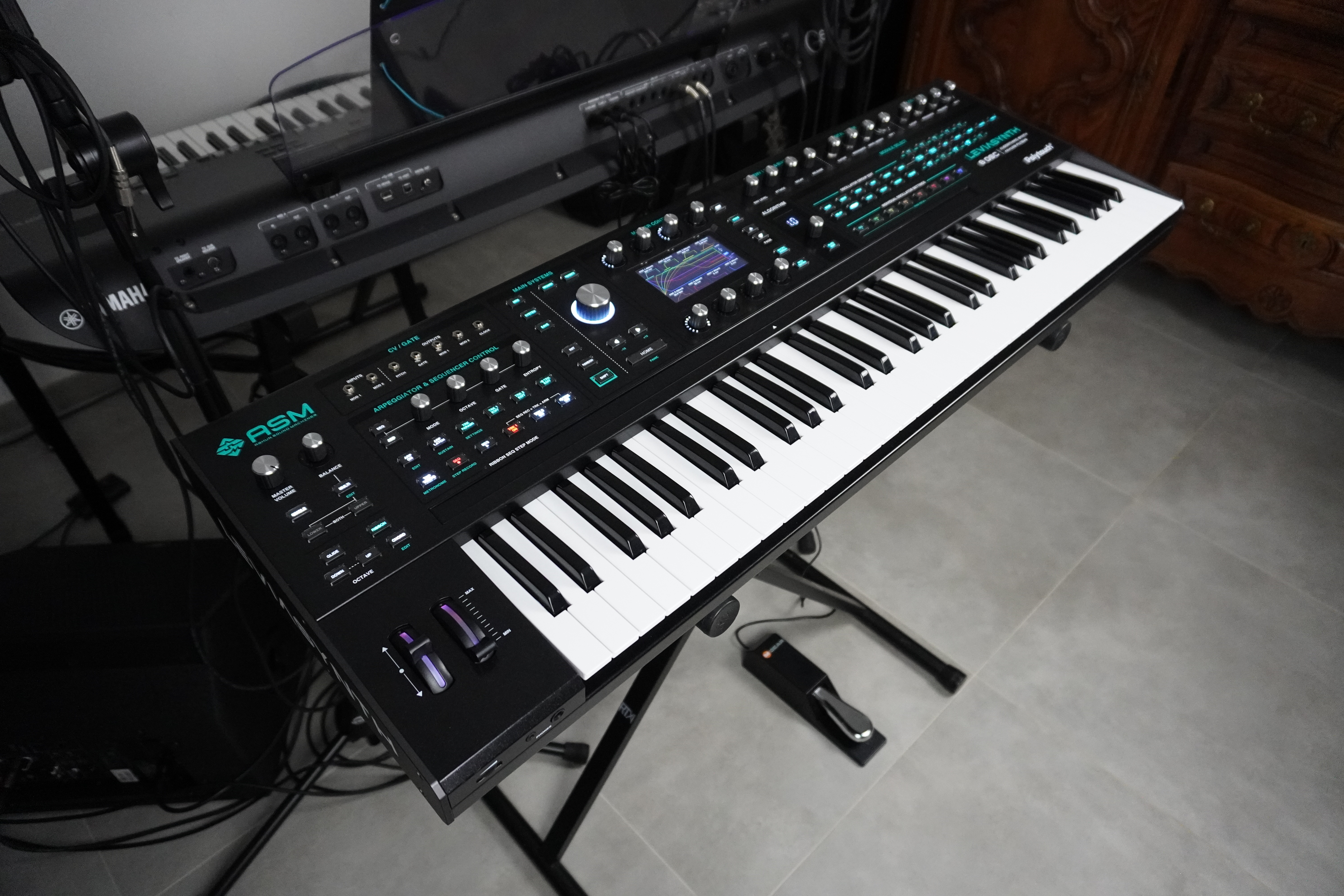
The unit can create mono or bipolar modulation and operate in pitchbend, modulation or Theremin modes (a note is held as long as you press it and continuously transposed when you slide your finger, all using the first four octaves as a reference point).
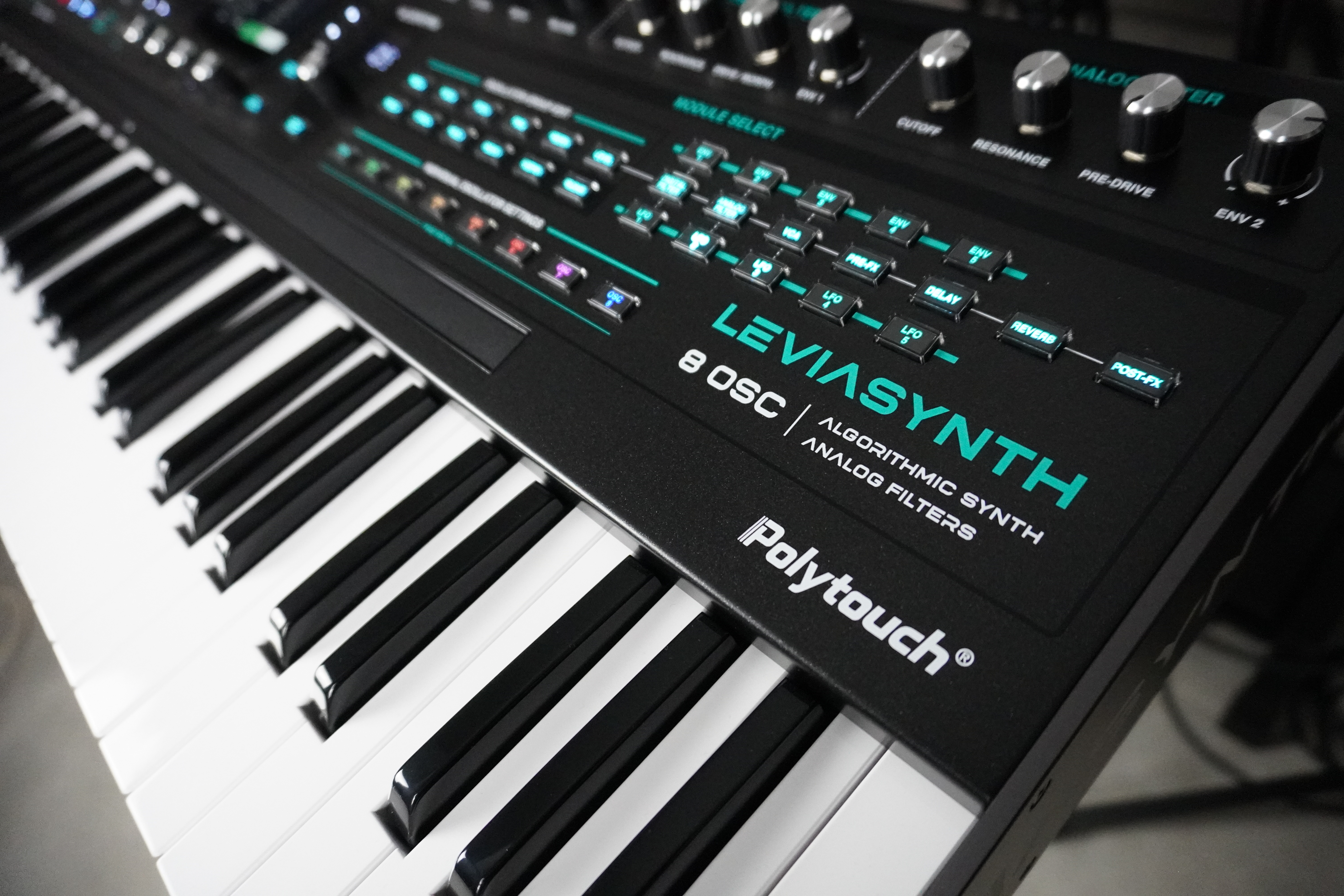
Sensitivity is well-balanced, bounce is pleasant, and pressure is well-configured. There’s no untimely triggering at high velocities, and modulation is controlled over the short stroke of this keyboard (it’s not an Osmose). Numerous settings are available to parametrize response: curve for velocity; delay, fade, curve, offset and release for pressure.
The synth measures 97 × 35 × 12 cm (about 38.2 × 13.8 × 4.6 inches) and weighs just 12 kg (26.5 lbs), surprisingly light considering its quality of construction. The module version measures 44 × 27 × 9 cm (about 17.3 × 10.6 × 3.5 inches) and weighs 5 kg (11 lbs). It can be mounted in a 19" rack — brackets supplied, thank you. It’s equipped with the same sound engine as its big brother, but lacks the keyboard, ribbon and a few direct controls (arpeggio encoders, direct algorithm selection). However, it adds a row of 16 polyphonic velocity and pressure pads.
Exemplary ergonomics, judicious controls and impressive graphics
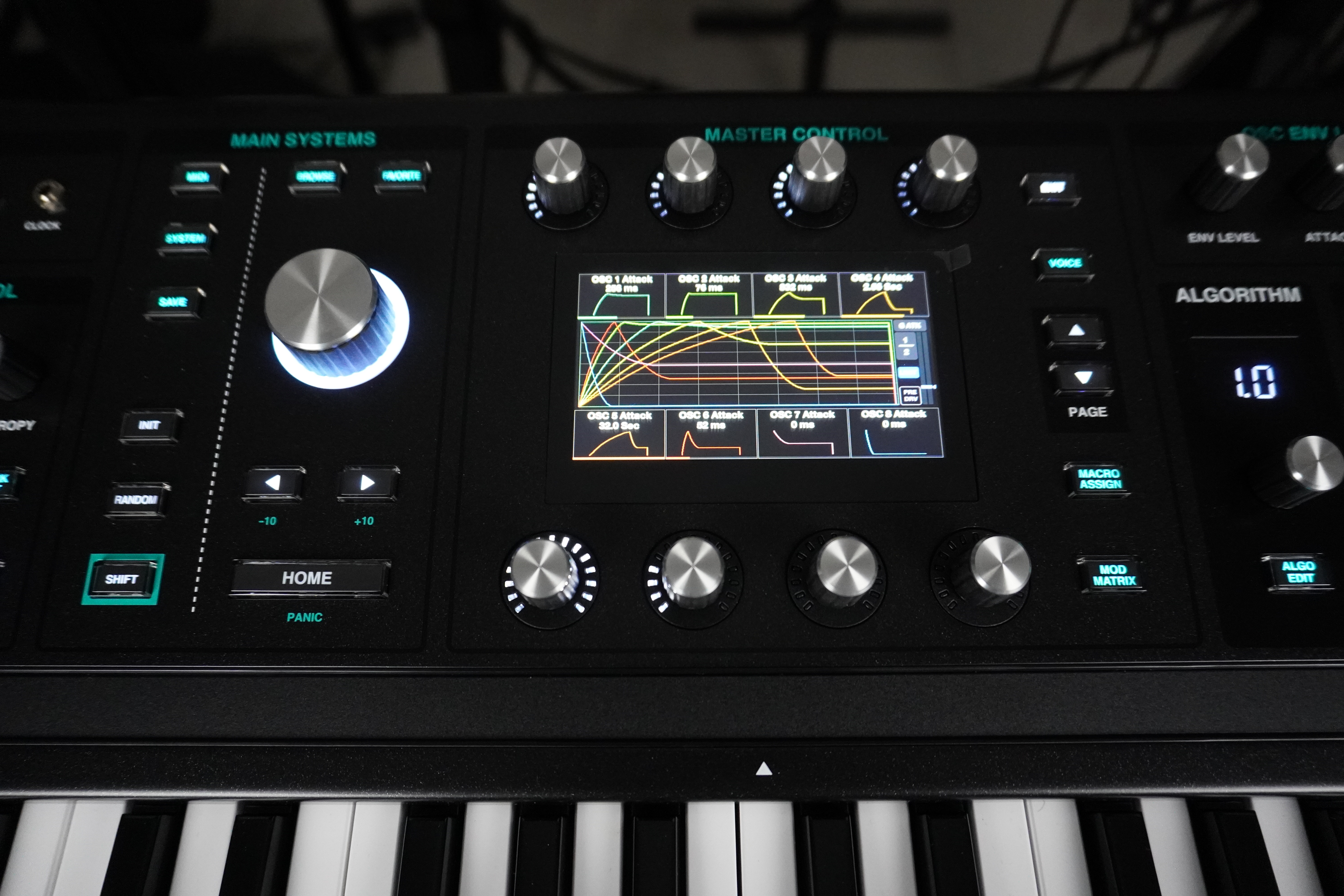
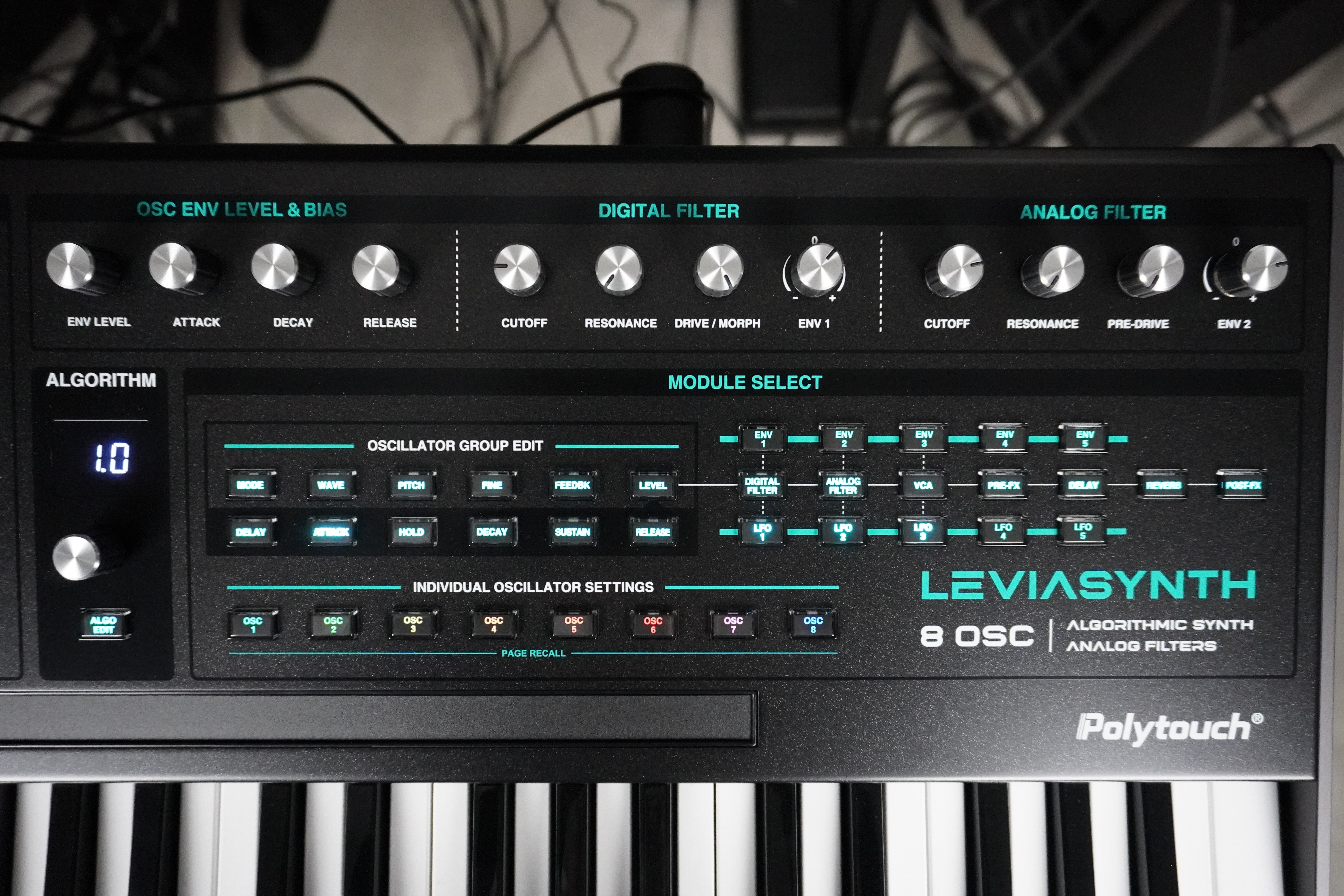
Typically, you select one (or more) operator(s) or a module in the appropriate area (which represents the signal path and pre-assigned modulations), then edit it using the eight encoders placed on either side of the screen.
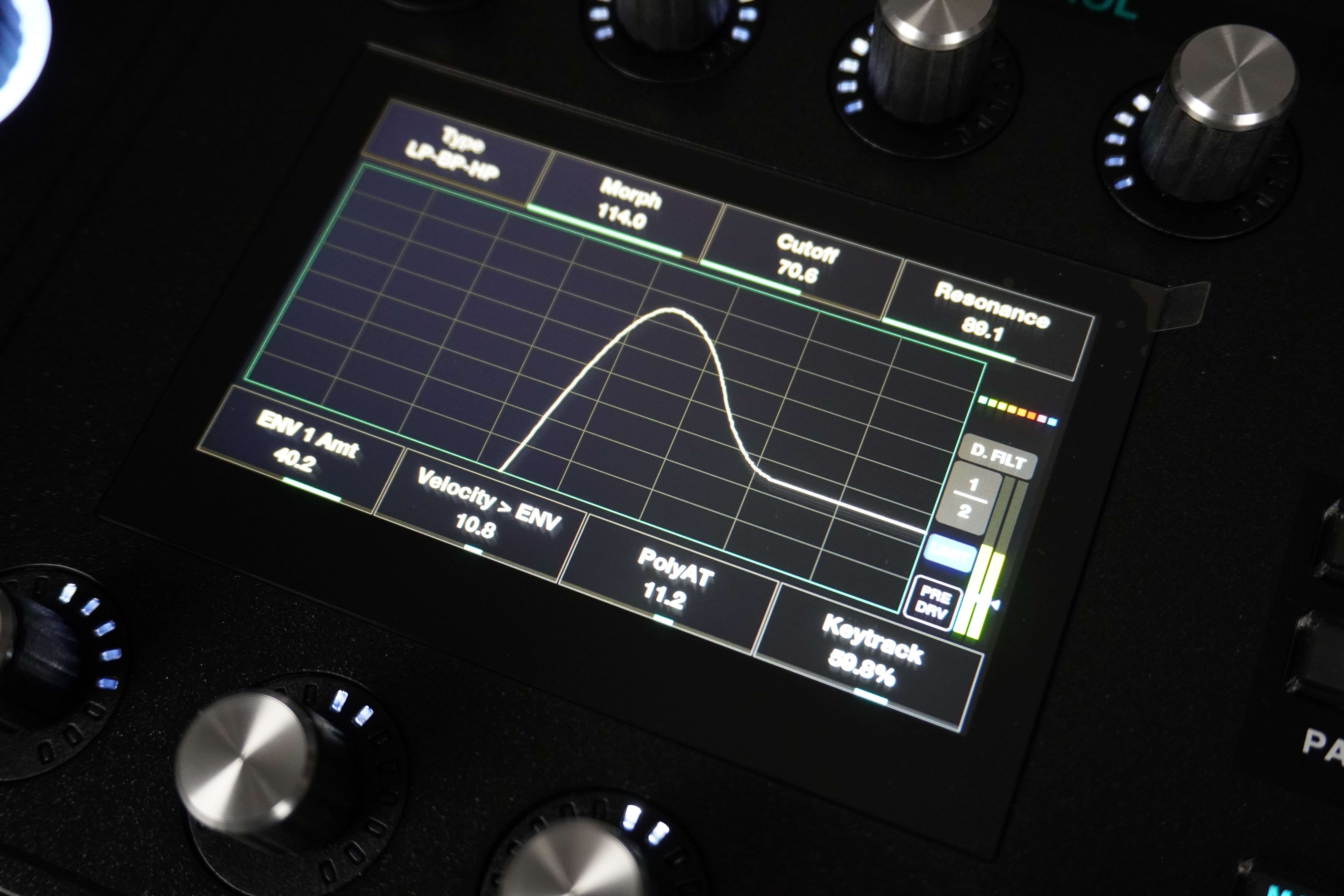
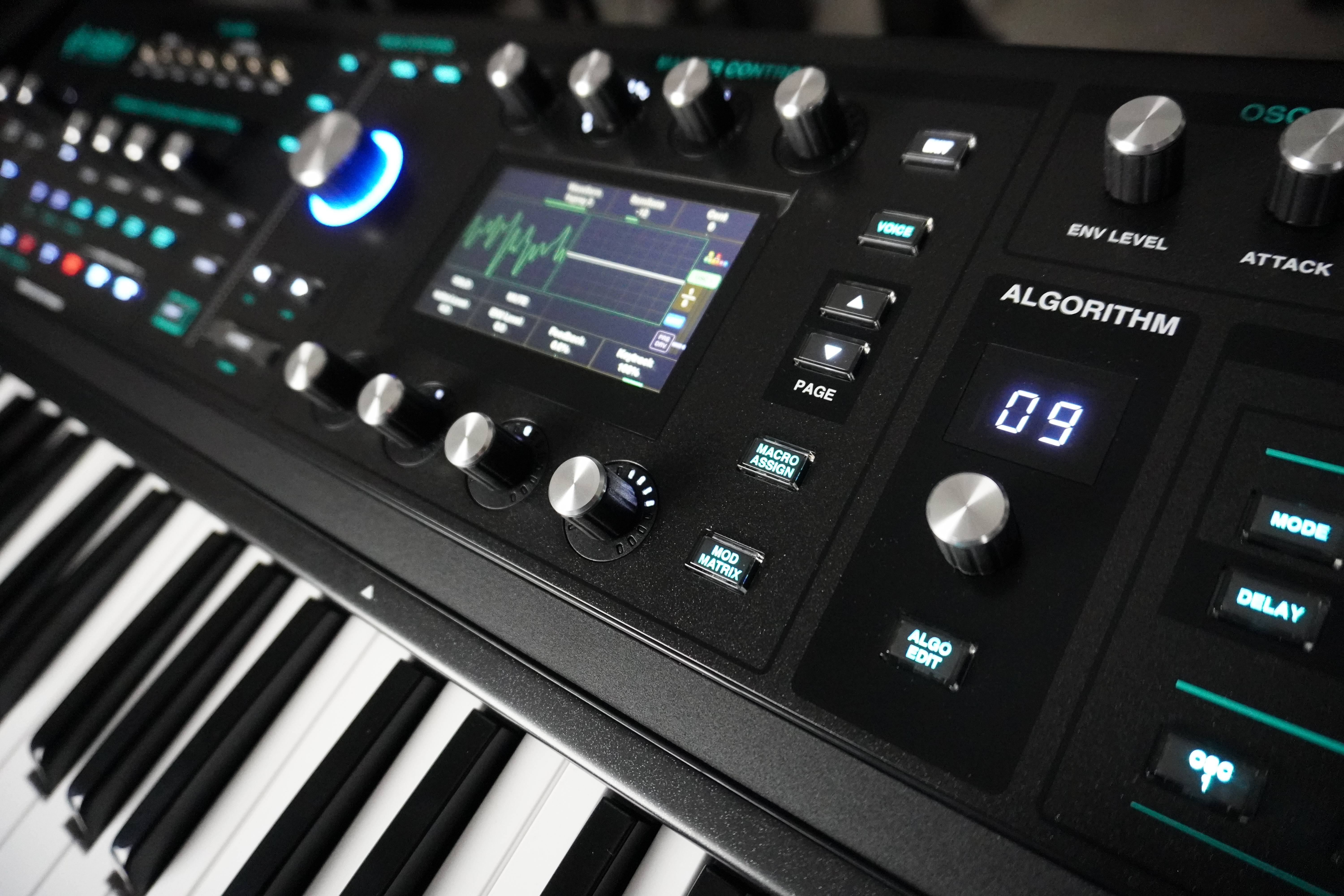
Color graphics assist you in this task: detailed algorithms, waveforms, envelopes and level monitoring. For example, the level envelopes of the eight operators are displayed simultaneously, each with its own color, and you can follow their progress in real time, which is as spectacular as it is useful. If a module requires several pages, the navigation keys light up.
The eight central encoders offer three editing speeds (plus resolution inversion via the Shift function) and are encircled by LEDs that indicate the values of the associated parameters. Other controls are backlit with LEDs whose color varies according to context. Some crucial parameters, such as operator envelopes, filters and the arpeggiator, have dedicated front-panel rotary controls. Some encoders are capacitive; place a finger on them, and the value of the parameter in question is displayed in a temporary window. The Init / Random / Save keys have not been forgotten, thank you. Finally, sources can be assigned to modulation destinations by directly holding down the relevant keys, which opens a page to finalize the edit.
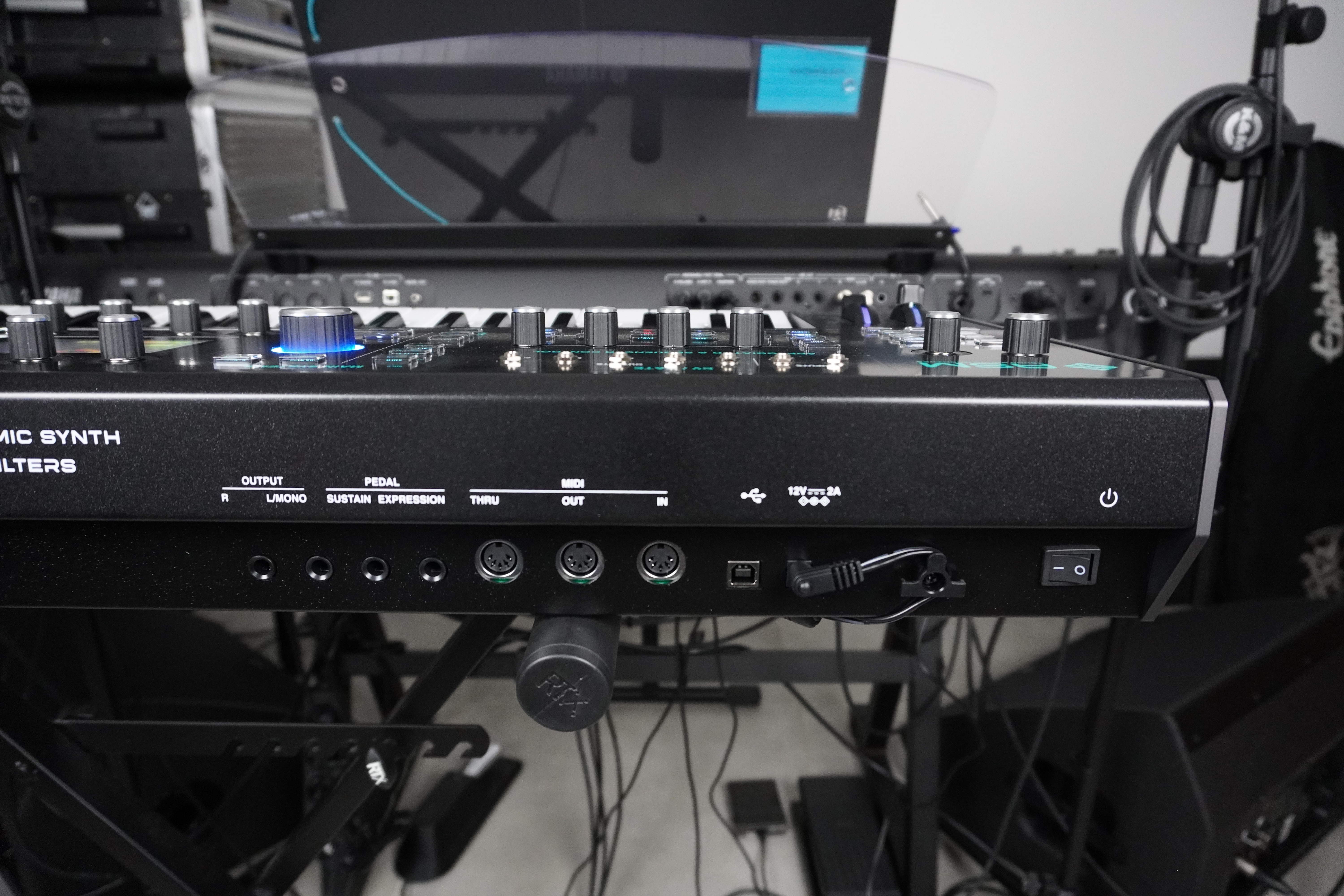
On the rear is a pair of balanced 6.35 jack outputs, two pedal inputs (hold, assignable modulation), a MIDI DIN trio, a USB-B socket (full MIDI, firmware, but no audio), a terminal for an external 12V/2A power supply (block type at the cheap end) and a mains switch. There’s only one pair of audio outputs, which is a shame for a bitimbral synth, but, to be fair, it’s a bit complicated to matrix 2 pairs of stereo outputs with a VCF/VCA-based 16-voice polyphonic synth.
Beautiful, crystalline and expressive textures with a Swiss bank inside
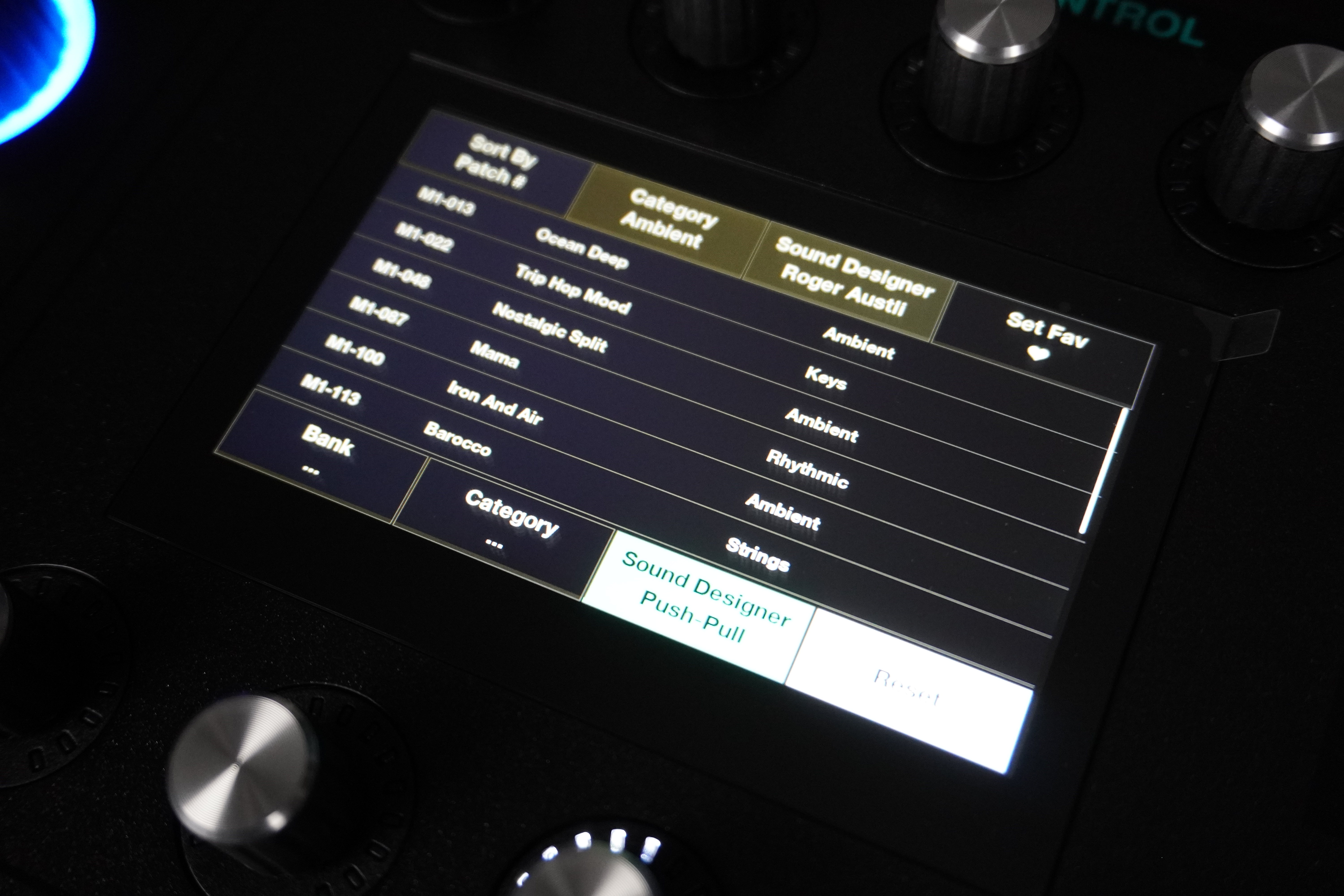
Sounds can be selected by number, name, category and/or author: this allows you to enjoy the excellent programs concocted by our friend Push-Pull, who was part of the Leviasynth sound design team — well done! You can’t refuse a Swiss bank, especially as there are others in development, some of which you can listen to in the audio player below. Both Singles and Multis can be placed in a favorites list (with no apparent size limit) for quick recall and filing.
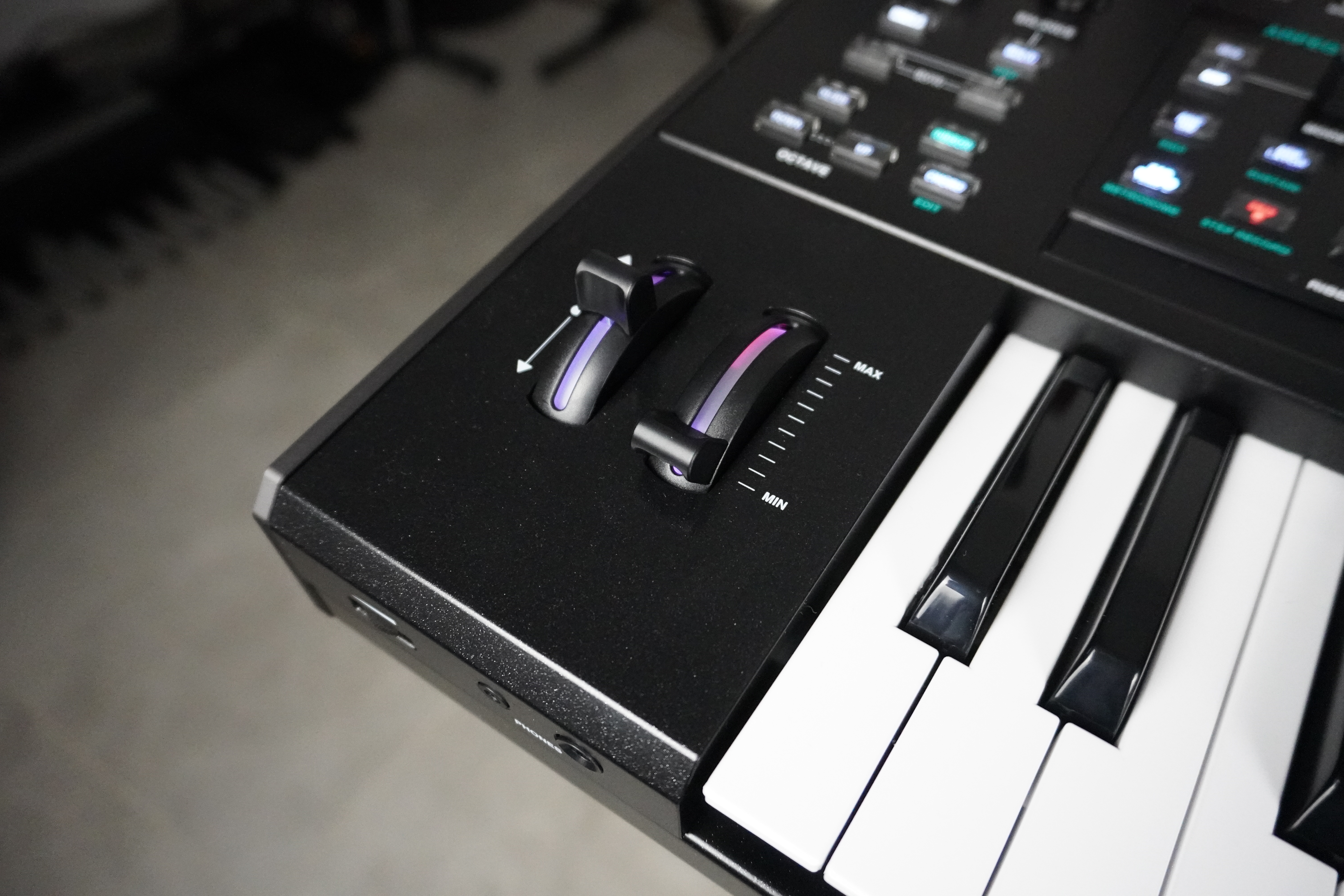
The Leviasynth is exceptionally expressive, whether using the keyboard, direct controls or physical controllers (knobs, ribbon, pedals). The sound engine allows infinite modulations (matrix, macro, arpeggiator, sequencer) and is hyper-reactive to physical controllers. The synth is at ease with crystal-clear, sharp, lively, evolving and soaring sounds. A binaural mode extends the stereo range (polyphony is then halved).
The Leviasynth is also capable of more basic “analog” sounds, with a character more incisive than warm, but this is not where it stands out most. To tell the truth, the low-pass VCF disappointed us a little. Where grain was expected, the result was a little dull, with some midrange coloration, perhaps linked to drive or resonance compensation.
When you increase the resonance, the effect isn’t spectacular until the VCF goes into self-oscillation, and then it gets pretty brutal, unless you go in on the tip of your fingertips. Most of the time, we fell back on the DCF, which is quite remarkable. As for the effects, we liked most of the algorithms on offer, although the reverbs seemed a little metallic when dosed too hard. A librarian (ASM Manager) is available for PC and Mac to organize your programs and update the firmware.

Eight carrier oscillators and modulators assembled at will in algorithms
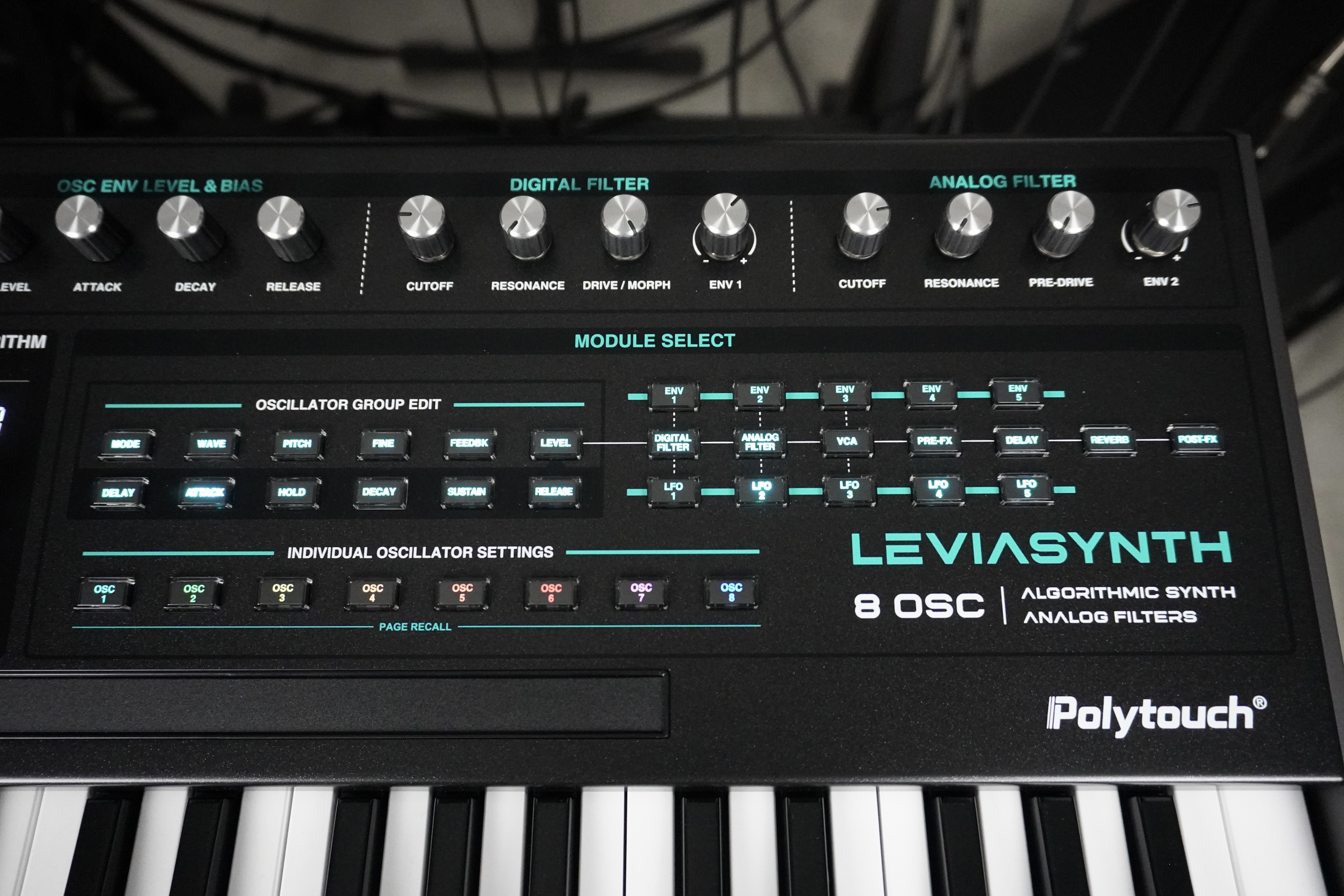
Voices can be played in poly, mono, unison, with different modes of rotation, density, stereo spacing, glide/glissando, snap (attack reinforcement), temperament/microtonal range (several dozen available or programmable) and modeled analog drift.
An oscillator can be a carrier (sound source), a modulator (audio modulation) or both (it has an audio output and modulates other operators). An algorithm is a combination that governs the links between the eight oscillators.
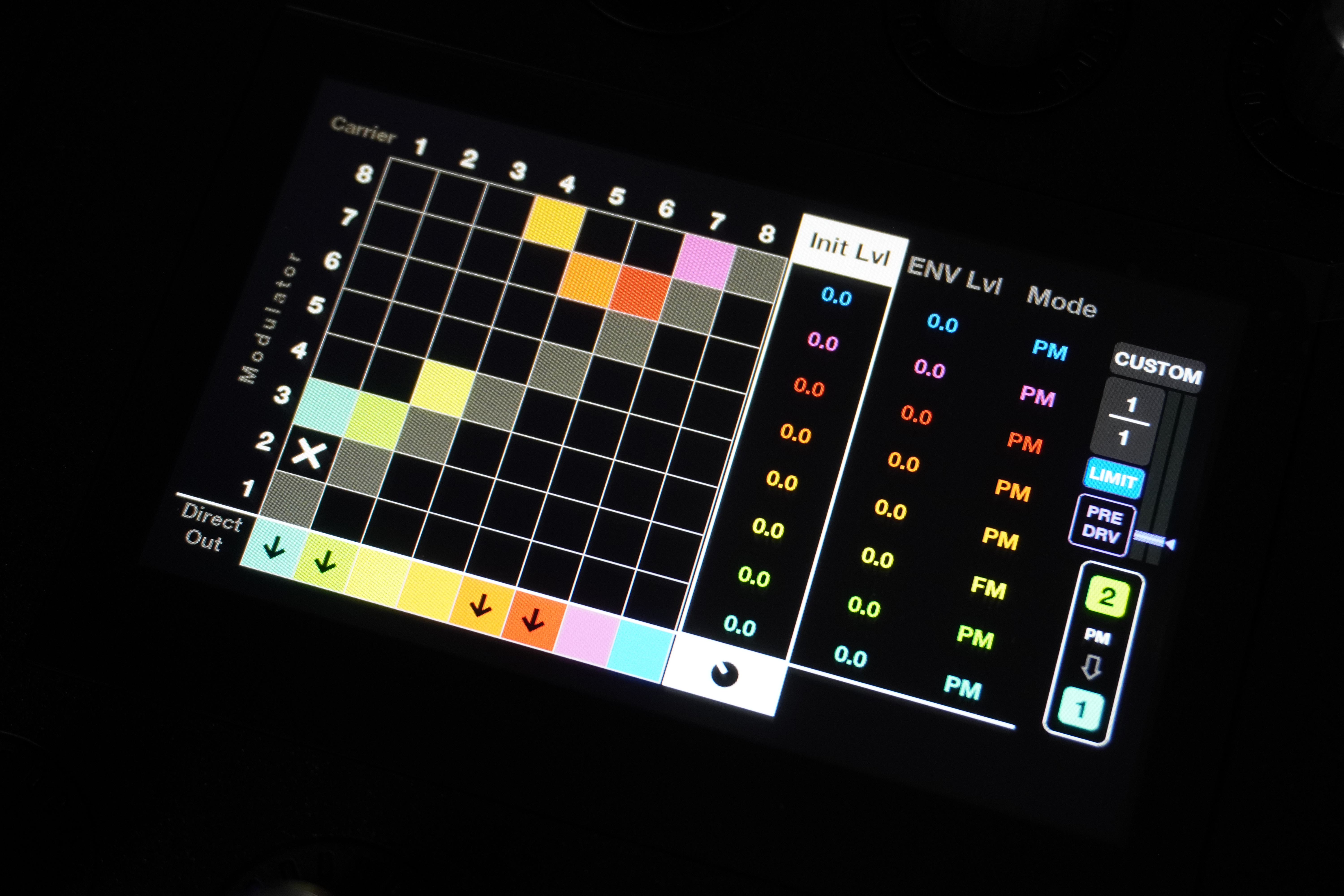
The Leviasynth includes 144 pre-programmed algorithms, integrating horizontal (addition of carriers), diamond, tree, cascade and vertical (modulations of modulations) configurations. You can even morph by progressively switching among eight algorithms, although the results are sometimes of questionable sonic interest. And if you still can’t find what you’re looking for, you can easily build your own algorithm, thanks to a well-designed graphic editor in the form of a full-color matrix. You can feel that the design engineers have taken pleasure in creating the ultimate algorithmic synth.
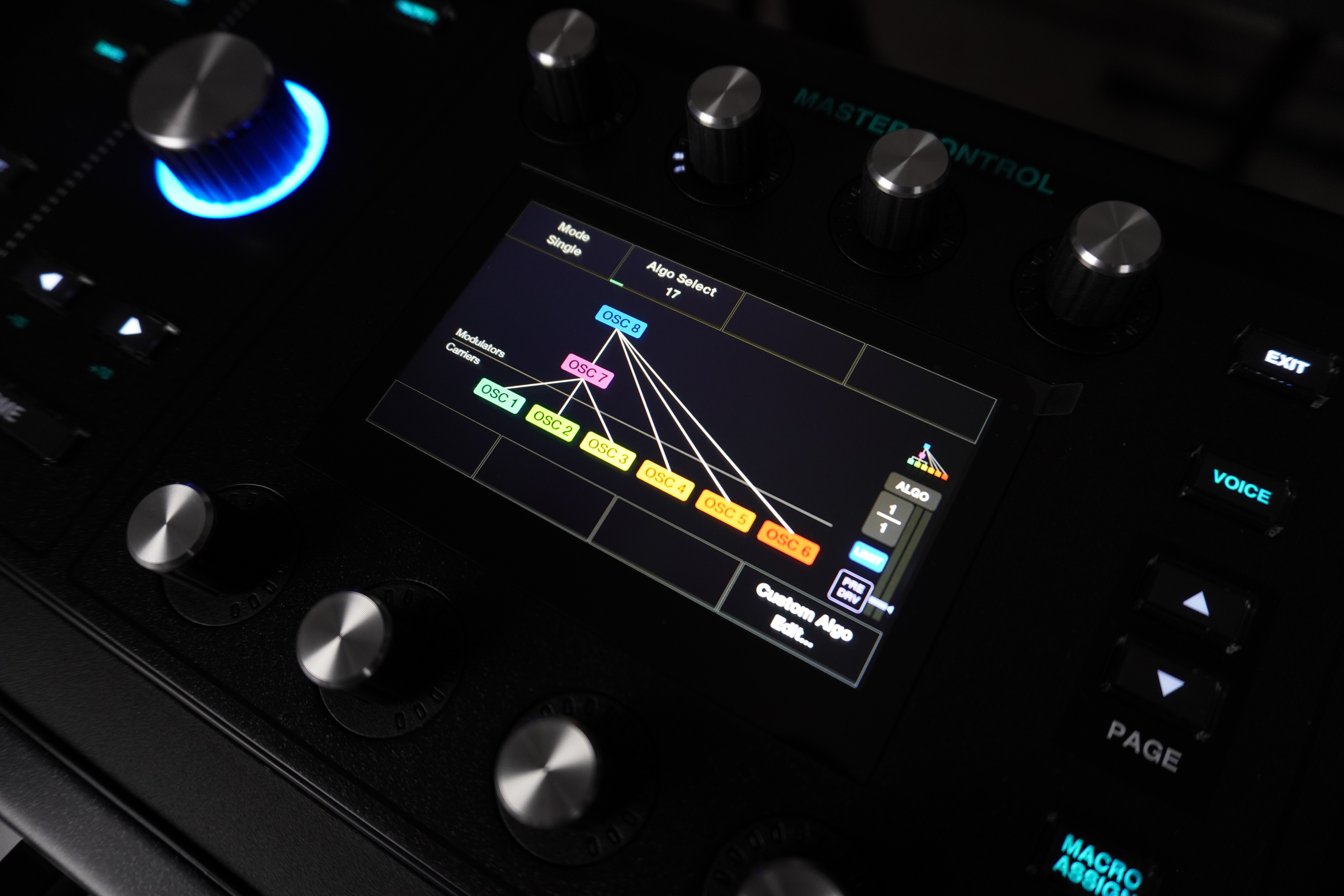
The crucial parameters for this kind of synthesis are all present: fine frequency or ratio, level, feedback, envelope and keyboard tracking. In all, there are five pages of settings for oscillators alone! We’ve already mentioned the possibility of operating in binaural mode (stereo oscillators grouped in pairs) to create very spacious sounds. You can then define the type of modulation between two oscillators: FM, phase modulation, PWM, synchro, phase distortion (square, sawtooth, combined). In short, the possibilities are plentiful; it’s up to the user to find the musically useful combinations, which are not always immediate.
A combination series DCF multimode and VCF compensated to sculpt the sound
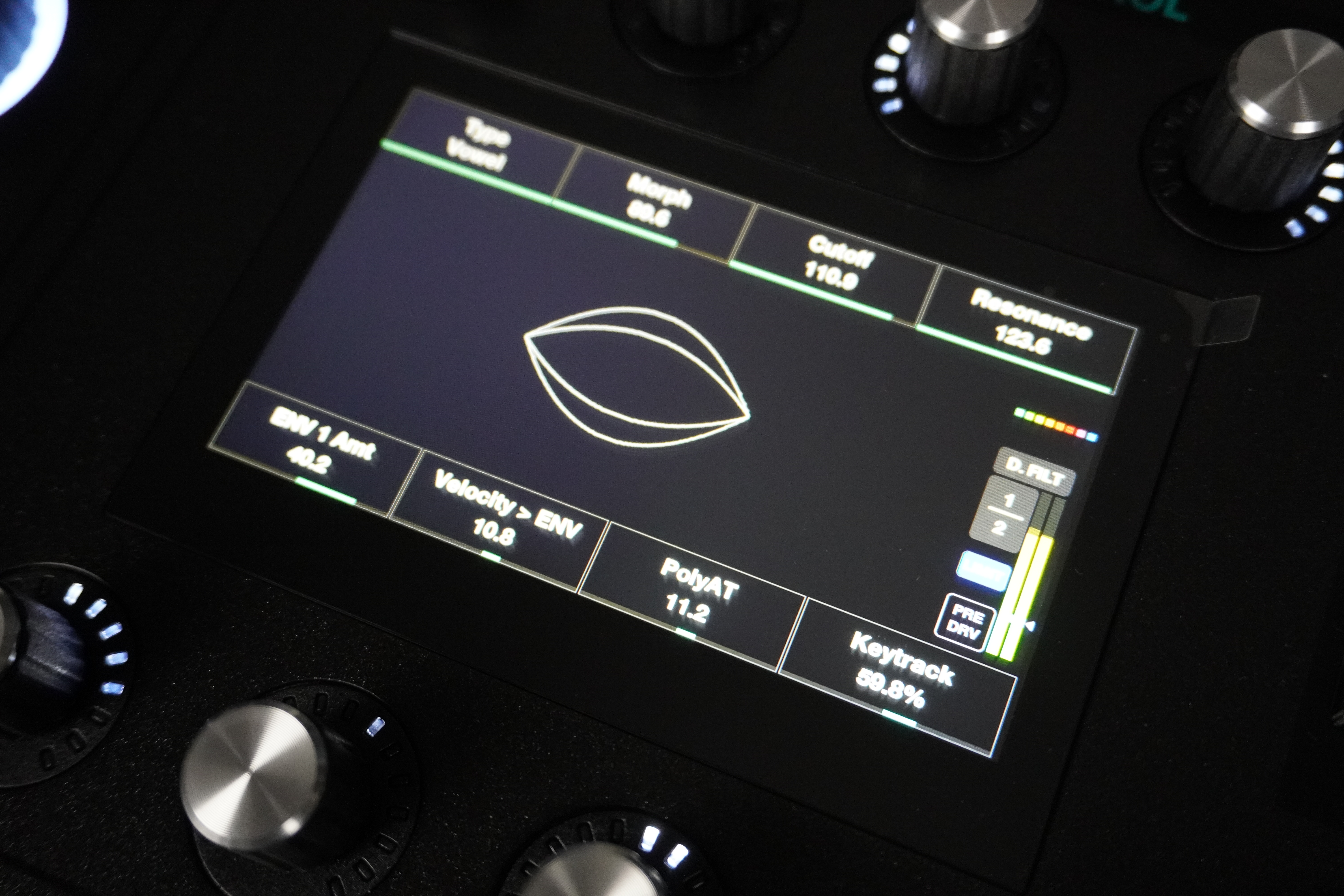
Threeler 3-pole filters combine 3 1-pole filters developed by Ian Fritz. The vowel filter lets you progressively chain and modulate AEIOU voice formants in eight different orders. All crucial settings are ultra-precise, with a perfectly smooth response.
Depending on the filter model, pushing the resonance can induce self-oscillation, whose power and stability are highly dependent on input and saturation settings. Particular attention must be paid to this point if you want a good level of drive while avoiding aggressiveness. This drive can be placed before or after filtering. The cutoff frequency can be directly modulated by LFO1, Envelope 1, envelope velocity, polyphonic pressure and keyboard tracking (+/- 200% for the latter, well done!).
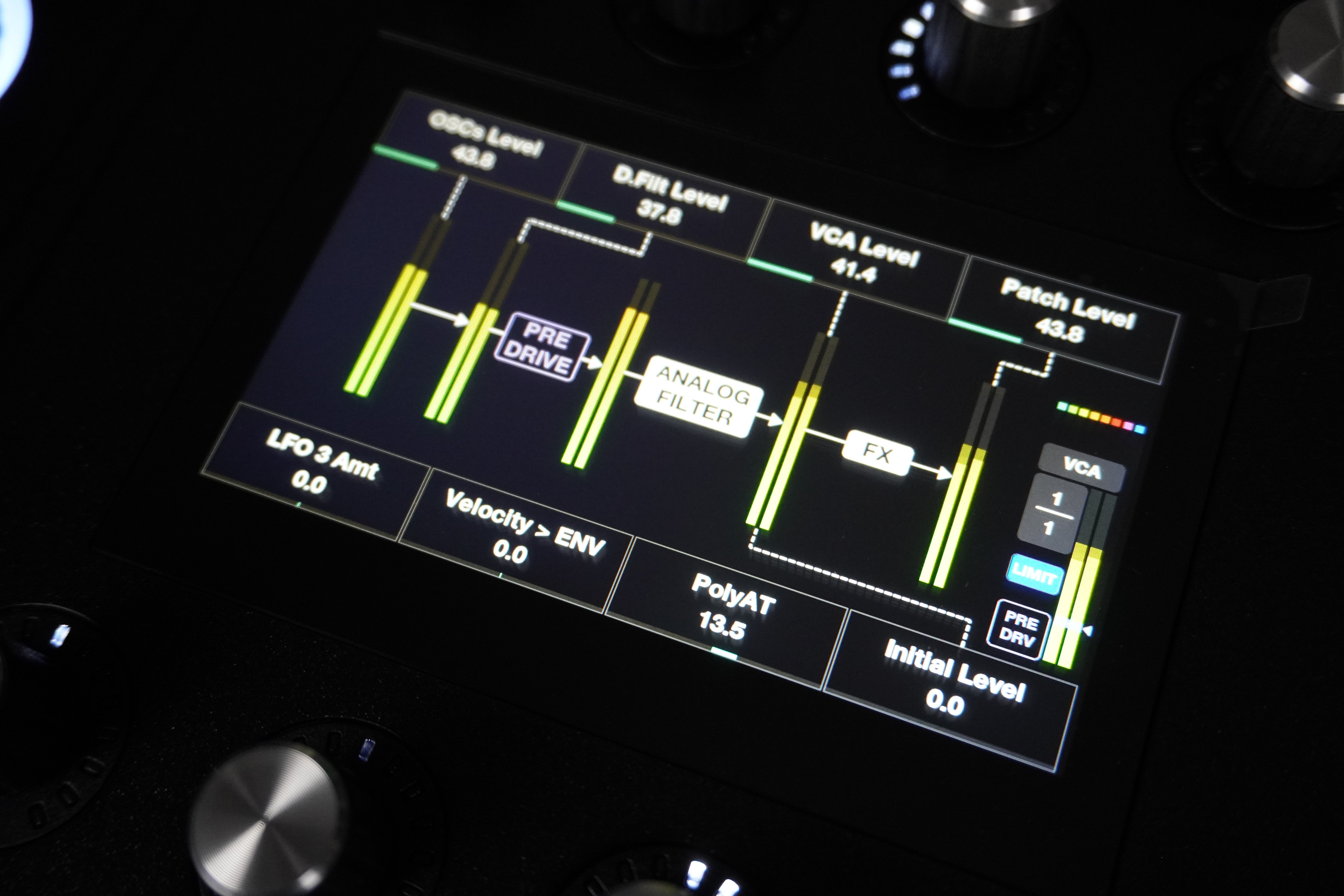
The DCF’s output level can be metered (via attenuation and amplification) before it reaches the VCF. This is a 4-pole resonant low-pass filter with pre-drive. You can push it into self-oscillation. The cutoff frequency is directly modulated by LFO2, envelope 2, envelope velocity, polyphonic pressure and keyboard tracking.
Here again, the settings are precise, which is necessary if you want this VCF to sound vintage. To tell the truth, we didn’t succeed, and this VCF left us wanting more, between a lack of character and an excess of aggressiveness, as already mentioned.
The VCF output finally attacks the final VCA. The module allows you to set levels at different stages of the signal path: oscillator output, DCF, VCA and program. A dedicated page with meters clearly shows where you are at each stage, and we can only recommend that you pay close attention to it if you want to keep your sound warm and not oversaturated, reminding us of our venerable Alesis Andromeda, which needs to be watched closely if you want to retain an analog character.
The VCA can be directly modulated by LFO3, envelope 3, envelope velocity, polyphonic pressure and keyboard tracking. There is no fixed panning setting per program; it’s set at the level of the voice mode (stereo dispersion for mono oscillators or panning for stereo oscillators, which can be activated for carrier/modulator oscillators or both), macros or modulation matrix. In Multi mode, however, you can adjust the stereo position of each layer.
Infinite modulations assured by a large matrix and multiple LFO envelopes
The curves of ADR segments can be continuously modified, from logarithmic to exponential, offering a wide range of response profiles, from the snappiest to the most progressive. They can also be quantized (staircases).
The display shows the envelope profile in real time, with a spectacular overlay for the eight oscillator envelopes. Envelopes can be triggered in legato mode, retriggered when polyphony is exceeded, freely continued or looped (from two to 50 times or infinitely). Parameters can be conveniently copied from one envelope to another.
Let’s move on to the LFOs, of which there are five, just like on the Hydrasynth, the first three being pre-assigned to DCF/VCF/VCA. There are 11 distinct waveforms, including the great classics, an S&H, noise, a random wave and a programmable step wave. In the latter case, you create your own waveform from eight modulation points.
Frequency varies from 0 to 25 Hz (slow mode) or 0 to 150 Hz (fast mode) and is expressed in time multiplications/divisions when synchronized to tempo. LFOs can oscillate by voice or globally. Delay, input fade, wave phase and modulation level can also be set. The waveform can be quantized (staircase), and the cycle read once (envelope type). As with envelopes, parameters can be copied from one LFO to another. Once again, the designers have let their hair down, and we wonder who’s going to use so many options.
Finally comes the 32-cord modulation matrix, allowing 170 sources to be routed to 425 destinations, with bipolar modulations. Assignment is straightforward: on the front-panel modules, hold down the source button, then select the destination button, before finalizing the settings on-screen.
Sources include envelopes, LFOs (bipolar or positive), pressure (poly or mono), keyboard tracking, velocity (initial and release), knobs, ribbon (bipolar absolute, unipolar absolute, relative), two pedals, two CV inputs, MPE parameters (X, Y absolute, Y relative, release velocity) and 128 MIDI CCs. Destinations include oscillators (frequency, level, waveform, phase, FM, feedback, panning), filters (cutoff, resonance, drive, formant, morphing, envelope, LFO, level), VCA (level, LFO), effects parameters (predefined), envelope segments, LFOs (speed, quantity, quantization), voice parameters (detune, pan, glide, vibrato), 32 modulation cords (modulation modulation), eight macros, arpeggiator (11 parameters), sequencers (11 parameters), two CV outputs and 128 MIDI CCs. Monstrous!
A beautiful collection of dynamic effects available for each sound layer
The third effect is dedicated to delays. There are five types: Mono, Stereo, Ping-Pong, LCR and Inverted. This time, six parameters are available, most of which can be modulated via the modulation matrix, with time synchronized to the clock. The third effect is dedicated to reverbs. There are four types: Hall, Room, Plate and Cloud (grains). Six parameters are again available, most of which can be modulated in real time. A special mode freezes the reverb tail. The well-specified effects section is perfectly integrated with the rest of the synth’s parameters.
A sophisticated arpeggiator doubled with a well-thought-out motion sequencer
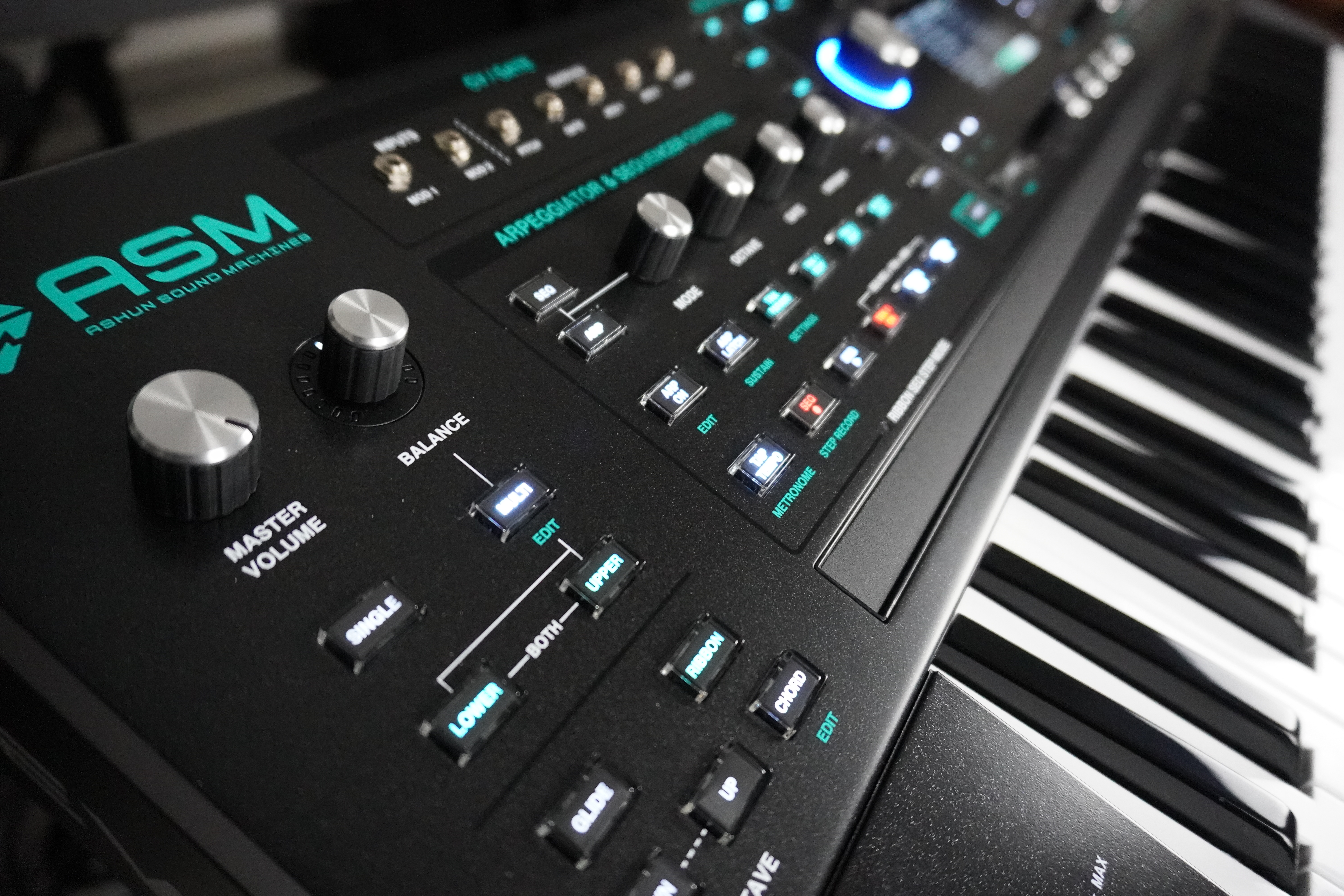
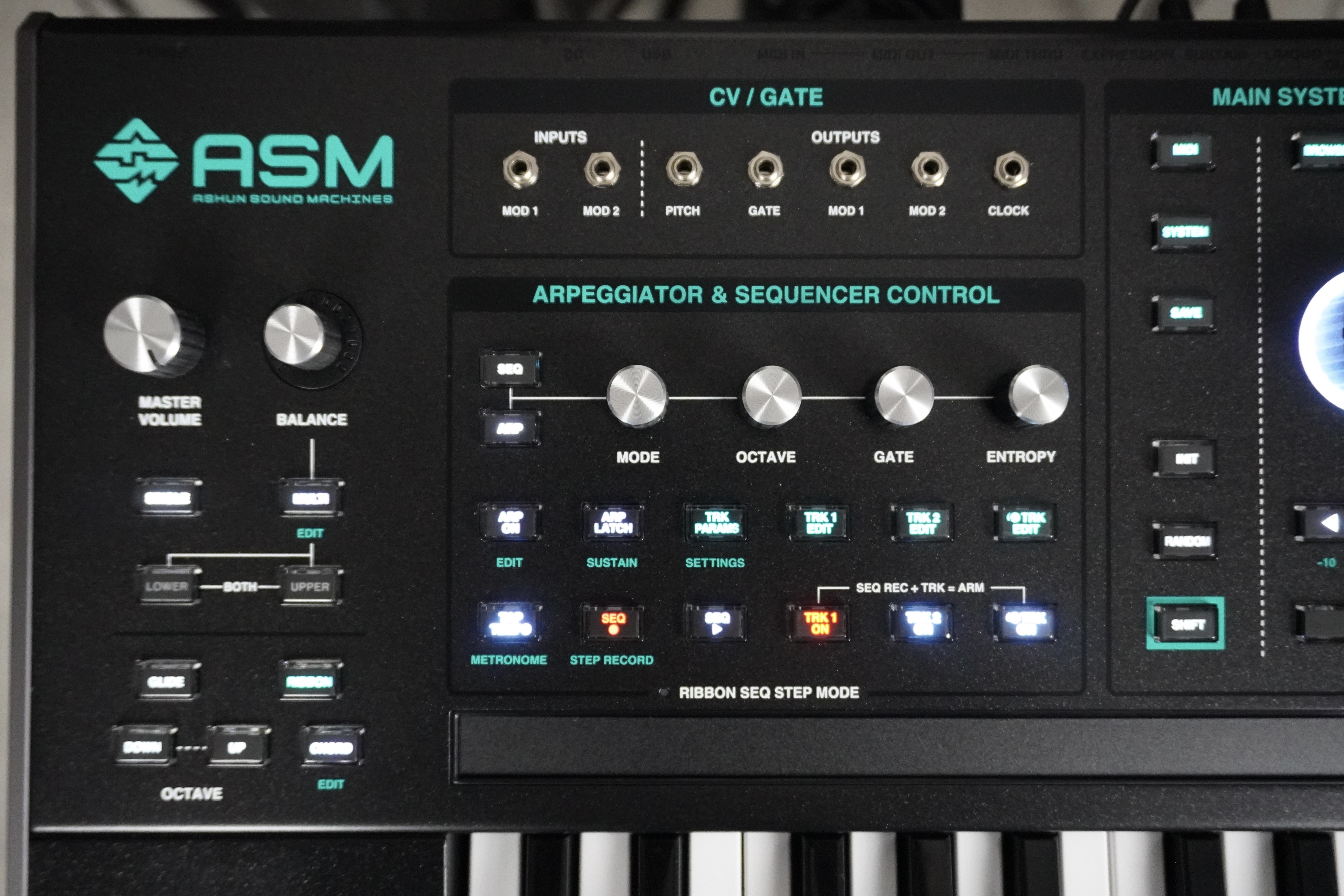
On the other hand, the settings accessible via the menu are very numerous: time division, octave transposition (1–6 according to 6 modes), playback direction (up, down, alternate, pendulum, chord, pattern, order played, fixed random after one cycle, integral random), number of notes scanned (1–32), pattern number (64 presets, 64 programmable), entropy (random variation algorithms — a function yet to be developed), swing, ratchets (1–2–4–8, probability from 0 to 100%), MIDI note transmission.
In Multi mode, the top layer defines the arpeggiator parameters, but you can choose which of the two plays, either based on the keyboard separation point (Split mode) or a velocity threshold (Dual mode). In short, it’s one of the most powerful and singular arpeggiators we’ve come across, but there’s only one instance of it.
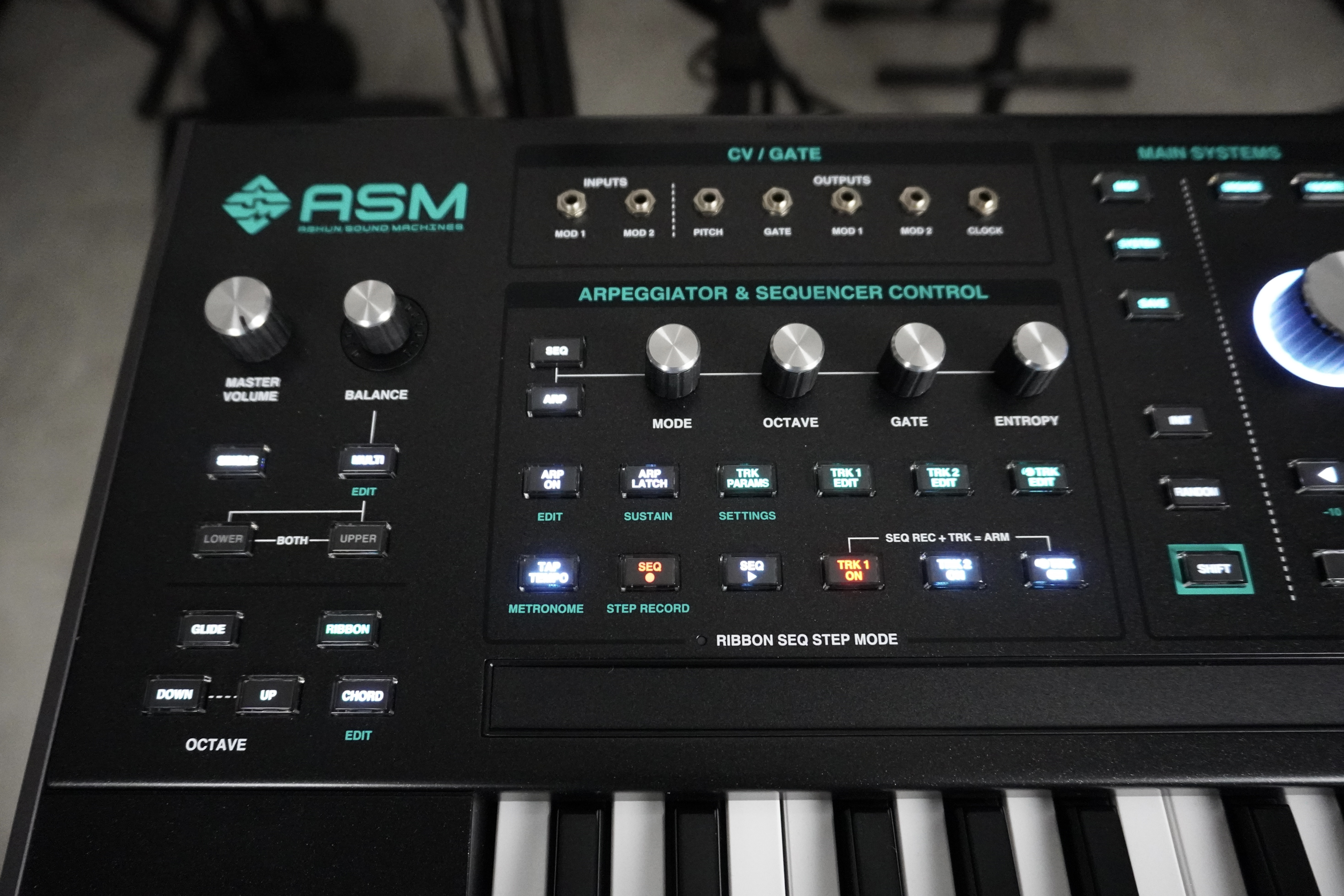
The Hydrasynth has no sequencer, but the Leviasynth does, and it’s beautifully implemented. Able to operate at the same time as the arpeggiator, the sequencer offers two independent polyphonic tracks for notes and one track for the movements of the eight macro encoders. This is not a step sequencer transposed to the keyboard. Playback can be performed in eight directions (forward, reverse, alternate, zigzag, random).
The two sequences can be played in parallel or in sequence. In a Split Multi, you can create a bitimbral sequence by assigning the two sequences to the two playing zones. Notes are recorded in real time or step by step, whereas movements are recorded only in real time.
All this is facilitated by front-panel transport controls and track selectors. Via the menu, you can set the number of steps (1–128), time division, swing, gate, octave transposition, time offset of the first step read, quantization, polyphony reserve, MIDI transmit/receive channels and CV/Gate transmission. Editing is microscopic, with graphical representations of the various parameters for each step: notes, velocity, gate, trigger, mute, micro-timing, probability and the values of the eight macros. It is possible to send an arpeggio pattern in real time within a sequence. Conversely, you can export a sequence to an arpeggio pattern. Once again, the developers have let loose with this highly sophisticated module.