



The Yamaha DX7 marked a turning point in synthesis and music in the 1980s. The first consumer digital and FM synthesizer, it transformed the studio sound palette and introduced new sounds that became indispensable.

The Yamaha DX7 marked a decisive turning point in the history of music synthesis and in the studio industry of the 1980s. The first consumer digital synthesizer based on frequency modulation synthesis (linear FM in fact), already seen on the Yamaha GS1 and the New England Digital Synclavier, opened up new sonic possibilities unattainable on the analog synthesizers that had dominated until then. Its clarity and sonic precision, its ability to produce fine, easy-to-mix timbres, and the purity of its digital rendering gave rise to a new aesthetic, where sharpness and precision took precedence over the warmth and thickness of analog instruments.
The Yamaha GS1: the origins of FM synthesis before the DX7
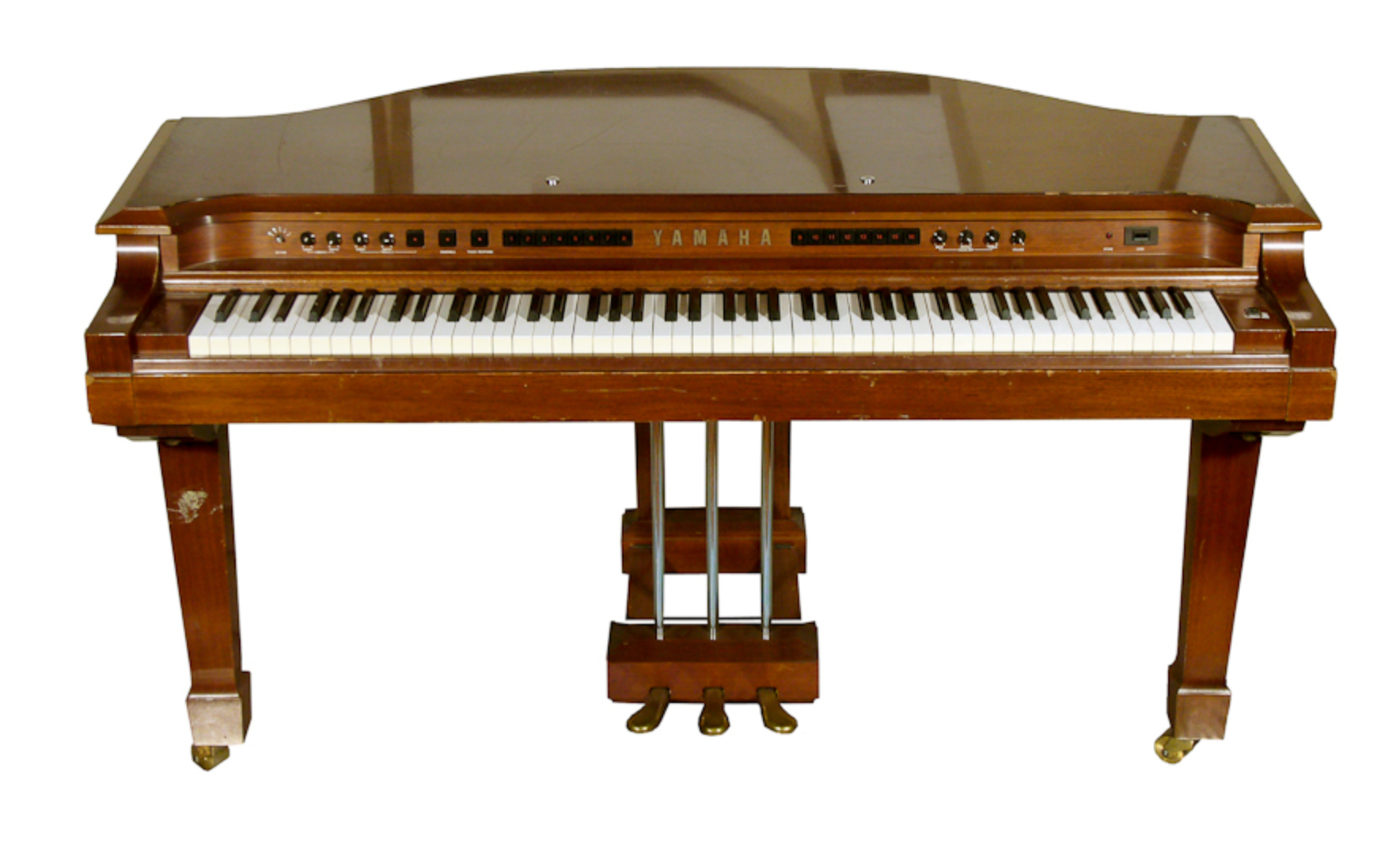
Before the DX7, Yamaha had already explored FM synthesis with a few instruments. Beneath its classical appearance, the GS1, launched in 1980, was a heavy, expensive synthesizer aimed primarily at professional studios and wealthy, inquisitive musicians. The GS1 used frequency modulation developed by John Chowning at Stanford University, which Yamaha had licensed, and offered a foretaste of the crystalline timbres and metallic textures that were to become the signature of the DX7.
However, it was mainly intended to be played rather than programmed. The idea was to allow musicians to try out this new synthesis without having to understand it. Just like being able to enjoy different timbres with an expressiveness close to that of classical instruments. The GS1 had a polyphony of 16 voices and, despite its 8-operator architecture, users were not free to choose which would be carriers and which would be modulators. (See the principles of FM synthesis in this article.)
A few controls were available for slightly modifying the timbres. The GS1 also featured a chorus effect, and sounds could be changed at any time by loading others from the instrument’s magnetic card. Yamaha opted for an 88-key weighted keyboard, sensitive to velocity and aftertouch, with performance controls including a vibrato pedal, tremolo pedal and sustain pedal. The GS1's initial price put it beyond the reach of most users in the early 1980s. Yamaha tried to remedy the situation by releasing the GS2, essentially a cheaper version of the GS1 with reduced functionality. Unfortunately, the GS2 also failed to appeal to a broad user base. Yamaha then decided to change its strategy for its subsequent FM-based instruments.
Yamaha DX7: functioning of FM synthesis and new sound possibilities
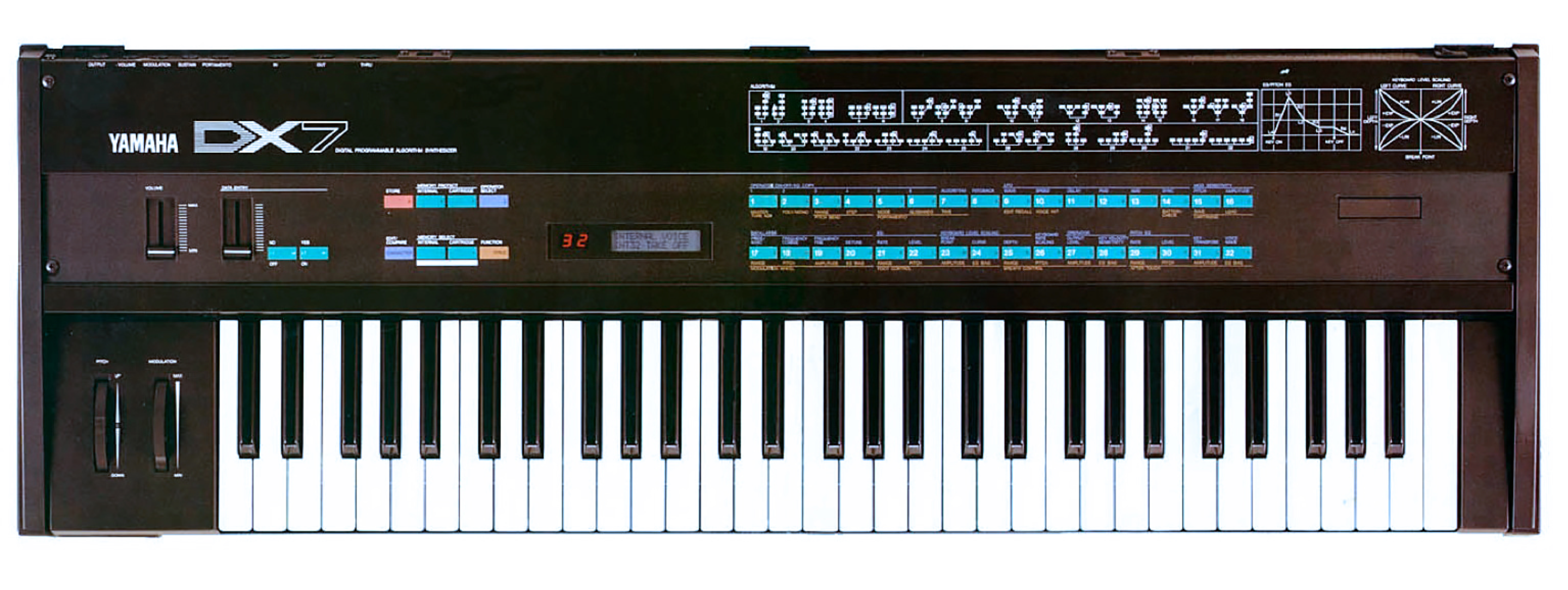
The DX7 wasn’t just a digital instrument: it offered an entirely new approach to sound synthesis. It was based on the same principle as the GS1, using frequency modulation. But this time, the user had total control over sound programming. FM made it possible to generate sounds rich in harmonics, with metallic, bright or percussive timbres that were difficult, if not impossible, to achieve on conventional analog synthesizers.
The DX7's sounds offered unprecedented finesse and were easy to mix, as their clarity and definition reduced the masking effects between instruments in a complex mix. The method of programming was also unprecedented: rather than sliders and potentiometers, the DX7 featured membrane knobs combined with a small display. By designing a sound on a DX7, you became a programmer, and terms like “algorithms” (of which there were 32) and “operators” (of which there were six), used by Yamaha to structure the many synthesis functions, reinforced this impression of modernity.
The DX7's velocity- and aftertouch-sensitive keyboard brought an expressiveness unheard of in this price range. And let’s not forget: when it came out, one of the DX7's great assets was its price. A synthesizer offering a new form of synthesis, new timbres, memories, a high-quality expressive keyboard and MIDI… at an unheard of price. But this richness had a downside: programming complexity that was often daunting for artists. Used to the VCO-VCF-VCA chain employed by synthesizers of the time, users were often baffled by this new way of programming. Few went so far as to create their own sounds from scratch. But there were some: Brian Eno was one of them.
In theory, the principle of FM synthesis is not particularly complex, and Yamaha has sought to make it accessible, thanks in particular to the famous algorithms — “turnkey” configurations that define which operators are carriers and which are modulators. In fact, many musicians preferred to use pre-programmed sounds available on cartridges. So widespread was this phenomenon that a veritable market in sound banks was born. The original presets, designed by sound engineers and the development team, also contributed greatly to the DX7's success. Sounds such as electric piano, metallic percussion and crystalline strings quickly became emblematic of 1980s productions. This palette of sounds, previously inaccessible on analog synthesizers, shaped the sound of an era and inspired many composers. Finally, the DX7's stability also contributed to its success: unlike analog synthesizers, which are sensitive to temperature variations, it offered great sonic consistency, making it easy to integrate into complex productions.
Yamaha DX family: declinations, derivative models and evolutions
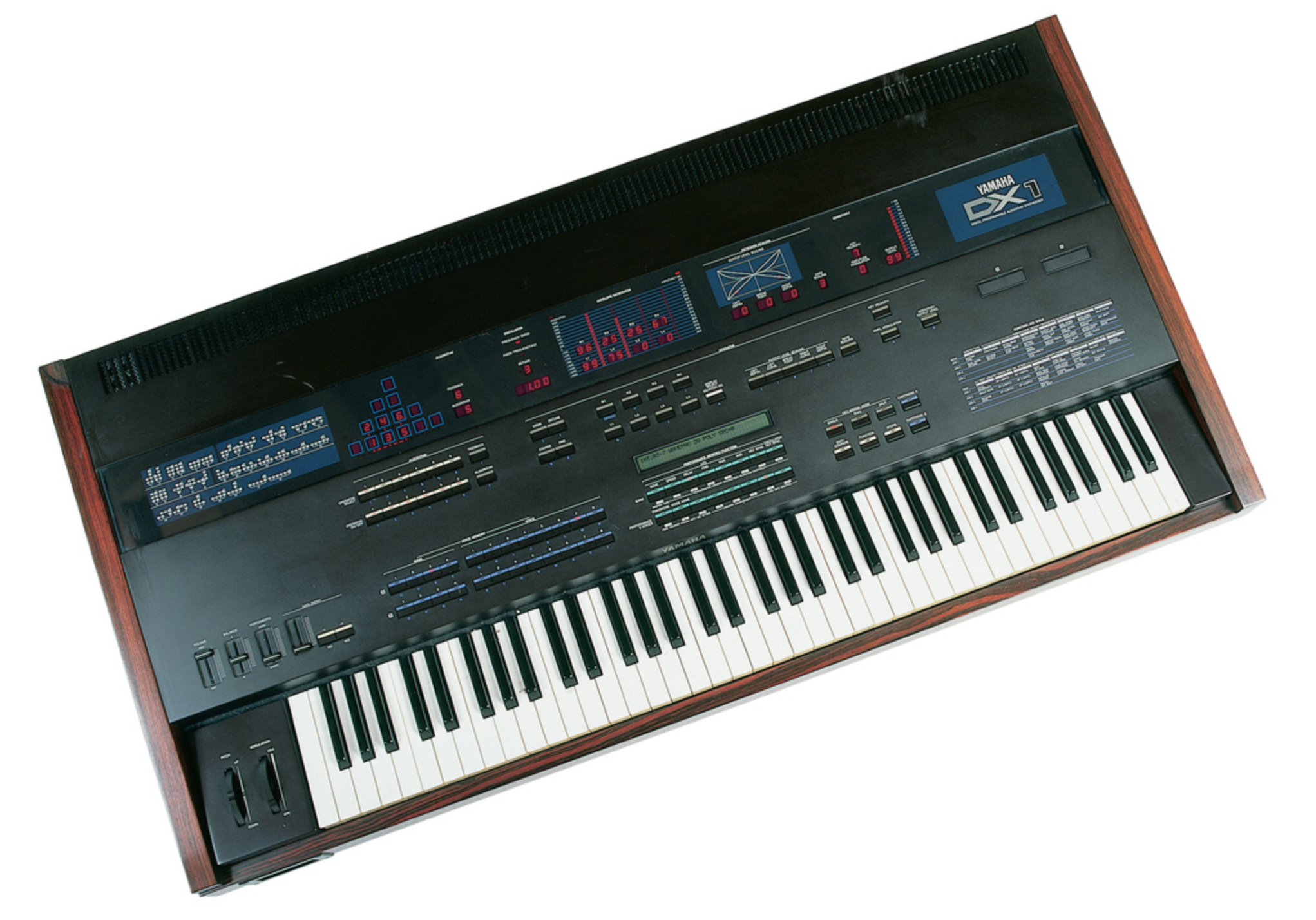
At the same time, the DX5 was a dual version of the DX7, offering features similar to the DX1 but with a less luxurious presentation. Its dual sound engines enabled the superimposition of sounds or the creation of more complex timbres, further expanding the available sound palette. The DX1 and DX5 retained compatibility with DX7 sounds and programs.
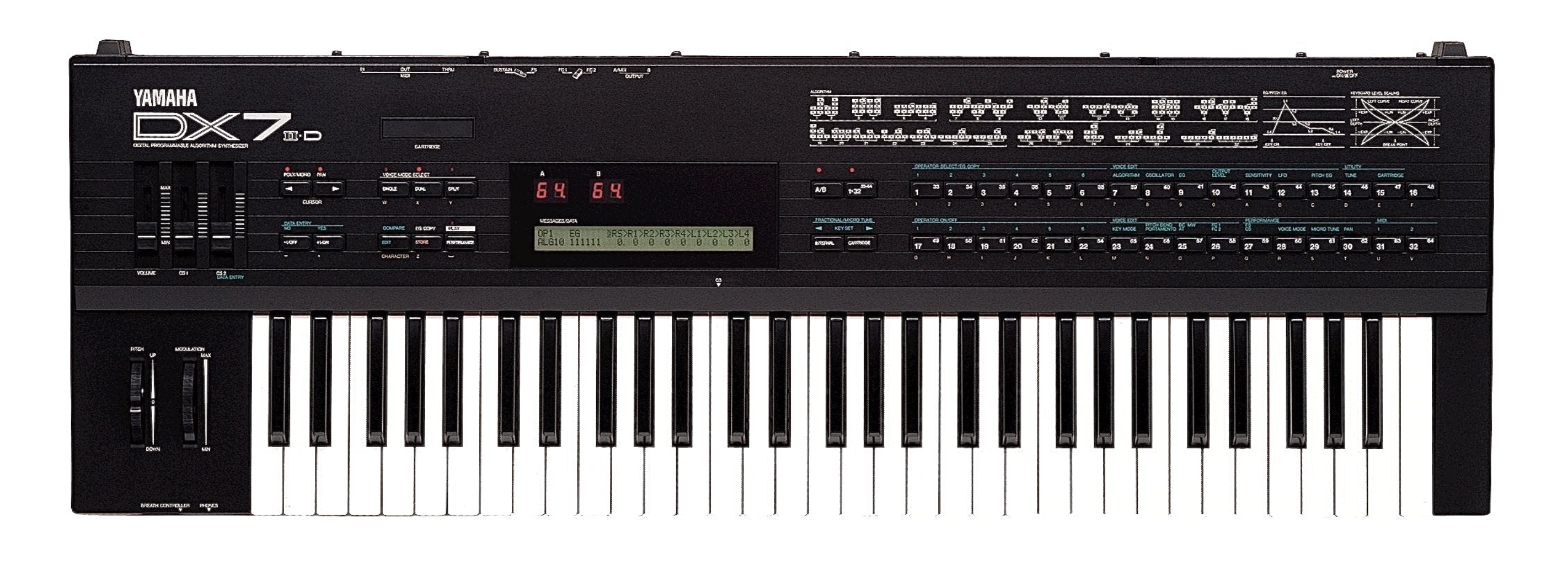
The DX9, released shortly after the DX7, offered a compromise between cost, polyphony and expressiveness, with a four-operator model. More affordable, it retained FM technology, but with reduced polyphony. There was also the small DX100, still with four operators, but with a mini-keyboard. Yamaha even offered rack versions, such as the TX7. Each model in the DX family reflected a different approach to the market and to usage: from studio to live, from professional musician to budding composer, Yamaha offered suitable solutions.
Legacy of the Yamaha DX7: influence on synthesizers and music production
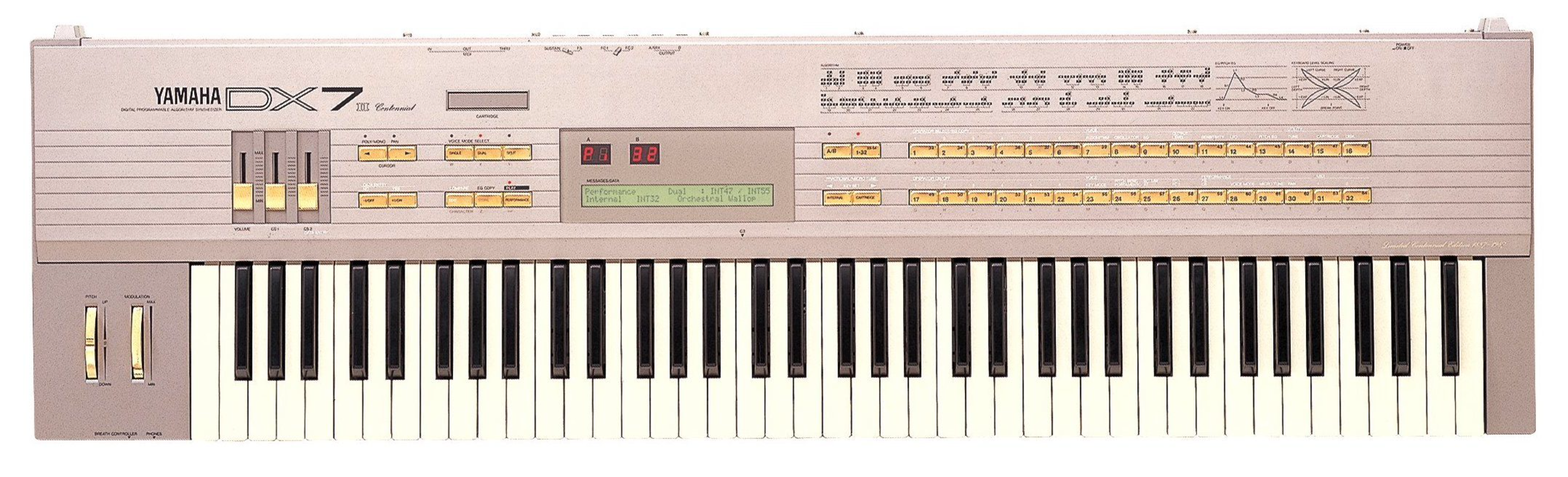
The DX7 didn’t just introduce a new technology: it profoundly transformed the sonic aesthetics of the 1980s. Musicians and producers alike quickly embraced its precise, brilliant timbres. FM synthesis, popularized by the DX7, influenced many later digital instruments and early computer synthesis software. The idea of reproducible, controlled timbres, combined with an expressive keyboard, had a lasting influence on synthesizer design in later years. Even analog and hybrid synthesizers were inspired by it: the Roland JX-8P, the Alpha Juno and the Korg DW-8000, for example, incorporated features inspired by the control and precision logic of the DX7. More than just an instrument, the DX7 has become a symbol of the transition from analog to digital and a perfect example of how technological innovation can reshape the musical landscape.
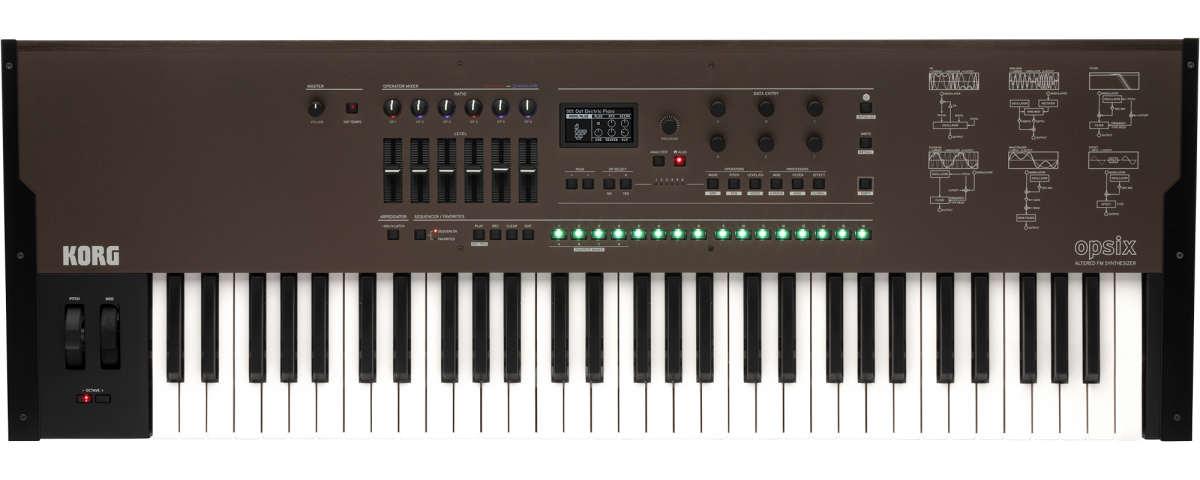
Fortunately, the qualities of this synthesis have been rediscovered in recent years. Today, without necessarily buying a DX7 or one of its derivatives on the second-hand market, there are many alternatives. While they don’t faithfully reproduce the programming experience, they do allow you to rediscover the characteristic timbres of FM synthesis. Several contemporary synthesizers are bringing FM synthesis up to date, with more intuitive interfaces: the Kodamo EssenceFM, in rack format with its large seven-inch capacitive multi-touch display (unfortunately discontinued), the Korg Opsix, with its six freely configurable operators, also available in a SE version, more luxurious and aesthetically closer to the DX7, or the Yamaha Reface DX which, despite its four operators, is an excellent, simple and affordable gateway. We can also mention the Yamaha MODX M, Montage or the Korg Kronos, which feature highly accomplished FM engines. On the software side, of course, we find Arturia’s DX7 V, which recreates a DX7 enriched with modern features in a production environment, as well as the excellent Dexed, free, capable as it is of reading DX7 SysEx files.
Yamaha DX7: review and importance in the history of synthesis
The Yamaha DX7 embodied a breakthrough in the history of synthesizers. It introduced the general public to sophisticated digital synthesis, enabling sounds of unprecedented precision and diversity, while remaining accessible thanks to its presets and simplified programming. The instrument opened up new creative possibilities in the studio, permanently changing the way music is conceived and produced. Beyond its iconic sounds, the DX7 set standards that influenced an entire generation of digital and hybrid instruments and paved the way for innovations to follow in the decades to come.
By combining the power of FM synthesis with the user-friendliness of a keyboard and interface that anyone could use, Yamaha succeeded in transforming a complex technology into a universal musical tool. Its impact can still be measured today through legacy sounds in pop, jazz and electronic music and even in digital synthesis education. The DX7 is therefore not just a technological milestone; it remains a symbol of the era when digital purity redefined musical creativity, establishing an unprecedented balance between sonic precision and artistic expression.
.