



The Fairlight was both the first sampler and the forerunner of CAM (Computer-Assisted Music). A look back at a decisive technical evolution, at the origin of many of today's production tools.

Tony Furse and the first attempts at digital synthesis
The history of the Fairlight begins in Australia, long before the Fairlight CMI became an essential studio reference in the 1980s, with the work of an engineer with a passion for electronics: Tony Furse. As early as the 1960s, Furse set out to design an electronic instrument capable of producing complex sounds, in particular realistic percussive or orchestral timbres, which largely eluded the synthesizers of the day. His first experiments were based on transistor circuits, in particular flip-flop* assemblies.
Between 1966 and 1969, he developed his first rudimentary digital waveform generator, enabling him to control a signal’s harmonics. This device marked a milestone in his research, but it remained largely limited in reproducing the tonal complexity of acoustic instruments. It wasn’t until the advent of integrated circuits in the late 1960s that his work became truly exploitable on a technical level.
The Qasar: towards a controllable digital instrument
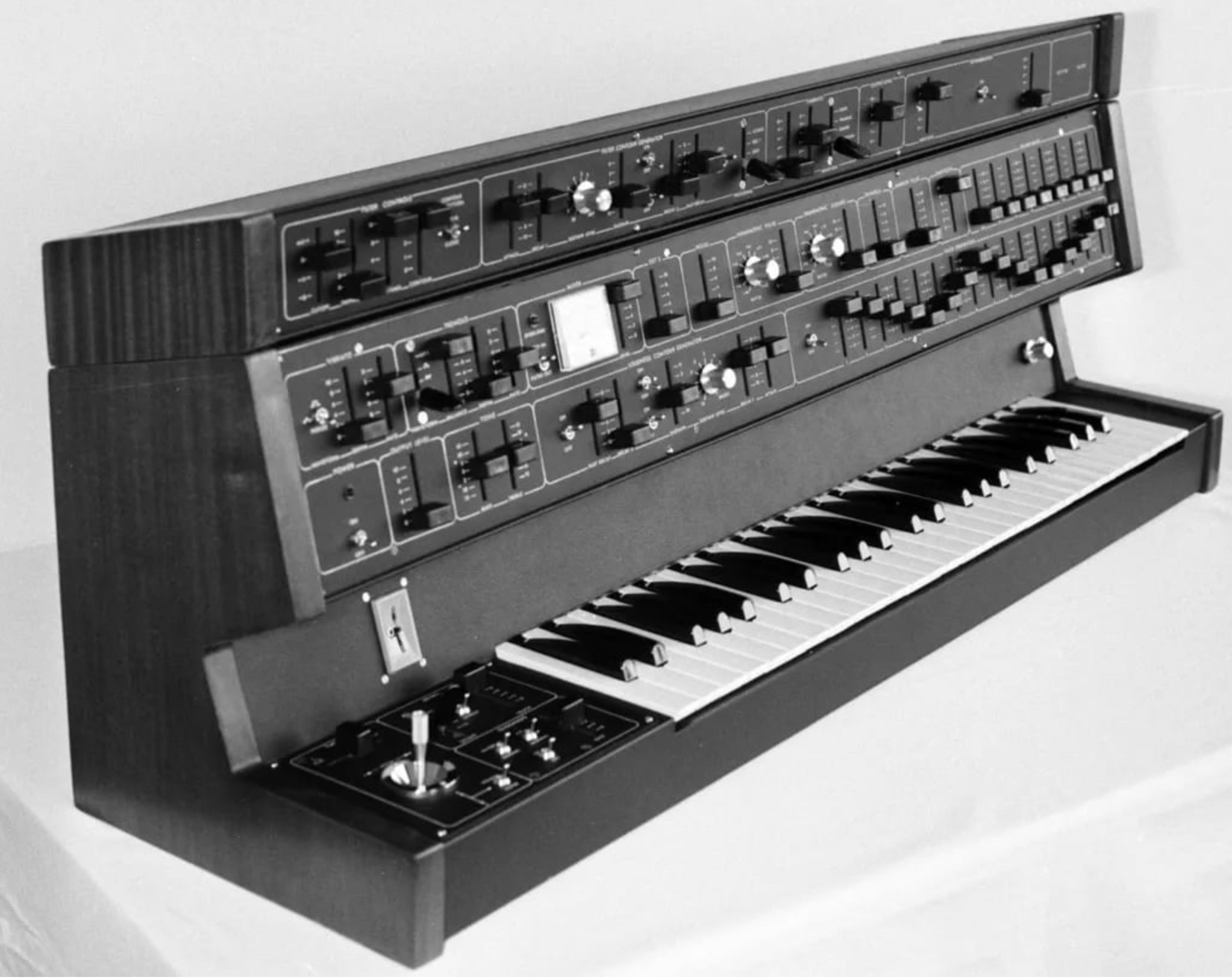
Although it never got beyond the prototype stage (only two were built), it attracted the attention of composer Don Banks, then head of composition and electronic music studies at the Canberra School of Music. Banks, who had experience of European electronic studios, notably with EMS instruments, saw the project’s potential and helped secure institutional support for its further development.
The collaboration between Furse and Banks resulted in the Qasar II, a more advanced version based on two Motorola 6800 8-bit microprocessors, deployed in parallel. The instrument was capable of synthesizing waveforms digitally but was limited in its ability to produce harmonic partials, resulting in relatively static sounds. Despite its technological ambition, the Qasar II failed to find a commercial outlet, not least because of its high cost and competition from more affordable analog modular systems developed in the same period.
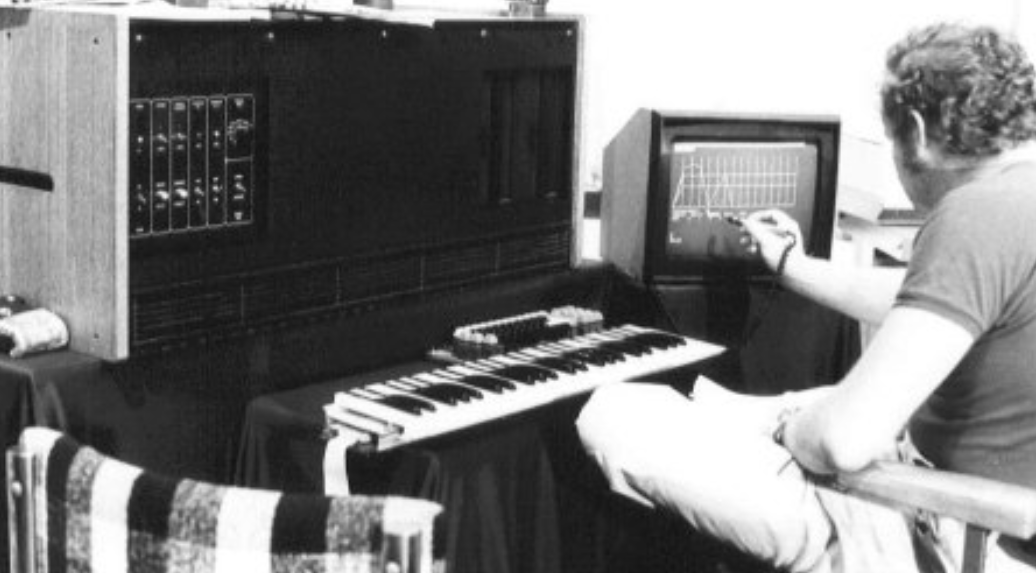
The M8 also offered additive synthesis based on Fast Fourier decomposition, offering greater control over sound structure. The instrument could be played conventionally via a four-octave keyboard, but could also be driven digitally using the MUSEQ 8 system developed by Furse. This sequencing device was designed to facilitate the composition and performance of music, even outside the strictly electronic field.
Sound programs could be saved on eight-inch floppy disks, a solution that was still new at the time, allowing data to be stored and modified without the need for conventional audio recording. However, priced at around AU $15,000 (Australian dollars, roughly $20,000 USD at the time), the Qasar M8 remained an expensive instrument. Other variants appeared, such as polyphonic models based on the same architecture, but distribution remained limited. Despite this, public demonstrations of Furse, notably in Canberra, aroused the interest of academic and institutional circles, who perceived the potential of these tools for musical creation.
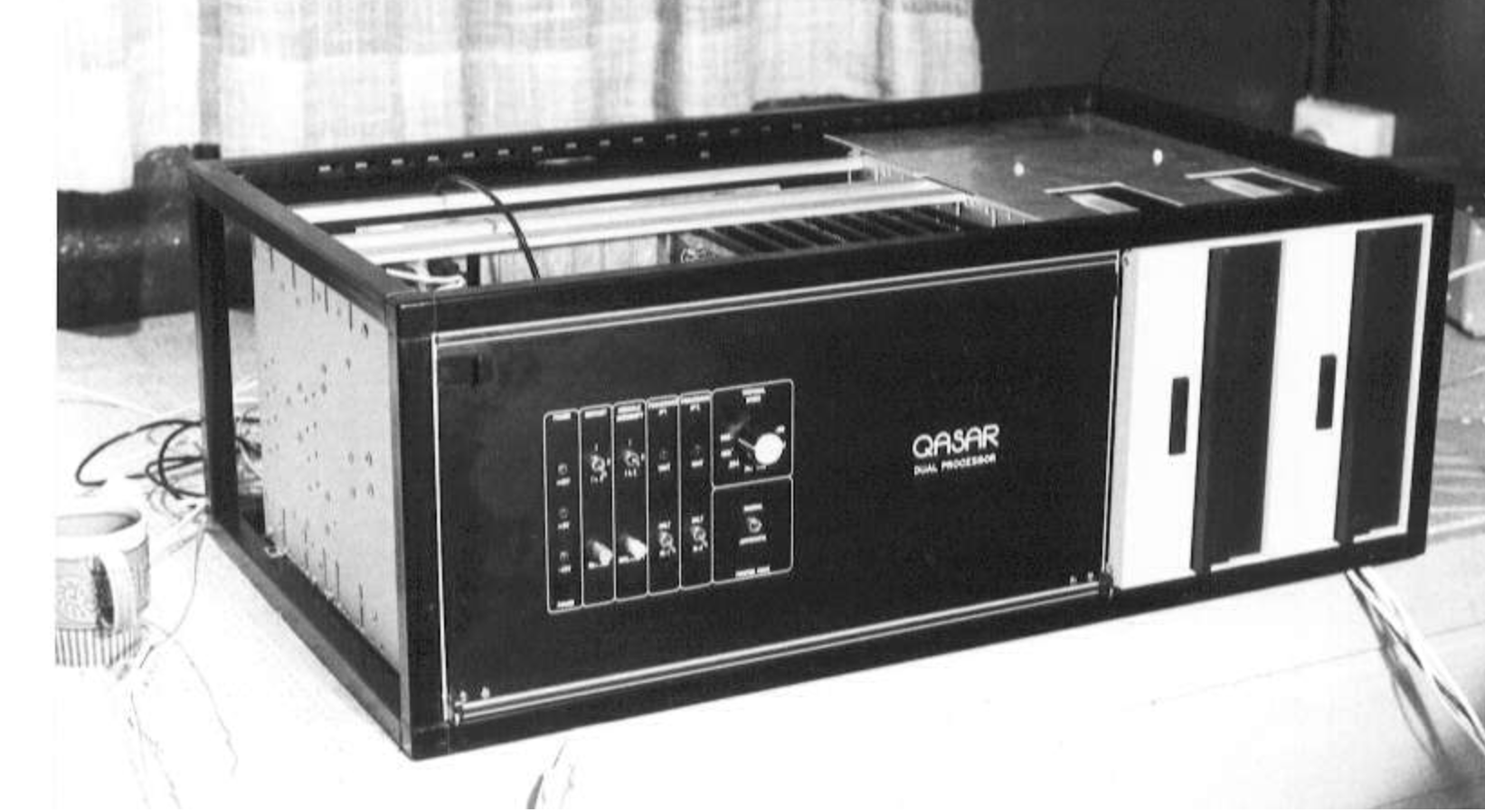
The result was the Qasar M8 CMI, a revamped version of the instrument. Notable improvements included printed circuit boards, an operating system derived from Motorola’s, and a keyboard extended to six octaves. The stylus interface was retained, as was eight-voice polyphony.
The price, on the other hand, rose again, reaching around AU $20,000 (USD equivalent $24,000). The M8 CMI was produced in limited numbers and finally discontinued in 1979. Nevertheless, many of its technical principles and functionalities were incorporated into the Fairlight CMI, an instrument that went on to become an international success. This was the basis for the transition from Furse’s experiments to the emergence of a digital system for professional studios.
The encounter with Fairlight and the transition to the CMI
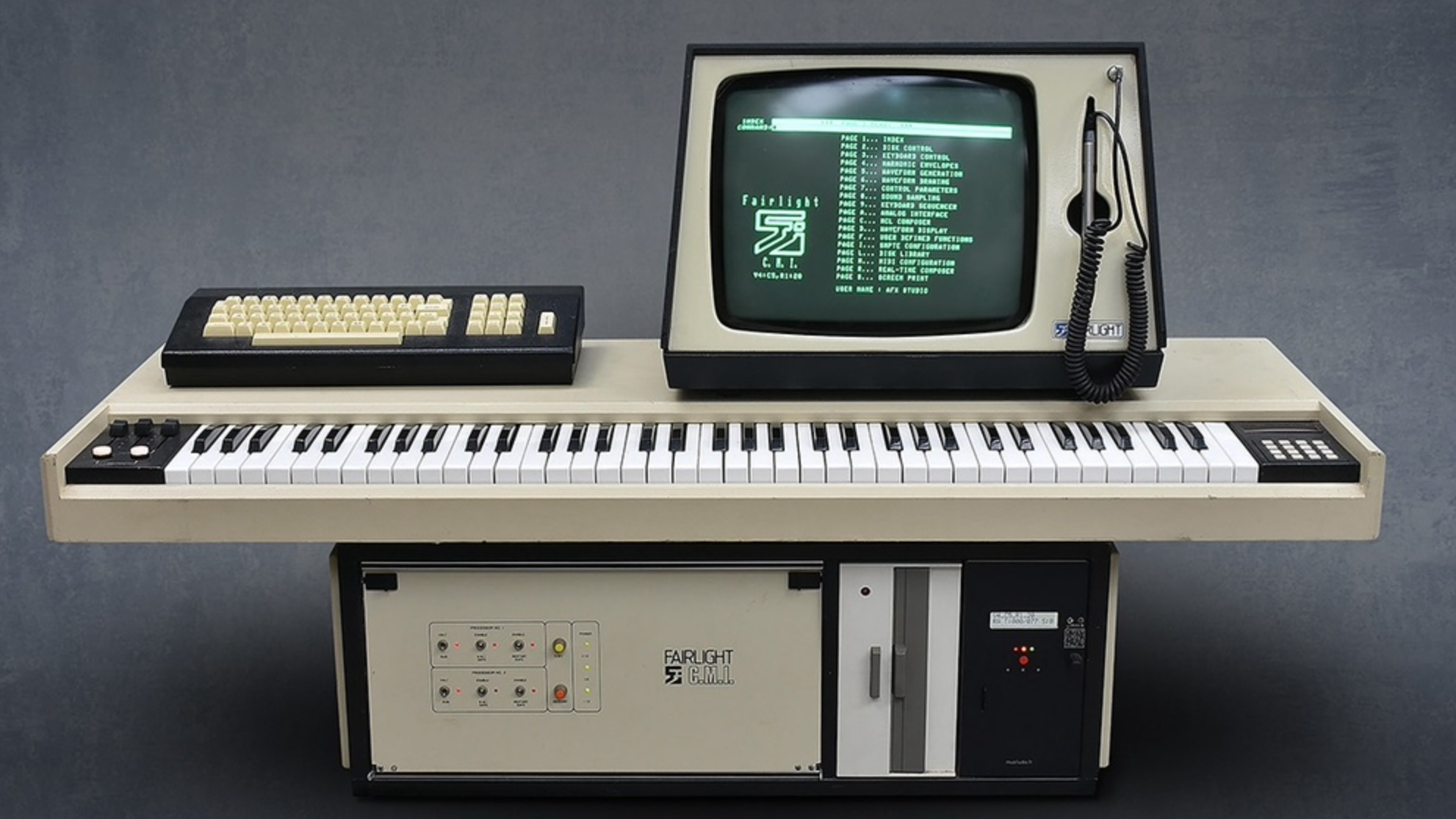
This approach marked a break from the work of Tony Furse and led to the emergence of a new tool: a digital sampling instrument, soon to be referred to simply as a “sampler." As Kim Ryrie summed up: “Sampling gave us the complexity of sound that we hadn’t been able to create digitally…We considered using sounds recorded in real life as a compromise.”
Though this choice was perceived as a compromise, it actually opened up a new path. The Fairlight CMI I, launched in 1979, used the same architecture as the Qasar M8 CMI, with Motorola 6800 processors, eight-voice polyphony and 8-bit resolution. The system included a 73-note keyboard, a CPU with two 8-inch floppy disk drives, a monochrome screen, an alphanumeric keyboard and an optical stylus. It ran under QDOS, derived from the Motorola system. The CMI combined several functions: digital synthesis, sampling, graphical waveform editing and a software sequencer. Despite its limited sampling quality (8bit/24khz), it became the first instrument to make these technologies available in a single integrated system. Its price, approximately £18,000 (USD equivalent $38,000), however, reserved it for a professional clientele.
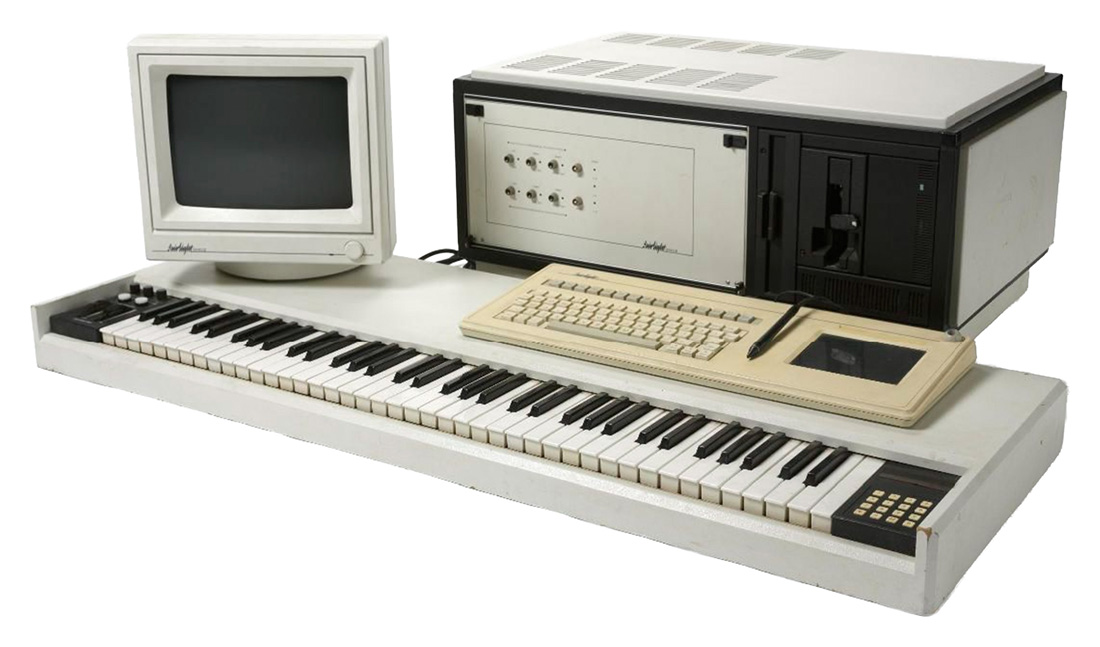
The IIx series was based on Motorola 6809 processors and incorporated MIDI and SMPTE interfaces. The price was approximately £27,000 (USD equivalent $46,000). In 1985, the Series III introduced significant improvements: 16-bit sampling, frequency up to 50 kHz in stereo, polyphony extended to 16 voices and hard disk integration. The system ran under OS9 and features an advanced version of the sequencer, CAPS. The price, about £60,000 (USD equivalent $78,000), made it a tool reserved only for the most lavishly equipped studios.
The Fairlight CMI enjoyed great success in the 1980s. A symbol of modernity, it became a central tool in many studios and was used by artists such as Peter Gabriel, Kate Bush, Stevie Wonder, Jean-Michel Jarre, Daniel Balavoine, Trevor Horn and Herbie Hancock. However, its high cost opened the door to more affordable competition. Initially, the EMU’s Emulators competed with it at much lower cost, followed by samplers such as the Akai S900 and Ensoniq Mirage, which truly democratized sampling. The arrival of less expensive components and personal computers accelerated this transition. Faced with the changing market, Fairlight ceased its activities in the music field in 1988 before reorienting itself towards video postproduction.
Conclusion
From Tony Furse’s Qasar to Fairlight CMI, the evolution is both technical and conceptual. Early attempts at digital synthesis, centered on generating waveforms, gave way to an approach based on recording and manipulating real sounds. This shift, at first perceived as a compromise, actually marked a decisive step in the history of digital instruments.
The Fairlight CMI did more than just introduce sampling. It combined synthesis, graphic editing and a modern sequencer, prefiguring today’s production environments. While commercial success was often associated with Kim Ryrie and Peter Vogel, Tony Furse’s work represented a decisive, and often overlooked, step in the emergence of these technologies.
Sampling was not the only technology in the Fairlight CMI, it combined synthesis, graphic editing and modern sequencing, prefiguring today’s production environments.