Log in
EN
FR

SeriesPeavey 6505

14 products found

Filter
Sort by
Evaluation
  • Reviewed or not
  • Editor’s award
  • Reviewed by Audiofanzine
Availability
  • Available or not
  • Sold new or used
  • Sold new
  • Sold used
Must-have products
  • All products
  • Flagship products
  • Best rated products
  • Hot products
  • Popular products
Price
  • Freeware
€
Clear
Sort by
  • Popularity
  • User ratings
  • Price - low to high
  • Price - high to low
  • Used price, increasing
  • Used price, decreasing
  • Name (from A to Z)
  • Name (from Z to A)
  • Added on
Sort results
  • Popularity
  • User ratings
  • Price - low to high
  • Price - high to low
  • Used price, increasing
  • Used price, decreasing
  • Name (from A to Z)
  • Name (from Z to A)
  • Added on
Filter results 14 results found
Evaluation
Availability
Must-have products
Price
  • Freeware
Show results

The best Peavey 6505 reviews

The reviews Audiofanzine members found the most helpful.
  • « Killer amp! »

    For the money it doesn't get much better than this amp. To get this solid sounding of a combo amp and to get it well under $1000 is remarkable. The tone from the 6505 is just geared towards rock, hard rock, and metal. This is just a brutal amp with tones of tone for any guitar player. Peavey 6505+ 112 Combo 2-channel, 60-watt Tube Amplifier Features at a Glance: 60 watts (RMS) 16, 8, or 4 ohms (switchable) 5 x 12AX7 preamp tubes 2 x 6L6GC power amp tubes Footswitchable lead/rhythm channel select Effects loop Separate 3-band EQ on each channel Separate resonance and presence controls for each channel Rhythm channel: pre-/post-gain, footswitchable crunch boost Lead channel: pre-/post-gain controls Genuine Accutronics 3-spring reverb Integrated MSDI microphone-simulated XLR direct interface 1 x 12" Sheffield speaker Top handle External speaker outputs UTILIZATION Details Type Tube Number of Channels 2 Power 60W Speakers 1 x 12" Sheffield No Effects Reverb EQ High, Mid, Low No Amp Modeling Preamp Tubes 5 x 12AX7 Power Tubes 2 x 6L6GC Inputs 1 x Instrument Outputs 2 x Speaker, 1 x MSCI (XLR - Microphone Simulated Direct Out) Footswitch I/O Effects Loop SOUNDS This amp needs to be played with a humbucker pickup guitar such as a Gibson Les Paul or a Gibson Explorer. It needs that rock guitar for the gain style this amp produces. You can play any guitar single coil or humbucker but I think it sounds the best with the proper high gunner pickup. The resonance and presence controls really enable this amp to do what you want with the the bottom end of the tone. The two controls are the key to this amp in my opinion. OVERALL OPINION At new these amps come in at around $600 which is a freaking steal of a price. You can get a lot for this kind of money but you sure can get a stellar sounding Peavey amp. I would recommend this amp to anyone needing to stay within a tight budget and needs a proper sounding metal or hard rock amp.

  • « 21 Years in production and still melting faces »

    Peavey has been producing quality, American Made music equipment at an honest price point for 47 years. All except for a select few products are still manufactured in Meridian, Mississippi under the ultimate oversight of Hartley Peavey, who founded Peavey Electronics in 1965. The Peavey 6505+, formerly known as the 5150II, is an all-tube, 2 channel high-gain guitar amplifier boasting 120 rated watts of 6L6GC power, and a staggering 6 stage preamp. The channels, labeled Rhythm and Lead, are both capable of obscene amounts of gain. UTILIZATION The 6505+ is easy to dial in, and good tone can be found on both channels. The FX Loop is tube buffered, and as far as I could tell, did its job with not a lot of loss to signal integrity. There is also a Preamp line out, which functions in the same way and quality that most of them do. You get all of the preamp tone up until the phase inverter. Some like to use this signal when mixing it with the signal from the speaker cabinet. The head itself is sufficiently well-built to Peavey's high standards of durability, though not as bulletproof as their amps of yore. I'm still wondering just what exactly they used for tolex back in those days! Tough stuff, for sure. The 6505+ sports a rather garden-variety grade of softer tolex. Chickenhead knobs make settings easy to pinpoint and see on a dark stage. An ohms selector switch on the back makes matching the head to a 4, 8, or 16 ohm cabinet possible, and a footswitch connects via 5 pin DIN connector in the back as well. An ALMOST good feature on the back is the addition of bias test points on the back, which actually only read grid voltage, and says nothing about actual plate current, which is the important measurement in power tube bias. Still, with a standard set of 6L6GC's, one can set the bias by ear and be safe in the -50 to -45v range. SOUNDS Unlike the 5150/6505, the +/II doesn't share one set of EQ controls, and global Resonance and Presence add clean highs and punchy lows to the mix. The Rhythm channel is switchable between Clean and Crunch modes. The Clean mode is famous, or rather infamous, for being not a very good clean tone. And indeed it is rather flat, lifeless, and too hairy when the Rhythm Gain is cranked. This is due to the fact that the 6505+ doesn't switch out extra gain stages to obtain the clean sound, and instead chooses to switch in a circuit that greatly attenuates the signal coming off the first gain stage while leaving the preamp topology largely intact. That being said, the clean channel can be usable to some, depending on how it is set up. Delay, chorus, and external reverb effects (the 6505 series has no reverb) can help the player get a better usable clean sound. The Crunch mode is excellent, and gives a nice, clear grinding sound that can also be rolled back to produce some convincing classic tones. Many metal players prefer the lower gain and fast response of the Rhythm Channel's Crunch mode over the Lead channel, and prefer to run this channel with the gain maxed and boosted with an overdrive pedal for a smidge extra gain and a tighter lowend. Still, the Lead channel is usable and packs plenty of punchy, raunchy grind with a little extra juice for solo work. OVERALL OPINION The 6505 series was heavily inspired by a classic Soldano Circuit, but takes things a step farther with more gain stages. As a result, clarity can sometimes be lost in the wash of preamp distortion, and a lot of people complain of the "fizzy" nature of the 6505's, as well as the background hiss that comes with the territory of high gain. And that's a fact of life. With gain comes noise, and this is why some amplifiers from different companies that possess similar levels of gain are also equipped with built-in noise gates to combat the hiss and noise. The 6505+ is an adjustable fixed bias amp, and comes from the factory with a safe, colder bias range (no doubt to maximize tube life and prevent tube meltdown from accidental over-biasing) and many have found that the cold, brittle, fizzy sound of their stock 6505+ was greatly improved by changing out the bias voltage dropping resistor with one of a lower value to allow for a hotter power tube bias. All things considered, the 6505+ is an amazing value, squeezing face-melting gain, lots of power, and revered tone into a quality, American-made package.

  • « Different voice to the 6505 Plus »

    The Peavey 6534 Plus is a 120 watt all tube head that is based on the classic high gain fury if the original 5150/6505 line but with a change in design that allows for EL34 power tubes. Typically known for their bright and sizzling high gain sounds, the EL34s may have at first seemed an odd choice for such a crunchy and low end based amp, but it offers a unique take on the classic 6505 tone that is so revered around the world. Otherwise it features the same specs as a standard 6505 Plus, with two channels, separate EQ, master presence and resonance controls and an effects loop as well. UTILIZATION Getting a good tone out of this amp is pretty simple. Peavey amps historically are quite intuitive and sound great at just about any setting. It is obviously optimized for certain heavier sounds, but the controls are responsive and don't really offer any "bad" tones within. Obviously the EL34s change up the tonestack a bit but the tones are still great and very easy to dial in. I find that the EL34 version has a bit more of a classic vibe to it but it still has the killer saturation from the 6L6 versions. SOUNDS This amp sounds optimal with more modern guitars to my ears, because the higher output pickups can get more saturation and tightness for rock and metal tones. The rhythm tones are very defined and clear and have that classic EL34 based sizzle which suits the design of this amp well. I find it to be a liitle bit less full sounding than the regular model but there is a bit more dynamics and compression available overall. The lead channel is great for modern sounding tones that excel especially as the amp is turned up. These are loud amps so be prepared for a serious sonic assault if you want to crank it up. OVERALL OPINION All in all I think the Peavey 6534 Plus is a great amp for anyone looking for a different sounding take on the classic Peavey high gain tone. It is built very well and still retains the spark that makes the original so awesome. It is reasonably priced and the value for money is great on these US made Peaveys. They are fairly loud amps so I wouldn't say it's the best rig to look at if you're a bedroom warrior, but for the modern rock player who wants a different sort of high gain tone, the 6534 Plus is very much worth a look!

  • « Not a great cab »

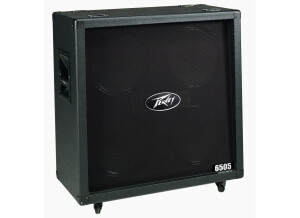
    The Peavey 6505 cabinet was designed as a cabinet to match the famed 6505 and 6505+ amplifiers in Peavey's line. It's a fairly standard 4x12 that is supposed to be optimally designed for the amps for which it shares its name. However, I'm not sure if it's poor design or just cheap/bad speakers, but in my honest option the 6505 cabinet really isn't worth considering, especially for the prices they sell for new. It's loaded stock with a set of Peavey designed and built Sheffield 1200 speakers and is constructed of high density plywood. At approximately 96lbs it's a bit heavier than some 4x12s that I've seen, but overall you've got to expect heavy weight when using a 4x12 cab anyway. I've tried the cabinet both with the matching 6505+ head and with other Peavey heads in the line (JSX, XXX, etc) and the results are basically the same. At low volumes, there's really no definition in the tone, and it can get muddy fairly quickly unless you dime treble or presence, which results in ear shattering highs that aren't very pleasing to listen to. As the volume is turned up, the general buzzy texture goes away a bit, but it's replaced with more of the harsh and piercing highs. The midrange is also fairly subdued and scooped out, so it's not really the best balance harmonically. I've found that the low end on this cab isn't nearly where it should be for a 4x12. Cabinets like the Mesa Rectifier or Orange PPC412 have a bunch more bass and low end plus they cut through much better, whereas this one lacks a lot of that tight low end and just gets sort of lost, especially if you use a lot of bass or play an extended range guitar. All in all I think the Peavey 6505 cab really is not worth the time of day. At $750 new it's completely outclassed by cabinets like the Mesa Boogie Rectifier or EVH 5150 III, both of which have a much better harmonic balance and tone than this one.

  • « The 6505+ simplified »

    The Peavey 6505 is the updated version of the famous Peavey 5150 as popularized by it's signature endorsee Edward Van Halen. The original 5150 was noted as a great rock amp, but eventually was recognized as a killer amp for metal music. Eventually Peavey took things one step further and released the updated 5150 II which had separate EQ for the channels. When Ed left Peavey in 2004 he took the 5150 designation with him... and so in 2005 Peavey renamed the 5150 the 6505. The 6505 is a 120 watt firebreather of an amp, featuring two channels. This amp is a bit more simple than the 6505+. The two channels feature only pre and post gain controls (essentially reworked phrases for gain and volume). The EQ on this amp is shared between the channels (bass, middle, treble, as well as resonance and presence). On the back it has two speaker jacks, a switch to select between 4ohm, 8ohm and 16ohm impedence, a ground switch and send/return jacks for the effects loop. Tube wise it features five (as opposed to six on the 6505+) 12AX7 preamp tubes and four 6L6GC power amp tubes to unleash the fire within. UTILIZATION The Peavey 6505 is an extremely easy amp to set up. It's not QUITE as easy as the 6505+ because you're dealing with a shared EQ for both channels, but it's still not terribly arduous. Peavey amps in general don't require much tweaking in general to sound great. The two channels are set up identically, so there's no new interfaces to learn and there's not really a learning curve with the EQ or gain structures like say a Mesa Dual Rectifier. Something to note about these amps... they are LOUD. When I had mine, I could barely dial the control to one without it being too loud for the room. In a band setting I found that two or three on the volume would overpower the drums... as a result I didn't keep it very long. Essentially, if you want one of these amps, be prepared to deal with the volume. SOUNDS I primarily used this amp with a Les Paul, a PRS and a few other various humbucker loaded guitars in a studio setting. The two channels are meant to be a clean and lead, however the clean channel really doesn't do great cleans. The clean channel is more useful as a crunch channel, especially when boosted with a good overdrive. I tried to get decent cleans out of this amp, but what I was greeted with was fairly flat and unremarkable. I had more fun turning the gain up full bore and just using channel one as a crunch channel. Channel two is a great high gain lead sound for any modern player. Despite the fact that I never tried it with any delay/reverb effects, I noted that on its own, the amp had more than enough sustain (via saturation) to play great lead passages as well as quite a few different types of hard rock and metal riffs. It doesn't really do the eighties thing all that well... which is somewhat surprising considering it's basically the EVH signature amplifier (though I've noticed that EVH has steadily gone for a more modern tone over time). The thing about this amp compared to the 6505+ is that the shared EQ makes things a fair bit more limiting as far as balancing the channels tonally. Fortunately Peavey's EQ structure isn't too bad as far as the learning curve and it works well enough that I don't feel the need to complain about it TOO much. OVERALL OPINION All in all, the Peavey 6505 is a great sounding amplifier head for anyone who wants a loud, gain heavy, loud, really saturated, loud tone. They are about $1,000 new and can be had for a fair bit less than that used, which is a killer deal for a USA made head. Peavey gear is quite reliable and I'd have no qualms using the 6505 for more rigorous applications. I partly wish that the "clean channel" was cleaner and sounded a little clearer, but used as a crunch channel it's fine. The lead channel is high gain, but it's still controllable and the excess saturation can be used to your advantage if you allow it to. The shared EQ is a bit of a frustration compared to the 6505+ and ultimately I'd prefer to spend the little bit extra to have the separate EQs at my disposal. Still, it's definitely worth looking into if you want a great metal amp for not a whole lot of money.

  • « Preferably over the slant cabinet! »

    These are an interesting match for the Peavey 6505 amps. I have never really heard of Sheffield speakers other than Peavey using them for certain amps in their line. I don't know a whole lot about them but match with the Peavey 6505 amps they are definitely a good fit together. The sounds is loud and thumping and that is the best way I can describe it. They have a punch to them that is similar to a British sounding speaker but with a crisp high end that matches the voicing of the 6505 amps perfectly. I have also heard the 6505 amps with V30 from Celestion but I think these speaker give the necessary unity with the amp. What I prefer these straight cab over the slant are two things: one being that it is $50 cheaper for the straight cabinet. The other being I feel that the cab retains some more of the low end thump for the amp much better than the slant cab does. The is typical for just about any manufacturer. You get more wood and the speakers are all more directional in one location rather than 2 going one way and 2 going another way. Each speaker I believe is rated at 75 watts, but I'm not sure since I have never opened the back up off of these cabinets. The construction of the cabinets are pretty decent, but they certainly are no Bogner cab, a Mesa Boogie cabinet, or a Mills acoustics cab. They match the amp but I'm not sure how well they match other amps. My guess is that if you buy this cab it is going to be because you have a Peavey 6505 or 6505+ and you want to get what the manufacturer intended. Peavey 6505 Straight Guitar Extension Cabinet Features at a Glance: Straight, closed-back guitar cabinet Made of high-density plywood construction Loaded with 4 x 12" Sheffield 1200 speakers 16-ohm input Locking XLR or standard 1/4" inputs 300-watt (RMS) power handling High-density plywood construction Recessed handles Heavy-duty casters Details Speakers 4 x 12" Sheffield Cabinet Type Straight Construction Material Plywood Mono/Stereo Mono Inputs 1 x XLR, 1 x 1/4" No outputs Power 300W Impedance 16 ohms Height 35.75" Depth 17" Width 32" Weight 90 lbs. At new these cab come in at around $699 which isn't bad for a 4x12 cabinet. Marshall cab come in well over that price. So you could probably pick one of these up on the used market for half that since Peavey doesn't retain their resell value all that well. I would recommend this cab to a Peavey 6505+ or 6505 owner or someone who needs a relatively inexpensive 4x12 cab. I don't have much info on the speakers since the brand name is not familiar to me. They do sound pretty good though coupled with the appropriate amp.

  • « Awesome! »

    For the money it doesn't get much better than this amp. This amp comes just over the $1000 but pack quite a punch for the money. The tone from the 6505 is just geared towards rock, hard rock, and metal. This is just a brutal amp with tones of tone for any guitar player. Peavey 6505 Guitar Amplifier (2x12 inch) Features 60 Watts RMS into 16 or 8 Ohms Five 12AX7 preamps tubes & two 6L6GC power amp tubes Footswitchable lead/rhythm channel select & reverb defeat Three-band EQ, resonance & presence controls Rhythm channel: pre-/post-gain controls, bright/crunch switches Lead channel: pre-/post-gain controls Two Sheffield® 1200 12" speakers in a closed-back cabinet Footswitch included Cover available UTILIZATION Peavey 6505 212 Guitar Amplifier Specifications Power Amplifier Section Rated Power and Load: 60 W RMS into 16, 8 ohms Power @ Clipping (Typically @ 5% THD, 1 kHz, 120 V AC line): 65 W RMS into 16, 8 ohms Frequency Response: +0, -3 dB, 50 Hz to 20 kHz, @ 50 W RMS into 8 ohms Hum & Noise: Greater than 74 dB below rated power Power Amp EQ: Active Presence: +10 dB @ 2 kHz Active Resonance: + 10 dB @ cabinet resonant frequency Power Consumption: 200 watts 50/60 Hz, 120 V AC (Domestic) Preamp Section The following specs are measured @ 1 kHz with the controls preset as follows: Low & High EQ @ 10 Mid EQ @ 0 Bright out Lead & Rhythm Posts @ 10 Presence & Resonance @ 0 dB Nominal levels with Pre Gains @ 5 Minimum levels with Pre Gains @ 10 Preamp High Gain Input: Impedance: Very High-Z, 470K ohms Lead Channel (with channel select in): Nominal Input Level: -80 dBV, .1 mV RMS Minimum Input Level: -92 dBV, .025 mV RMSM Clean Channel: (with channel select out) Nominal Input Level: -21 dBV, 85 mV RMS Minimum Input Level: -32 dBV, 25 mV RMS Maximum Input Level: 0 dBV, 1.0 V RMS (Subtract 16 dB with Crunch switch in) Preamp Low Gain Input (-6 dB pad): Impedance: High-Z, 44K ohms All levels are increased by +6 dB Effects Send: Load Impedance: 47K ohms or greater Nominal Output: -10 dBV, 300 mV RMS Effects Return: Impedance: Very High-Z, 470K ohms Designed Level: -10 dBV, 300 mV RMS Preamp Output: Load Impedance: 47K ohms or greater Nominal Output: +10 dBV, 3 V RMS Remote Footswitch: Special 2 button unit with LED indicators (supplied) Channel select & reverb System Hum & Noise @ Nominal Level (Clean channel): (20 Hz to 20 kHz unweighted) Greater than 60 dB below rated power Equalization: Custom Low, Mid & High passive type EQ Push Bright (Rhythm channel only): +6 dB @ 2 kHz Push Crunch (Rhythm channel only): Increases gain Dimensions: 24.125" (H) x 30.125" (W) x 12" (D) (612.775 mm x 765.175 mm x 304.8 mm) Weight: 84.5 lbs. (38.33 kg) SOUNDS This amp needs to be played with a humbucker pickup guitar such as a Gibson Les Paul or a Gibson Explorer. It needs that rock guitar for the gain style this amp produces. You can play any guitar single coil or humbucker but I think it sounds the best with the proper high gunner pickup. The resonance and presence controls really enable this amp to do what you want with the the bottom end of the tone. The two controls are the key to this amp in my opinion. OVERALL OPINION At new these amps come in at around $600 which is a freaking steal of a price. You can get a lot for this kind of money but you sure can get a stellar sounding Peavey amp. I would recommend this amp to anyone needing to stay within a tight budget and needs a proper sounding metal or hard rock amp.