6 products found
Choose a category
Selected category: Pianos & Organs


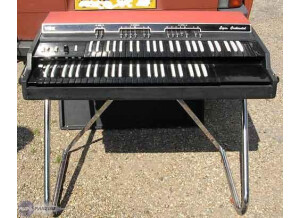
This is a really classic organ that has been heard on countless recordings from the 60s and 70s. The most obvious examples that I can think of would have to be The Doors' Ray Manzerak who used them a decent amount, and especially Steve Nieve of Elvis Costello's band the Attractions. There aren't any ways to update this organ, it predates Macs and PCs, as well as MIDI for that matter. It has minimal controls, drawbars for tones (two tones) and four for octave selection. There is no controller for vibrato, it is unison for all settings. It is polyphonic. UTILIZATION It's an easy organ to use, actually far less of a burden to operate than a B3. I haven't seen a manual for one officially, I found guides on the internet to help me find out how to set it up and operate it, etc. The setup isn't that simple, but with the guide I was able to do it, and I'm assuming most people could do the same thing. I could have just asked the owner but I wanted to know exactly how to do it myself. SOUNDS The sounds that come out of this organ are really cool. While they don't really have the intensity of a B3 or most Hammonds for that matter, they are actually really sweet on their own right. I would say that the best way to describe it is a little bit brighter than a Lowry or B3, but also a bit more nasal and colorful. They are certainly rather thin, though not annoyingly so. The tone actually fits really well into many styles of music, from new wave to classic rock, as well as gospel and blues type music. I don't think I've played any kind of simulation that feels or sounds like the real thing, which makes it really special. OVERALL OPINION I think that the relative portability, as well as the nostalgic and classic sound, are the two main selling points about the organ. The worst part is that they are really really hard to find nowadays, and if so, they are extremely expensive. I had the fortune to have a client use one so I got to really experience it firsthand (especially since I had to set it up for him). The best thing to do in this situation is probably to go with a Nord replacement if you really can't swing the real deal. I would say that most people can't actually, which is hands down the most disappointing thing about it.