Log in
EN
FR

Rca

22 products found

Categories
Filter
Sort by
Evaluation
  • Reviewed or not
  • Editor’s award
  • Reviewed by Audiofanzine
Availability
  • Available or not
  • Sold new or used
  • Sold new
  • Sold used
Must-have products
  • All products
  • Flagship products
  • Best rated products
  • Hot products
  • Popular products
Price
  • Freeware
€
Clear
Sort by
  • Popularity
  • User ratings
  • Price - low to high
  • Price - high to low
  • Used price, increasing
  • Used price, decreasing
  • Name (from A to Z)
  • Name (from Z to A)
  • Added on
Choose a category
Sort results
  • Popularity
  • User ratings
  • Price - low to high
  • Price - high to low
  • Used price, increasing
  • Used price, decreasing
  • Name (from A to Z)
  • Name (from Z to A)
  • Added on
Filter results 22 results found
Evaluation
Availability
Must-have products
Price
  • Freeware
Show results

The best Rca reviews

The reviews Audiofanzine members found the most helpful.
  • moosers's review

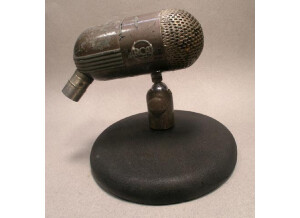
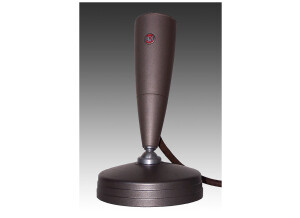
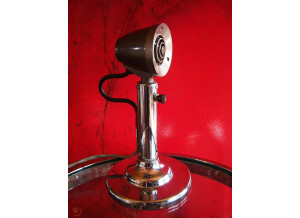
    The RCA BK-5B is a vintage ribbon microphone that is designed for broadcast and studio purposes. I've only got experience using the mic in the recording studio, but I do believe that the original intentions for the mic were for broadcasting. The mic has a cable attached to it and also comes on a small mic stand that is made for putting the mic on your desk. The mic has a uniaxial pick up pattern, which is similar to a cardioid pattern but it also picks up sounds from the side and from the side. It will pick up frequencies between 30 Hz and 20 kHz. OVERALL OPINION The RCA BK-5B is definitely a great mic to have around the studio. It's kind of a like a really thick sounding Shure SM57, as it seems to work well for similar applications. Although it's physically thicker and larger than a 57, it has the sound to match. I've used the BK-5B for a variety of applications including for recording kick drum, snare drum, vocals, and electric guitar. It's definitely versatile enough to be used across the board, but these were the applications that I got a chance to use it for. Even though it's a ribbon microphone, it doesn't sound like a traditional ribbon microphone, although it does share a low output level. I don't really know what kind of price the BK-5Bs go for used these days, but I would imagine that they would be about mid level. You definitely won't see too many BK-5Bs out there, as I've only seen the one that I've used before. They probably didn't make too many of these, but if you are interested in vintage ribbon microphones that aren't as expensive as other vintage RCA mics, the BK-5B is something you should definitely be aware of.

  • moosers's review

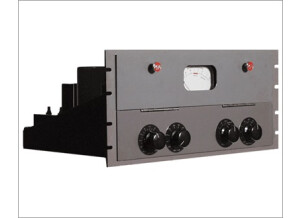
    The RCA BA6A Compressor/Limiter is a vintage dynamic processor that is simple in make up and very rare. This is an analog compressor and is one that is quite large and bigger than most out there. I'm not sure about the connections that the BA6A has since the one that I have used was already racked up in the studio that I used it at. The unit will fit in a traditional rack, but does take up about four or five spaces. UTILIZATION The make up of the RCA BA6A Compressor/Limiter is incredibly easy to understand and learn how to use. It has only some basic parameters as there isn't anything too complicated about using this. The BA6A has knobs for input, meter, balance limit, and output. There is a handy meter that will measure a few different things depending on how you set the parameter for it. Since this is such an old piece of gear, it would be hard to find a manual for this unless you found one online. I don't think that one would be necessary anyway as it is easy enough to figure it out on its own. SOUND QUALITY The sound quality of the RCA BA6A Compressor/Limiter is absolutely top notch. While it doesn't have a clean sound like a lot of the compressors made today, where it lacks in clarity it makes up with grittiness. It really depends on what kind of sound you are going for, but I find the BA6A to be helpful in all sorts of situations. While some engineers probably wouldn't like the grit that this has to offer, when used in the right situation this compressor can really shine. If you have access to one and are wondering what to try it with, I would recommend trying it on any and everything as I think it is versatile in the right setting. OVERALL OPINION While the RCA BA6A Compressor/Limiter is very hard to find as I've only seen one of them ever, if you are interested in vintage compressors, this one is a must see. I don't know their availability in terms of getting one used, but I would think it would be hard to buy one and if you could it would cost a pretty penny. For this reason I can't say I would recommend seeking one out, but if you are ever in a studio that has one of these on hand, this is a helpful compressor in all sorts of situations and is one that has a ton of character.

  • moosers's review

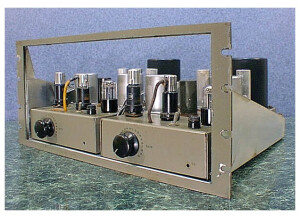
    The RCA BA-2C is a 1950’s tube microphone preamplifier. I recently had the pleasure of trying out one of the preamps, although it was heavily modded and probably not very much like an original BA-2C. This was the only BA-2C that I’ve used, so I can’t say how this would matched up to the original, but it was undoubtedly better. This new version of the BA-2C had XLR connections and built in power. It wasn’t rack mountable as it comes in it’s own box with the tubes sticking out on the top. UTILIZATION It’s not hard at all to operate the RCA BA-2C as the one I’ve used really just had controls for setting the gain on it. It had built in phantom power, but this was a mod as the original doesn’t have this. There’s not going to be a manual for this, but there’s nothing at all to using it. SOUND QUALITY This modified version of the RCA BA-2C was hands down the best sounding microphone preamplifier I’ve ever heard. I can’t say exactly what was different about it, but it seemed like the guy who made it turned it into a completely different mic preamp. I tested it out with a Shure SM7 and shot it out with our Neve 8068 console we have at the studio, at this beat it out hands down. It’s one of the fullest and clearest sounding preamps I’ve ever used, but don’t quite expect this from the stock BA-2C… OVERALL OPINION While you won’t find any out there quite like the one I’ve used, the RCA BA-2C should be a very solid microphone. Perhaps you can find some information on getting yours up to snuff if you’re interested as it seems worth it to upgrade it if you have one or can find one. They’re still not very cheap on their own, but finding one will prove to be the hardest thing of all here as they’re quite old and won’t be available in too many places. If you’re interested in a big (and somewhat expensive) project, find one of these RCA BA-2C’s and do some research on how to modify it and you’ll have yourself an incredible preamp to say the least. Of course this isn’t very much information on how to do so…

  • moosers's review

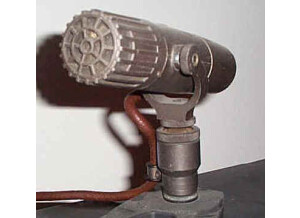
    The RCA 88A is a pressure microphone, and is quite rare at that. It was probably originally a broadcast mic, but I've only tried it out a few times in the recording studio for recording spoken vocals. This is also the only non-ribbon mic that I have used made by RCA that I can think of right now. The mic is really more of an antique now as it has been around for quite a long time and there aren't too many of them left. However, I was fortunate enough to get to shoot one of these out with a few other mics to hear what it sounds like. The mic has a standard cardioid polar pick up pattern and will only pick up frequencies between 60 Hz and 10 KHz, so it only has a limited versatility in terms of what it can be used to record. OVERALL OPINION Other than the one that I used, I haven't seen too many RCA 88As out there. I believe that this mic was first made as early as the 1930s, so many of them have died out throughout the years. The mic will do a pretty good job of picking up your voice, but isn't the cleanest by modern standards at all. Since it only picks up a limited width of frequencies when compared to modern day mics, I can't say that I would recommend it for anything other than mid range applications, and namely the human voice. Since RCA is a large brand that has a lot of classic microphones, the I would imagine that even if you did find one of these used, that I would cost a decent amount of money compared to what it was when it was originally manufactured, as I believe this was a low budget microphone even at the time. Having said all of this, if you like old vintage mics and RCA specifically, the 88A will definitely still please you.

  • moosers's review

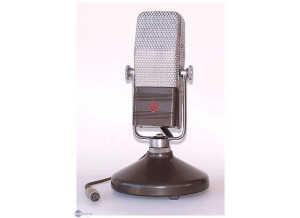
    The RCA 44 is a classic ribbon microphone that is made for use in the recording studio. The look and design of this microphone is one that has been copied a great deal over the years and has been seen on all sorts of talk shows. The mic isn't meant for use outside of the recording studio (unless as a prop) and has an attached XLR cable as well as a swivel mount. OVERALL OPINION I've been using the RCA 44 ribbon microphone on and off for about three or four years and it is one of the coolest overall ribbon microphones that I have used. It can be described as an overall great microphone that will reproduce your tone quite clearly and accurately. If I am looking for a realistic sound from vocals, drums, or any other application, this is the type of microphone that I am looking for and if I have access to it, I will always try the RCA 44. I am a huge fan of ribbon microphones in general as I love the way a great one sounds and it is a sound that is impossible to reproduce without a microphone like this one. The price of the RCA 44 is pretty reasonable if you can find one in the average price range used, as of course these are no longer made. I would absolutely recommend this to both professional and home studio owners, as this is a classic microphone that is great in any setting. Those who are after a high end ribbon microphone know that you will have to pay a bit as they aren't cheaply made, but also isn't incredibly expensive like other types of high end mics. If you're looking for a top tier ribbon mic, it doesn't get too much better than the RCA 44.

  • moosers's review

    The RCA 77 is a classic ribbon microphone known as one of the best ribbon mics ever made. It is made for use in the studio, and I wouldn't recommend using this mic, or any other ribbon mic outside of the studio in a live setting. The microphone is built well even though they are old and should stand up well over time, as many of these have. RCA was the original manufacturer of high end ribbon microphones and this mic holds its own special place in recording and audio history. OVERALL OPINION I've been using the RCA 77 ribbon microphone for about five years. This mic has a reputation for being one of the top ribbon mics of all time and I am never ceased to be amazed when I use this mic. It works great in a number of different situations, including for vocals and drums. It has an extremely warm sound that cannot be matched with anything other than a ribbon mic. The look of this microphone has taken on a life of its own, as its look is mimicked on talk shows and pretty much all over the place. While like all ribbon mics, the RCA 77 is somewhat fragile, if you treat it right they are known to last a while and there are quite a few of these around that have been around for a long time. If you can get a vintage one of these used it will cost you a bit but not as much as you might think. This being said, I wouldn't expect to see one of these in a home studio as these are pretty professional microphones and are aimed at high end recording. Compared to the RCA DX77, I probably like it better than this mic, but that is just personal preference. If you are looking for a classic ribbon microphone the RCA 77 won't let you down.