Log in
EN
FR

SeriesSeymour Duncan High Output Humbuckers

106 products found

Filter
Sort by
Evaluation
  • Reviewed or not
  • Editor’s award
  • Reviewed by Audiofanzine
Availability
  • Available or not
  • Sold new or used
  • Sold new
  • Sold used
Must-have products
  • All products
  • Flagship products
  • Best rated products
  • Hot products
  • Popular products
Price
  • Freeware
€
Clear
Sort by
  • Popularity
  • User ratings
  • Price - low to high
  • Price - high to low
  • Used price, increasing
  • Used price, decreasing
  • Name (from A to Z)
  • Name (from Z to A)
  • Added on
Sort results
  • Popularity
  • User ratings
  • Price - low to high
  • Price - high to low
  • Used price, increasing
  • Used price, decreasing
  • Name (from A to Z)
  • Name (from Z to A)
  • Added on
Filter results 106 results found
Evaluation
Availability
Must-have products
Price
  • Freeware
Show results

The best Seymour Duncan High Output Humbuckers reviews

The reviews Audiofanzine members found the most helpful.
  • « One of the most popular aftermarket pickups »

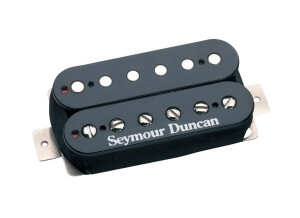
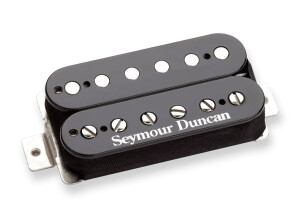
    Seymour Ducan is probably the most popular aftermarket pickup maker in the industry and this is probably their most popular model. The JB is pretty much the standard when it comes to hot rodded humbuckers. Put this in just about anything and it will really wake it up. There is no wonder why so many guitar makers put these pickups in their guitars. From ESP to Jackson you can find models that use the Seymour Duncan JB usually paired up with its buddy the Jazz in the neck. These pickups can make just about any guitar sing. This pickup is more eq'd on the high end for clarity. Because of this these pickups work best in guitars with darker woods. The output is about 16k so this pickup will drive just about any amp. You see these pickups in a lot of Les Paul style guitars because they can add some crispness to the naturally dark sound of those guitars. Seymour Duncan even goes as far as to say mahogany guitars with rosewood fretboards. I dont think I would go this far but a darker wood like mahogany is really the best pairing of wood with this pickup. You also see these pickups in shred guitars like Jacksons because with their high end bite and tight low end you can get a metal chug yet still have singing high end with the pickup. Even with this, this is not the first pickup I would recommend for a bright guitar. A bright guitar with a bright pickup can equal painful ears when played out. It doesnt have a huge amount of bottom end but what it has its really tight. The high end is nice and crisp and you can get it to scream if you want. If you are looking for a good all around humbucker replacement for the bridge of your guitar this is what everyone else is using.

  • « good for super tight metal! nothing else.. »

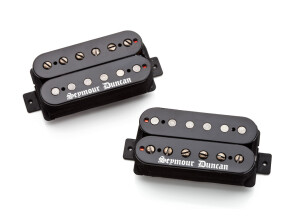
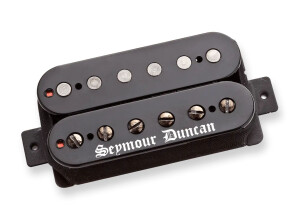
    Oh the famed invader pickup!! Made famous most likely due to James Hetfield using it back in the day on master of puppets. Can be coil tapped if you get the 4 conductor version. I've fortunately been able to use both the neck and bridge pickups together in a Jackson Stars Rhoads V. I have not tried it tapped. as a neck pickup (CLEAN): Not bad. Not shimmery or clean-like either. Though it is lower output than the bridge pickup. Clean it doesn't break up if you don't want it to, depending on where you set the height. Of course the magnets are HUGE, so the pickup height should definitely be set properly. as a neck pickup (DIRTY): The distortion is very modern with the ceramic pickup. I guess the best way to put it is gritty and a little bit crispy, yet thick at the same time. It's a very stiff sound, not very saggy and saturated at all, which, depending on your uses, can be a good thing. as a bridge pickup (CLEAN): Clean this pickup is definitely no fender single coil. It breaks up depending on your right hand technique, which is good for some. Though I personally don't mind break up, this type of break up is not what I'd prefer. Again, like the neck pickup the distortion sound is very stiff, even though it's very bassy it has a very specific sound. After owning the set for over 2 years I can almost hear it distinctly on songs/records or guitars. I wouldn't say this is a dynamic pickup, it doesn't clean up well with the volume rolled down, nor does it sound very good on low/medium gain. Overall I think these are a great metal pickup and you're looking for a very tight sound with some grit. The clean is only average and not great. So it's not a very versatile pickup. On the positive, no matter how much gain you throw at it, it will stay tight.

  • « Razor sharp, very modern pickup »

    I got this in a Dean Dime O Flame. Based off of Dime's L500XL, whether it was the B&B or the BLUSA isn't known and doesn't really matter, they're incredibly close. There's rumors it was based off a custom L500XXL made just for him but that's not a proven fact. This is a very bright pickup, which happens to be it's #1 complain. A simple 250k pot swap will smooth out those highs and make this pickup sing. Designed to be used in a full mahogany guitar which is pretty dark, so if you put it in an already bright strat style guitar what else would you expect? This pickup isn't bad in any sense but it wasn't as tight or clean as the B&B L500XL. It has higher gain and IMO a bit too much. It is a little fuzzy for that reason, they needed to take off a few winding's to calm it down a bit. Like the L500 this pickup is very clear. Listen to some Pantera to get an idea of how articulate these are. He used the L500 during Pantera but they’re so similar you’ll get the idea. Along with the articulation these have a very smooth razor like sound. It’s not thick but it’s not thin either, it just makes staccato playing effortless, cause it wants to be tight anyways. Again this is definitely not a bad pickup but for what it is (a L500XL copy) I don't see the point is spending another $30 for the words "seymour duncan" and Dime's signature on it. I'd rather just buy the REAL thing for $50 and have very slightly better tone. There’s a huge debate over B&B vs BLUSA, I don’t buy into it at all. They both make great pickups and are close enough in tone that no one should ever care. I guarantee no one would be able to tell which is which in a blind test, without getting lucky. There’s a youtube video floating around that compared the B&B, BLUSA, and the Dimebucker, all in the same guitar. I suggest you check it out.

  • « Will fatten up any 7 string, maybe even too much »

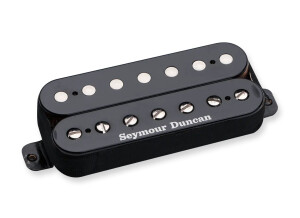
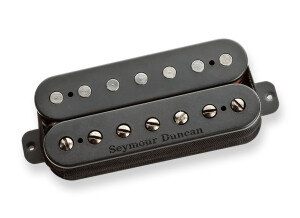
    The Seymour Duncan Invader is one of the older extreme pickups. Before there were Bareknuckle pickups and all these extreme pickup companies there were not many really heavy passive pickups to choose from. This and the X2N were your only accessable options back in the day. The modern advent of extended range guitars has given new life to these older extreme pickups. This pickup is essentially the same as the 6 string version but for 7 strings. It still has all the pros and cons of the old pickup but with some extra caveats. The Invader is known for its huge low end and the 7 string version retains that. On a 7 string since you are going to have extra low end from the low B with this Invader pickup the low end can get really boomy if this is in a mahogany guitar. This pickup works best if you have a guitar not made from great tonewoods. If your guitar has a thin natural sound or something like an Ibanez a pickup like this would fix it right up. The huge thickness this pickup has will make any guitar sound huge and this is its benefit and its detriment. A pickup like this can be very boomy and get muddy if you are playing big chords. The problems with these pickups are pretty well known. It is a very noisy pickups due to its huge magnets. It picks up interference from just about everything. Also with the huge screw pole pieces when the strings hit these you get more noise as well. If you have a 7 string that is in desperate need for a bigger sound this is the kind of pickup you need. This pickup makes not excuses for its tone, it is just big and huge all the time.

  • « A great and unique sounding take on the PAF »

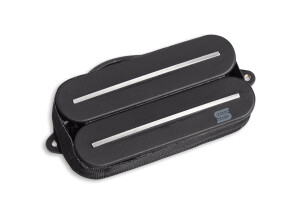
    The Seymour Duncan PATB-3B is based on their popular Parallel Axis humbucker, but voiced to the requests of the guitarist Blues Saraceno, best known for his stints with bands such as Poison or Transmission OK. He's always had a very interesting tone that has a very apparent upper mid voicing that can best be described as "honk." It cuts through very well in a band mix and doesn't get in the way of other tones. This pickup from Seymour Duncan is supposed to get players one step closer to that great and unique tone. Upon first inspection, this pickup looks a little bit different than a conventional humbucking pickup. Most humbuckers have 6 circular polepieces per coil. However, the Saraceno humbucker has two horizontal, rectangular polepieces for each string (one is placed directly above the string, one is directly below it)so now each coil effectively has 12 pole pieces. To my ears this seemed to react like a rail magnet based pickup with a good strong string pull overall. It's supposed to be like a PAF on steroids, and being a fan of Blues, I have a decent idea of what his tone is like. I tried this pickup loaded in the bridge position of a Fernandes Monterey Les Paul clone (mahogany body/neck with ebony fretboard). It was paired with the stock Sustainer system humbucker in the neck position. I tried it through a Mesa Boogie Dual Rectifier Roadster head/Orange 4x12 and a Soldano Astroverb 16 combo. The tones were very pleasing overall. Cleans had a nice chime to them as well as the aforementioned "honk" based midrange frequency, which really suits a Les Paul type guitar very well in my opinion. The dirty tones were really cool. For being essentially a PAF style pickup, it has gobs of output and sustain on tap. It's not a modern or tight voiced pickup in the slightest... I found it to be very loose and somewhat fuzzy, much like Blues' classic tones on record were. For playing vintage voiced rock with lots of gain though, whether playing power chords or sustained lead passages, this pickup sounds awesome. In closing, I felt that this pickup was a really cool alternative to the typical PAF clones that are out there. I like the fact that it has a different design for the polepieces and I like the voicing and output that this pickup offers. For what it is worth, the pickup that was replaced in the guitar (owned by my good friend Andrew) was a stock EMG 81, and Andrew commented that to him, this pickup had more output than the stock EMG did!

  • « CRUNCH! »

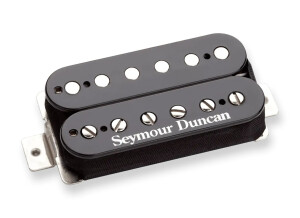
    I have the distortion installed in the bridge position of an ESP Eclipse standard (mahogany body and neck, maple top, rosewood fingerboard) to replace the stock Duncan JB. I mainly run it through a Framus Cobra tube amp and sometimes with an H&K triamp or Peavey 5150. I bought this pickup on a suggestion from a fellow eclipse user when I was looking for something with a similar output to the JB but with A smoother top end, tighter bass, and more beef. In this guitar that is exactly what you get. The pickup has a great crunch and top end that allows you to cut through mixes without the harsh quack sound of the JB. In low to mid gain settings it gets a very classic sound then just gets meaner and meaner when turning the gain up. The bass is tight to the point that you really have to tighten up your right hand technique because any slop will show but it's very rewarding when you lock into some double bass and everything just pummels out into the crowd. Chord work retains definition in high gain settings again to the point of exposing any slop in your playing. The one area I don't think it excels at is lead work. Fast flurries are well defined but it's missing the fluid sound I like in single note runs and it just sounds A little plain. I will not do leads on this pickup without some sort of verb or delay otherwise it just sounds empty to me. I will admit I love effects so I may just be biased to a wet lead sound. Overall I would definitely try this in other guitars. I think it's tailor made for the classic LP wood configuration and any lack of lead sound can be made up for with a nice neck pickup.

  • « Aggressive but a bit loose »

    The Seymour Duncan JB is, without a doubt, the most popular pickup in the Seymour Duncan lineup. It has been one of the pinnacle pickups in the ‘80s, and it’s still extremely popular today, so it should be no surprise that they made a 7 string equivalent. It features slugs on one coil, adjustable screw heads on another, four conductor wiring and an Alnico 5 magnet. The JB 7 is an extremely love or hate pickup. It has such polarizing opinions that it’s crazy. The biggest reason is that it’s very picky when it comes to what guitar it mates to. It’s also very picky when it comes to pickup height. Both of these can lead to either an amazing sound or an awful sound, depending on what it was mated with. The low end on this is fairly vintage sounding. It’s not terribly tight, but and since this is the 7 string model, it has a bit of a problem dealing with very low tunings. However, it can generally work for most applications. The midrange is a bit “stringy” at times, and the treble has a bite to it. This helps it really cut through the mix, and it generally doesn’t get too harsh. Split coil and parallel tones are great, too. I find this pickup to sound best in mahogany. Most of the time, when I try it in alder, it sounds a bit too bright. However, it totally depends on the guitar in question. In one of my alder bodied guitars, this pickup just screams like crazy. It’s really a pickup you have to try for yourself to see if you like it, and be sure to spend some time with it adjusting the pickup height. Some people use the JB in the neck, and while it does work, I find there are better pickups out there for the neck. Given how popular the JB is, it’s worth at least trying one time in your life. They’re so plentiful that they’re very cheap on the used market, so there’s no reason to avoid it. If you don’t like it, just sell it or maybe swap in a ceramic magnet to have a baby Duncan Distortion.

  • Audiofanzine FR's review

    (Originally written by Revan#/translated from Audiofanzine FR) I installed it on an Ibanez RG321 (a mid-range instrument). I wanted to upgrade the original pickups because they didn't match my tuning (drop B) and the sound was not accurate enough with distortion... I searched a long time for the right pickup and I think I found it! In the beginning I was surprised by the very present mids... But after a while I understood that this strong mid frequency response makes my guitar cut through the mix. The sound is more dynamic and the gain higher... The sound precision is stunning and this pickup can easily compete with active models. The output level is also very high and with many overtones... The sound is warm and has a strong character! The sound versatility is stunning regardless of the tuning. The sound is always clear and dynamic. Your amp will come to life. Even with drop B tuning the sound remains clean and accurate and the pickup doesn't generate any noise. The SH-6 can be split, which is a great for clean sounds, and even though it's not the best pickup for clean sounds it does perform better than a 81... I've had it for three months and I would certainly buy it again. I recommend it first and foremost to people looking for an alternative to the characterless EMG pickups. If you want a warm, aggressive, accurate and dynamic sound, this pickup is made for you. Update: a lot of people suggest, rightfully, that you should use it with a heavy string set... Which is normal considering the pickup is conceived for down tuning fans