Log in
EN
FR

Caparison

40 products found

Categories
Series
Filter
Sort by
Evaluation
  • Reviewed or not
  • Editor’s award
  • Reviewed by Audiofanzine
Availability
  • Available or not
  • Sold new or used
  • Sold new
  • Sold used
Must-have products
  • All products
  • Flagship products
  • Best rated products
  • Hot products
  • Popular products
Price
  • Freeware
€
Clear
Sort by
  • Popularity
  • User ratings
  • Price - low to high
  • Price - high to low
  • Used price, increasing
  • Used price, decreasing
  • Name (from A to Z)
  • Name (from Z to A)
  • Added on
Choose a category
Choose a series
Sort results
  • Popularity
  • User ratings
  • Price - low to high
  • Price - high to low
  • Used price, increasing
  • Used price, decreasing
  • Name (from A to Z)
  • Name (from Z to A)
  • Added on
Filter results 40 results found
Evaluation
Availability
Must-have products
Price
  • Freeware
Show results

The best Caparison reviews

The reviews Audiofanzine members found the most helpful.
  • « Japanese Jackson »

    Caparison is an interesting guitar company out of Japan. Nowadays its basically 1 guy in a garage but a few years ago they were pretty big and pretty popular on both sides of the ocean. A lot of their designs are based on old Jackson Stars designs out of Japan. They took these designs and modernized them a bit. This is their HSS Dellinger model. The guitar has a mahogany body with an oil finish. The neck is maple with bolt on construction. The fretboard is ebony with 24 jumbo frets. The inlays are the cool Caparison clock inlays. The dials on the clock are pointing to the time corresponding with what fret it is at. The pickups in this example were slightly changed. Not many people like the Caparison no name pickups. This example had a hot rails in the neck and a trembucker JB in the bridge both from Seymour Duncan. The middle pickup was stock. The bridge is a Schaller Floyd Rose one of the best non original Floyds on the market. UTILIZATION Overall the guitar feels like an older Jackson. The neck is nice and thin with a D shape. The fretboard itself has a compound radius like a Jackson. The radius goes from about 12 to 16. Down at the low end of the neck the fretboard is a bit rounded so you can play chords comfortably. Near the neck joint it is flatter so you can get a lower faster action for leads. The oiled finish on the body is super smooth and feels good against your body. The bridge isnt flush mounted like a lot of guitars nowadays. It is slightly raised like an old Charvel which helps give it more of the old school feel. It also gives you more room to diving and such with the bridge. SOUNDS This guitar has a lot of natural tone. With the mahogany body and the oil finish there is nothing holding back this guitar from resonating freely with a thick tone. I cant say anything about the stock pickups because they are long gone in this model. The Trembucker and the Hotrails do a good job in this guitar. The Hotrails Gives you a neck humbucker sound in an HSS guitar. The tone is hot and smooth and works well for lead playing and cleans. There is not much single coil spank but if you are putting a humbucker in the neck thats not what you are looking for. The Trembucker JB in the bridge is a good all around pickup. It is the JB that is spaced for a Floyd Rose. It is interesting that pickup makers make different spaced pickups because the differences are so small they pretty much have no effect on tone. It just looks better when the strings line up with the pole pieces. The JB suits the style of guitar this is. It works well with mahogany and it gives you a sharp 80s sound with lots of cutting mids. OVERALL OPINION These guitars are becoming rarer and rarer since the company seems to be dying nowadays. They are not putting out near the amount of guitars they use to. With ESP and Jackson around lots of their endorsers have left for more productive companies. If you can find one of these and get a good deal on it good for you but I wouldnt fret over not being able to find one of these guitars. They are not that much better than an ESP or an Jackson or even a Prestige Ibanez to warrant looking forever and paying twice as much for one. For a few years these guitars were the hottest thing around but that heat seems to have died off.

  • « My kind of shred guitar »

    Caparison is a small guitar maker out of Japan. Most of their guitars are Ibanez style guitars. The creator of the company use to work for Jackson. This is one of their few models that is setup for thicker heavier playing. It is part of their short lived HGS line. HGS stands for heavy gauge strings. I already play with really heavy strings so this guitar is perfect for me out of the box. I cant play to my maximum unless I have a low E string larger than .50, it doesnt matter what the tuning is I just cant play right without anything less. This guitar is setup for thick tone out of the box and this model has some mods. The guitar has a mahogany body with a maple top and a set machogany neck. The neck scale is 24.75. The guitar has 24 jumbo frets on an ebony fretboard free of inlays. This example had a set of EMG 85 pickups swapped in. The controls are simple with a master tone and master volume with a 3 way blade switch. From the factory the guitar comes strung with 12-54 strings. Personally I like the high strings a little lighter but the low strings have perfect tension for me and my style of playing. UTILIZATION Caparisons are known for their great playability. This guitar is no exception. The bridge is moved back a few mm for better intonation at lower tunings. Caparison uses Gotoh hardware all around so everything feels solid. The neck shape is beefy but thin, kind of like the thinner Gibson necks. The heel is nice even though its a set neck it kinda looks like a neck through there are no square edges on the joint, everything is smooth. With no inlays on the fretboard it may be a problem but the side dots on this guitar are super bright so they are impossible to miss. Jumbo frets and ebony feel like you are playing on air, its just you and the strings with this guitar. SOUNDS A guitar like this with tons of natural tone when you add some super pickups to it the tone is crushing. A setup like this is similar to what the guy from Soilwork used at one point. Angelus with EMG 85's. This setup is like thick on thick. The guitar comes from the factory in Drop B tuning. I am not a huge fan of drop tunings so I just cranked it back up to C. This guitar has some super thick grind. Its like a Les Paul but with super a super action. The 85 in the neck is super smooth for leads. It can get kind of muddy for this setup. This guitars natural tone is not really meant for lead playing. The bridge pickup is where the action is on this guitar. With the 85 in the bridge the tone is super thick and heavy. The 81 has a thinner high end grind sound to it. If you are seeking ultimate clarity the 81 might be better but for me the balls of the 85 is what I like. OVERALL OPINION These guitars are pretty hard to find because everyone wants them. Everyone wants them for a good reason. They are perfect for modern metal music. They have the same feel as any guitar but hold their composure through much lower tunings. You do not have to switch to a long scale guitar or 7 string with these because they can handle it. If you can afford one and find one these guitars shouldnt be passed up.

  • « TAT Is an incredible Machine! »

    Yet another classic gem from Caparison. Handmade Japanese quality. This one is a 1996 and has the coveted mid-boost. Hand Carved archtop, Mahogany body and maple neck through body. Three way toggle pickup selector. Schaller Floyd Rose and Gotoh Height Adjustable Pole tuners. 24 jumbo frets in a rosewood board with Clock inlays and a Caparison "Devil's Tail" Headstock. Caparison PH-f and PH-R pickups. As usual, Caparison quality is perfect. UTILIZATION Ease of play is astounding. This is essentially Caparison's take on the Jackson USA Custom Shop Soloist. It does that. VERY well. Absolute rock-solid guitar. All frets are easily accessed, carve of the body holds your arm/wrist in the perfect shred position. The neck is extremely fast. Tone controls are about as basic as it gets. SOUNDS All my reviews are done through the same collection of Amplifiers: Mesa Boogie Dual Rectifier Solo Soldano SLO Fender Twin Reverb Peavey XXX Peavey Ultra 120 Rocktron Vendetta Effects are typically not used. This guitar it the complete package for any style of music. Definitely geared towards the harder rock/metal crowd. When run through the orange channel on the Mesa, The TAT spits fire. I might replace the pickups soon however. OVERALL OPINION Precision built, the Soloist Jackson wishes they could still make. The TAT excels in it's genre of guitars. It is unique, well-designed, even better built and the newer models include coil tapping. The neck shape is comfy and exceptionally fast without being too thin. This is the classic Caparison. This guitar put them on the map and it continues to showcase their craftsmanship. I would not only buy it, but I would buy five. This is a lot of guitar for the price.

  • « Dellinger 7, worth a look. »

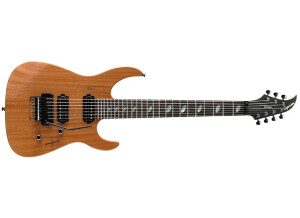
    Japan has brought some great guitars onto the market to be sure, and Caparison is definitely at the forefront of these. If you are lucky enough to find one in your country due to their small amount of distributors and even smaller scale production, you have stumbled upon a keeper, and the Dellinger Seven is no exception. This guitar features a mahogany body and a bolt-on 25 1/2 Inch scale neck with the Caparison Standard "Devil's Tail" Headstock mounted with Gotoh Height Adjustable Pole tuners. Finishes available are a natural finished satin mahogany or the Caparison Pro-Black. The pro-black finish is supposed to enhance low-mid response. Pickups are the Caparison PH7-n and Caparison PH7-b in the neck and bridge position, respectively, with Controls of Master Volume, 5 Way Lever Switch, and Master Tone with Tap Bridge and Neck Pickup Coil Split Switch. The Neck is topped with a rosewood fingerboard with the Caparison Clock Inlays with 24 jumbo fret. The neck carve is a very comfortable "D" shape with a 49mm nut width and an oil finish. Topped off with an Original Floyd Rose, and this guitar is the seven-string shredder's dream. UTILIZATION The one complaint that is heard often with Caparison is a particular distaste to their pickups. The PH series is very low-end heavy and takes the proper amount of dialing to get it to your personal tastes. All frets are easily accessible and the neck is very comfortable. The coil-tapping feature is especially nice, and provides a lot of tonal variety. If you are looking for an alternative to a USA Jackson Soloist 7, this may be a good option for you. The low "B" is nice and chunky, not muddy like quite a few ERGs out there. As usual, Caparison's are built to take a terrible beating and keep going, no worries about it's reliability. SOUNDS All my reviews are done through the same collection of Amplifiers: Mesa Boogie Dual Rectifier Solo Soldano SLO Fender Twin Reverb Peavey XXX Peavey Ultra 120 Rocktron Vendetta Effects are typically not used. Clean tones on this guitar are clear, with a very low-emphasis. The guitar shines through the Soldano and Mesa for meatl riffing and shredding. That being said, this is no Jazz guitar, it's purpose is very straightforward: Heavy music. OVERALL OPINION This is definitely a good option in the high-end seven market. There are quite a few Extended Range Guitars in this price range, and this one deserves a look. Downsides are the Pro-finish tends to get dirty rather quickly, and the Dellinger 7 is a bit of a rarity. These rarely come up for sale, but with Caparison resuming production, I wouldn't be surprised to see a few more hitting the market. Caparison's build quality is phenomenal, fretwork is amazing and these guitars are extremely reliable. My final thought? Expensive, hard-to-find, but a solid axe that shines for dropped tunings. This one deserves a look from any player searching for a new seven string.

  • « Hardtail Dellinger »

    The Dellinger FX-HGS is the first hard tail model that Caparison has ever released. It's similar to the regular Dellinger, but this model has a special Schaller hard tail bridge with fine tuners to aid in overall tuning stability. There are no fretboard markers on this. Instead, you get a nice, jet black piece of ebony. The body is still a mahogany body, but it has a special pro finish to help accentuate the low end more. The bridge is moved back a bit to aid in intonation when tuning to B. It has luminous side dots that you can see on even the darkest stage, a 5 way blade switch and a single volume knob. UTILIZATION The guitar feels just like all the other Dellingers; it has that medium D shaped neck, familiar Jackson-esque body and the bridge even somewhat resembles a floyd. However, this is a purely fixed bridge. On top of that, the bridge has fine tuners to help aid in tuning stability. The finish on the guitar really helps make this guitar resonate more, and it even comes with the famous PH-R that everyone seems to love. SOUNDS This is really more of a no-nonsense metal guitar. Given that there's no tone knob, it helps really push the input a bit more than if there wouldn't be one. The finish gives it this very resonant low end, and the PH-R gives the guitar a nice grind. Personally, I like swapping the pickups, but some people like the stock ones. It all depends on your personal preference. Either way, the best thing about Caparison guitars is that you never have to worry about buying a "dud." Caparison's QC is very high, and they don't let dead guitars go out like some other manufacturers out there. OVERALL OPINION The Dellinger FX-HGS has since been discontinued in favor for the new fixed bridge model. Itaru apparently preferred using a different bridge to help aid in tuning versatility. The FX can have some issues with really thick string gauges, hence the change. That said, I never had any issues with this. If you're looking for a fixed bridge model Dellinger, I recommend checking this guitar out.

  • « Evolution of the Applehorn »

    The Apple Horn has been around in the Caparison lineup for quite awhile, and this new Jazz model is pushing guitar innovation to a different level. Instead of the standard mahogany body, this has a half mahogany/half walnut body. Instead of the normal Schaller floyd, this has a fixed bridge. Aside from that, it's pretty much the same as the rest of the Apple Horn models. The only other major thing worth noting is the new inlay. UTILIZATION Caparison did a really innovative thing with this. Most people have a paper thin top to change the tone. Caparison decided to use a huge slab of walnut to put on top of mahogany, and what you get is a mixture of the best of both worlds. The mahogany portion helps make this guitar sound huge, and the walnut portion gives it some upper midrange and bite. The guitar sounds huge, but it also sounds tight -- something a lot of guitars can't seem to achieve. The fixed bridge also aids in tuning stability and overall tone compared to a floyd. SOUNDS The sound of this guitar is pretty phenomenal. I really think the unique body construction and fixed bridge help aid in this guitar's massive tone. While I'm not normally a fan of fixed bridges, the bridge Caparison use, albeit a bit ugly, feels nice in your hands. It doesn't cut you up like some of the vintage bridges with the saddle adjustment allen head screws. OVERALL OPINION If you're looking for a hard tail Horus, this is pretty much the only model you can get. That said, it shouldn't be much of an issue as this guitar is an amazing guitar. It's massive sounding, yet it sounds very tight in the low end. It never gets too out of hand in one frequency, and it just resonates like crazy thanks to the wood construction, finish and hard tail bridge.

  • « One of the original Caparisons »

    Caparison is a small company in Japan that makes hand crafted guitars. The original Angelus was one of the first models that was released back in 1995. Since then, it has gone through various changes, but the one I'm referring to in this review is one of the mid production models from around 2000ish. It has a mahogany body with a flame maple top, a set mahogany neck, rosewood fingerboard, 24 jumbo frets, HH configuration, a three way switch with a volume and tone knob, and a special rotary switch that allows for extra versatility. UTILIZATION Caparison did an amazing job with this. It's somewhat similar to a PRS in ways, but it's much more versatile than most guitars out there. The coolest thing is the rotary switch. The four way rotary switch allows you to split the neck pickup, split the bridge, split both at the same time or have both in series at the same time. It actives by having the pickup selector switch in the middle position. This allows you to get tons of really interesting tones all from the stock pickups. The neck is a medium D shaped neck that's not too thin and not too thick. It feels just right. SOUNDS The sound of the Angelus is pretty awesome. It has this huge low end sound that a lot of other guitars don't seem to have. Caparison pays special attention to the finish process, and they tend to use thinner finishes than most other manufacturers out there. This allows the wood to resonate more and give it some more "tone." The pickups are kinda weak, so I recommend replacing them with something else. Aside from that, it's nearly perfect. OVERALL OPINION If you're looking for a double cut guitar that's not a typical strat, I highly recommend checking this guitar out. It's almost like a more versatile PRS but with better tone. Sure, the pickups might need to be replaced, but that's something that's so minor that it's almost not worth mentioning, especially when you consider the versatility of this thing.

  • « Dellinger in HH format »

    Caparison is a small company in Japan that makes hand crafted guitars. The Dellinger II was one of the models that was released shortly after the first successful run back in 1995. There are some variations in the Dellinger series, but the Dellinger II I have has an oiled mahogany body, HH configuration, maple neck with an ebony fretboard, 24 jumbo frets, a Schaller floyd rose, a 3 way switch with a single volume and push/push tone to split the bridge/neck pickups. UTILIZATION Since Caparison is a small company, they tend to pay attention to detail a bit more than the average guitar company. The body and layout itself is very similar to the Jackson Soloist, and that should be no surprise considering the company's founder was a luthier for Jackson. The oiled finish feels very nice on your wrist, too. One thing that's different about Caparisons compared to most guitars is that the bridge is actually raised more than a normal floyd would be. It feels more like the old school Chavels where they used to route out the flush mount bridges. The neck is a medium D shape, so it's not a paint stirrer neck like certain other necks tend to be. SOUNDS These are some of the better pickups that Caparison offers. A lot of people really love the PH-R in the bridge, and the PH-F isn't bad, either. Personally, however, I usually replace the pickups. The guitar is extremely resonant, just like all Caparisons tend to be. Caparison pays special attention to the finish thickness as it has a directly correlation to tone. A thinner finish means the guitar will resonate more so than a thicker one. OVERALL OPINION This is one of my favorite six string guitar models out there. It sounds amazing, the fit/fish is awesome, the electronics are fairly high quality (the push/push can sometimes flake out, though), and it's just an overall nice guitar. You don't have to worry about buying a "dud" when you buy Caparisons, too.

  • « LP style sound with a superstrat feel »

    The Horus was one of the original guitars that Caparison built when they first started in 1995. When Itaru worked for Jackson, he made Chachamaru a guitar called the Falcon. This is the evolution of that model. It features a mahogany body, maple neck and rosewood fretboard. The Horus actually has 27 frets, which is unusual for most guitars. To switch between the neck and bridge pickup, it actually utilizes a push-push switch. This ingenious method helps keep the guitar looking clean and allows for a tiny route in the body to maximize tone. UTILIZATION The compound radius neck allows for some super sick low action and a great feel during chording. The neck itself is a medium sized D shape neck that fills the hand just right. The 24.75'' scale gives it a real Les Paul style feel and slinkiness. However, there are two problems with the Horus -- the push-push switch can be a bit flaky at times, and the fret access past the 24th fret is somewhat hard to get to, even with the sculpted neck heel and extended lower horn cutaway. SOUNDS This guitar sounds absolutely phenomenal. The FD finish paired with the mahogany body allows for some sick low mids. The rosewood fretboard also keeps things nice and round sounding. The stock pickups are fairly weak, but I replaced them with the Hot Rails and Distortion. The Custom is usually my go-to pickup, but the Distortion just sounds perfect in this guitar. It cuts through without sounding overly harsh or thin. OVERALL OPINION I like this guitar so much that it became my #1. If I had to choose just one guitar out of my entire guitar collection, this would be it. The 24.75'' scale length took a little bit of getting used to at the higher register, but it's nothing a few minutes of playing can't fix. I highly recommend them for anybody who wants a different take on a familiar feel.

  • « Evolution of the standard Horus »

    HGS stands for Heavy Gauge Strings. Basically, on every HGS guitar, the bridge is moved back 3mm, along with the bridge pickup route. This allows for better intonation at lower tunings. Stock, these guitars come tuned to B with 10-52 gauge strings. To be honest, the 3mm isn't that noticeable when playing it, but that extra bit really aids in intonating the guitar at lower tunings. The HGS also comes in either black or oiled walnut. Walnut bodies aren't usually found in the guitar world, and I feel it's an underutilized wood. This model has upgraded electronics, a proper three-way switch and your choice of either ebony or maple fretboards. My personal model is an oiled walnut body with a maple fretboard. UTILIZATION Aside from a few things, this guitar is still the same famous Horus that Caparison manufacturers. The 26th and 27th frets are still a bit hard to get up to just like the original, and it still has that medium sized D shape neck. Apart from the wood, the biggest difference is actually in the switching system. The pot is a CTS pot, and the switch is a high quality 3 way switch. The problem is that the switch can be a real pain to switch on the fly as the floyd's bar tends to get in the way. One interesting thing worth noting is that the rear electronic cavity route is not the typical Horus route but the Dellinger/TAT route. I'm not sure if Itaru did that for tonal purposes or for customization purposes. SOUNDS The sound on this thing is absolutely killer. It's currently my #2 guitar at the moment. The walnut wood is similar to mahogany, but it has maple overtones going on. It sounds really fat, yet it still cuts through without a problem. I'm not a fan of the stock pickups, so I replaced the neck with a Hot Rails and the bridge with a Custom. The Custom really fattened up the tone, and when tuned to B, it gets that famous melodeath tone that everyone knows and loves. OVERALL OPINION I'm a HUGE fan of Caparison guitars, and this guitar delivers tone in spades. The walnut body and HGS setup help push Caparison in a new direction with their guitars while still maintaining that familiar feel they're so famous for.