Log in
EN
FR

Yamaha Studio Effects

48 products found

Categories
Filter
Sort by
Yamaha
Evaluation
  • Reviewed or not
  • Editor’s award
  • Reviewed by Audiofanzine
Availability
  • Available or not
  • Sold new or used
  • Sold new
  • Sold used
Must-have products
  • All products
  • Flagship products
  • Best rated products
  • Hot products
  • Popular products
Price
  • Freeware
€
Clear
Sort by
  • Popularity
  • User ratings
  • Price - low to high
  • Price - high to low
  • Used price, increasing
  • Used price, decreasing
  • Name (from A to Z)
  • Name (from Z to A)
  • Added on
Sort results
  • Popularity
  • User ratings
  • Price - low to high
  • Price - high to low
  • Used price, increasing
  • Used price, decreasing
  • Name (from A to Z)
  • Name (from Z to A)
  • Added on
Filter results 48 results found
Brands
Evaluation
Availability
Must-have products
Price
  • Freeware
Show results

The best Yamaha Studio Effects reviews

The reviews Audiofanzine members found the most helpful.
  • moosers's review

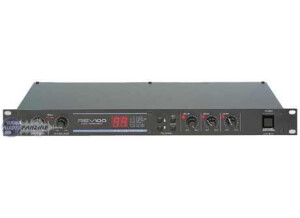
    The Yamaha R1000 is a digital reverb unit that is enclosed in a single rack space rack mountable unit. It has 1/4 inch inputs and outputs in the back as well as a 1/4 inch output in the front of it for a foot switch. UTILIZATION The configuration of the Yamaha R1000 is pretty easy to figure out overall, as there are no tricks involved at all. From left to right, the unit has four buttons to choose the reverb mode, a meter to show the output level, and then has parameters in the form of knobs for input level, three equalization knobs for low, mid, and high, a knob for setting the reverb level in the mix and then an overall output level knob. It also has buttons to put the EQ in or out as well as a button for power. I don't have the manual for the Yamaha R1000, so I can't speak to how complete it is. SOUND QUALITY The sound quality of the Yamaha R1000 is pretty good but is nothing to write home about in my opinion. It has a good amount of different reverb sounds but to me none of them stand out all that much. I have used this reverb on a number of different instruments including for vocals, drums, and guitars, and while I'm usually satisfied with the sounds I can get, nothing on this unit really sounds above average. OVERALL OPINION I've been using the Yamaha R1000 for about two years and while I like the unit as a whole I don't use it all that often because I would rather use a reverb plug-in for convenience. To me I can get a comparable if not better sound from a reverb plug-in and it just isn't worth it to use a piece of outboard gear if I don't have to. Because of this, the Yamaha R1000 isn't all that expensive if you can come across a used one and is a good choice because of this cheap price. Overall, the Yamaha R1000 is a nice sounding reverb unit that should only be used if you are really into outboard reverb.

  • prysm's review

    Reverbs, delays, echos, chorus, flange and combos of all. 99 presets that are all adjustable by 2 knobs on front panel, plus you can get at more parameters by pushing a few buttons and can save if you want.Or use the midi interface. 16 bit A/D D/A processor with 44.1 kHZ sampling rate. Stereo in & out via 1/4" , single rack space, external power transformer. UTILIZATION I mainly use this for reverb, which it does well. The 2 knobs & 1 button on front give me quick access to programs , predelay & decay. The other controls knobs are input level, mix,output level. I'm not a big fan of having to read a 100 page instruction book to navigate the control of some units I've seen. I have the manual, I flipped though it once. Not really needed unless you want to use the midi controls. SOUND QUALITY Like I said before I only have really used the reverbs. I use this on my home stereo system to give the music more life. The reverbs are good for the price of this unit. It's not a high end Lexicon sound but does the job very well. I can't see myself ever selling it for any reason. OVERALL OPINION I've had this about 3 years without any problems, bought it used. It's got good reverbs & easy to use controls. I have a few other reverbs, an Alesis microverb 3 & a Lexicon Alex. This one I think is better than the Alesis , but not as good as the Lexicon. For the price the sound is very good. Unless you step up to something in the $600 & up range this one does just fine. Yamaha makes good stuff, never had problems with any of their products. You turn them on and they work.

  • moosers's review

    The Yamaha E 1005 is an analog delay unit that is designed for use inside the recording studio. I wouldn't think that you could use this anywhere other than a studio, as that's really what it's made for. An outside engineer brought one of these into the studio, and we made all of the connections in the front and hooked it up to a Little Labs box. The 1/4" connections that it has in the front are for two inputs, an output, a foot switch, and a delay only jack. It is rack mountable and will take up a few spaces in a traditional rack casing. UTILIZATION The configuration of the Yamaha E 1005 isn't anything hard to understand, as to me everything is pretty self explanatory. The parameters that it has for the delay are for input A level, input B level, delay, feedback and mixing. It also has modulation effect parameters for speed and depth and switches for choosing between either mic or line input and for choosing either a short or long delay. It also has an LED meter to show you your input level. I haven't seen a manual for the E 1005, so I can't speak about it, although I don't believe that most users will have a need for one. SOUND QUALITY The sound of the Yamaha E 1005 is pretty awesome overall, as you get a really warm and echoey delay with this unit. You might not know it from looking at it, but it definitely has a vintage kind of sound to it. I've used the E 1005 on vocals and electric guitar for only a single session that lasted a few days. An outside engineer brought one of them in to use for auxiliary reverb, and in my short time using it I really found it to have a full sound with a versatile palette of sounds available. OVERALL OPINION Overall, the Yamaha E 1005 is a great analog delay to have around in any studio. I don't know how hard it would be to get your hands on a Yamaha E 1005, but I would imagine that they aren't very common since I've only seen one of them ever. I love the straight forward make up of this unit, as almost anyone can use it easily. I don't know that I'd encourage you to go out and seek one out, but if you're in a studio that has one and are need a bit of analog delay, don't hesitate to give the E 1005 a whirl.

  • moosers's review

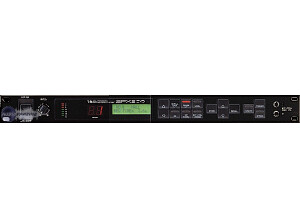
    The Yamaha SPX900 is a multi effects processor in the form of a rack mountable single rack space piece of outboard gear. The processor is a digital unit and it has XLR connections in the back. It also has 1/4 inch inputs in the front for a foot switch or another type of external controller. UTILIZATION The configuration of the SPX900 takes a bit of getting used to. Like a lot of these early digital effects processors, there are a lot of digital windows to maneuver through, and this can take a bit to get used to. However, once you understand the basics of the unit, it is easy to get the sounds you want from it. It has a lot of different sounds and capabilities, which is the only reason there is somewhat of a learning curve. I don't have a manual for this, so I can't speak to how helpful it is or not, but it is probably useful when learning how to use the SPX 900. SOUND QUALITY The sound quality of the Yamaha SPX 900 digital multi effects processor is about average. While it has all different types of effects, including reverbs, delays, modulation effects, and others, none of the effects stand out or blow me away. This being said, they are all usable and well suited for a number of different applications. I have used the Yamaha SPX 900 on all types of instruments, including electric guitar, acoustic guitar, lap steel guitar, electric keyboards, and drums. I like the reverb effects best, but all are adequate and usable. OVERALL OPINION I've been using the Yamaha SPX 900 for about a year and have come to trust it as a handy piece of outboard gear. However, I found myself using plug-ins more and more for effects like this because of the drastic change in ease of use and its comparable sound quality. I believe I can get just as good or better sounds within some plug-ins over the SPX 900, but this doesn't mean that the SPX 900 is useless. The price of these isn't too expensive used, which still makes it a viable option. For those who love the feel of outboard gear and want an all effects in one processor, this is definitely worth a look into.

  • moosers's review

    The Yamaha REV7 is a digital reverb unit in the form of a rackable piece of outboard gear. It will take up two rack spaces and I believe it has both 1/4 inch and XLR connections, but I'm not 100% sure - I use this in a studio where the REV 7 was pre-mounted. UTILIZATION The configuration of the Yamaha REV 7 is the units worst quality, as it is pretty hard to follow. Like most early digital units, the menus are somewhat hard to follow. There are a lot of sections on this unit that I have never used because I'm not sure how they work. This being said, I usually use this to get a basic reverb sound. It is easy to get your typical reverb sounds, but it can be somewhat hard to follow the deeper you go. I don't have a manual for this, but it would definitely be helpful when learning this machine. SOUND QUALITY The reverb effects from the Yamaha REV 7 digital reveb are good and usable, but I wouldn't call the effects great. I have used this unit on everything from lead vocals and back up vocals to guitar and have found it useful in a few different applications. While the reverb is useful and sound pretty good, it isn't the best outboard reverb I have used by any stretch and actually prefer a few different reverb plug-ins over this unit as well. OVERALL OPINION I've been using the Yamaha REV 7 digital reverb for about four or five years and while it has served me well and has been useful, I don't use it all that much for a simple reason. While the sound quality of this unit is pretty good, unless an outboard reverb is top notch, I find myself using plug-ins more and more as I have found some reverb plug-ins sound better than digital reverbs like this one and are much easier to use. I suspect that sub par effect outboard gear like this will die out as plug-ins sound better and better.

  • « good price »

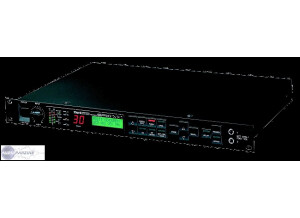
    The Yamaha SPX 90 is a digital multi effects unit. The effects it includes are distortion, flange, tremolo and delay. The effects can be used singularly or they can be mixed and matched together. I believe the connections are XLR and the unit is rackable. UTILIZATION The configuration of the Yamaha SPX 90 is easy to follow and manipulate. The dials and buttons are easy to read and while it takes a bit to figure out exactly what does what, as it is all laid out easy enough. The only reason it takes a bit of getting used to is simply because there are so many different effects and different ways to alter them. I don't have access to a manual but I would think it would be helpful in figuring out all the ins and outs of this model. SOUND QUALITY I really like all of the effects on the Yamaha SPX 90 for various uses on various instruments. My favorite effect is the delay, as it is easy to get a variety of delay sounds from it. I've used it on everything from vocals to guitars and anything else that could use a cool effect or twist to it. You can get a sound anywhere from short, subtle delay to a beautiful, wide, cavernous one. The repeats can get extremely quick and almost crazy sounding. When mixed with some of the other effects it can make for some seriously unique tones. I also like using both the flanger and the tremolo for creating a really thick and wide flange tone or a wobbly tremolo. There are plenty of dials to manipulate each effect to get a real wide variety of sounds for a variety of applications. OVERALL OPINION I first used the Yamaha SPX 90 about 2 years ago and while I no longer have access to it, I wish I did. They are even cheap enough where almost any studio owner could own one and it is a great bang for your buck. If you are looking to expand and get some time based effects that are not in plug in form, this is a great model to get started with.

  • moosers's review

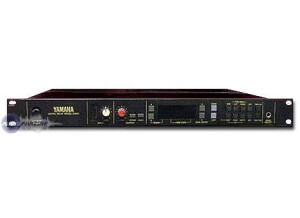
    The Yamaha D5000 is a little known digital delay unit. It's got a lot to offer, but like a lot of digital outboard gear has been pushed to the side in lieu of plug-ins of the same function. The D5000 consists of connections for stereo XLR inputs and outputs, as well as the same in the form of 1/4" jacks. It also has MIDI connections and a 1/4" foot switch jack. It is rack mountable and will take up just a single space. UTILIZATION I can't say that I've mastered using the Yamaha D5000, as I find devices like this to be somewhat hard to use, but I will say that this one is easier than others. It's easy enough to scroll through all of the presets (and there are a good amount of them), but I haven't yet had a need to get more in depth with it. If you wanted to learn all of the D5000's features I'd recommend scoping out the manual, although I haven't had a look at it myself. SOUND QUALITY A studio that I used to work at had one of these Yamaha D5000's, and it didn't see much use. However, when the studio was taken down, we tried it out a bit and did some research on it. At first the owner was just going to sell it for whatever, but upon some research we found that this is actually revered by famed engineer Bob Clearmountain. That certainly changed our opinion of it a bit and we went ahead and tried it out some more. We found it to be a very useful digital delay with a lot to offer. I don't think he ended up selling it, but also still don't think he uses it very much. Unless you're a professional engineer or studio owner, it's not really necessary to have around, but it certainly sounds great! OVERALL OPINION I think you'll find the Yamaha D5000 in a number of studio racks, but probably isn't a device that sees much use. If you have one of these in your studio, give it another shot! I don't know that it's worth it to buy one if you're a home studio owner, but professionals should consider it if they're looking for a delay unit. It shouldn't cost very much as not too many people know about it, so definitely go for it if you're at all thinking about it!