Log in
EN
FR

Yamaha Studio & Home Studio

393 products found

Categories
Series
Filter
Sort by
Yamaha
Evaluation
  • Reviewed or not
  • Editor’s award
  • Reviewed by Audiofanzine
Availability
  • Available or not
  • Sold new or used
  • Sold new
  • Sold used
Must-have products
  • All products
  • Flagship products
  • Best rated products
  • Hot products
  • Popular products
Price
  • Freeware
  • Low-cost (< $2,000)
  • Mid-range ($2,000 - $6,000)
  • Premium (> $6,000)
€
Clear
Sort by
  • Popularity
  • User ratings
  • Price - low to high
  • Price - high to low
  • Used price, increasing
  • Used price, decreasing
  • Name (from A to Z)
  • Name (from Z to A)
  • Added on
Sort results
  • Popularity
  • User ratings
  • Price - low to high
  • Price - high to low
  • Used price, increasing
  • Used price, decreasing
  • Name (from A to Z)
  • Name (from Z to A)
  • Added on
Filter results 393 results found
Brands
Evaluation
Availability
Must-have products
Price
  • Freeware
  • Low-cost (< $2,000)
  • Mid-range ($2,000 - $6,000)
  • Premium (> $6,000)
Show results

The best Yamaha Studio & Home Studio reviews

The reviews Audiofanzine members found the most helpful.
  • « Yamaha REX50 mit dem legendären Symphonic Preset, Gitarren Multieffektor (Yamaha SPX90) »

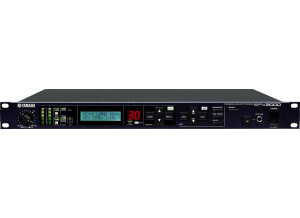
    Das Effektgerät Yamaha mit dem legendären Symphonic Preset, welches auf quasi fast jeder 80s Platte zu hören ist und auch der Signature Sound der Nirvana Gitarre usw... Legendäres Effektgerät der 80er Jahre. ähnlich SPX90, SPX900, SPX1000, SPX990. Yamaha beschreibt den REX50 als "digitalen Multieffektor"-"Gitarren Multieffektor mit Hi-Z-INPUT", dass er eine große Anzahl von Audioeffekten einzeln. Gibt es einige Fälle, in denen Sie mehr als einen Effekt gleichzeitig erzielen können. Yamaha REX50 richtet sich möglicherweise in erster Linie an Gitarristen, aber der kleine Studiobesitzer könnte es vorziehen, es als Adaption des SPX90 zu betrachten. Es stehen 9 Haupttypen von Effekten zur Verfügung: Reverb: 4 Typen - Hall, Room, Vocal und Plate. Frühe Reflexion: 4 Typen - Hall, Random, Reverse und Plate. Verzögerung und Echo: entweder mit separatem oder kombiniertem Feedback. Modulation: 4 Typen - Flansch, Chorus, Phase und Symphonic. Tonhöhenänderung: 3 Typen - MIDI-gesteuert mit Feedback; 2 Tonhöhen in Stereo oder Mono. Gate: Ein Noise Gate / Envelope Shaper und ein Gated Reverb. Kompressor: eine Verzögerung und Kompressor. Schwenken: Automatisches Schwenken. Verzerrung: Grundlegende Overdrive-Verzerrung plus neun Kombinationen mit Hall-, Delay- / Echo- und Modulationseffekten. 30 Presets werden permanent im ROM gespeichert und geben einen Eindruck vom Umfang der Grundeffekte. 60 RAM-basierte Speicherplätze (mit Batterie-Backup) dienen zur Speicherung Ihrer eigenen Variationen. Das eingehende Audiosignal kann entweder Mono oder Stereo sein, obwohl die beiden Kanäle des Stereosignals vor der digitalen Verarbeitung summiert werden. Ein Drehregler auf der Rückseite ermöglicht die Einstellung der Eingangsverstärkung. Ein Trimmpotentiometer "Hi-Z-INPUT" für den Eingangspegel - eine Verbesserung gegenüber dem ursprünglichen SPX90, der nur einen Eingangspegelschalter hatte. Der unsymmetrische Ausgang ist in Stereo mit einem Schalter zur Auswahl von Nur-Effekt- oder Effekt-Plus-Eingang, sodass Sie den REX50 über die Sende- und Rücklaufanschlüsse eines Mischpults inline oder als Außenborder verwenden können. Alle Audiopegel arbeiten mit dem Studio-Standardpegel von -10 dBm und einer Impedanz von 10 kOhm. Der linke Kanaleingang ist der Mono-Eingang. Wenn Sie nur diesen anschließen, wird an beiden Ausgängen das Direktsignal angezeigt. Anstelle der üblichen Phono / Cinch-Anschlüsse nach dem Standard für die Heimaufnahme verwendet der REX50 Viertel-Zoll-Buchsen für die Audioeingangs- und -ausgangsanschlüsse, vermutlich aufgrund seiner beabsichtigten Anwendung als Gitarreneffektgerät. In der TRUE GUITAR-Effektmode bietet der REX50 ¼ "Audio-Ein- und Ausgänge auf der Rückseite. Dies bringt uns direkt zu etwas, das geklärt werden muss - obwohl der REX50 linke und rechte Ein- und Ausgänge bietet und Stereoeffekte möglich sind, sind die Ein- und Ausgänge möglich werden nicht separat verarbeitet. Stattdessen werden sie summiert und dann zusammen verarbeitet, um Stereoeffekte zu erzeugen. Anschließend können Sie die trockenen Eingangssignale mit dem Effekt mischen. Dadurch eignen sich die Eingänge für den Betrieb des REX50 als Inline-Effekt für Instrumente (normalerweise Synthesizer) ) mit Stereoausgängen. Bei der Inline-Gitarrenverarbeitung wird der REX50 durch Einstecken nur in den linken Eingang für den monophonen Betrieb eingerichtet, obwohl das trockene Eingangssignal an beiden Ausgängen angezeigt wird. Im Inneren des REX50 wird das Audiosignal mithilfe einer sehr cleveren Technologie, die das von Yamaha bei der Entwicklung von Chips voll ausnutzt, in digital umgewandelt. Sie verwenden einen einzelnen DAC-Chip, um die Analog-Digital-Wandlung sowie die Stereo-Digital-Analog-Wandlung durchzuführen und zwischen den einzelnen Funktionen zu multiplexen. Die Quantisierung ist 16-Bit-linear bei einer Abtastrate von 31,25 kHz, was einen resultierenden Frequenzgang von 20 Hz bis 12 kHz ergibt. Vintage Sound! Die Reverbs klingen natürlich, ohne unerwartete Farb- oder böse Quantisierungseffekte. Das Early Reflection-Programm bietet eine überzeugende akustische Simulation eines Raums ohne die Mushiness des Nachhalls. Die Presets Flange, Phasing, Chorus und Symphonic machen genau das, was ihre Namen vermuten lassen, und erzeugen sehr effektiv Effekte vom Typ "Modulated Delay". Der Reverse Gated Reverb ist ein sehr effektiver Spezialeffekt, der den Eindruck von Rückwärtsecho oder Hall erweckt. Die zusätzliche eingebaute Verzerrung macht den REX50 zu einem Anwärter auf die Effekt-Waffenkammer des Gitarristen. Die letzten 10 Presets verfügen alle über die digitale Verzerrung, entweder allein oder in Kombination mit anderen Effekten. Die Meinungen über den Verzerrungseffekt selbst waren bei den von mir konsultierten Gitarristen unterschiedlich - dies ist ein sehr subjektiver Bereich. Sie können MIDI Program Change-Meldungen verwenden, um einen REX50-Effekt aus der Ferne auszuwählen, die Tonhöhenverschiebung einer der drei Pitch Change-Optionen einzustellen und die Gate-Effekte auszulösen. Insgesamt ist dies eine wunderbare Box, um nahezu jede akustische Umgebung zu schaffen, die Sie erwähnen möchten, von natürlich bis unmöglich. Freq Response: 20Hz to 12kHz (+1/-4dB, 1kHz = 0dB) Sampling Rate: 31.25kHz Quantisation: Linear, 16 bits Dynamic Range: 74dB (effect) Noise Floor: -76dBm 60 RAM memories 30 preset effects 4 banks of MIDI program change mapping Stereo Input and Output at -10dBm MIDI In only

  • « Exceptional »

    I've had the Yamaha HS50M, good speakers, but these one are CLEARLY better from any point of view: Impeccable finish, crystal-clear sound. They are small but weighty! They are perfect for a home studio, the best ones I've ever had. Right from the installation, I adopted them when I had some trouble with the HS50M. SOUND Sound is clear as crystal, it's a real treat. They distinguish themselves from the HS50M, which are pretty aggressive. These are very pleasant, I have finally found a set of speakers that satisfies me from all points of view. I ran a quick test this evening with the TotalMix of my RME UCX and it's fabulous, you can clearly hear the slightest change. I finally have the right speakers to mix, they have nothing to do with what I had up to now. Kudos for Yamaha for these speakers that transcend eras and trends. OVERALL OPINION I compared them to the 50M and they are obviously better, but the 50M are good speakers. On the other hand, they completely OUTCLASS the Prodipe P6, which are inaudible and much less precise in comparison. I did a test with an MSP5 on the left and a Prodipe P6 on the right and there's simply no comparison ;) They are much smaller, but they have a superb sound and finish. It's a different ballgame altogether. Prodigious small speakers, I can hear things I couldn't hear before.

  • « NOT A NS10 M »

    Great for the new style monitor but not an NS10M. No comparison. They are a bit more colored and a bit more unreal on the low end. They have a great rating and some great reviews but for the money why would you not get a more realistic speaker. Decide if your looking to impress or mix. If you want to mix use the real old NS10M over buying these. If you looking to get more movement down at the 50hz frequency, these will do. When you are use to flat monitors these won't suit your needs as they have a compressed enhanced sound. I use to own a pair of KRK'S that did the same thing. When you are mixing loud and you have set them up as near field monitors and your only monitors they sound pretty damn good. Most all monitors do if you have nothing to compare them to. But we have contacts and they bring us monitors to try all the time and we put them to the test every time. The Yamaha's are good sounding monitors if you are use to a more smooth low end whereby the lower frequencies like 100hz to 140hz sound somewhat compressed and really smooth. I am use to more flat monitors that are a bit more real and unprocessed sounding so when I first heard these it surprised me as they were smooth and normally Yamaha monitors are nothing close to smooth. They have a harsh sound at about 3K and that is why many producers in the past would place tissue paper over the tweeters to cut down on ear fatigue during a mix down or even a long day session. I use to do that all the time. But upon hearing these I noticed a great deal of enhancement. I am not saying they are bad monitors I am just stating that Yamaha has a reputation for really flat sounding almost dead sounding monitors. With this set it threw me off as it was a bit more like the Mackies or the KRK speakers. I was not ready for that from Yamaha so it did not suit my needs for mixing. Much like a new JBL monitor it seemed that it was too smooth for my own good. I SOUNDS Good stereo imaging. A bit cautious on the effects mixing. When effects mixing on smoother sounding monitors you have to be very careful with your effects especially reverbs. Snare reverbs were too smooth for my liking as was the vocals. I like the fact that they provide a more comfortable listening experience but for me that can be a bit deceiving. My ears are more trained for the high boost that a classic NS10m provides which makes you work really hard and long on the midrange tones of your mix. It also makes you work harder on your vocal compression and you can hear any fluctuation in the vocal tracks and in the snare tracks. These speakers provide a good listening experience but not as flat for my liking as I would like out of a speaker. I will stay with the old NS10M and a good pair of JBL's and even the Mackie h824s which to me are more like a slightly enhanced NS10m more than any other speaker. Buy a pair of Mackie H824 and you will like them more. OVERALL OPINION I think I like the bump of these but not the unrealistic sound of any of the new Yamahas. I just don't trust their representation. If I am buying Yamaha, again I would just buy the NS10m's.

  • « Affordable solution for analog systems »

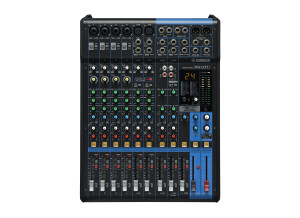
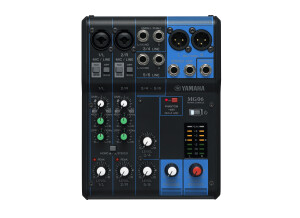
    The Yamaha MG102c is one of the most affordable analog mixers that you can get today. It has a 3 band EQ on channels 1-2 and a 2 band EQ on channels 7, 9 and 9/10. There is one auxiliary send but it has no busses. This mixer is small and compact, it cannot be racked but that is ok because it does not take up much desktop space at all. UTILIZATION Setting this mixer up is very easy because it really has nothing to do with your computer because it is analog, so that makes it plug and play. There is phantom power on a few channels and it has all of the inputs and outputs that you need for your small set up (inputs: 2 ¼ and 4 ¼ plus 2 RCA, outputs: 2 ¼ for your monitors and 2 RCA for recording). SOUNDS The sound is decent for the money, you will get no hissing and if you are using a good quality microphone with this Yamaha MG102c then your quality will be pretty solid. But if you stick to using cheap microphones then it will not be very good. So it will all depend on what kind of microphone you choose to use with it. OVERALL OPINION I have used this mixer many times and have had it for many years. Though my set up is not so much analog anymore I still find uses for it. I would be nice if there were a few effects on it, the only type of effect it has built in is a compressor which is pretty good for this to only be a 100 dollar unit. There is no talk back function on it, but it gives you a total of 10 analog channels to work with. Though I purchased this a long time ago, I would still purchase it again if I was in the market to buy a analog mixer. I have used plenty of Yamaha’s analog mixers and this is the most affordable one that they make and it is very similar to the MG82CX.

  • « Good, effective, simple-yet-versatile fourtrack recorder »

    I picked up on of these relatively cheap. The competition from Tascam fetches much higher prices even in 2020 – undeservedly so, I think: This little Yamaha appears to be as good as the competition! I want to use this recorder for two and a half purposes: – simple quick recordings of ideas that vanish before I have booted up the DAW – audio manipulation such as tape saturation, reverse playback effects, etc. – for use as an auxiliary 6-channel submixer, if needed The Yamaha does all this and more – I am discovering more tricks and uses all the time. Check out Youtube and similar sites for inspiration – these things can serve as: – super-complex "oscillators" for modular synthesis – echo effects – tape saturation effects – musical instrument (drones, playback tracks, etc.) I used to have a similar recorder almost 20 years ago, by Tascam (but don't remember the model name). It was directly comparable to this machine, I would say. Maybe the Yamaha feels a bit "lighter", for lack of a better word, but the machine seems very well put together. Yamaha gear has *never* given me any trouble, and I don't expect this little recorder will, either. The pros of this product are: – highly intuitive, – quick – "good"-sounding recordings (if you like tape sound) – more uses than I ever imagined The cons of this product are: – don't expect a limitless (but also soulless) DAW!

  • « Very flat »

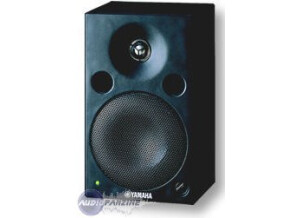
    Yamaha’s MSP5’s where a pair of monitors that I was using for a while as reference monitors. They are active monitors with a 5 inch woofer and 1 inch tweeter. These monitors are very flat, compared to a lot of other monitors that I have used in the past these are better than a lot of them and they are even cheaper. I first heard these at Guitar Center when I went to get a “cheap” pair of monitors to reference with. I ended up leaving with these just because of the flat sound. That made it very easy to mix with these monitors but because I had the KRK monitors these ended up being my reference monitors and they helped me out a lot with mixing my bass nice and clean while keeping it tight. SOUNDS These monitors have low cut, low trim, power, phase, and high trim controls right on the monitors. They work at 60 watts and are not any taller than a foot. These monitors are not big at all and fit right on my work desk with my laptop. They have magnetic shielding so there were no worries with them affecting my computer/laptop screen. OVERALL OPINION The LED meters on these monitors will let you know if you are clipping by displaying a “red” color instead of the standard “green” color. The frequency response is 50 Hz to 40 kHz with a maximum output level of 101dB. These monitors should have been my first choice for near field monitors; and if I could do it all over again these would have been purchased long before I got my hands on them. These are some of the best you can get for less than 500 dollars. I have used about 10 different set of monitors in this price range but not have them are as flat and clean as the MSP5’s are!

  • superdébutant's review

    The console is not rackable but you can put it on a stand. 10 channels, 4 mono with XLR/Jack inputs and 3 stereo (2 on jacks and 1 on RCA). 3-band equalizer No effects UTILIZATION Simple setup, easy installation. The manual is well done, without being too technical. SOUNDS It's a $100 mixer, so don't expect too much from it. My setup is pretty simple: 1 stereo input: 1 revox tape recorder 1 mono input: 1 grundig tape recorder 2 mono inputs: different mics, cd players... 1 jack output going into an Edirol UA 25 1 return from the Edirol via jacks 1 output for my active monitors No noise, unless you crank it all the way up, but who does that, anyway? Very sensitive equalizer, which can distort sound quite rapidly. Be careful. OVERALL OPINION I've used it for two and a half years. Stereo channel 8 deteriorated after one year and I started hearing noise from the left speaker. That meant two months of after-sales service — very annoying! Two weeks later and with an interval of one year, same problem, same track! I am not too violent with the console, I only turn the pots. Decent value for money, but apparently the reliability leaves a lot to be desired. I hesitated between the soundcraft compact 4 and the small Tapco... My review could've been different!... I would certainly not buy this mixer again (especially two years later, now that there are consoles that double as audio interfaces).

  • moosers's review

    The Yamaha SPX90 is a digital multi-effects processor that has been a staple of many recording studios over the years. I can't say too much about the connections that it has as it was already racked in place when I used it at a professional studio, but it does have a 1/4" connections in the front for both a bypass foot switch and a memory foot switch. I do also know that it has MIDI connections and I'm not 100% but I think it uses 1/4" inputs and outputs as well. The SPX90 is rack mountable and will only take up a single space in a traditional casing. UTILIZATION Navigating through and using the Yamaha SPX90 will take a little bit of practice since there are a ton of different windows and things that you can do with it, but it is still pretty user friendly and I think that most will be able to catch on rather quickly. It mostly has parameters for scrolling and controlling the different effects, which range all across the board, but also for storing and recalling different presets. The manual is put together very well, as is usually the case with Yamaha products, so more times than not I'd recommend having it around. SOUND QUALITY The Yamaha SPX90 pretty much has every effect that I can think of, including reverb, delay, modulation effects like chorus, flanger, and vibrato, as well as compression, equalization, and most other types of signal processing that you can think of. All of the effects are pretty clean sounding, but the reverb is definitely the highlight of the unit and is generally what I use it for. Having said this, the other sounds on the SPX90 sound very good as well and can be used in all sorts of different situations. OVERALL OPINION I don't really know what the availability of the Yamaha SPX90 would be now, but you will definitely still find them in a good amount of different professional recording studios. I also don't know anything about the price, as I've never had a need to seek one out. While I'd probably recommend plug-ins if you're a home studio owner looking for some effects, if you're a professional looking for digital multi-effects outboard gear, the Yamaha SPX90 is an overall great choice...

  • songboy's review

    This is mainly a reverb unit with some delay and modulation options. Yes, you can edit this through a computer using software such as MidiQuest XL. This is in fact a 1u rack mount piece of gear. The Yamaha REV100 is a Digital unit. There are 1/4" stereo audio in and outs and a Midi in connection. UTILIZATION Yes, the sound and effects editing is fairly easy via the three main parameter knobs and the Mix knobs on the front of the unit. It is also even easier using MidiQuest. Yes, the general configuration is very simple. Simply select the patch you want and tweak it with the knobs on the front to change the mix, delay time, the decay, etc..... The only reason I used the manual was to find out exactly what all the presets were as they only display a number in the LCD. SOUND QUALITY I used this mainly on drums, vocals and acoustic guitar. With drums, it definitely can give you that 80's and 90's plate reverb sound which is fun to use here and there. As for vocals, I found that I didn't really like most of the sounds with the exception of some delay/modulation presets that made some cool sound effects. With the Acoustic guitar is where this unit really shined for me. It really brought some depth and warmth to my guitar and I used it on many tracks for the year that I owned it. The preamp did color the sound a little by making everything just a little muddier, but I generally used this on a bus so I was able to mix in the audio from the separate channel for the finished project. OVERALL OPINION What I liked about this unit was how well it made my acoustic guitar sound. It reminded me a lot of the recording I find on "Windham Hill records." What I didn't like about this unit is that the reverbs were definitely dated and didn't sound all that great on most other instruments/tracks I used it on. I paid $35 for this used on ebay and sold it for the same amount a year later so I am pretty happy with that. I give it a 7 out of 10 for sound quality. If you want your drums to sound like they are from an 80's studio, than this can help. It also works well with acoustic stringed instruments, other than that, don't bother in my opinion. I upgraded to a Alesis Microverb 4 after I sold the REV100 and the Alesis blows the REV100 out of the water. No, I wouldn't buy this unit again

  • Audiofanzine FR's review

    (Originally written by Forenz/translated from Audiofanzine FR) - Is it rack mountable? No but you'll find flightcases specially designed for this mixer. - How many channels, groups, aux sends and returns ...)? 16 mono mic/line channels, four stereo line channels, six aux (four pre/post and two post fader) + two aux for internal effects. Four groups, two effect returns. - What kind of connections (RCA, phone, XLR...) does it have? Mono channels: unbalanced XLR or jack; Stereo channels: two unbalanced jacks. - Does it have a parametric EQ? Semi-parametric mids, 4-band EQ on the stereo channels. - Does it have an integrated effects section?...Two SPX effect modules. The number of inputs, outputs, aux and groups is incredible considering the price. I give it an 8 because channels don't have direct outs. But the inserts are post gain and post EQ so you can easily use them as direct outs for recordings. UTILIZATION - How complicated is the overall configuration?It's an analog mixer so it's very easy to use. - Is it easy to access the main functions? Analog mixer: One function = one button - Is the user's manual clear and comprehensive?... Yes SOUNDS - Does the desk sound "transparent"? Transparent is not the right word but when the input signal is good, the output signal is also good. Does it generate noise? Slight hum noise above 0 dB but that's normal. Nothing serious. - Is the EQ effective?... It's ok even though it has a bad reputation. I expected the worst after reading some user reviews, but you just have to avoid extreme settings. The quality of the EQ is ok. OVERALL OPINION - How long have you been using it? One month - Which feature do you like the most / the least? Pros = number of aux sends and groups. Cons = no direct outs - Did you try any other models before buying it? Mackie, Soundcraft, Allen & Health, Midas Venice, etc. This Yamaha is alright, it's neither the best nor the worst. - How would you rate its value for money? Very good - Based on your experience, would you choose this product again?... Yes, if I had the same budget. With a bit more money, I would buy an Allen & Health.

  • moosers's review

    I got a pair of Yamaha NS-10Ms because, like many, I feel that the mixes I get on them translate well to other listening environments. They are pretty normal speakers, which is part of the reason that so many people love to use them to A/B mixes. I run my pair with a Crown D75 power amplifier. SOUNDS I would say these monitors give a pretty accurate portrayal of the sound, excluding the low end frequencies. They don't have enough bulk to project those deep low frequencies, but the mid and high end frequencies come in pretty clear. Since the low end response on these isn't the best, you have to know what amount of bass is appropriate on these to translate well to a set of speakers that might have more low end response. This being said, all monitors take a bit of learning to see how accurate their spectrum is. The stereo image is more than satisfactory and they give off a crisp overall sound. OVERALL OPINION I've had my pair of Yamaha NS-10Ms for about three years and I'm really glad I bought a pair of these. They are great to use in tandem with a fuller set of speakers so that you could A/B a mix between them. If you can find a used pair of these, they aren't all that expensive, which make them a good deal. The NS-10Ms seem to be in a class of their own when it comes to monitors. Some people love them and swear by them, while some just don't get it. I think it is just a matter of knowing how to use these to your best advantage, which takes a bit of learning. The NS-10Ms are definitley worth a look at from anyone interested in picking up a set of studio monitors.

  • « for Cubase users »

    You will get nothing but low-latency performance with the Yamaha N 12. I have been using this unit for the last year, we have it hear in one of the studio’s on campus. It was used with a Windows 7 system running 64bit. There where no issues with it at all, I didn’t not install it so I am not sure how easy it was to install but I do know that after using in a bunch of different DAW’s it works great in each and everyone of them. The phantom power is switch able and it has solo level control. There is a talk back function with a built in microphone which is pretty important to us in that studio. UTILIZATION You can connect the Yamaha N12 to many different sound sources. It has XLR connectors and TRS jacks in mono. There are also RCA pin jacks, so no matter what audio gear you need to run through it there is a plug for it. I prefer to use the Yamaha N 12 with Cubase most of the time, that is the first program that I have used with it and it worked great with it so I never started using it with anything else. SOUNDS The Yamaha N12 has MIDI in and out, a foot-switch input and it comes with a version of Cubase. It has 11 faders on it and eight microphone pres. The unit as a whole is well built and I don’t every see it breaking. It is nice and heavy. OVERALL OPINION The sound quality on the Yamaha N 12 is great, it has a morphing compressor that sounds perfects as well as reverb right on the Yamaha N 12. If you are a Cubase user than this interface is something that you need to seriously invest in. It is not cheap , costing around 1200.00 dollars but it will be well worth it once you buy it. The 8 pre amps and 3 band EQ are worth that price alone. The Yamaha N 12 has set a high bar for interface from this point on!