Log in
EN
FR

Audio-Technica Studio & Home Studio

298 products found

Categories
Series
Filter
Sort by
Audio-Technica
Evaluation
  • Reviewed or not
  • Editor’s award
  • Reviewed by Audiofanzine
Availability
  • Available or not
  • Sold new or used
  • Sold new
  • Sold used
Must-have products
  • All products
  • Flagship products
  • Best rated products
  • Hot products
  • Popular products
Price
  • Freeware
  • Low-cost (< $150)
  • Mid-range ($150 - $300)
  • Premium (> $300)
€
Clear
Sort by
  • Popularity
  • User ratings
  • Price - low to high
  • Price - high to low
  • Used price, increasing
  • Used price, decreasing
  • Name (from A to Z)
  • Name (from Z to A)
  • Added on
Choose a category
Selected category: Studio & Home Studio
Sort results
  • Popularity
  • User ratings
  • Price - low to high
  • Price - high to low
  • Used price, increasing
  • Used price, decreasing
  • Name (from A to Z)
  • Name (from Z to A)
  • Added on
Filter results 298 results found
Brands
Evaluation
Availability
Must-have products
Price
  • Freeware
  • Low-cost (< $150)
  • Mid-range ($150 - $300)
  • Premium (> $300)
Show results

The best Audio-Technica Studio & Home Studio reviews

The reviews Audiofanzine members found the most helpful.
  • « Excellent for the price »

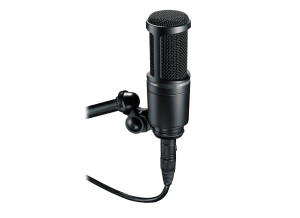
    Condenser mic. A mic for all occasions, as long as you have a good preamp behind it. Very (or even too) clean sound, so pay attention to sibilants and HF, which can be hard to get rid of during mixdown. But let's be clear, for $120 you really get your money's worth. It's very simple: To have something really better you have to spend three times as much. It lacks a low-cut and a pad, but if you have a good preamp or mixer, you already have everything you need, so such features are useless for someone who has outboard gear. It has to do with the price, I think, because the manufacturer launched the same mic with filter and pad with a higher price tag. OVERALL OPINION I've used it for about a year in my home studio and I'm satisfied with it. Yes, I compared ii to many others, but it was the flattest and most versatile in its price range. You really have to go to the next price range to notice a difference that justifies the investment. Granted, it's certainly not a Neumann! Continuation: I used it this week in post-production to record a Japanese female voice. It was perfect. The production thought it was a high-end mic. Almost no background noise and a nice precision in the high frequencies to give presence to the voice off. I can confirm this mic can even be used for broadcast without the slightest problem.

  • ejendres's review

    This is a budget cardioid condenser mic, which basically is a nice way of saying it is cheap. However, it has some really nice features that you don't see on a lot of cheap condensers. It has a -10db pad and a high pass filter that are both activated by physical switches on the mic. I'd say this mic is best suited for the studio. It is really well built and seems quite tough, but like all condensers it is prone to feedback and picking up unwanted sounds. Those two aspects of the mic make it less than ideal for live use. Another great thing is that it comes with a shock mount. OVERALL OPINION I really like this mic. It has great clarity. I've used it for recording acoustic guitar, bass amps, guitar amps, and vocals. For acoustic it really captured the warmth and body of the guitar. It sounded great on its own, but I also tried blending it with an SM57 (placed at the 12th fret) and it sounded phenomenal. The SM57 really brought in some of the high end sparkle. The -10db pad really comes in handy when recording loud guitars. Sounded great alone, and again, I also really liked it paired with an SM57. And the built in high pass filter makes it so you don't really need to eq your guitar tracks. Its really handy. It also does great for vocals. I've used it extensively for recording my voice. Seems to stay very true to your actual vocal tone. Its also very sensitive. I am a layman when it comes to studio, so I can't tell you which high end mics the AT2035 competes with. What I can tell you is that this is a clear, great sounding condenser that makes a great addition to any home studio.

  • « Good in all situations »

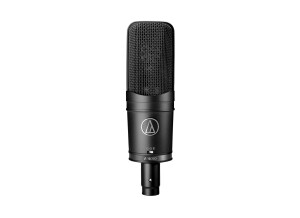
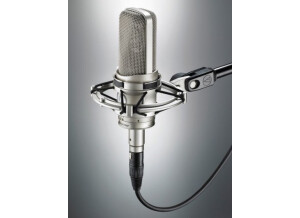
    The AT4033 is a large diaphragm cardioid condenser microphone that comes with a shock mount and protective case. This microphone has become a handy microphone to have for use because of its versatility. It has low noise, and sounds really good on instruments and on vocals. I have been using since 2010 and still use it to this day but for more of a backup in case something happens but it is usually with us no matter where we are or what band we are working with. It has a 10 dB pad and a frequency response of 20 Hz to 20 kHz. OVERALL OPINION You can do just about anything with this microphone and feel very good about the quality of it. It sounds great when used on an acoustic guitar especially because it picks up just a little bit of room noise. So if records a very natural sound and has a natural reverb to it. If you use a good interface with it you will be very pleased with the quality you can get on the AT4030. The output impedance is 100 ohms and the microphone is built very tough. It will last a long time. I think I have even dropped it a few times and there isn’t even a scratch on it at all. This microphone is the versatile microphone that all bands and musicians need because it will work great with any type of vocal male or female and sound great with different instruments in just about any room space. I have not tried this microphone live and probably never will just do to all of the good live microphones that we have and use. But if you didn’t have a live microphone this would be great for a singer/ acoustic guitar player who goes solo to do gigs. It will give you a very natural sound and a light ambient feel.

  • « Condenser and Dynamic »

    The Audio-Technica AE2500 is a condenser and a dynamic microphone. It is one of the higher end microphones from Audio-Technica and comes with a hefty price tag of 550 USD. It is said to be one of the best kick drum microphones out. The fact that it is a dual microphone with a condenser and dynamic elements in the same microphone shows me why it is the price that it is. The condenser’s frequency response is 20 kHz- 17 kHz and the dynamic frequency response is 30 kHz- 10 kHz. OVERALL OPINION The Audio-Technica AE2500 having both a condenser and a dynamic side to makes it a powerful kick drum microphone. It will give you a full sound if you have a good placement with it. You have to remember that the place with the kick drum is the most important factor of getting the sound that you want. You may even want to experiment with placement to see how you want it to sound. If you record with the Audio-Technica AE2500 then you will notice the frequencies will seem like they are pretty flat. Some of use might like that and others might not. If your frequencies are flat then you might want to place your microphone a little bit closer but don’t ever do it. Or you could get into boosting some frequencies to get the sound that you want. The value of the Audio-Technica AE2500 for the price is pretty good; it is a pretty expensive microphone to purchase for your kick drum. But your sound will thank you later once you hear how well that it is. I have used several similar microphones that are dual microphones and some of them sound similar to the Audio-Technica AE2500 but they are a little more expensive. Check out some of the Shure dual microphones if you don’t want to spend this much, they have some good ones that are similar and are a little cheaper.

  • « Built for the road »

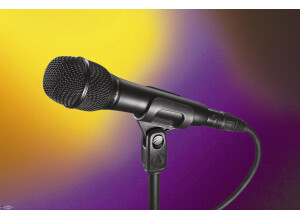
    The Audio-Technica AE6100 is a dynamic hypercardioid microphone that cost 170 USD. The Audio-Technica AE6100 will make your voice sound full and rich. The warmth of this microphone is what shocked me; I could not believe how good it made my voice sound. The best part of it is that it only picks up your voice and nothing else. If I were to talk in it, then stop talking you would hear nothing coming from the speakers even though there are a bunch of people around all talking. At first I was comparing this microphone to the Shure Beta 58 but after using it more and more I have come to the conclusion that it is better than the Shure Beta 58. OVERALL OPINION The frequency response is 60Hz-15 kHz and the impedance is 250 ohms. The Audio-Technica AE6100 is more of a live microphone but you could use it in a studio if you want to record with it. I have done some personal mixes for a CD that I put out using the Audio-Technica AE6100 for my voice over and it sounded great. Now that was just putting a voice over, so I am not sure how it would work if you are really recording some vocals and fitting it right into the mix of your song. The value for the price of the Audio-Technica AE6100 is spot on. It cost exactly what it should cost, not too much. The built in pop filter, provides great protection against those popping sounds and it is very tough. The Audio-Technica AE6100 is made to be taken from place to place to use. It comes with a stand clamp (but not a stand). Right out of the box the microphone will feel good in your hand, it has a good weight to it and you can tell that it is made out of quality materials.

  • « Great »

    The Audio-Technica ATM250DE is a solid kick drum microphone with a high price tag. I have used other microphones that are half of what the ATM250DE cost that sound pretty similar too it. The Shure SM67 or maybe even the D112 are the microphones that I would say the are closest in quality to the ATM250DE but they cost less than it does. The ATM250DE is a cardioid condenser microphone with hypercardioid pickup patterns. It is a solid microphone to use for your kick drum and guitar amps. One thing I can say about this microphone is that it will give you a really big sound! The old fashion way to get those really big sounding kicks or guitars is to point multiple microphones that the instrument and then bring it all together in the mix. But with the ATM250DE it will basically do that for you without causing any problems between dynamic or condenser frequencies and elements. I have been using this microphone since 2009 and stopped using it in 2011 due to some issues I was having with the cord ( think there was a short). I ended up selling the microphone for almost what its worth brand new to a local band member. OVERALL OPINION Overall, the ATM250DE has a dynamic microphone capsule as well as a condenser capsule, that is why the price is so high. If you are willing to make the investment to purchase the Audio-Technica ATM250DE you will love how good it sounds, it will really bring your kick drum or guitar sound to life with no effort or EQ’ing involved. This Dual Element microphone is well worth the money spent, it is very rugged and it will last you a long time. It comes with a clamp for mounting and a cord (which was defective in my case) but I could have just had a bad one out of the bunch. I have never heard of anyone else having the issue that I was having. This microphone is outstanding and it is top notch. You will get a professional sound with no effort.

  • « Good choice for field recording! »

    The Audio Technica AT 825b is an electret condenser primarily used for audio/visual work and for field recording. OVERALL OPINION The AT 835b is an excellent choice for A/V applications. It's portability using battery power makes it obviously ideal for such use. What may be surprising is how this "intended" use can be ignored and what you can accomplish when you use this mic in creative ways. I, of course, have used this mic for "on-site w/camera" recording and I've also used it to capture folley tracks. It has performed well in both instances but I prefer to use it for folley. I've gotten some really outstanding thunderstorm tracks, bird song, and lakeside nightnoise tracks in particular using this mic. I have a much older version which is grey but I'm positive that there is no difference other than the newer models are black. Honestly, I think that that is all that the 'b' in the model number signifies. Where I have diverged from it's intended purpose is where I've found some really unique results have occured. I've used the AT 835 as a mono distant room mic for drums. In a larger drum room with an uncommonly high ceiling I placed the 835 in the opposing corner from the drum kit aimed down at the kick drum from a point just below the ceiling. Wow! The 835 covered the whole kit with a very good overall balance between shells and cymbals but what blew me away was how huge the kick and toms sounded! I have to say it was probably my favorite drum room ever, it had a stone floor, A-frame ceiling, and rough, un-even log cabin style walls. Once the 835 track was mixed dead center with the close mic'ed tracks the whole room and a beautiful depth stepped forward in the mix. I expect groans and shaking of heads for this next part. Use it as an overhead! I know that because of it's design it is going to try to focus itself further out than the typical overhead mic. Yet, that's the beauty of it! Using it as a close over really complicates getting your phase relationships nailed down in an acceptable way, but if also combined with another 835 used as a distant room mic, you can get a very open, roomy, washed jazzy sound. You don't need to believe or even agree but you should know that this is an excellent mic to own. The quality of the sound overall is a little bit pushed in the mid-range but respectably flat-ish everywhere else.

  • « Good Overhead Mic that can double as an instrument Mic as well! »

    The Audio Technica AT4041 is a small electret condenser, what is commonly called a "pencil condenser". I've used this mic in nearly every situation that I could throw at it. It will perform just as well live as it will in the studio. Audio Technica may sometimes be overlooked by some engineers with deep pockets but believe me when I tell you that their products are quite a bit better than they often get credit for. The mic also comes with a carrying case, a windscreen, and it's own mic clip. OVERALL OPINION The main thing to like about the AT-4041 is it's versatility. Many engineers prefer, so called, "pencil condensers" only in overhead applications. The AT-4041 does a brilliant job on just about anything. Drum overheads, acc. gtr, elec. gtr, strings, harmonica, accordion, piano, and even vocals! Close Mic-ed or at a distance. Go figure! I got my pair many years ago, (about 12), for about $550(us). At the time it was the most expensive and most pro condenser that I owned. To this day the AT-4041 is a standby in my arsenal. I use this mic constantly for overhead applications, whether that be drums, flute, percussion, kora, and whatever else. However, when a certain instrument needs that close mic-ed, yet crispy, sound the AT-4041 can really impress. It is surprisingly warm and yet not "tinny" for an electret condenser. You can get really bright and present guitar, banjo, sitar, strings, and much more to come across very well in a mix with the AT-4041. What may perhaps be the most surprising aspect of the AT-4041 is how it deals with vocals. Electret condensers are not known for being good or, let's face it, even appropriate for vocals. With the included windscreen and a well trained, mic control talented, singer you can actually get some fairly warm and highly workable vocal tracks out of the AT-4041. I'm not going to tell you that it performs as well as a large condenser because that would be a lie, but for the engineer that only has a couple hundred dollars to spend on a good condenser, and needs it to be versatile? Well, if you've got your mic control skills, a windscreen, and a pop-filter the AT-4041 may surprise you. The AT-4041 also really shines on acc. gtr. Have you got an old, rusty stringed, dilapitated old archtop or some other similarly ancient and dusty old instrument? Put the AT-4041 right up close to that guy, apply a healthy dose of high shelf, and listen to that remarkable vintage sound. The AT-4041 packs enough warmth to pull these odd vintage sounds off without much trouble at all. There are tons of other "pencil condensers" out there, and many of them are admittedly better. However, for the price and the quality the AT-4041 is an excellent choice.

  • « Audio-Technica AT3035 Cardioid Condenser »

    Primarily a singer, I've been playing guitar for about 10 years, been in a band (drummer!), and have continued to record and play with other musicians on a non-professional basis. My styles range from folk to hard rock, with heavy power-pop leanings -- Big Star, not Green Day. Bought at Guitar Center on Sunset Blvd. in Los Angeles for $200. I needed a better microphone for acoustic guitars and vocals. I can't afford higher-end mikes that cost $4000, and I am quite pleased with the sound I get from the AT3035. After acquiring it, I used it on an acoustic-guitar/vocal recording and was stunned at how much clearer the sound was compared with my old recordings. I also use it for film voice-over and ADR work and the mike yields pretty clean results even without a soundproofed room. When shopping for the microphone at Guitar Center, I tested this against a Nady, an MXR and an AKG Perception -- some of those were more expensive than the AT3035, some were less -- but the AT3035 was the winner by a landslide in terms of clarity and construction quality. Nothing, really, except that the metal at the top of the microphone is a little soft and gets dented easily. Very good. It's not too heavy, but feels sturdy enough. It also comes with its own shockmount and soft carrying case. Getting this microphone completely changed the sound of my recordings. Suddenly my vocals began to sound much more professional, I could hear myself far better while recording and so I could also perform better. And the AT3035 also does fine recording acoustic guitars. For $200, it's a great piece of equipment. This review was originally published on http://www.musicgearreview.com

  • « Audio Technica Pro 25 »

    I bought my (4) AT Pro25's online from AMS for $109. Originally I bought them for tom mics for my drums but my guitarist borrowed one and he was very impressed as was I with how well it worked on his cabinet. I like the high spl handling capability of the pro 25 as well as it's hypercardioid polar pattern. On stage needless to say a tight pick up pattern is a must! The one thing I dont like about the mics is the "very slight" tonal inconsistency from mic to mic. This is fairly easily corrected with some eq magic however. The universal mount is highly adjustable and the body of the mic is very low profile making it very versatile for instrument micing situations. To say that it is rugged is an understatement. Mine have taken a beating and are still like new. If any of you guitarists are looking for a dynamic mic alternative for your cabinet, you might consider the Audio Technica Pro25. With its hypercardioid pattern, high spl handling, and freq resp leaning to the low to mid range it produces a fat beefy tone for both live and studio application. This review was originally published on http://www.musicgearreview.com

  • « good for price »

    I was a little skeptical about this mic at first for a saxophone being that its fairly cheap, but I was pleasantly surprised by its response to my sound. I very rarely have gotten a true sound with many different mics, but mixed correctly this thing is amazing. You'll need to turn down the lows so you do not get distortion in the lower notes (common with most clip on mics) and same thing with the high so it does sound like a whine. Used this on soprano sax playing for a wedding (Hooked up to a JBL PA Speaker) and use it at church every Sunday on Tenor and Soprano. Each horn needs to be mixed differently so don't expect to switch back and forth a lot unless your sound guy is awesome or you're working your own sound. You get some key noise, but not enough to ruin a sound or any performance. All in all, this was a great purchase and I would recommend as one of the best cheaper solutions for a sax mic. Great for acoustic instruments and believe it or not it sounds great on a banjo and a mandolin it really keeps the acoustic sounds but doesn’t take away the highs or lows. the only thing that keeps this mic from being better is that it doesn’t have other types of clips for it but if you get it you be surprised at how good it works in many different situations and instruments OVERALL OPINION You can't beat this mic for horns! We are able to wander all over the venue playing which gets a great crowd response. The ruggedness and sound quality of this mic is unbeatable. I have also used this mic in a church setting playing classical trumpet pieces. It has NEVER let me down. Try it.

  • « Great for documentaries »

    Designed for professional recording, broadcasting and film/TV/video production Short length is well-suited for ENG, outdoor recording and other specialized uses Provides the narrow acceptance angle desirable for long-distance sound pickup Excellent sound rejection from the sides and rear of mic Switchable low-frequency roll-off Operates on battery or phantom power Line + gradient mic, 14.5" long XLRM type output Roll-off switch Includes windscreen. OVERALL OPINION One of my main gigs is I play lead guitar in a fairly large touring pop rock band. Our sound guy and I have backgrounds in film and one day on tour he suggested we do a road documentary. I initially laughed it off and said he was crazy. But a few months and crazy chances later we actually decided to go through with it. We had a very good camera but we needed an ambient shotgun style mic. So the search began. We really knew nothing about these kinds of mics, but we had a friend who had access to quite a few. The primary goal was reliability since we were going to drag it on the road and we really didn't want to bring a backup. After looking at a few brands, the Audio Technica shotgun mics seemed to feel the most solid. We also didn't want to spend more than half a grand which eliminated a lot of choices. But we were immediately attracted to this one and bought it. The fact that it operates off a battery and doesn't need phantom power is a great perk because we're obviously on the go. But the real question is: how does it sound? Well it sounds great I must say. We got some seriously nice audio out of it. And it doesn't really pick up a lot of room noise. Which is shocking based on how 3D the pickup pattern is. I don't know how they do it but it works great. We would definitely buy another one if this one broke but it never did. For the price you really can't beat it. We compared it to a few shotguns over 3 times the price and the difference was minor. For any kind of film audio or maybe radio use this is great. We're about to use it for some gang style vocals just to see how it turns out. We'll see. Highly recommended.