Log in
EN
FR

Sennheiser Studio & Home Studio

261 products found

Categories
Series
Filter
Sort by
Sennheiser
Evaluation
  • Reviewed or not
  • Editor’s award
  • Reviewed by Audiofanzine
Availability
  • Available or not
  • Sold new or used
  • Sold new
  • Sold used
Must-have products
  • All products
  • Flagship products
  • Best rated products
  • Hot products
  • Popular products
Price
  • Freeware
  • Low-cost (< $200)
  • Mid-range ($200 - $650)
  • Premium (> $650)
€
Clear
Sort by
  • Popularity
  • User ratings
  • Price - low to high
  • Price - high to low
  • Used price, increasing
  • Used price, decreasing
  • Name (from A to Z)
  • Name (from Z to A)
  • Added on
Choose a category
Selected category: Studio & Home Studio
Sort results
  • Popularity
  • User ratings
  • Price - low to high
  • Price - high to low
  • Used price, increasing
  • Used price, decreasing
  • Name (from A to Z)
  • Name (from Z to A)
  • Added on
Filter results 261 results found
Brands
Evaluation
Availability
Must-have products
Price
  • Freeware
  • Low-cost (< $200)
  • Mid-range ($200 - $650)
  • Premium (> $650)
Show results

The best Sennheiser Studio & Home Studio reviews

The reviews Audiofanzine members found the most helpful.
  • « No stand? No problem. »

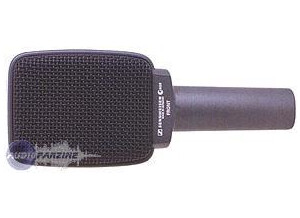
    This microphone was pretty much made for live use. I suppose you could use it to record but given all the options out there, it's really not that special for studio use. It does excel in the live environment however, as I think it was designed to. Despite the look of it, this mic has a very tight pickup pattern and it's a try dynamic to the bitter end. I think some people buy these thinking they are some kind of ribbon or even a condenser mic but they aren't. It really is just a dynamic mic. Think SM57ish in function. OVERALL OPINION I tour sometimes with smaller bands, and some of the stages I play are so small that I simply don't have room for a stand to use to mic my cab. This is bad since I typically like to use an SM57 or a large diaphram condenser to mic my cabs, which both require a stand. I used to mess with special compact SM57 stands but if they break on tour, you are stuck up river. I was recommended this mic since it is able to be hung from the mic cable over the back of the cab. Pretty genius actually when I think about it. But is the sound good? Well yes it is. It's like an Sm57 almost but with more bass response. It does require a bit off low end roll off at the board with certain speakers. No big deal. The main rig I use this with is a simple AD30 with an Orange 2x12 setup. It's pretty flat. Or flat for what it is. Usually these kind of mics have crazy peaks in certain spots. Not this one. It has held up well to road abuse. I actually have 2 in case one dies on me. But it hasn't in the two years I've used it. I've heard they break easy but I've dropped mine maybe 6 times and so far so good. A little disclaimer...it's not the best guitar mic in the world and I'm not saying that. But when you don't have a stand it's probably the best you're gonna get. I wouldn't use it in the studio because it doesn't have enough character or flavor for a track.

  • moosers's review

    The Sennheiser e609 is a great dynamic mic for recording guitar amps both in a studio and live setting, as I have used it in both. I put it right up against the speaker and it comes out great most of the time (of course depending on the amp, guitar, player, etc). OVERALL OPINION I've had this mic for about 3 or 4 years now and although I don't use it as much as I used to but it is still a great option for recording guitar amps and I love having it in my arensel. Compared to a Shure SM57, it has a pretty similar sound to me, and I do prefer the Sennheiser 421 on guitar amps over the e609. However, for the price this is a great mic to have around. Although they say it is also great on toms, I could never get the right sound with this over a tom tom and it was a bit hard to place on it. Overall I would definitely recommend this mic to someone who is interested in having a new option for guitar amps, but I would also recommend having a Shure SM57 and a Sennheiser 421 to compare it with.

  • « affordable for home »

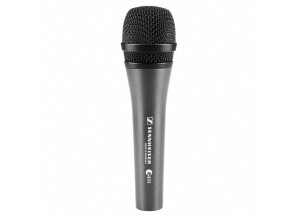
    The Sennheiser E825S mic is a very affordable dynamic microphone that will be perfect for your home recording conditions. It will sound great no matter (well almost) no matter what your home set up is. If your room that you are recording in at home is a decent size, and not too big unless you have a lot of treatment or furniture in your room , it will sound great. It will sound a lot better than a less than 100 dollar mic. Most 100 or less dollar mics sound exactly like that. They sound cheap and you will have to do a ton of Eqing when using most cheap mics. I hate using cheaper mics because I always have to end up boosting the high frequencies and cutting too much of the low end off. And once you start doing that you will start to hear a really muddiness to what you just recorded. It will only get worse and worse the more you have to do to the audio file that you just recording when you have to eq to much. OVERALL OPINION With the e825 you wont have to do to much eq at all. Just a little boost on the high end and I usually always cut out the really low end frequencies that you cant hear anyways just to make it sound cleaner and not have all the energy going to wasted space with frequencies that wont get picked up. The Sennheiser E825S is also very well built and light. You can travel with it and take it places without the fear of it getting broke, and even if it does get broke its not like you broke a 500 dollar mic. Its really cheap to replace which is always good because over time stuff will cause problems. I haven't been using this mic long enough yet to experience any problems and hopefully I wont for a long long time.

  • « price »

    This mic is a pre polarized mic that has a half cardioid pick up The mic is rather expensive to me and can cost over 300 dollars brand new and I don’t believe that it provide quality that is worth that amount of money. There are other mics in Sennheizers line of mics that are better and cheaper than this one. This mic is an ideal mic for like a open area, this is not a studio mic so don’t think you can purchase it to use in yoru studio. This is more for a speech situation or maybe to record some real piano’s in an open space it just doesn’t perform that well to me in a confind studio space. I have tried using it in a small studio and it recorded but when using it on a stage in a auditorium you will really be able to pull all of its capabilities out. But like I said the price isn’t high, but its too high for the quality of the mic. OVERALL OPINION It does have a good frequency response to pick up instruments and can be used on vocals as well for stage and shows. When purchasing it you will get a manual, which is easy to understand and you really wont need It because if you purchase this mic then you know what you are purchasing it for so no need to pick up thte manual. It will also come with a pouch to carry it in. the mic wasn’t as big as I thought it was going to be which is a good thing since I travel a lot and picking up piano’s was a breeze with it. The E 912 is a good mic in the end. I just feel like it should be a little cheaper than 300. It should be more in the range of 200 -230 and that would make me respect it a little more. But you wont be un happy if you get it. It does sound great.

  • « Sennheiser E865 »

    Sing. Got this used Sting Signature E865 over Ebay for about $140 as the principle mic to replace the wirelesses. Not knowing which was better, I also got a Shure beta 87A for about the same money. Both are top of their line condensers and I expected them to sound and work alike. But no! Even without comparing, the Shure was a toy, unpleasent to use. When comparing, the shure was trash: The Sennheiser E865 has execellent, uniform, and sensitive pickup that does not varies too much with the distance from mouth. I have amazed friends who told me they like this mic, totally on their own initiatives. The Shure Beta 87A sounds weak when farther and sounds harsh when close. It is very sensitive to distance that you must hold it very steadily. It has a slim handle that may not be comfortable to hold. One person prefer this one because of its high frequency emphasis. Nothing wrong about this one. Good metal construction. For professionals. This review was originally published on http://www.musicgearreview.com

  • « for clean vocals »

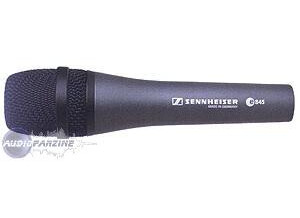
    The Sennheiser E 845 S is a very nice looking vocal mic intended for the stage. It is very stunning to look at as a throwback to the retro mics of the 50's and 60's. You would expect to see Elvis grabbing one of these and singing into it. Apart from the extraordinary appearance, it is actually not a bad mic for live purposes. I find that it sounds very similar to the Shure SM58, and I would not be surprised if it is actually the same cartridge inside. This is a dynamic mic and you don't need any phantom power for it. It will connect with a standard XLR cable. It doesn't have a low cut filter switch on it, but the frequency response definitely seems to drop off fairly quickly below 65 Hz or so, so one is not very badly needed. It is a cardioid pickup pattern, so you will get the rejection you need for this perform well on a stage. One handy feature that it has apart from turning heads is the on/off switch. I think those are very underrated for live vocal mics since they come in handy all the time. OVERALL OPINION I bought this mic many many years ago when I was doing more gigging. I thought the sound was definitely passable for a live club setting, and the fact that the mic really caught the eye was a nice bonus. The frequency response is tailored for vocals, with a presence peak for intelligibility and a low roll-off to reduce rumbling. You end up with a pretty full and even sounding vocal coming through this which your live engineer will appreciate. These will cost you around $150, which is not much more than the similar sounding SM58. I think it's worth it and a good value. I'd get it again.

  • « Great for voice work »

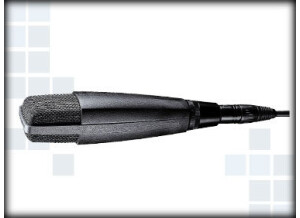
    Has a 5 knotch bass control. Very directional design. This is a classic mic known for rugged build and reliability as well as a high quality performance. I know these are typically used for drums in the studio but I use mine for voiceovers mostly. I run a weekly podcast with a couple of buddies and I have 4 of these on tap just for that purpose. It works pretty great for this application although not the end all be all of voice mics. I expect the MD421 would be even better as a live voice mic due to its lack of feedback or noise. I can never get it to feedback no matter what I do. They are very clear and have a nice response range. I've also used this mic for some oddball uses like recording congas and even wind instruments. I still remember the day I was asked to run sound for an outside festival and I used a couple of these to mic the percussionist of a band that was playing. At one point it started raining fairly hard and the band kept going. A lot of the mics on stage started to malfunction noticeably but the MD421's didn't seem to have any issues. They got pretty wet too. 3 years later I still have them and they aren't in any worse shape. OVERALL OPINION This is probably one of my favorite mics for really loud situations or situations where feedback is prone to happen. It won't feedback ever in my experience. The odd shape can be an issue if you don't have the proper clip at hand. And the clip it does use it very annoying. At the end of the day it's a great reliable mic for a number of odd uses. Just don't fall too in love with it. It doesn't work for everything. Still, well worth the price and I think everybody should get one or two at least. They will likely outlive you regardless of whether you take care of them.

  • Deleted member's review

    The Sennheiser E 945 is a microphone that sits at the top of this range of microphones. In a nutshell, this microphone probably is the best of them. Read on to find out why, everyone! The Sennheiser E 945 is a dynamic handheld microphone designed for use with live vocals. The wonderful thing about the E 945 is that it has a supercardioid pattern, which, to be fair, is not so terribly rare these days, but it is worth mentioning because I personally prefer using supercardioid microphones to cardioid microphones for their rejection characteristics. Also note that this means that the microphone is no good for group vocals at all, because of how narrow their pattern is. You may be thinking, "These types of microphones are not designed for that anyway!" and you may be correct, but it does not stop them from being used in these ways anyway. The SM57, for example, can work on group vocals quite well when needed. The Sennheiser has a nice frequency response of 40-18,000 Hz, which is typical in this line of microphones, and superior in this range compared to the other brands' competitors for the most part. The microphone is also advertised to give more gain before feedback, and when testing this, I can confirm this is actually quite true, so if this is an issue, this microphone is one to consider! OVERALL OPINION The Sennheiser E 945 is a wonderful microphone for the price. Sure, it may be more expensive than the industry standards, but there is a tangible reason for it. The industry standards are workhorses, but vocal microphones are specialist microphones, and thus, I have only tested it on vocals. I am not sure whether these will fill a workhorse role as well as the venerable Shure models, but it cannot hurt to give it a shot if you really need a vocal microphone anyway!

  • « Reliable Drum Mic »

    This is a Sennheiser E 604, which is generally used as a tom mic for drums. I have used it mostly in this capacity. It's a dynamic microphone and it's better suited to capture deep frequencies like drums. It could work on guitar amps theoretically, but the fact that it comes on a drum-mounting clip makes this a difficult mic to use in that way. I have used it on snare drums as well, which provides it with a different kind of sound that I enjoyed but is actually far less versatile than an SM57. This microphone works well in the studio as well as live, in fact, it might be a great choice for live as it has the clips that can attach to the drums themselves and don't rely on stands. OVERALL OPINION I think that these mics are great for the price, however, I don't think I'd use them if I had other options. Considering they are best used as tom mics, they don't really hold up to the Sennheiser 421s, which are a very respected tom mic. In addition to sounding better on toms, the 421 is more versatile and can be used to great effect on guitar amps, vocals, horns and others in a live capacity. It also sounds better on snares. Basically, get this until you can afford the 421, and then sell this. Unless you really need a microphone that clips to your drums.

  • moosers's review

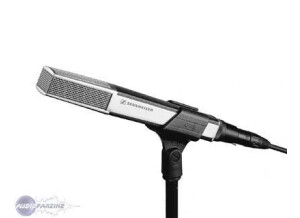
    The Sennheiser MD 441 is a dynamic microphone that I have experience with in the recording studio. It is in the same vein as the classic MD 421, although it doesn't share the same sound and the 441 seems to be a bit more versatile. I don't know if this would sound good for live shows, but I stray away from using it on the stage since it isn't very cheap and isn't exactly designed for this sort of use. The mic has a super cardioid polar pick up pattern, so it is great for aiming it directly at something without picking up too much sound around it. Like the MD 421, the MD 441 also has a five point bass roll off switch, with the letters "S" and "M" on each of the sides, standing for "music" or "speech." It also has a treble boost on it as well. While the mic feels pretty light, it is quite sturdily built. OVERALL OPINION I've only had the chance to use the Sennheiser MD 441 in a few different scenarios, but many engineers that I have talked to speak very highly about this microphone in terms of it's versatility. The applications that I have used it for are for both the top and the bottom of a snare drum. Mostly, I used it on the bottom with a Shure SM57 on the top, but also experimented with using the 441 on the top as well. I found that it worked quite well for both applications, but in the end I did like the sound of the SM57 on the top of the snare best and found that the MD 441 was best suited for the bottom. I haven't yet had a chance to try the MD 441 on other drums like tom toms, but would think it would be good for them as well, as is the case with the MD 421s. If you own or have access to a Sennheiser MD 441, I definitely recommend trying it on all sorts of applications to see what will work best for it, which is something I plan on doing as soon as I am able as I believe it will sound great for most applications. The MD 441 is definitley not as readily available as the MD 421, but you can find them around. They will however cost a good amount more. All in all the Sennheiser MD 441 is a very high quality dynamic microphone that should be treated as so.

  • FP User's review

    The mike came with a neat little pouch and its own head for a mike stand. £90.00 OVERALL OPINION This mike has a very high out-put, with hardly any noise even when pushed quite hard. The sound is clear and warm and would suit live vocals well. In recording it works well but seems to enhance sibilance due to a peak in frequency response at around 5khz. It works quite well on acoustic guitars, yet its frequency response only goes as high as 16khz. A harmonic exciter lifts it nicely and sounds fine. Just plug it in and away you go! The manual gives you a detailed map of the frequency response. This is really a hardcore giging mike, I reckon it would take a good knocking around without giving up the ghost. Its feel and look is very solid. Its streamlined look and bullet grey metal body oozes quality! I love this mike, its helped me record many a song and will help me record many a song in the future. Originally posted on FutureProducers.com Posted by: Unknown (January 0-, 2002)

  • victormelamade's review

    This mic is the old school version of the famous 421. The newer ones are actually called the 421 II, but you may not realize that because people usually just say 421. The U-5 version is german made, and people who have used both this version and the newer one will tell you pretty much every time that the older U-5 version sounds better. There is something very unique about the sound of this mic that made it so famous in the first place. The newer versions, while they are technically cleaner mics, definitely just kind of sound sterile in comparison. The U5's have a nice coloration and better response in the low-mids, which is probably why they became the standard for miking toms in the studio. These are no longer manufactured, but you can get one pretty easily on ebay these days because they used to be so popular. They are dynamic microphones with a cardioid pattern. The frequency response has definite bumps in the low-mids and in the presence area around 5k, which makes these mics so perfect for miking toms. The low-mids give them extra body and the presence boost will give the toms more snap, so they will really come at you in a mix. There is also an optional low cut filter with several slope settings which is a nice feature, in case you want to go for more pingy sounding drums. OVERALL OPINION I have been using these for a very long time. I still have my originals, I never wanted to give them up. The newer versions, while not bad mics themselves, are just not the same. If you are interested in picking up some 421's, go for the older U5 versions! You won't regret it, and then you'll know why people in the know stick with the originals. At around three hundred bucks a pop, these mics are a great value considering the rocking tom sounds you'll get. I love these things, I'll never get rid of them.