Log in
EN
FR

RODE Studio & Home Studio

85 products found

Categories
Filter
Sort by
RODE
Evaluation
  • Reviewed or not
  • Editor’s award
  • Reviewed by Audiofanzine
Availability
  • Available or not
  • Sold new or used
  • Sold new
  • Sold used
Must-have products
  • All products
  • Flagship products
  • Best rated products
  • Hot products
  • Popular products
Price
  • Freeware
  • Low-cost (< $65)
  • Mid-range ($65 - $150)
  • Premium (> $150)
€
Clear
Sort by
  • Popularity
  • User ratings
  • Price - low to high
  • Price - high to low
  • Used price, increasing
  • Used price, decreasing
  • Name (from A to Z)
  • Name (from Z to A)
  • Added on
Choose a category
Selected category: Studio & Home Studio
Sort results
  • Popularity
  • User ratings
  • Price - low to high
  • Price - high to low
  • Used price, increasing
  • Used price, decreasing
  • Name (from A to Z)
  • Name (from Z to A)
  • Added on
Filter results 85 results found
Brands
Evaluation
Availability
Must-have products
Price
  • Freeware
  • Low-cost (< $65)
  • Mid-range ($65 - $150)
  • Premium (> $150)
Show results

The best RODE Studio & Home Studio reviews

The reviews Audiofanzine members found the most helpful.
  • « All-purpose, good performing mic »

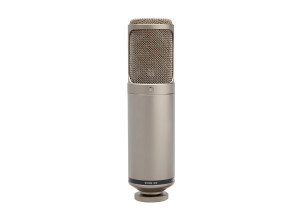
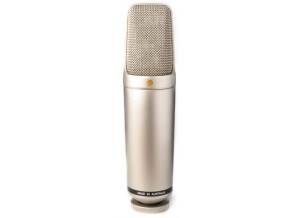
    Very versatile, due to the polar patterns available (omni, cardioid, figure 8) and low-pass, as well as pad: You can record percussion vocals, piano and everything else you want, with the only condition that you need to have some time to test the settings: 3 polar patterns x 3 filters x 3 pads = 27 possibilities. Large-diaphragm, condenser mic, which means it needs 42V phantom power. To make yourself an idea, you can make simulations at Rode's website: You need to send a recording made with another indexed mic and then listen what it would sound like with the NT-2A and these or those settings. Nice and interesting, but you should always take the results with a pinch of salt — it's their site. They also have pedagogical videos regarding the capturing of sound. I have no shock mount, only a standard screw-on clip but the low-pass filters out lots of annoying rumble from the ground. It's practical and improves the recording, while also reducing the need for digital processing afterwards, like using a digital filter after digitization. OVERALL OPINION I have it since 2006 and I didn't test anything before: There was simply nothing comparable at this price point back then, I think. And I still think the same today. I use it with an MC200 Behringer preamp, and it sounds pretty good (even if I think the tube must be changed), or with a Toneport UX2 when it is in the mood for working, or even with my small Alesis USB mixer. It comes out clean and clear out of all of them, without any shrill, but you obviously need high-end hardware to get the best out of it. The pros: It is not only versatile, it is good and not expensive. It's even a bit too good: You can clearly hear the noises from the computer and even the fridge in the room next door. I'll have to isolate better my studio. The cons: I got mad when I saw that it is now sold with a shock mount for the same price. And you must also be careful with mic stands that are too light, since the mic has a considerable weight. I don't know if it's fragile, I have always taken good care of it. In hindsight, I'd buy it with the whole kit rather than having to settle for the mic clip.

  • « nice »

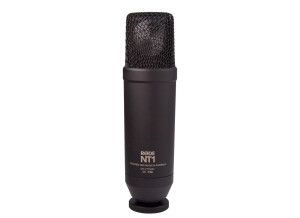
    I have used he NT1 microphone many times in the last year or 2. Generally the NT1 microphone was made to be an affordable mic. But then it turned into being a top quality mic overnight. I think Rhode was actually surprised by the success of it and its popularity. This mic brand new doesn’t cost that much at all compaired to some mics on the market. For all the mics in the 100 to 300 dollar range the NT1 could be your best bet. This mic is still being sold and hasn’t been replace yet to the best of my knowledge. It actually replaced the older model (cant remember what the name was). But every since this mic came out a lot of people have been using it in major and small studios. OVERALL OPINION Overall, the mic is very affordable and it’s a must have for you. I feel that if you are recording at home and need a top notch mic for a good price (and who doesn’t need that) then this is the one you will need to get. You can also try it and if you don’t like it you can take it back. But I am almost sure you will love it and not return it. You can even find some of these used online for half of what they cost brand new. I recently saw one on guitar centers website under the used section and thought about getting it for a back up mic to have around but didn’t get it. The one that I have has been holding up great and I don’t think it will every go out on me (knock on wood). it’s a great value for the price and im happy having it. I didn’t try the other model before this one came out but I just cant remember the name of it. They don’t make it anymore though.

  • « My go to mic for almost everything!!! »

    The Rode NT1-A is a cardioid-pattern, large-diaphragm condenser mic. It is probably the quietest mic you can buy for a measly 350 dollars. It boast an impressive signal input noise of just 5 DB, better than many professional quality condenser mics. For those who don't know what that means, it's super quiet. I love this mic, it is my baby. I use it for almost all of my vocals, acoustic guitars, most strings, drum overheads, and even a small chorus. It is not really useful in live sound situations, given the fact that condensers are fragile, and don't hold up as well to being blown into or screamed at. The sound quality is pristine, though the microphone is lacking both a pad and a roll-off switch, however it sounds fine with out. Don't use this if you play death metal or are going to mic a singer who sings REALLY loud as just blowing into most condenser mics is enough to pop the Diaphragm and break them. The output is pretty loud, and it runs on phantom power. This mic is an AWESOME deal, and worth every cent. OVERALL OPINION My favorite thing about the NT1-A is how incredibly quiet it is. It's amazing and captures sounds with pristine quality. The diaphragm is really high quality, and all the circuitry is professional. As far as condenser mics go, this one is pretty durable, and useful in lots of different situations. Lacking a roll-off and pad is kind of annoying sometimes, especially when recording say electric guitars. Some male vocals will need some careful eq'ing due to a sharper high end on them, but overall this mic is great! I use this mic all the time, and I've recorded so many songs with it. I have no regrets about buying this mic, and it is a GREAT first condenser mic. Love the design to, very attractive piece of gear.

  • « excellent mic »

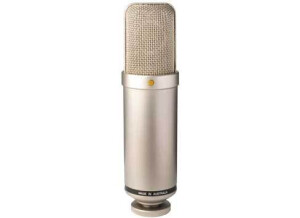
    Excellent Mic. I bought this based upon a friends recommendation to record some scratch tracks for upcoming demos. After working with it, I found it to be very smooth and clean. I now use it for most recordings and highly recommend it to my recording customers. Once they hear the sound (I do use a tube preamp) they are blown away. This mic sounds more like the $2000 - $2500 price range of microphones. You should buy this. I did .... and bought a second! It will be in my mic locker for years to come. OVERALL OPINION The Rode NT5 is priced well and affordable for a good mic.. This cost me less than half of the amount of the expensive equipment that I had and I have better recordings out of the Rode NT 5 and TC Electronics Desktop Konnekt 6. I can say this because I have Auralex studio foam set up in a closet and I did have the SE Electronics Reflexion Filter when I was using the Neumann TLM 102 and M Audio Profire 610. I have a small closet filled with Auralex studiofoam, with an NT 5, and my Desktop Konnket 6, and I' am more than happy with them! This will save the time and money for the people who are new to home recording and make the people who have wasted money on other equipment more than happy. I suggest taking a intro to audio class for learning how to mix if you are new. It will help you understand the concepts, tools, how & why specific tools are used for mixing and mastering. After that you can learn on your own. It's all about practice. The Rode NT 5 is just one of the models that Rode makes and all of them are pretty good. But the Rode NT 5 will give you the best quality for the price!

  • moosers's review

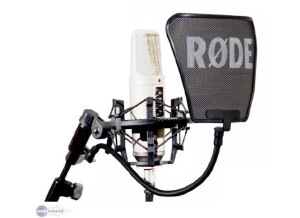
    The Rode Pop Shield is a uniquely designed pop filter. I'm assuming that if you're checking out this review you know what a pop filter does, but in case you don't, the purpose of it is to filter out any sibilance and harsh sounding words or phrases in the human voice. It will also protect the microphone from any spit or extraneous factors. This is something that is designed for use in the recording studio, and I'm not sure it would have any other purpose at all. OVERALL OPINION While definitely the most unique pop filter I've seen out there in terms of design and make up, I'm not sure that the Rode Pop Shield is any better than your traditionally designed pop filter. While it certainly covers more ground as it is simply larger, I never felt that other pop filters didn't cover up the microphone well enough or anything like that. The Rode Pop Shield definitely does have a sturdy built and make up to it, as it is easy to attach to any stand and stays on there sturdily, which can sometimes be an issue for pop filters. While this does claim to be specially acoustically treated, I can't say that I've noticed a real difference between this and a traditional pop filter. For me the Rode Pop Shield would be all well and good and might even be my filter of choice if it wasn't for the price. It is more than double the price of most pop filters out there, which definitely isn't worth it in my opinion. Perhaps if this was a bit cheaper, I would be recommending it. However, the pop filters made by Shure and other brands have gotten the job done for me in the past without being this expensive, so I think I will stick with them...

  • joshsound's review

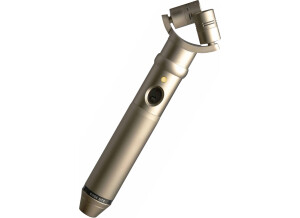
    This is a pretty unique combo mic. It is actually like two mic capsules in one. There are two small diaphragm condenser capsules housed at the end of a single mic body, and they are configured in a permanent 45 degree XY setup. This is obviously a huge convenience if you want to have a good pair of condensers for stereo miking. The capsules are assuredly matched to one another in terms of specifications, so you know you're going to get a consistent stereo field. The output on the mic is necessarily stereo, so you may wonder what kind of a weird cord you'd have to have in order to connect this. Rode does provide you with said weird cord, which basically just connects to the mic's output on one end and on the other end are two separate standard XLR connectors, so you will just need two separate XLR inputs on your preamp or converter. The mic does need normal phantom power to operate, but it also can be powered internally by battery which is nice. Rode also provides you with a nice case as well as a wind shield which comes in handy if you're miking outside. The overall sound on these mics is quite nice, coming across as fairly even sounding across the spectrum. The sweet spot for this mic seems to be about 3 feet in front of it depending on the source. OVERALL OPINION I bought one of these when they came out, thinking I could keep one set up permanently in my studio for when I needed a quick stereo mic job. These aren't the purest sounding mics in the world, but they are clear enough and at less than $600 for the &quot;stereo pair&quot; it's a great value. I do recommend this mic for anyone who really likes XY stereo miking, likes the sound of Rode's condensers and doesn't want to deal with the hassle of aligning capsules manually. Nice product!

  • joshsound's review

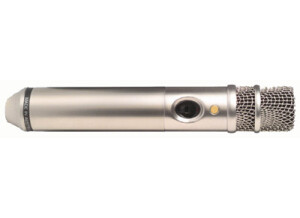
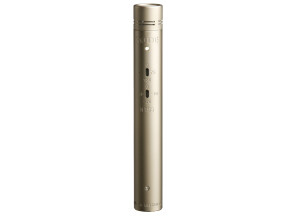
    The NT-3 is Rode's &quot;budget&quot; small diaphragm condenser mic. This is definitely one of the nicer mics in this price range. The mic capsule is actually a little bigger than most other small diaphragm condensers, so you'll notice that you tend to get a little more body on your sources than with most other pencil mics, which can tend to sound a little shrill when you compare the recording to how the source sounds to your ears live. One really neat thing about this mic is that it is self-powered. If you are in a situation where you don't have access to phantom power, you won't be out of luck, since this mic can be battery powered as well. The pickup pattern is a standard cardioid, and it is not switchable. You don't get a pad or bass roll-off with this mic, so make sure that you're set up correctly when using it. The sound on this mic is pretty good, although I do sometimes notice a hyping of the mids at around 1k. You don't usually hear that in condenser mics, but I'm certain it's there. Other than that one spot around the mids, the sound of this mic is very balanced and clear. You may just want to dip an EQ cut in that one spot if it pokes out at you. OVERALL OPINION I have an NT3, and though I don't often use it due to owning a large number of other small diaphragm mics, this mic definitely has its place in my studio. I really love this mic on hand percussion. For some reason, it really adds something to tambourines, shakers, and other percussion instruments. It seems like a barely have to EQ them to get them to sit right when I use this mic on them. Overall this is a nice small diaphragm condenser, and a fair value. I would recommend it, but no need to go running to the store immediately for this mic.