Log in
EN
FR

AKG Studio & Home Studio

310 products found

Categories
Series
Filter
Sort by
AKG
Evaluation
  • Reviewed or not
  • Editor’s award
  • Reviewed by Audiofanzine
Availability
  • Available or not
  • Sold new or used
  • Sold new
  • Sold used
Must-have products
  • All products
  • Flagship products
  • Best rated products
  • Hot products
  • Popular products
Price
  • Freeware
  • Low-cost (< $150)
  • Mid-range ($150 - $350)
  • Premium (> $350)
€
Clear
Sort by
  • Popularity
  • User ratings
  • Price - low to high
  • Price - high to low
  • Used price, increasing
  • Used price, decreasing
  • Name (from A to Z)
  • Name (from Z to A)
  • Added on
Choose a category
Selected category: Studio & Home Studio
Sort results
  • Popularity
  • User ratings
  • Price - low to high
  • Price - high to low
  • Used price, increasing
  • Used price, decreasing
  • Name (from A to Z)
  • Name (from Z to A)
  • Added on
Filter results 310 results found
Brands
Evaluation
Availability
Must-have products
Price
  • Freeware
  • Low-cost (< $150)
  • Mid-range ($150 - $350)
  • Premium (> $350)
Show results

The best AKG Studio & Home Studio reviews

The reviews Audiofanzine members found the most helpful.
  • Deleted member's review

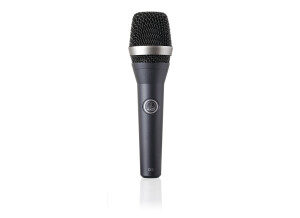
    TThe AKG Acoustics D 5 is a microphone that is designed for hand held vocal use in a live setting. It is AKG’s current entry in the world of these types of microphones. It is a dynamic microphone, as one would expect in this price range and model or line, but the real kicker and appeal of this microphone is its engineering specifically in mind of keeping bleed to a minimum and the reduction of the handling noise and feedback on stage, eliminating many logistical errors from the setup of a show. This is accomplished by the polar pattern. AKG chose to make the D5 a supercardioid microphone, which means that the pickup pattern is far tighter than the typical cardioid pattern that one might expect. This also allows increased gain before feedback. What is particularly special about this microphone is its patented Varimotion diaphragm, which means that the microphone’s diaphragm varies in thickness. This is not a new trait, but the patent is for the manufacturing process that makes these advanced technologies available at a lower cost than would be otherwise. The D 5 has a frequency response from 70 to 20,000 Hz, and it is capable of handling sound pressure levels of up to 147 dB. What makes this microphone very appealing sonically is the gentle low mid presence boost and a bit of air on top, helping it cut in a live situation. OVERALL OPINION The AKG D 5 ended up sounding quite different from the venerable Shure SM58, and its tone was a bit less crunchy, despite its air. It does not endeavor to smooth anything out, though, which makes the D 5 a bit more suited to certain smaller venues than the SM58 and softer music as well. The SM58 cuts more than this microphone, but often, I find it too aggressive, and that is where the D 5 shines.

  • « Depends on what you want, the story of a mic. »

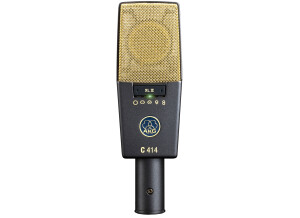
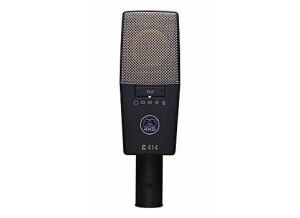
    Is a multi functional LDC with some nice applications. The low end is very confused and that makes the typical sound of the C414. For some Studio vocals, Brass and OH This microphone does a great Job. In a live situation you can hang it on the Guitar Cabinet, no stand needed ;-) OVERALL OPINION For some vocals, Brass and OH This microphone does a great Job. Also on Pop-piano and Guitar cabinet this is an interesting Microphone. The low end is too confused to use it for classical Music Double Bass or Piano but for Brass it is ok. Not my prefered Microphone but if well used he is usefull for the above mentioned applications.

  • Deleted member's review

    The AKG Acoustics D 7 is AKG’s current high end entry into the world of hand held vocal microphones. This particular microphone shares many of the same qualities with its more ubiquitous friend the D 5, however, there are certain key differences that must be noted, that account for the almost doubling of the price. The AKG D 7 is a dynamic microphone designed for hand held vocal use, and it was designed with an incredible focus on well balanced sound. The first thing to note about the D 7 is its Laminated Varimotion diaphragm, which means that the diaphragm of the D 7 has a thickness that varies across it. It is not a new idea, but AKG has implemented it at such a low cost that it is worth mentioning. This is apparently meant to enhance clarity. The D 7 has a supercardioid pickup pattern, which allows it to reject other things and reduce bleed. This was a very deliberate choice by AKG to not use a cardioid pattern microphone. At any rate, this, along with its built in high pass filter which rolls off the low end underneath about 80 Hz, allows the AKG D 7 to be an idea vocal microphone with a built in cleanliness to it. The AKG D 7 has a frequency response that begins at 70 Hz and continues up to 20,000 Hz, although starting around 15,000 Hz, there is a very aggressive roll off. There are a couple of peaks, notably in the low end and in the early mids, and a bit of a shelf boost around 5,000 Hz with a bit of a dip. OVERALL OPINION The AKG D 7 is a fantastic microphone, I have found, and it did produce a rather clear, neutral sound. It is nothing spectacular or revolutionary, but the microphone is certainly a fantastically viable choice for many singers who want to confidently assert themselves with style.

  • moosers's review

    The AKG D25 is an interesting dynamic microphone that is designed for use in the recording studio. Since I have only used this mic in the studio I can't speak to how well it would work in the live setting, but I really wouldn't recommend bringing it out of the studio because it is a vintage mic and isn't cheap. It comes with a swivel mount that is unlike most shock mounts, and also has a standard XLR connection on it. OVERALL OPINION I've been using the AKG D25 for about four years and it is one of my favorite microphones to record kick drum with when I have access to it. It not only has a great sound to it, but can really take a lot of loud noise, which is what makes it so great for kick drum. In addition to recording kick drum, I've also used the AKG D25 with success on electric guitar, bass guitar cabinets, and floor toms. This being said it is a great all around dynamic microphone and is a fine candidate for recording just about anything that calls for a dynamic mic. If you can find one used, the AKG D25 isn't too cheap of a mic because they have become somewhat rare and highly sought after. I have only really seen these used in professional studios, and that is really where they should stay, as they aren't really suitable for home studio owners because of the high price and delicate nature because of its age. However, if you can find one at a decent price these mics make a great addition to any mic collection and are truly great sounding dynamic mics. All in all, the AKG D25 is one of the best mics out there for recording kick drum and even though these will die out as the years go out, it is the predecessor to the AKG D 112 and will always hold its place in recording history.

  • moosers's review

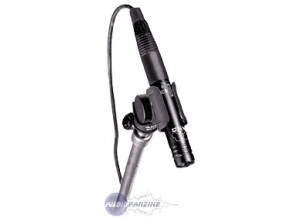
    The AKG 451 E is a small diaphragm condenser microphone. It has a cardioid polar pattern pick up and also contains a switchable high pass filter. I have only used this microphone in the studio and this is probably where it is best suited. It can be used in a live setting, but is pretty expensive of a microphone to be bringing out and risking damage during live performances. This being said, it can be used in either setting. OVERALL OPINION I have been using the AKG 451 E condenser microphone for about a year and I have found it useful in a number of different situations. Some of the applications I have used the 451 E for include for acoustic guitars, drum overheads, hi hats, and other acoustic stringed instruments. When placed up on the strings of an acoustic guitar or mandolin, it does a great job of picking up the high end frequencies and also does an awesome job of blocking out noise outside of what you are recording. The signal comes in clean when I record with this mic, and it is great to have a mic around that has this much versatility. The AKG 451 E is overall a great sounding microphone that is set at quite a reasonable price. Even though I can think of some other mics I would rather record with, this is a worthy microphone. It has a nice look and great tone and is perfect for recording acoustic guitar and other instruments with similar tone qualities. The high pass filter also comes in handy when recording acoustic guitar, as you can cut everything below 75 Hz and below that there isn't any of the acoustic guitars frequencies. Overall, the AKG 451 E is an above average mic that is definitely worth a look in terms of small diaphragm microphones go.

  • phraseland's review

    This is a small diaphragm condenser microphone with built in power supply (9V battery). It has a sturdy aluminum casing with an on/off switch and can also be fed via phantom power. This microphone has been used in many situations - be it as overheads for live and studio situations, to record acoustic instruments or to capture jam sessions. The price tag makes it very attractive - on the other hand after a few years you will start to realize what you have been missing. I really have a kind of love/hate relationship with this microphone. Sometimes it seems that it just can't handle any kind of transients and then I hang it up in my band room to record a jam session and afterwards sit in awe at the sound it was able to capture. OVERALL OPINION The C1000 can probably be found in almost any practice room around the world. They are cheap and deliver a good signal-to-noise ratio. I can't really say that it sounds bad but to me it really never has sounded very good either. It can however withstand quite a lot of gain and recording in loud environments is where it shines most to me. I often treat it almost like a dynamic microphone and get the best results. If you compare it to Rode mics (NT-5 for example) then I would probably prefer Rode - but that's just taste. The quality is definately very good for the price. As I said - it's love/hate. Just when I am about to go ahead and sell them on ebay someone plays something he recorded with the C1000 that makes me reconsider. In the studio the C1000 is best suited for HiHat and maybe Ride (maybe) and less suited for general Overheads. As always trust your ears with these microphones. If they don't sound right then there is a reason for that. :-)

  • FP User's review

    The only available options are -20dB switch on the mic itself and Low filter (40Hz) on the power supply box. Comes with the robust case, good quality shock-mount absorber and usable foam as a poper stoper (yelloooow!), I don't use it, though. Use regular stand mounted net, works better. It has cardoid pattern, but I didn't need anything else so far. It has all you may need for vocal/acoustics mic. Price paid: $500 USD used OVERALL OPINION Just great! It has that warmth of tube mic, yet very clear and balanced tone. If you don't want to spend hours on producing the vocals this is the right mic. With a good preamp (I use dbx 376 tube channel strip) all you need is a somenone who can sing. Yes it colours the sound significantly but in a great way. I just love the it. It's also great for the acoustic instruments and percussions. Even the crapy ones sound better recorded then live. Due to the small number ov available options it's very easy to use. No doubts about positioning either. Stand in front of it and sing/play. That's it. Hey it's AKG. Top quality. Tube is still being produced so no fears for spare parts. It's for the studio use only, of course. You've got to love it! I do! Originally posted on FutureProducers.com Posted by: Unknown ( 4-, 2003)

  • « Classic Microphone that has been since the 90's »

    I used the AKG C 451 back in 2005 in to 2006. This microphone is no longer being made, it actually got discontinued not long after it was circulated. This microphone came out long before I had my hands on it though. The C 451 is some what affordable depending on what your budget is, but this could be one of the best all around microphones that was out. You could use the C 451 on almost any instrument in live or in a recording setting and get a very natural sound. I was very upset that it was discontinued, because I purchased mine used in 2006 and in early 2006 it got damaged and was never the same again. Or maybe it was damaged to a certain extent before I purchased it, because I only dropped it a few times while moving gear around and it made this horrible hissing noise and it would “pop” (like it had a short or something). I tried to see if it could get fixed but had no luck and AKG wasn’t much help with trying to fix it. I even purchase another AKG microphone back in 2006 thinking that it would be similar to this one because it had similar specs, but it was not as good. OVERALL OPINION The best thing about the AKG C 451 is that the sound is very good, and its very good no matter what instrument you are using or what your pitch range is as a vocalist. This microphone was very versatile and the tone was second to none. I have not really liked many other AKG microphones that have came out over the last 10 years, I wish they would remake this microphone. I have used the C451 and the C451E, that was back in the 90’s, they are both very similar. That was the reason that I went back and found this microphone in 2005.

  • « Great Bass Amp Mic »

    Microphone Type: Dynamic Polar Pattern: Cardioid Frequency Response: 20kHz-17kHz Impedance: 210 ohms Max. SPL: 160dB Includes mic clip OVERALL OPINION A lot of people really love this mic on the kick drum, but against my Beta 52, I don't have as much love for it. The mic can sound great, but it needs quite a bit of EQing to get it to sound the way I usually like, and it's much more picky about its placement. Though it has a higher frequency range than the Shure, the natural EQ of the mic doesn't tend to sit as well in a mix for me, and I often have to dial in a little more mid-range to get the "click" to sound more full and less puny. On a bass cab, however, I absolutely LOVE this mic. Not sure what it is about this thing, but it just sounds fantastic on bass amps. It's not often that I'm micing bass amps, but when I do, the D112 is always the mic I try first; on very rare occasion do I ever even try a different mic. The D112 just works on bass.

  • moosers's review

    The AKG C12A is a unique condenser microphone that uses the capsule from a regular AKG C 12 microphone, but hooks up to a nuvistor impedance converter. A nuvistor is a kind of vacuum tube. The microphone portion of the C12A actually looks more like an AKG 414 than it does a C12, but sounds better. The mic is only for use in the recording studio as they're older and definitely a bit more fragile than your average microphone. I don't know all the details about how the C12A works as I've only had the chance to use it on one occasion. OVERALL OPINION The AKG C12A is definitely one of the most unique mics I've used in a while. It has the sound of a C12, which as you probably know is one of the best microphones ever made. It's not a dead match for the original C12 though, although I haven't had an opportunity to try them out side by side. I've used the C12A for recording some acoustic guitar parts in a large studio and it sounded incredible. Super clear and rich sounding. I think it's probably going to work well for most applications, at least when it comes to acoustic instruments, but to date this is the only thing I've used it for. The C12A is not nearly as ubiquitous as the C12 has been, and I can see why as it's kind of a strange microphone to set up and what not. It will still probably cost you a good chunk of change as it's still a type of C12 and sounds amazing. Plus since it's pretty rare that probably drives the price up a little bit, although I honestly do not know what these normally go for on the open used market. If you want a C12, I'd probably recommend going with a traditional one however unless you find one of these on the cheap.

  • « Good condenser for the price »

    This is AKG's budget condenser. It comes with a shock mount, a low cut switch, and a DB decrease switch. AKG recommends it be used for vocals, guitars, and an in general instrument microphone. It's supposed to be quite versatile for studio and even live use. OVERALL OPINION I've owned this mic for years. It was one of my first condensers and I choose it for the value. I have used it in many situations so I will comment on each use individually. Vocals - The 200 is a very honest mic. If you are not a good singer, it will butcher your vocals. The 200 is almost accurate to a fault. Every little breath and tick comes through over the recording. I found it does better with vocals in a full mix than a 1 or 2 instrument recording. It seems to like female vocals better for some reason. If you want a transparent vocal mic that you can go back and edit to taste in your recording environment, this is a good mic. It doesn't have any "magic vocal sauce" though. At this price you aren't getting anything amazing. Acoustic guitar - It's okay. Not great. You are better off with an SM81 or something of that style. If you are really gifted at mixing, it's doable, but I could never get a good strum sound with this mic. Bass drum - Amazing. Put it in the sound hole, turn the DB cut on, and listen. Awesome kick sound. I've used it live too and it works great. In fact I swear by it for kick. My drummer wears in ear monitors to hear his kit and he loves how his kick sounds with this. Won't use anything else. Piano - If the piano is good, then I give it an A. With some pianos it's a dud. Just depends. There are better mics for this application but in a quick and dirty live environment it will do the job. I've abused this mic over the years and it keep on kicking. I think I would buy another if only for the kick drum use. I'm not a big fan of it on anything else. For certain voices it's great. Not so much on mine. For guitar and piano it's just so so.

  • « Cheap Condenser! »

    This is a really, really low-priced condenser microphone. It's technically a small diaphragm condenser, even though it looks kind of big and is shaped like a large-diaphragm condenser. I wouldn't really consider it ideal for live situations, but it is kind of cheap, so you could try it on certain things. I'd say for the most part, though, it's more of a home-studio mic. It uses phantom power so make sure your pre-amp supplies it, or you have a backup phantom power supply. OVERALL OPINION I was surprised at how good this microphone was for the price. For an entry-level engineer, it's not bad at all. As far as which instruments I'd use it on, I've experimented with it a bit, and I've found that mostly, it's got a great midrange response. It's high end leaves a little bit to be desired, which is a shame as it's a small-diaphragm, and they tend to have good high-end response. I think it's best used on warm, mid-rangey sounds. Certain acoustics and electric guitars sound great. Pianos leave a lot to be desired, unless you are going for a muffled, dull sound. I don't like using it as a drum overhead, which is kind of what I had expected to use it as (being that it's a small diaphragm condenser). It also doesn't sound too great on vocals. It's not that noisy for a cheap mic, and it definitely has some good uses. If you wanna learn the ropes of recording, and experiment with a lot of stuff, this is a good tool to do it with. That being said, I'd never use it in a professional studio, assuming I had better options.