Log in
EN
FR

Behringer Studio & Home Studio

303 products found

Categories
Series
Filter
Sort by
Behringer
Evaluation
  • Reviewed or not
  • Editor’s award
  • Reviewed by Audiofanzine
Availability
  • Available or not
  • Sold new or used
  • Sold new
  • Sold used
Must-have products
  • All products
  • Flagship products
  • Best rated products
  • Hot products
  • Popular products
Price
  • Freeware
  • Low-cost (< $250)
  • Mid-range ($250 - $900)
  • Premium (> $900)
€
Clear
Sort by
  • Popularity
  • User ratings
  • Price - low to high
  • Price - high to low
  • Used price, increasing
  • Used price, decreasing
  • Name (from A to Z)
  • Name (from Z to A)
  • Added on
Sort results
  • Popularity
  • User ratings
  • Price - low to high
  • Price - high to low
  • Used price, increasing
  • Used price, decreasing
  • Name (from A to Z)
  • Name (from Z to A)
  • Added on
Filter results 303 results found
Brands
Evaluation
Availability
Must-have products
Price
  • Freeware
  • Low-cost (< $250)
  • Mid-range ($250 - $900)
  • Premium (> $900)
Show results

The best Behringer Studio & Home Studio reviews

The reviews Audiofanzine members found the most helpful.
  • « Killer console »

    Nice tool, conceived for professionals. I have only good things to say about it. Except that I found yesterday someone who had the S16 and a X32 compact... And I noticed that my problem wasn't isolated: Male XLR connectors can get stuck in the console! It's shocking: I had never had that with any other console. The solution? I got a metal saw blade and, since it's a bit curved, I was able to saw off the male XLR until the input was free. Then think about leaving a mini connector so that nothing ever gets stuck again, and don't forget to cut the peg. And that's it. I don't even want to imagine if Behringer has to recall its 40000 consoles for such a stupid problem. UTILIZATION Great design and usability. No manual, but there's really no need for one. To access the functions, simply press view. SOUNDS Everything's great, converters, dynamics, filters, effects, soundcard, all good. OVERALL OPINION I've used it live for 6 months. It's excellent and has everything to become a standard.

  • phenix!'s review

    4-band dual parametric EQ with tube output circuit For the rest, everything is well described in the previous review. I bought it secondhand for $100 on this site. It maybe lacks adjustable low-cut and a high-cut filters besides the 4 bands, but each of the 2 extreme bands, highs and lows, can have this role. You lose an EQ band that way, but it's not that bad. UTILIZATION I got it two weeks ago. Right now I use it at home,with my Triton Rack synth and as insert on my Mindprint TRIO USB console/audio interface for vocals and bass. I plan to use it live as an insert on the mixer, but also in the effects loop of a bass or guitar amp. Currently I have only tested it with a jack. Generally speaking, a parametric EQ is more precise and effective than a 31-band graphic EQ to correct specific sources, although for FOH or monitors it's a different story. SOUND QUALITY It's not a tube EQ, the tube only acts on the output to warm up the sound and add some brilliance. And all to a given extent only. You really have to see it as two different things: - A 4-band parametric EQ - A "sound warmer." The second function is accessory and if you don't want to use it, you simply have to set the knob to 0 ("cold" mode). The overall signal-to-noise ratio is good. There's some background noise —from the tube circuit I guess—, but nothing annoying, much less than a Presonus Tubepre. Anyway, increasing the frequencies a lot doesn't add much noise, so in that sense the signal-to-noise ratio is very good. That's a change from certain mixer EQs that when you increase from 6 to 9 dB you inevitably end up with a good dose of noise, so with 12 or 15 dB it's not worth it at all...(even if it's not common to go to such extremes, true, but this Behringer performs well all the same). The EQ is precise and effective if you fiddle with it a bit, you can get the sound you want pretty fast. Regarding the output tube, even if it's an accessory function in my head...and that I didn't expect to have an exciter and an EQ, I admit that it wasn't very excited about it. It provides some brilliance to the sound, not too exaggerated (but not uninteresting either), and not too much warmth or roundness. That was with the original tubes, which are Behringer 12ax7a, "Premium selection" supposedly (and no Sovteks 12ax7 LPS as some people say. Or at least not on my model). I replaced one of the two tubes with an Electro Harmonix 12ax7 and you can tell the change... The tube always provides brilliance, it's more "musical" than the Behringer, but it also adds roundness to the sound, especially in the low end, which really gives an impression of warmth, which, adequately used, is one of the best effects on my bass (the sound is rounder and more brilliant), vocals, tested with a Shure Beta87a (it also provides them with a nice color and brilliance) and my Triton (the sounds have more punch, they sound less "sterile" or flat), they all have more personality. It's not a "torrid" warmth, but it turns more interesting and musical with the 12ax7EH. Cranking the Warmth pot all the way up doesn't add much (or any) noise. Try the same with the Drive knob of a tube Presonus... It's that something that can give personality or color to the signal that goes through it, without altering the sound if used wisely. It actually adds roundness and definition to the sound. OVERALL OPINION I bought this unit with the hope of having a more precise and musical 4-band EQ than those I usually find on mixing consoles here and there (from Phonic, Yamaha MG to Mackie and Soundcraft), and thus process some signals more effectively. I also use it in my home studio to EQ or correct certain sources, but also to add more coloration and warmth when needed. Therefore, I'm really satisfied with my purchase. At the same time, at this price point (mid-range products), it has no competitors, besides maybe Presonus, but their 3-band EQ is mono. With the Behringer you can process two mono signals or one stereo. In short, I agree with the previous review regarding the quality of this EQ (keeping in mind it's a mid-range product), it is much better than certain mixer EQs and plug-ins It does a superb job at processing sources with precision. For those of us who can't afford to work with Midas mixers or TL audio, Avalon or SPL Qure EQs that cost $1000 minimum... You can try it, but anyway, there's no real choice!

  • XLRcable's review

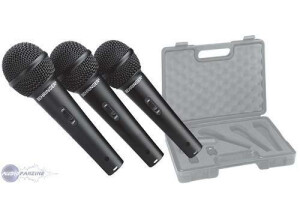
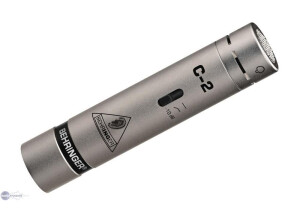
    Dynamic mics to record instruments in the studio. I recommend to use them as a pair on acoustic instruments (I use them on piano). These are condenser mics. They require 48V phantom power. OVERALL OPINION I've been using them for one year and I'm quite satisfied with them. They are an excellent value for money (it's hard to find a single studio mic for the price of two C2s). Their frequency response is interesting, although not perfect. Very weak highs. These mics need some EQing. If possible, you should use them with a compressor, otherwise they sound too metallic. Avoid using them onstage: They are not completely isolated (shielded) and produce a lot of feedback, which is very hard to get rid of.

  • « Behringer C-1, Take a closer listen.... »

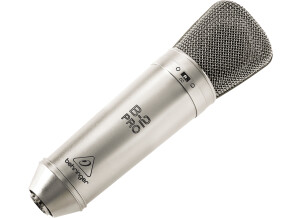
    A lot of people slam Behringer gear. Most of these people don't know or comprehend the design and engineering that goes into pro audio gear. That said, the Behringer C-1 is exceptionally well designed. What happens to that design in a Chinese factory is another matter. Obviously, there are quality controls at Behringer's manufacturing facility, but occasionally you will get a lemon. Send it back. There are some really good C-1's out there. I own 3. I have Neumann's, I have Rodes, Audio Technica, and others. The C-1 is a personal favorite. I say that in part because I can use is for live performances with vocals and it sounds rich and full. Now granted, much of this is subjective and depends upon individual preferences. But I will say that I get many more compliments for vocal sound with the C-1 vs. use of my much more expensive Neumann KMS 105. This has proven to be the case time and again. The only downside I have found to the C-1 is the plastic mount. You can break it if you aren't careful and they don't sell replacements. Wish they would make it with a metal mount. Then all would be right with the world. Thanks for reading and all the best in finding your perfect sound.

  • « Clear, decent sound »

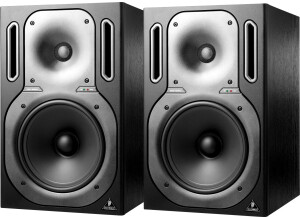
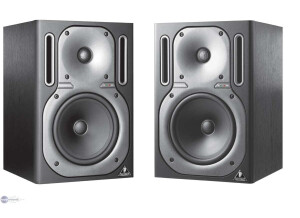
    Behringer Truth B1030A are powered monitor speakers with a 1 inch dome tweeter and a 5.25 Kevlar woofer. They are equipped with a balanced XLR port, 1/4 inch TRS as well as unbalanced TS and RCA connections. They have switches for adjusting the high and low frequency output of the monitors; handy for optimizing their performance based on the room you're using them in. The low frequency woofer has 50 watts of power while the high frequency has 25 watts. They are pretty solid and not too heavy at 5KG each. They're well built, with the yellow cone which looks like was copied from the KRK Rokit series. They feel good and are ideal for home studio use. I use mine in my home studio and they were actually the first pair of monitor speakers I purchased. SOUNDS Several people tried to convince me to stay away from Behringer products due to supposed issues with quality. I still went ahead and bought the Truth speakers anyway and I have to say it was not a bad decision at all because the sound on these is clear and uncoloured for the most part, which is how a good monitor should sound. I use them with my Komplete 6 and Mbox 3 Mini audio interfaces, though it's possible for you to connect them straight to your computer using the RCA connectors (a rare thing in many monitors). My main use for them is mixing hip hop, reggae and dance music though I occasionally use them for casual music playback. The bass on these is not very pronounced which may be a concern to anyone who mixes bass heavy music and uses a lot of 808s. The rest of the frequency spectrum is represented well. One other thing I noticed when I playback mixes through these speakers is that they sound lower; they are not as loud as my other 2 sets. But this isn't a major concern because I don't usually mix at very loud volumes. The RCA connection is very convenient when I want to casually play music off my MP3 player. The high frequency and low frequency controls are also great for anyone who mixes in an untreated room or in a tiny space, close to a wall. You can adjust them to get the sound just right to suit your environment. The sweet spot on these is also worth a mention. It's wide. You can move around without losing much audio info. For most mixing jobs these speakers will suffice. As with most speakers once you learn their sound you'll be able to make good mixes if you know what you're doing. No matter how good a speaker is it can't substitute skill, knowledge and experience. OVERALL OPINION Overall these speakers are great value for money. I got mine at $300 for the pair. They do what they're supposed to do which is provide clear sound for you to tweak your mix so that it translates well on other systems. I have indeed managed to make many great sounding mixes with these speakers. They were my first set of monitors and I don't really regret buying them as I was on a budget. Adding an extra $100 can get you a superior set of monitors, but the Behringers are nonetheless good. They are great for small, home studios or anyone who wants good sound at a low cost. Pros: - Balanced and flat sound. No over hyped high end or low end. - Wide sweet spot - Multiple inputs, including RCA jacks cons: - Not as loud as other speakers in the same range - Bass response not great

  • Kergo's review

    I bought them as low-budget monitor speakers when I started doing computer music. To this day I use them connected to a Presonus AudioBox 44 VSL soundcard. I still use them for computer music with Nuendo. SOUNDS It's true that these speakers have lots of lows, but fortunately there are two knobs at the rear that allow you to adjust the low and high frequencies The ON/OFF switch is also practical. It's obvious that these speakers don't have the precision of professional speakers, but if you listen to them regularly, you can easily make good use of them, always taking care to listen to your mixes on other media (headphones, speakers), so you can find the right balance between the different sound reproduction tools. When I read that some people say the sound isn't good, I can't believe it. I think the bad sound they get is due to their soundcard or bad settings of the latter. Personally, I never crank them beyond halfway and I never have distortion. The dynamic response is good. OVERALL OPINION I've been using these monitors for 6 years. I've had the opportunity to listen to other monitors in a studio, but they are out of my reach. At home, I use the Behringer MS 40 as main monitors, but to check my mixes I also use a couple of Hi-Fi Tensaï speakers connected to my '80s JVC amp a pair of Beyerdynamic DTX 910 headphones, plus a pair of AKG cans whose model I can't recall. I also use my Phonic P620 to listen at loud volumes. From my point of view, this product is a great value for money and it features intelligent connecting possibilities, frequency controls and an ON/OFF switch on the front panel, as well as an LED indicating the power status. You need some time to get used to them and not let yourself be mistaken by their major defect, which is to highlight the low end. I wouldn't hesitate to buy them again. I must point out that I'm not a pro of computer music, it's only a hobby for me.

  • « Spare »

    I have been using the Behringer ECM8000 for a long time. It only cost 60 bucks but it sounds way better. I am very surprised that it cost so little because if you compare it to microphones that cost 2 and 3 times more than it cost you can barely hear any differences. The ECM8000 has no low cut filter on it though, which could be a difference with some of the higher prices similar microphones. The frequency response is 15 Hz to 20 kHz and the polar pattern is Omni. OVERALL OPINION The ECM8000 comes with a gold plated 3 p in XLR connector and it will work with phantom power as long as the voltage is +15 to +48 volts. The response with the ECM8000 is very flat, it is actually more flat than some 200 dollar similar condensers that I have used and heard over the years. The ECM8000 is very portable, usually when it comes to Behringer and the microphones they put out I usually don’t jump up to get them because I don’t feel that their microphones are as good as they use to be. It seems they have cut back on the quality of producing Behringer microphones over the years. I have used close to 3 different microphones that have went out on me over the last 4 years. Most of them were cheaper microphones though but they still were not reliable. The ECM8000 has held up great and it has been very reliable. I have had no issues with it at all, though I do not use it as much as I use to. I refuse to get rid of it because it is a great back up microphone just in case something unexpected was to happen. I suggest getting a couple of these for back up microphones. Because at this price, you can afford to get a few of them just in case.

  • Zavierxp's review

    Well... I'll be the first to write in this section. I went this weekend to Germany to get it. 350 euros (yes... on eBay) You can read the features on www.Behringer.de Apart from the fact that it doesn't have any effects (which doesn't bother me much, since I play drums). It has all the features of a big console (which rarely have effects!)... 9/10 USE Very easy to use (if you have the manual). It's a real treat to use! I have nothing much to say in this regard, except that the faders on mine feel way too smooth, I would've preferred them to offer a little more resistance. SOUND Neutral sound. No alterations. You get what you pay for. No noise (I tested it with a Neumann as overhead mic...Which I could NEVER afford!!!). 6/10 (not considering the price) 10/10 (considering the price!) So 8/10 OVERALL OPINION Neutral sound, routing possibilities that even some "big" consoles don't have, the faders lack "stiffness" on mine (they feel cheap). Otherwise, there's not much to add. Oh, yes,... Would I buy it again? Yes, I would!!! Unbeatable value for money!!! For an amateur home studio... It's a real delight. A real pro would want and can certainly pay more!!!

  • Comp's review

    The Mastercom is the small sibling of the Behringer Combinator. It's a two-band stereo compressor/leveler + limiter/clipper in 19" 1U format with the choice of two crossover frequencies. It features jack and XLR connectors working at professional +4dB nominal level. That means that when it indicates 0dB the output level is + 4dB. USE Very easy to use. You only need to activate it, set the compressor's threshold, ratio, the relation between compressor and leveler or simply compressor or leveler, and, finally, the threshold of the limiter/clipper and the output level. It shouldn't take you more than five minutes to get a decent sound. It's a pity that it doesn't have attack and release controls to amuse yourself. But, on the bright side, you don't need to rack your brains fiddling with them. It can also put up with high levels. SOUND QUALITY The compression is obvious with this unit! The sound has a particular color. Low level signals are nicely boosted. The loudness improves substantially. The limiter/clipper is incredibly effective, even when pushed to the limits, but it sounds somewhat metallic. OVERALL OPINION Yet another weird unit on the secondhand market. It's robust, easy-to-use and effective (but be careful, it's not an orban optimod 8100a either, but anyway. It's not bad at all to get a good compression with personality. All things considered, this Behringer product is quite all right without being a legendary unit, obviously (it's not a BSS DPR402!)

  • moosers's review

    The Behringer MDX2200 Composer Pro is a dual channel dynamics processor, consisting of a compressor/limiter and an expander/gate. It’s designed for home studios, and I definitely wouldn’t use it anywhere else, if at all. It’s got both XLR and ¼” connections for your inputs and outputs for each of the channels, as well as ¼” connections for side chaining. It is rack mountable and will only take up a single space. UTILIZATION The make up of the Behringer MDX2200 Composer Pro allows for a good amount of control over your sound between the two sections on each channel for your compressor/limiter and expander/gate. The expander/gate section has parameters for threshold and ratio, while the compressor/limiter has those for threshold, ratio, attack, release, output level, and another threshold for the peak limiter it has on board. There’s also a button in between the two channels for stereo coupling. Each channel also has LED metering for threshold, gain reduction, and input/output level. A manual might be a good thing to have if you’re new to the world of dynamic processing, but otherwise it’s probably not necessary. SOUND QUALITY The sound of the Behringer MDX2200 Composer Pro is a bit below average in my opinion. I’ve got plug-ins that sound a whole lot better than this, although they certainly cost more as well. It does give you a lot of control over your sound, but most of the time it kills your signal more than anything. The expander/gate section is pretty useful, but I’m just not a big fan of the way the compressor/limiter sounds. This is an okay unit to get started with if you have a really basic home studio, but even then I’d recommend getting plug-ins over this for convenience purposes. OVERALL OPINION Overall, I can’t say that I’d recommend the Behringer MDX2200 Composer Pro to anyone really. It’s cheap for sure, but it’s not an equal trade off in my opinion. If you’re looking for a dynamics processor for your home studio, I’d encourage you to either spend a few more bucks on hardware, or go with a plug-in like Digidesign’s Smack LE, which sounds better than this even though there isn’t as much control there. Behringer works from the inside out with their products, and it definitely shows.

  • Audiofanzine FR's review

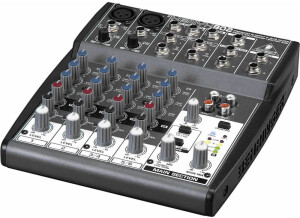
    (Originally written by ralphadam/translated from Audiofanzine FR) Eight inputs, including four mic inputs with 48V phantom power L/R master XLR outputs L/R control room outputs with 1/4" jacks Headphone output that allows you to listen to each channel separately (using the mute/solo switch). It's convenient for live gigs because it allows you to mix your sources for the FOH system and use two channels for your in-ear monitor system! UTILIZATION Ultra easy setup... You won't need the user's manual! Everything is clear... SOUNDS I can't say the sound is transparent because I can't compare it with any other product... I can only say it doesn't add noise to the signal even with high gain settings. The sound is always clear and I don't expect more from a keyboard mixer on stage. OVERALL OPINION I've been using for nearly two years and I haven't had a single problem (not even with the faders). I've used it for several professional applications (large stages with huge PA system, open-air events, shows with lots of fog machines, etc.) and haven't had a problem! Surprising considering the price and the manufacturer's reputation...

  • Audiofanzine FR's review

    (Originally written by efabric/translated from Audiofanzine FR) Tube/modeling hybrid technology. No effects. You can boost the signal until it starts to distort, and change the EQ. Compact and transportable unit (not for rack). I use it with a Bass V-amp, a powerblock and a Vox 2 x 12" speaker cabinet. UTILIZATION Very easy setup. Easy editing and short user's manual. I would have liked more precise descriptions of the limiter section, the low-pass frequencies, the modeling, and the amplifier stages. In which stage the tube actually works, etc. SOUND QUALITY The sound of the instrument is faithfully reproduced but the modeling is not versatile enough. Sometimes the selector generates some noise when manipulated. Sound coloration is very evident! It's not comparable with a solid-state amplification system! In the beginning it's quite subtle, but as soon as you play a solid-state preamp you feel the difference. You can boost the effect until you get distortion. The sound is good with moderate settings otherwise I don't like the effect. I'll make some new tests when the unit is hot and do some comparisons with modelings. The unit doesn't clip except when you boost the instrument's signal or when you pick up the sound of a speaker with a mic for example. I haven't tried out every combination but it's true that the limiter reduces the dynamic range greatly. Review update: With a bit more experience now I find the saturation sounds good, and when you increase both gain and volume settings you can enhance the signal of a guitar. The limiter effect is strange: I connect my bass and get a strong sustain. When I attack a string hard the limiter rapidly decreases the volume. Normal! On the contrary, when I let the string ring, the volume increases again after 1 or 2 sec. before the note fully fades out! It's a strange effect like an ADSR filter... However you can use the limiter (with low settings) for phrases with short notes. OVERALL OPINION I've been using it for 2 days. It's has no power on/off switch. So use a multiple socket outlet with a switch. Pro: the tube warmth! Con: the modelings, especially with the limiter. It's my first tube gear. Very good value for money. It colors and enhances every sound source very subtly. I recommend it even though my experience with it is rather short. Review update: With more experience I find this unit is essential. It's great with a multi-FX processor! It's ideal for guitar or bass recordings if you don't have a DI box but only a mixer!