Log in
EN
FR

Behringer Mixing Consoles

125 products found

Categories
Series
Filter
Sort by
Behringer
Evaluation
  • Reviewed or not
  • Editor’s award
  • Reviewed by Audiofanzine
Availability
  • Available or not
  • Sold new or used
  • Sold new
  • Sold used
Must-have products
  • All products
  • Flagship products
  • Best rated products
  • Hot products
  • Popular products
Price
  • Freeware
  • Low-cost (< $450)
  • Mid-range ($450 - $1,000)
  • Premium (> $1,000)
€
Clear
Sort by
  • Popularity
  • User ratings
  • Price - low to high
  • Price - high to low
  • Used price, increasing
  • Used price, decreasing
  • Name (from A to Z)
  • Name (from Z to A)
  • Added on
Choose a category
Selected category: Mixing Consoles
Sort results
  • Popularity
  • User ratings
  • Price - low to high
  • Price - high to low
  • Used price, increasing
  • Used price, decreasing
  • Name (from A to Z)
  • Name (from Z to A)
  • Added on
Filter results 125 results found
Brands
Evaluation
Availability
Must-have products
Price
  • Freeware
  • Low-cost (< $450)
  • Mid-range ($450 - $1,000)
  • Premium (> $1,000)
Show results

The best Behringer Mixing Consoles reviews

The reviews Audiofanzine members found the most helpful.
  • cedricjablonski's review

    In a flight case with the S-16 x2 option and then wifi UTILIZATION I do PA for an orchestra SOUNDS Good preamp, the console works very good (up to now) after a month using it live outdoors. The effects are a small drawback, they are a bit fuzzy, it's a pity. OVERALL OPINION Good console for live concerts, the monitors can be managed via iPhone, iPad...IT'S GREAT, each musician deals with his own monitor, so it's a weight off your back, and it's easy to use. Berhinger is progressing....

  • « The mixer with 1001 I/Os »

    24 mic inputs + 24 line inputs Inserts on all tracks 4-band semi-parametric equalizer 8 sub-groups 6 auxs (4 pots + switch between 3/4 and 5/6) External power supply in 19" 2.5U rack format I think there are over 250 I/Os on this mixer! There are inserts everywhere, triple sub-group outputs, etc. Get the manual to learn more! USE It's a classic mixing console But be careful, depending on the version, the direct outs aren't wired the same way, on the first version they are post-fader!! The bar-graph can display either the 24 mic or the 24 line inputs. SOUND I think it's a very good console with a great sound for live gigs! It makes much less noise than the brand's modern consoles! (I've ran some tests) OVERALL OPINION How long have you been using the product? Two years Did you try any other models before buying this one? Yes, several Yamahas, Behringers and Mackies Which feature do you like the most / the least? The bar-graph is really handy, as well as the dual monitoring section The routing possibilities are huge thanks to the 8 sub-groups, 6 auxs and 24 inline inputs Based on your experience, would you buy this product again? Absolutely! It's one of the most comprehensive analog mixers I've seen. There are certainly better ones, but they cost 10 times as much!

  • « Bought it just incase, ended up using it all the time! »

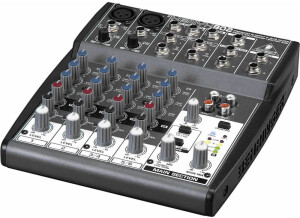
    The Behringer XENYX 802 is a great portable unit for that engineer on the go. I personally use it for headphone mixes almost every time I'm at the studio. I've even seen people use it with their TV, surround sound and game systems! This small analogue mixer is well worth the MSRP of $100. The unit is not rackable but it will easily fit on any flat surface. At about 9"X7" the Behringer XENYX 802 will save you lots of valuable desktop space. The unit is analogue only, this means no digital out's or built in effects. The 802 has XLR, TRS/TS & RCA connection jacks. Specs: -8 inputs (2 XLR, 6 TRS) -2 main outputs (TRS) -2 control room outputs (TS) -1 FX send (TS) -2 aux returns (TRS) -1 stereo headphone out (TRS) -2 RCA inputs -2 RCA outputs -2 XENYX preamps -3 EQ (low 80Hz, mid 2.5kHz, high 12kHz)(+15/-15dB) on 4 channels (channel 3&4 are stereo) -1 FX fader knob on 4 channels -Inputs 1&2 also ave TRS/TS line inputs -CD/Tape To Control button -CD/Tape To Mix button -1 main mix knob -1 phones/control room knob -1 aux return knob -1 phantom power button -Includes power adapter -Mic gain for channels 1&2 range from +10dB - +60dB -Line input for channels 1&2 range from -10dB - +40dB -22dBu maximum output -3 LED meter (-20, 0, 6, CLIP) -Power & +48V LEDs -Metal design with plastic side pieces -1.9" X 7.4" X 8.7" -3.5lbs UTILIZATION This mixer isn't trying to play tricks on you, it's really easy to use. Every thing is labelled very clearly and it shouldn't confuse even the beginner (okay well maybe not the absolute beginner, if you are going to be a pain about it). Although it doesn't have sliding faders, the knob faders are easy enough to understand. No USB = no install problems. You never know which system update will cause your interface to stop working. This unit won't have to go through those types of problems due to its analogue genetics. There's something humbling about using a piece of analogue gear, maybe its because it won't crash on you. Keep in mind this mixer isn't going to give sound to your computer (unless you have the cables and an input on your computer). The manual is alright. You can't blame Behringer for wanting to put a few different models together in one manual. It saves space, money and time. However it can be confusing to the beginner so be sure to always check which models features you are actually looking at. There is also a CD/Tape to CTRL button and a CD/Tape to mix button. They come in handy when you want to mix in an external line level signal such as an iPod, CD player, etc. SOUNDS There is no audible hiss or noise (unless blasting the gain knob and fader). The XENYX 802 has smooth gain that leaves you with enough headroom incase your singer decides to wail out their final lines. The mic inputs on the unit has a +10dB - +60dB range in the gain stage. The line inputs preform almost as hot, getting a -10dB - +40dB range in the gain stage. I really like the dual XLR/TRS connectors for channels 1&2. You get the freedom of being able to connect something like a guitar or a keyboard into your primary channels. In case you've gone a little overboard with the gain you'll be happy that there is a handy red "clip" LED. And yes, I know you are an audio expert and can hear when there is any clipping, however some of us just enjoy the ease of seeing the LED go into "code red". The 802 features 3 british EQs which compliment every channel. Lets keep in mind that you don't have an adjustable frequency knob (it would send the price of the unit up), what you do have is a low EQ of 80Hz, a mid of 2.5kHz and a high of 12kHz. You are getting -/+15dB per EQ, which I've found to be especially effective for eliminating headphone bleed when recording and using the 802 for a hearback unit. A nice added bonus is that the 802 has blue coloured EQ knobs. Not the biggest deal but it is kind of a disappointment when you get a unit without colour coded knobs (you want to be able to quickly glance at your board if changes need to be made). Say the built in EQ isn't enough for you, good thing you've got your aux out and stereo return. Send signal from each of your channels to an external EQ (or reverb, or delay, etc). Return your beautifully EQ'd signal in stereo, then watch how easy it fits into your mix. It should be noted that the aux knob has a range of infinity to +20dB. Now if you are using this as a headphone mixer for a musician like I am I'll have to warn you, this unit's headphone mix doesn't come out super hot. I've been close to being maxed out before some clients are satisfied with their levels but then again with some nice over the ear headphones they should be fine. As for over all sound of the unit, it does sound nice and the price makes it sound even better. The british EQs indeed sound like they've come straight off of a big british console, but like I said, it would be nice to have some frequency control. The gain sound is surprising, you would think that a $80 mixer is not going to be good for in the studio, just at home. This isn't true, I don't have a real reason to use it in studio, but I have and 98% of people aren't going to be able to tell any difference between this mixer and a full desk mixer. OVERALL OPINION What I most liked about the XENYX was the size. The unit only measures 1.9" X 7.4" X 8.7", this is about the size a small mousepad and it takes up next to no surface area, leaving your desktop free for all kinds of other junk (please put the caps back on your water bottles, for all of our sakes). What I like least about the 802 was that it has plastic sides. I'm not the type to drop my gear, but if it happens I would feel more secure if the sides were also some sort of metal. What a value for the price. I've been seeing them for about $80 average and you can't really complain. Even if its just a mixer for your small TV system, the price of the 802 makes its irresistible. Lets remember that this unit has been around for years now so there are probably better choices for better prices. This unit has gone down in price a bit since it's release, but that is to be expected. The sound of this unit was medium-high quality and the precision was just about the same. You can be assured that you are getting what you pay for plus even more! A rule of thumb for mixers is price per channel and if I were to average it all out I'd say you are looking at about $100 per channel for quality pre amps. If that doesn't convince you of it's value I don't know what will. I didn't try other models when looking at the 802. I had already owned a XENYX 1622 so I knew what to expect. It's nice to have the 1622's little brother around. Like I have said many times before, it's nice to have a small portable unit just incase. Knowing what I know now, yes I would absolutely make the same choice. In fact if anyone wants to send me one, I'll take a second! It would be a nice everyday carry mixer (yes I have all the paperwork to legally carry a concealed mixer in my province). Pros: -Small, lightweight -2 XLR/TRS in -2 more stereo channels of line input -2 channels out/RCA in/out -Control room out -Great headroom on pre-amp -Auxiliary send and returns -Phantom power -Use the RCA inputs to attach a CD & mix it into your mix Cons: -No adjustable frequency knob for EQs -Plastic sides

  • « Good price, good product for small bands. »

    This is an 8 input 2 bus mixer. It has 2 strips and 2 stereo strips. There are 2 XLR inputs, each on one mono strip and each mono strip has one 1/4 inch jack. The stereo strips each have two 1/4 inch jacks. There is an fx send and return, control room outs, main outs, a headphone jack. There is one set of 2-track in/outs. Each strip consists of a 3 band eq, fx send, pan/balance knobs and a level knob. No sliders. One of the greatest things about this, is that you get two XLR inputs that provide phantom power, which is pretty darn awesome. It'd probably be cheaper to buy four of these and run them in unison instead of buying a 16 strip with 4 XLR inputs. I really love this, the preamps sound pretty good, for only costing 80 bucks. The value to money ratio here is pretty high. The lack of sliders can be impractical, but certainly not unlivable. Plus, this thing is tough. Works fine in all kinds of weather and conditions and stuff. UTILIZATION Everything on this mixer is sturdy, and does what it says. The parts are high quality and it's super easy to use. It doesn't have a lot of built in effects, and doesn't have any bells or whistles, just the basics. It is a great value for the price, and the Preamp is pretty much completely transparent, I love it. The manual is barely need, this thing is practically plug and go. I do wish it had a USB out, but one can do without, especially given the great price. SOUNDS The sound of this mixer is great. Not incredible, but great. The eq is pretty good. It has a pretty transparent sound, which is nice. I love the simplicity of it and the operation. It's INCREDIBLY quiet, and it provides enough preamp gain for most applications. I have a condenser mic that I use pretty consistently for smaller applications. There are no hisses, or pops, and all the inputs are sturdy. The thing is built like a tank, dropped it multiple times on concrete, no problems. OVERALL OPINION This mixer is worth every cent. It is an astounding deal, especially for the price. Behringer makes some awesome products now and then, and this is one of them! It's simplicity is a gift from heaven, and it's very well put together space wise. Your fingers have enough space to tweak the knobs, and there aren't too many knobs. Everything is clearly labeled and does what it says. The phantom power it supplies is so nice. and hard to find at such a low price. If you need a back up mixer, or something portable for smaller bands, BUY THIS NOW. You won't regret it. I do wish there was a usb output, and maybe faders instead of knobs for the main strip, but overall this thing performs. I currently own and use 3 of these things.

  • moosers's review

    The Behringer Eurorack UB1204-Pro is a discontinued model of an analog mixer. It has 12 inputs total, with four XLR inputs and preamps, as well as two stereo channels with 1/4" inputs. It also six channels with faders - four of them mono, two stereo, as well as faders for a stereo submix and stereo master output. Each of the channel strips has built in EQ, although it doesn't sound too hot for my taste. It has a bunch of stereo aux return and sends, as well as RCA connections in addition to a number of other routing options, but I have used this in just about as simple of a set up as possible, so I haven't used these features too much. UTILIZATION Even if you don't have any experience with analog mixers, using the Behringer Eurorack UB1204-Pro is very simple. Behringer is a beginner's company, so pretty much everything that they make is simple to use and understand. If you don't understand the concepts behind analog mixers, I'd suggest doing some research or looking at the manual, but this is pretty much as simple of a little mixer as you can find. SOUNDS For what I have used the Behringer Eurorack UB1204-Pro for, it gets the job done, but for anything beyond this, I don't know how well it would work. I use it set up with a pair of Mackie HR824s and Wavelab 5 for editing clips together, so for this type of use the mixer works fine. Having said this, I wouldn't suggest getting this as your mixer for a home studio, unless you are just starting out, and even then I'd recommend straying away from it, as it just isn't necessary. The equalizers aren't very good at all, and I only needed to try them out once or twice to realize this. I haven't used the mic preamps, so I can't say what they sound like. OVERALL OPINION While they no longer make the Behringer Eurorack UB1204-Pro, you can definitely find a used one if you wanted to. However, it looks like to me that the newer Behringer models are slightly better than these older ones. Having said that, if you are looking for a dirt cheap analog mixer to get yourself started with, or for simple applications like that I mentioned before, the UB1204-Pro will get the job done, as just about any mixer will. Behringer aims their products at home studio owners, so it won't get too much cheaper than this...

  • « Was great for about a year... »

    This is a very well thought out 32 channel live sound mixer. It has all the features you can ask for in a 32 channel mixer. Does pretty much everything a A&H GL2400-32 does for less than 1/3 the price. Can do up to 6 pre fader monitor mixes. UTILIZATION Very nice metering. Individual phantom switches for each channel. Nice looking board. SOUNDS Sounds great!!! The mic pres seem a bit smoother than other Behringer mixers I own (I have owned over 10) OVERALL OPINION I received one of the first in the USA on 5-4-09 and put it into use right away for a large &quot;Joseph&quot; musical at my church. The board worked flawlessly and sounded great!! Behringer did their homework on this one. They better be prepared to make a lot of these. UPDATE - After about 1 year of use the board developed multiple bad channels. I eventually gave it to a guy at Guitar Center. We now use a A&H GL2400-32 in it's place with virtually no problems.

  • FP User's review

    Has a lot of features you'd expect from a 32 channel 8 bus analog console. Probably the only feature i'd of liked to see would have been on solo'ing a bus would mute all other channels. Instead, the main level leds show the solo'd signal level or the re-fader level (it's a toggle). There is no external option for a meter bridge, but the ability to see the signal in the main level led does a good job. You just have to do it one channel at a time. Price paid $849 UTILIZATION If you can use an analog desk, you can use an analog desk. Just more channel strips, and a couple extra bells and whistles. Witout opening up the manual i was able to do everything with the desk. The manual is well written, but again, there isn't a whole lot that one wouldn't know if they could use an analog desk to begin with. The only realy nice feature is the extra help offered in setting up patchbays for the desk (of course recommending their patchbays for the job). 100% usable and rugged enough for both studio and live applications. it's designed for both. You have the option of doing monitor mixes or front of house mixes with the same desk, and if you are more electonic in your application for music, you can mix yourself on stage and send the monitor and foh desks as little (2 channels) or as much (4 stereo by hard panning the 8 subs more if you are willing to give up aux sends) as you'd like. Aux sends one and two can be routed back into any stereo pair sub (1&2, 3&4, 5&6, or 7&8) or the mains without the need for repatching. SOUNDS I'm partial to Behringer over Mackie with analog desks. I've always found them to be nicer. That being said, there's a lot of debate out between the two (especially if you're in the shop comparison shopping). Half the people will tell you the Behringers are quieter, the other half says the Mackies are quieter. I'm of the camp that for the most part the behringer's are quieter. The eq is also solid and contains a nice low frequency cut for the times that you need it. OVERALL OPINION I have to give the MX3282A a love factor of 10. Having spent so much time away from a nice analog desk and working solely within the computer realm of Cubase, it's nice to have physical control over the channels without the use of a mouse or an external control surface. The manual also comes with suggested modifications to the board dealing primarily with changing the aux sends from pre to post fader (the recommendation is to have an authorized service center do the modifications, but if you have experience with saudering it is a very easy modification) At any one time you are looking at a channel having at most 6 aux sends, (5&6 and 7&8 share the same nobs and are switchable, but they also have the option of switcing between pre and post fader) but given that 1&2 are pre, 3&4 are post, and the remainder switchable you've got enough options to cover most situations. I also like the fact that channels 25-32 are in stereo pairs as this opens up the ability to route additional aux sends back into the board on their own channels if it's desired. All around if you are looking for an affordable 32 channel 8 bus console but aren't looking to spend the money on a mackie, behringer probably makes the board you need. Originally posted on FutureProducers.com Posted by: Unknown ( 5-, 2002)

  • JackLudden's review

    This mixer is not rackable, it is a small/midsized desktop unit. However, included in the package is a little rack-mounted plate on which you can put the mixer - so I guess it's semi-rackmountable. This mixer has 8 mono XLR inputs, and 4 stereo 1/4&quot; inputs. Each of those channels has an EQ strip with 3 bands. There are also 3 sends, a pan pot, mute, and solo buttons. This mixer also provides phantom power. There is also an input section for RCA if you want to input a CD player or something. There are integrated effects that you can send into the individual channels. These range from reverb, delay, chorus, pitch shifting, and combos of those effects. There are also inserts on the back panel. This is an analog console. UTILIZATION The setup is pretty generic and simple, so there is not a lot of new ground here. The only thing that steers from the norm that jumps out at me is the FX section. The FX are digital and built into the mixer. So you select which one you want to run, and you can then send that in various amounts to your channels. All the other normal mixer functions are easily accessible. I personally found the manual to be a little bit vague at times. It is not as in depth as it could be. However, most of the functions are largely self-explanatory so it's not a huge deal. SOUNDS The console is not very transparent. Most of what this unit does sounds rather cheap, I guess because the unit itself is cheap. Sounds are brittle, small, and lack a lot of extreme high end that can bring a track to life. I definitely do not recommend this for recording. Noise tends to be a problem on Behringer products, and you can hear it as you push up the gain - another reason you maybe wouldn't want to use this in a studio. The EQ does what it's supposed to do, but again sounds grainy and not very smooth. The effects fall into a similar category, although a couple of the stranger ones sound kind of neat - such as the delays/reversal one which sounds like it could be used for scary movie whispers. A couple of the reverbs are not bad. OVERALL OPINION I have had this mixer for about 2 years. I like the very low price about it, and that it is reliable. The sound is definitely a weak point however, so I only use it for live things where a top sound quality is not necessary. I've used a good amount of mixers. If you are just looking for a workhorse mixer, not for studio use but for other things such as an open mic or for speakers, than this would be a good value due to the very low price. For my purposes, it hasn't done me wrong, though I do not use it for many musical applications due to the sound being second rate.

  • docdrum1225's review

    I’m not a huge audio buff, but I do enjoy being able to record my own music. When I first looked into a mixer I bought a small Behringer mixer thinking I wasn’t get that much because I only paid $80, but I was wrong. The mixer was great it lasted me for two years before I decided I wanted to make a real investment in a mixing board that I could record with and do live gigs with. I looked into getting a firewire or USB interface but everything was ridiculously expensive and I got minimal XLR inputs. I then decided maybe I should just get the bigger version of the great mixer I already had. I went through with it and made a real investment in it, but it was worth every penny. Not only did I get 10 XLR inputs but I received a whole bunch of other inputs for other things. When I read the manual I also saw that I got two things I was not aware of. In addition to the great mixer I got a USB interface to improve the recording quality but I also got a whole built-in panel of effects. I tried out the effects and they were decent but they do come in handy when I want to record my drums in a small room but make them sound like their in the biggest room I can imagine. The mixer gives you tons of options. Right now, I’m looking into purchasing a power amp replace my Live PA head with this piece of fine equipment. On top of the working functions of the mixer, it’s rack mountable! It’s great to be able to get a rack and just throw this thing on it. It really does make the whole using process easy. If you’re looking for something inexpensive but built with quality and unlimited features this is the mixer for you! UTILIZATION Very easy and efficient Maunal was more than helpful SOUNDS Effects are decent OVERALL OPINION See above for details

  • « $500 18 track digital recorder »

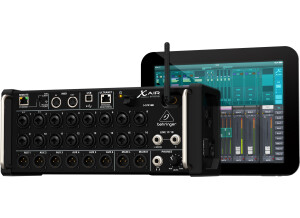
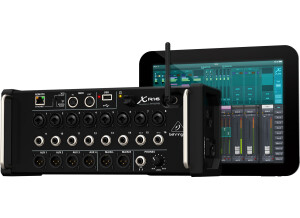
    I am a videographer shooting 4 camera shoots of live house concert performances. I have always wanted a multi-track recorder. The Behringer XR18 combined with a laptop makes a great inexpensive 18 track digital recorder. I have combined this with a pair of ART S8 passive microphone splitter so I can drop it between stage mics and the PA snake and record all the channels. With careful buying I assembled this including 2 x 16 channels of snake for about $1,000 total. The mixer itself sounds great and provides lots of audio processing power. Fully parametric EQ, compressor and noise gate on every channel. Four effects processors are good. The builtin WiFi is only so-so. I use an external WiFi router. This biggest drawback is no control surface. You have to use a laptop or smartphone. I miss knobs I can grab to tweak the sound. Is this a Soundcraft or Allen & Heath, no. But at $500 new on ebay it is a great deal. Lots of bang for the buck.

  • « Excellent value, fairly clear audio, easy to use »

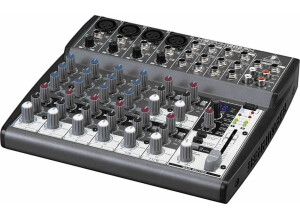
    I specifically bought this mixer as a stopgap between owning a Mackie 1604 VLZ board and a replacement. I also used, for a while, the Alesis Multi Mix 6, and the Xenyx 10 channel. Despite not having faders, it's easy to set your levels. The clarity is there. It's not what you would get from some more expensive boards, and not very booming, but it's in there. I used it as my main desk mixer between a PC, drum machine, SP-202 sampler, and a guitar line in. No problems. The USB connection to the PC will only record at 16-bit, 44.1 khz WAVE file so it's not really good for mastering or tracking. Demo purposes only, or out in the field recordings. The pros are that it is incredibly inexpensive, a good value for the money. Well built. Cons include the recording sample rate, lack of faders, and lack of power button.

  • « Try the XENYX1204 too »

    There are 16 inputs on the UB1622FX-PRO and a bunch of knobs and sliders. This mixer reminds me of the XENYX 1204usb mixer that is also made from Behringer. The UB1622FX-PRO is no longer manufactured and has been replaced by several models but I still think that the quality and build of the UB1622FX-PRO is one of the best they have made over at Behringer. UTILIZATION Some of the cons: It is not made anymore and may be hard to find one still in good shape. Also it only has 4 stereo channels. Some of the Pros: Each one of those stereo channels has a 4 band parametric EQ. On the mono channels there are 3 band EQ’s and low cut options. SOUNDS This mixer does tend to have a lot of noise to it though and it does generate hissing and humming tones from time to. It is very affordable though and served its purpose for us. I would buy this mixer again because I know how well it was built and I never had a single problem or issue with it. I would use it as my main mixer if it didn’t have that much noise though. OVERALL OPINION Check out the XENYX 1204 USB mixer you are looking to get a mixer in this price range because it is very close to the UB1622FX-PRO. The parametric EQ is so much better than what this unit is worth the. The parametric EQ is the type that I see on more expensive mixers that are not made by Behringer. The precision and quality of sound is average maybe a 5 out of 10. But the build and make up of this mixer is a 10 easily because it is very solid and sturdy. Out of all of the Behringer models that I have used in this price range, this is the best built on by far.