Log in
EN
FR

Behringer Microphones

33 products found

Categories
Series
Filter
Sort by
Behringer
Evaluation
  • Reviewed or not
  • Editor’s award
  • Reviewed by Audiofanzine
Availability
  • Available or not
  • Sold new or used
  • Sold new
  • Sold used
Must-have products
  • All products
  • Flagship products
  • Best rated products
  • Hot products
  • Popular products
Price
  • Freeware
  • Low-cost (< $30)
  • Mid-range ($30 - $35)
  • Premium (> $35)
€
Clear
Sort by
  • Popularity
  • User ratings
  • Price - low to high
  • Price - high to low
  • Used price, increasing
  • Used price, decreasing
  • Name (from A to Z)
  • Name (from Z to A)
  • Added on
Choose a series
Sort results
  • Popularity
  • User ratings
  • Price - low to high
  • Price - high to low
  • Used price, increasing
  • Used price, decreasing
  • Name (from A to Z)
  • Name (from Z to A)
  • Added on
Filter results 33 results found
Brands
Evaluation
Availability
Must-have products
Price
  • Freeware
  • Low-cost (< $30)
  • Mid-range ($30 - $35)
  • Premium (> $35)
Show results

The best Behringer Microphones reviews

The reviews Audiofanzine members found the most helpful.
  • « Unbeatable value for money! »

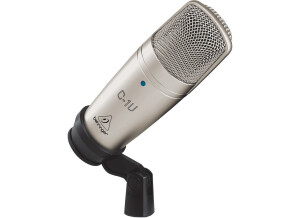
    Behringer C1 mic to record vocals and even acoustic guitar. Use exclusively with phantom power and anti-pop filter or say hello to distortion. OVERALL OPINION I've used it for four years in a mobile studio (Fostex MR8) only. I've used SM Shure 57, 58, a prodipe too and a sennheiser. Clear highs, sound is a bit off phase in relation to the lows, even though I notice a better reproduction in the mids. I use it for pop rock vocals. It takes time to get the best results but I have come to really master it based on very meticulous adjustments (pop-up - mic- mouth distance), the mic's response and hardware effects. Unbeatable value for money, especially secondhand! Based on my experience, I recommend it when you are starting out with your home studio or want to produce songs quickly and effectively without braking your head with settings...

  • « Cheap, you get your money's worth »

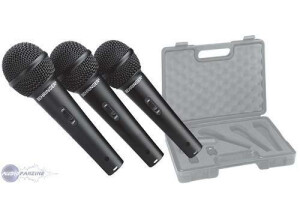
    Dynamic mic for live speech or vocal applications. OVERALL OPINION When the first one came out, a friend of mine who does sound for big conferences put several on stage and asked me what I thought about them. We found them quite all right. So I bought it and have used for several years the 3 different Behringer dynamic mics (XM8500, XM2000S and XM1800S) as they were made available. To my ear, there's no difference between these 3 mics. They all have the same frequency response curve. I have personally never liked the sound of the Shure SM58 and I prefer the Behringers. You will certainly not get the same durability as with Shure. Although... From my 8 Behringer dynamic mics, 2 have had problems with the capsule. In one of them, both cables were damaged and the mic ended up in the trash can (together with an SM58). The other one sounded like a baby rattle. A bit of cyanocrylate to glue the grille that protects the grille and all was good again. Given their price, it would be a pity not to take advantage of it. I then switched to a Shure Beta58, and then a Beta87. The difference is clear, but it costs from 10 to 20 times more.

  • « price and quality »

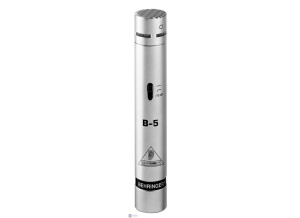
    I have used the B5 to record mainly guitar tracks and some drums but not that much because I don’t have a full drum set up at home. I have used the B5 for over a year now and I must say it is a very good accurate mic. I really don’t have any complaints or anything bad to say about it. Even the price is a good point to purchase this if its your first instrument mic. Even if its not your first mic you will still love the way that it sounds on your guitar. I havent really used it on anything except guitar and hats and snares so I really cant comment on how it would sound with some brass instruments or some of the more bright and stronger instruments. One thing to take note on with the B5 by Behringer is that you will need to be in a treated studio room in order to get the best sound quality possible. Yes, you can use it hat home but keep in mind that if you have other things going on around you like the tv on or window open and outside noises coming in, the B5 will pick those sounds up and you will hear them very clear during playback. Now you can eq some of them out but you know that when you start eq ing you start to lose some of the natural quality of the instrument that you where recording in the first place. So to avoid any of that just make sure its quiet around you or as close to silent as possible. OVERALL OPINION You can purchase this mic brand new at a very cheap price. And for how good it is , it could be one of the best options for you. I know that it was the best price and quality option for me. I have used a ton different mics and condensor mics and this one stands out without a doubt. I just don’t record unless I can have complete silence. I really hate picking up background noises and because the houses are so close together here you can easily hear stuff going on out side when recording. So I try to limit the external sounds as much as possible.

  • Deleted member's review

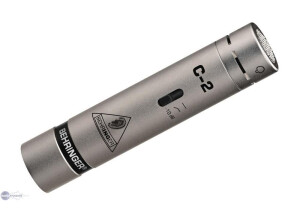
    *Microphones are very subjective. Some microphones that work for some brilliantly may be disastrous on others. It is therefore important to understand the context in which this review is written and take it with a grain of salt, like all reviews on microphones should be treated.* The Behringer C-2 microphones are small diaphragm cardioid pencil condensors and are sold in matched pairs that come with a stereo bar. Very nice inclusion, but one comes to expect these extra features from Behringer despite the price. The Behringer C-2 has a frequency response of 20-20,000 Hz and a respectably low (for a pencil condenser) self noise at only 19 dB. The signal to noise ratio is also not something to scoff at, coming in at a quite respectable 75 dB. The Behringer C-2 microphones have 10 dB pads and low frequency roll off switches, although the obnoxious trend of the budget microphone world seems to dictate that the two features can't be activated at the same time because they are on the same switch. The most remarkable thing about this microphone is that, again, even though I may not be the best authority on pencil mics because I mainly do vocals, they are easy to EQ and very forgiving. It is rather odd that I would find a pair of hyper budget microphones, especially from Behringer, that I enjoy. However, it does not exactly have anything to do with the original sound; it is more from this very fact that EQing this microphone is not terribly destructive. And when you XY these microphones, you can get some very usable, if not top shelf results. And I also found that piling these up in a mix, while obviously harsh, is easy to do, because of how well this microphone actually responds to EQ. OVERALL OPINION The Behringer C-2 microphone is a piece of black magic, not for its quality, or even its price to performance ratio, but for the fact that in a sea of awful Behringer products, this gloriously outshines them all. I haven't gotten to use them extensively yet, but if I ever get into more instrument recording, it's certainly something I'll have to consider!

  • « similar to the SM58 »

    The XM8500 is a dynamic vocal microphone that made itself popular when it first came out because of the price. Behringer released this microphone for a really low price and people went crazy over it. It is great with rejecting feedback and cutting out the background noise. The sound is very clean and warm; the mid range frequencies are where all of the action is because they are very smooth and you can tell that instantly. It is very similar to the SM58 but the difference is the price. This microphone only cost about 30 bucks when it came out and I remember getting two of them right away. You can use this microphone on instruments or as a live microphone and I have used it as both and it sounds great. OVERALL OPINION Using it on instruments is great if you are using a brighter instrument like an alto sax, it will give you a fluid like sound that sounds very smooth while getting rid of other sounds that may be going on around you. For a live microphone you need those attributes in order for the mic to function properly. On vocals it sounds just as good live, but in a recording session do not use this microphone because the quality is not as good and you will really have to get in there and do some EQ work on your tracks. The frequency response is 50 Hz to 15 kHz giving it all of the range needed for instruments and vocals live. This is a very common microphone as far as specs go, but at this price you almost have to purchase a couple of them. I recommend getting this if you are into performing at smaller venues, or it would even be a great practice microphone for your home set up.

  • « Not quiet enough »

    The Behringer C-3 is a large dual diaphragm condenser mic that has a cardioids, omni and figure 8 pickup patterns. On paper the Behringer C-3 looks great because it cost less than 100 dollars and comes with those pickup patterns. But that is not the case, this microphone is very noisy. It is so noisy it pretty much makes it unusable. I do not even recommend this microphone to someone who is on a small budget and is a beginner. You can get a better microphone for cheaper than this one is. OVERALL OPINION Behringer claims that the Behringer C-3 can be used for instruments (acoustic) but there is just no way that it could work for me because the recordings are not warm enough and the microphone has a constant noise to it. it is built well and has a rugged body to it. I don’t even see this microphone breaking down or going out over time even if it is dropped a few times. The value for the price that It cost is decent, because it only cost about 65 dollars. But still at that price you can get a better sounding and quieter USB microphone from Blue Microphones or even another brand that will give you a better and warmer sound than this condenser will from Behringer. I have had a lot of problems with Behringer mics over the years and I think it is because they are focused on manufacturing microphones that are cheaper and more affordable rather than putting out microphones that have a great sound and quality to them. The quality of sound is below average for microphones in this price range which I do not understand because if you look at the specs of the microphone you would expect it to sound a lot better and be really quiet like Behringer claims that it is.

  • « Affordable, but does need some work »

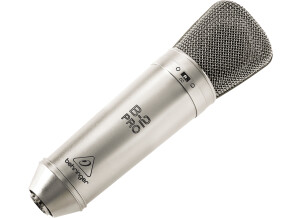
    The Beyer B2 Pro is a dual diaphragm condenser microphone and is one of the cheapest priced microphones that will get you a good sound no matter if you use it for vocals or for instruments. It is a pretty versatile microphone, it is a condenser so it will require a 48 V phantom power to work, unlike the other Beyer microphone that is dynamic and doesn’t require you to have phantom power. It is shock mounted and has a pressure gradient transducer. It has a great transparent sound, the sound is actually better a few of the other Beyer microphones that cost almost twice as much. When choosing a condenser microphone it will come down to exactly what you want to use it for. All condenser microphones are better in some areas and not so good in others. This microphone can be used for live vocals, but I didn’t like the way it sounded when used for live instruments. When using the Beyer B2 Pro for live instruments in a live setting, the quality of the instruments wasn’t not too good. For live instruments I suggest using in a studio setting with proper room acoustics in order to get the best sound. You will not need room acoustics for your vocals though, you will be ok with just a regular room set up as your vocals aren’t too punchy like instruments are. OVERALL OPINION The quality of sound with the Beyer B2 Pro is about what you would expect to get out of a microphone in this price range. Maybe it is a little better than other microphones that are in this price range, but it is no where near where I wanted it to be. I had to invest more money for a versatile microphone that could work great in live and recording settings with vocals and with several instruments. My search for the perfect all around affordable microphone didn’t stop with the Beyer B2 Pro. I have used this microphone off and on for about 2 years before getting rid of it. It did serve its purpose while using it though.

  • « For recording or live settings. »

    The Behringer B-2 is a dual diaphragm condenser microphone that can be utilized in either a live or in a studio setting. This is a very versatile microphone and puts out an excellent audio quality in almost any recording environment. I was very surprised with the B-2 because I didn’t think that it would be this good for the price that it cost. It has a gold plated xlr output that will give you great signal quality for recording. The microphone is also very rugged and heavy duty for those musicians that are on the move a lot and get a lot of their gear dropped and banged up. It also has a low frequency roll off switch to get rid of those unwanted noises and provide minimal feedback for a live setting. OVERALL OPINION The best thing that I like about this microphone is the price, for this price and for the quality that it provides and can be used in multiple situations it was a no brainer for me. Downside of the Behringer B-2 is that if you have an issue with one you already have, Behringer will offer no support at all and try to get you to purchase a newer version of it. I still own this microphone till this day and use it a lot. I am glad that I have it because it is no longer being made, you will have to purchase it used from eBay or from a used store. I have tried many other Behringer models, and through trial and error I ended up settling for this one at the time. Just because it was the most affordable and versatile microphone that they offered at the time. It well surpasses the first version of this microphone the B1, with major upgrades with the roll off switch and rugged structure of the microphone. The Behringer B-2 is a great multipurpose microphone for live and recording uses.

  • « cheap »

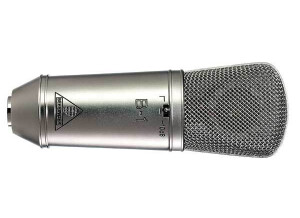
    The price of the Behringer B1 is what makes it so appealing to the people that make music on a budget. These are the type of deals that we cant wait to get our hands on because they are so cheap. But let me tell you that when you purchase a mic that is this cheap you are going to get sub par quality when recording. You just really cant expect to purchased a Large Diaphragm Cardioid Condensor mic like the B1 that is less than 100 dollars and I have even seen used ones go for 40 bucks, and expect to get some great home studio recording quality. Honestly I have seen better mics come with cheap bundles deals like the mbox bundles and such. Way back when, I remember purchasing a karaoke mic from Radio Shack about 15 years ago, that is exactly what this mic reminds me off. They make it look really nice by putting it in a fancy case when you buy it but really it’s a low grade mic that you should only buy if you truly cant afford a decent condensor mic. OVERALL OPINION Its very easy to use and set up, but like I said don’t let the fancy case fool you. The Behringer B1 comes in like a fancy brief case type of a case and it looks like its serious business but its really less than average and I say save up your money for something worth it. I havent had a good experience with this mic and I havent heard any one else who had one either. If you use this mic, you will end up selling it less than a year later for a better one. Once you get a better on you will hear a major difference in the quality of your music.

  • « Behringer ECM 800 »

    50-year-old musician, Kevin Mattson, has been an entertainer for plenty long. I'm just here to help you whippersnappers get a grip on the golden age in which you live. Excellent gear is cheap and opportunity is rampant. Talent is a license for hard work. Go for it. I bought two Behringer ECM 800 microphones on the advice of a famous recording engineer. They were about $50 each from any of the musical dot.coms Incredibly versatile. This mic can help you calibrate your studio or mixing room's accuracy. But they can also serve as excellent general purpose live mics of choirs, orchestras, church concerts, school events, etc. Nothing to complain about. Comes in a nicely molded case, including mic stand adapters and wind-screen. There's a paradox about recording music: The larger the group you're recording, the smaller the mic's diphragm should be. Can't explain that here, but the Behringer ECM 800 is a good choice for capturing the music of choirs and orchestras. This review was originally published on http://www.musicgearreview.com

  • Audiofanzine FR's review

    (Originally written by Selecta Biss@/translated from Audiofanzine FR) Moving coil dynamic mic with ON/OFF switch No output transformer. The capsule is wired to the 2nd and 3rd XLR pins so the mic can't be damaged by phantom power. OVERALL OPINION I've owned it for six or seven years (it was my first mic). In the beginning, I used it for vocals... Pros: Reliable (seven years of rehearsals and P.A. use under very demanding conditions - mud, moisture, shocks, freezing temperatures, etc.). I don't like the on/off switch but it's convenient for P.A. applications when nobody stands behind the mixer and the singer takes the mic by the grid... On the contrary, it's a problem when a singer turns it off and forgets to turn it on again while staring at the sound engineer... Cons: The sound is a but muddy and not very clear in the high-end but it's quite warm. The proximity effect is very audible, which can lead to problems with male vocals. But considering its price, it sounds much better than those 57 or 58 Chinese copies. But it would be exaggerated to say it sounds like a real SM58... (I'm not a SM58 fan but it's definitely a reference product). I bought it pretty cheap at the time and it gave me a good return on investment. Now I use it as talkback mic. Forget it for professional applications... It's as sturdy as an SM58... If I had to made a choice between this mic and a PG58, I would choose this one... So I give it a 6 since it has nothing special but you get two XM2000S for the price of a PG58...