Log in
EN
FR

Shure Microphones

452 products found

Categories
Series
Filter
Sort by
Shure
Evaluation
  • Reviewed or not
  • Editor’s award
  • Reviewed by Audiofanzine
Availability
  • Available or not
  • Sold new or used
  • Sold new
  • Sold used
Must-have products
  • All products
  • Flagship products
  • Best rated products
  • Hot products
  • Popular products
Price
  • Freeware
  • Low-cost (< $95)
  • Mid-range ($95 - $250)
  • Premium (> $250)
€
Clear
Sort by
  • Popularity
  • User ratings
  • Price - low to high
  • Price - high to low
  • Used price, increasing
  • Used price, decreasing
  • Name (from A to Z)
  • Name (from Z to A)
  • Added on
Sort results
  • Popularity
  • User ratings
  • Price - low to high
  • Price - high to low
  • Used price, increasing
  • Used price, decreasing
  • Name (from A to Z)
  • Name (from Z to A)
  • Added on
Filter results 452 results found
Brands
Evaluation
Availability
Must-have products
Price
  • Freeware
  • Low-cost (< $95)
  • Mid-range ($95 - $250)
  • Premium (> $250)
Show results

The best Shure Microphones reviews

The reviews Audiofanzine members found the most helpful.
  • « Great for everything »

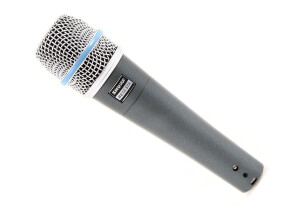
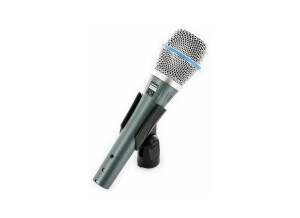
    Microphone Type Dynamic Polar Pattern Supercardioid Frequency Response 50Hz016kHz Impedance 150 ohms Length 6.23" Width 1.69" Depth 1.69" Weight .6 lbs. Manufacturer Part Number BETA 57A OVERALL OPINION I actually bought this mic to use as a guitar cab mic initially. I was micing in a live situation with a Suhr Badger amp and a Bogner 1x12 cube cab. Nothing really fancy. It works wonderfully for that purpose. It doesn't have the awkward midrange that the sm57 and beta 58 do. But as I have owned this mic over the years I've learned that it does a lot more than speaker micing. One day I was having problems with my beta 58 picking up tons of stage noise. Tried an sm58. Didn't sound right with my voice. Tried a couple of Cad dynamic mics. Sounded good but they fed back some. Finally, given no other choices I decided to put my Beta 57 up there for kicks. Not only is it impervious to stage noise but I didn't have to eq it at all. It just naturally sounds very good on my voice. Since then I've tried it on about everything. Female singers? Great. Snare drum? Suprisingly awesome and puts an sm57 to shame. Sax? Yes it does that too. I would go as far to say that if I had to choose one mic to have for the rest of my live show career, it would be this one. I'm serious about that. It just excels in so many applications. It never ever peaks out from high volumes and it always seems to sound very wide and open no matter what. My only complaint is that it isn't terribly useful in the studio, outside of tracking very aggressive vocals and maybe some super loud guitar parts. But everything else about it is tops. Never had any technical issues despite really abusing a few of these.

  • Deleted member's review

    To me, Shure's Beta microphones, especially the companies condensers, like this microphone I am reviewing right now, have always stood in a strange place to me. Call me a quintessential slave to marketing, but I never even thought about the Beta handheld live condensers from Shure for more than the most transient of moments, but when someone actually shoved one into my hands, it took me a bit of time for the gears in my mind to click and remember that these exist. That sounds awful, but considering that we hear loads about the SM58 then loads about the KSM9 make all of these middle microphones a little odd to think about. At any rate: The Shure Beta 87A is a handheld electret condenser microphone designed specifically for live vocals on a stage. The Beta 87A has a nicely chosen supercardioid pattern, so as to tighten up the pickup for "on axis" sound more than cardioid is truly capable of without causing some bizarre frequency artifacts. The 87A has a frequency response from 50Hz all the way to the 20,000 Hz that we all enjoy. It has an impressively high SPL of over 140 dB. In terms of specifications, I find that the self noise and signal to noise ratio numbers to be poor, however in live usage this should never be an issue. It is, however, important to note, because if you are looking for a microphone to use both on stage and in a studio, this is not the microphone. In use, I have found that the Beta 87A imparts a warm tone, especially when the proximity effect is worked strategically, while the microphone retains a very pleasant sizzle. It would probably work well for loud music, but for more intimate things, there seem to be few microphones that can bridge the gap in this application between the Beta 87A and the vaunted KMS 104/105 microphones from Neumann. OVERALL OPINION The Shure Beta 87A is a fantastic live microphone that will flatter the voice in a very unique way. Give the microphone a shot before you commit, however, because there is a clearly apparent "won't work on everything" vibe the sound gives off. Make sure you listen to samples, and if possible, try them out!

  • Deleted member's review

    The Shure PG52 is Shure's entry level kick drum microphone, and before I go any further, if you want a kick drum microphone from Shure, look to the Beta 52A. The PG52 is not bad per se, however, in a world of fantastic kick drum microphones, it cannot win against its higher end competition, because it has broken the $100 threshold and will likely not be looked at as a cheap microphone, relatively speaking. Now, onto the main course. The Shure PG52 is a bass drum microphone. It is a dynamic microphone and has a cardioid pickup pattern. This is typical of kick drum microphones. While it is a kick drum microphone, however, it is curious that the frequency response only rises to 13,000 Hz. (It starts at 30 Hz.) I am only mentioning this because in the other kick drum microphones do have frequency responses that extend up relatively high compared to the Shure PG52. While it does include all of the nice things that a kick drum microphone should have, something weird seems to happen to the sound of the kick drum. I will get back to that soon. The Shure PG52 indeed has all of the required things of a drum microphone, sturdy construction, compact size, simple adjustment mechanism, and most importantly, a very high SPL tolerance. But the PG52 is strange, because compared to its competition, it sounds positively anemic on kick. It strangely finds its place mic'ing up floor toms, and, best of all, bass cabinets. This was odd, because a lot of bassists choose to use direct input rather than mic'ing up a cabinet like a guitar player would. OVERALL OPINION Understand what the PG52 is for. It may be just okay on a kick drum, but on a floor tom and a bass cabinet, you can get fantastic results with it.

  • Deleted member's review

    The Shure PG56 is an impressively small microphone designed specifically with drums in mind. It is a direct alternative to the SM57's, and often, the PG56 works better due to its small size. Once, a drummer came in and had no idea that he was being mic'ed because the PG56 microphones were so well hidden all around the drum set. Its size also betrays its image of durability. The Shure PG56 is a nastily rugged microphone, so wild drummers who still manage to hit the ridiculously small PG56 microphones on their toms are not going to blow it up like they may blow up an SM57. Don't get me wrong; the SM57 is pretty rugged. The PG56 microphones, are, simply by design, more safe from the abuses of a fast traveling stick of wood. And this thicker grill and padding make the PG56 pretty resistant to extremely high SPL levels. This is nothing I think anyone should be terribly impressed by, considering the fact that it is a dedicated drum microphone and this feature is a requirement of them. The PG56 has a fairly standard frequency response, starting predictably at 50 Hz and rising to 15,000 Hz. Their response is tailored to deliver a nice punch, and while I have trouble describing the flavor, it provides a healthily budget minded alternative to the SM57. I will just say that it is in no means of lower quality in any way whatsoever. OVERALL OPINION The Shure PG56 is a very cute, but very impressive alternative to the SM57 when mic'ing up a drum kit for live use. There are indeed better sounding microphones out there, but not anywhere near at this price. As a vocalist, my standards for this are not terribly discerning, but I found them to be roughly on par with the vaunted SM57's. So use that standard, and decide for yourselves!

  • Deleted member's review

    The Shure Super 55 is a remarkably impressive supercardioid dynamic microphone designed to be used for vocals. Yet another one of Shure's re-releases of the iconic "Elvis mic," the Shure Super 55 is a bit different from the other release, the Shure 55SH Series II. For one, the Shure Super 55 is supercardioid, and has a wider frequency response than the 55SH Series II. It has a nice respectable frequency response of 60-17,000 Hz, and I usually never mention this, because all vocals microphones seem to have this claim: tailored for voice. Well, this one is pretty nice, let me just say. The microphone seems to give off a very interesting character that is flattering to the voice in a very subtly vintage way. What this generally entails is that this microphone is designed very nicely to accommodate more character driven music, more grit and raw power and performance than the overproduced vanilla sound that you generally hear nowadays. This means that I would never record a contemporary pop artist on this, although for R&B, Blues, good ol' rock and roll, and perhaps some rap, this would be ideal. The Super 55 seems to hit its market perfectly. and it does so while looking incredibly attractive. There's also a special edition of this microphone that is in black and red instead of silver and blue. And before you ask, this microphone does possess impressive technical attributes, such as superb resistance to feedback and superb off axis rejection. It's no SM7b in that regard, but it's still pretty impressive. And finally, there isn't an on/off switch. While some people may see this as a disadvantage, I find switches to be rather silly looking, and personally, I do get a tad bit paranoid with them. OVERALL OPINION It may not be the most frugal purchase in the world, because you can find good sound for less, but considering its appearance alone, the Shure Super 55 is a contender. Engineers are the people most aware of the visual element in music today, but often, they will shun a microphone like this just because of this. Thank goodness that the Super 55 has its own nice character to make it more than a cheaper microphone with bling!

  • « You can never go wrong. But you can certainly go more right. »

    Ahhh. The legendary Shure SM58. Venerated by anybody to ever take any interest in microphones ever. If you have ever sung on stage, it has probably been into a Shure SM58. The reason for this is simple: it just works. The Shure SM58 has a very solid reputation of being able to sound good on almost any source imaginable, take the place of a hockey puck for five minutes, (I'm serious. Look up the video. People have taken slap shots at the Shure SM58 while it was plugged in, and use it afterwards) and still keep chugging for years. No matter how bad it may end up looking, it will continue to sound good for years and years and years to come. This isn't to say that the Shure SM58 is the end all be all of all microphones ever. There have been several much more specialized and technologically advanced microphones that have been invented and relied upon ever since the first Shure SM58's rolled off the production line. The Sennheiser 835's, the EV N/D series, the Heil live microphones. These microphones in my opinion, at least on my voice (high baritone, relatively rich in comparison to most pop and rock singers), are far superior to the midranged focused, honky microphone in the Shure SM58. However, I will never gripe and moan about having to ever sing into one. Anyone who would ever doing that would be setting him or herself up for a lot of disappointment in life. The reason that these continue to roll off the production line despite Shure's revision and "successor" in the Shure Beta 58 is because of this one simple fact: Shure just got it right that time. OVERALL OPINION If you've never owned a microphone before, there is no reason for anyone to ever pass up the SM58. This is because you will never be short of advice or opinions on how to squeeze every ounce of quality out of it. So for $100 new, you are setting yourself up for a lot of joy in the Shure SM58. I fully and utterly recommend it, no matter what you're doing. You may not always be getting the cream of the crop in every application, but it will never actually fail you. Ever.

  • moosers's review

    The Shure KSM44 is a large diaphragm condenser microphone that is designed for use in the recording studio. This is probably the highest end condenser microphone that Shure currently has to offer, as of course they are best known for their dynamic mics. The KSM44 will certainly draw comparisons to the cheaper KSM32, as they are definitely similar mics. The KSM44 has three pick up patterns to choose from, including for cardioid, omni-directional, and figure eight. It picks up the full range of human heard frequencies, from 20 Hz to 20 kHz. OVERALL OPINION The Shure KSM44 is simply an all around great microphone. It's suitable for almost any application that you'd like to use it for, including for vocals, room mics, and anything else that you can think of where you'd want a good amount of clarity from a large diaphragm condenser mic. I've also used it for recording the bottom of a snare drum, and it excelled tremendously in this situation as it picked up all the details of the snares beautifully. When compared to the Shure KSM32, the KSM44 has more options and a slightly cleaner sound, although both mics do sound great. It would be hard to say if it would be worth it to go with the KSM44 over the KSM32, as it really just depends on your situation and what you want to use the mic for. I'd recommend both microphones, and it should be easy enough to try out both of them since they are quite readily available. I don't know if it's worth the extra couple hundred bucks if you are a home studio owner looking for an all around condenser mic, but again it's hard to say as everyone's situations will be different. All in all, the Shure KSM44 is a very high quality condenser microphone that comes at a reasonable price considering the flexibility and overall tone quality of the mic...

  • moosers's review

    The Shure SM53 is a somewhat rare dynamic microphone that I have used in a recording studio setting. It does look like it would be good for vocals during live shows as well, since it does have the hand held look and design. However, since it is an older microphone, I wouldn't recommend using it for this sort of use anymore. While it may have been suitable for this at one point, if you do come across one right now I would be careful with it and only use it in the studio. The SM53 has a standard cardioid polar pick up pattern and will grab frequencies in the range from 70 Hz to 16 kHz, which isn't ideal for a studio mic, further leading me to believe that these were originally intended for live shows. The SM53 has a counterpart in the Shure SM54, which is pretty much the same mic except that the SM54 has a better filter if I'm not mistaken. The manual for the SM53 isn't necessary. OVERALL OPINION I don't have extensive use with the Shure SM53, but have used it enough to get a good grasp on what it can and cannot do. While I believe the original intention for the SM53 was for vocals, I haven't used it for this application. In fact I've only used it to record a guitar amplifier. I guess my thinking was that at best it would be like an SM57. However, it didn't quite do the job as well as the SM57 that I also had going with it at the same time. Don't get me wrong, the sound was definitely more than respectable, but it still didn't match the 57. I've yet to have the chance to use the SM53 for other applications, but a few other situations I'd like to try it out for include the bottom of a snare drum and the aforementioned vocals. The one that I have used is literally the only one that I've ever seen, so unless I'm back in the studio where I used it, I don't think that I'll have the opportunity to experiment too much more with it. While the SM53 will definitely give you a good sound for electric guitar at least, as of yet I'm overall pretty indifferent on the mic until I can try it for some other applications. I wouldn't use this over an SM57 to record guitars, so until I can find another useful application for the Shure SM53, I'm not sure I can really recommend it...

  • moosers's review

    The Shure SM94 is a small diaphragm electret condenser microphone that I have used in the recording studio. You can probably use it for live shows as well, but I haven't used it for this application as I don't do live sound and only do work in the recording studio. It wasn't until pretty recently that I had even heard of the SM94 let alone used it, as they seem to be pretty rare. In terms of characteristics, it's got a standard cardioid pick up pattern and will pick up frequencies between 40 Hz and 16 kHz. It requires phantom power, but can also be powered by AA batteries if you're using it for a live show. OVERALL OPINION My experience with the Shure SM94 is somewhat limited to date, but I have used it in a few different situations, including for acoustic guitar and scratch vocals. While the SM94 isn't my favorite sounding microphone for these applications, it does have a good enough sound to get the job done well. It doesn't have any special features, and in fact the limited frequency pick up makes it less versatile than most microphones that should be used in the recording studio. While this does have a similar look to the Shure SM81, it doesn't have the same type of sound at all. While the sound of the SM94 is quite clean and full bodied, it lacks the vibrant sound that you'd get with a more traditional small diaphragm condenser like a Shure SM81 or a Neumann KM 184. Even though the Shure SM94 is pretty rare, you can most likely find them around here and there if you're looking hard enough. However, the SM94 isn't all that noteworthy where most people will be searching for it, so I believe the price wouldn't be very much, but it won't be extremely cheap. All in all, while not the greatest sounding small diaphragm condenser out there, it's still a very good sounding microphone worthy of use.

  • moosers's review

    The Shure Unidyne III 545 is a dynamic microphone designed for use both in the studio and on the stage, although I’ve only used it in the studio. While it has a similar look to an SM57, the sound quality is definitely different and for this reason has a different set of applications. The Shure Unidyne III 545 also has an awesome look to it, with a silver metallic finish on it. OVERALL OPINION I’ve been using the Shure Unidyne III 545 for about two years and it has become my go to microphone for recording the bottom of a snare drum. I usually record the top of a snare drum with a Shure SM57, and blend the two signals together to get a sound I am satisfied with. For some reason, the Shure Unidyne III 545 excels beyond expectation when it comes to recording the bottom of a snare drum. It has a certain high end presence that is perfect for picking up the rattling of the snares and is without a doubt the best at what it does in terms of picking up this signal. Since it sounds so great on the bottom of a snare, I honestly have never used this microphone for anything else. I’m sure it would sound good in a few other situations, but I have never had the chance to try it out on anything else. The Shure Unidyne III 545 isn’t too well known, but for those who do know it they know how great it sounds for snare bottom. If you can find one of these used, which is pretty hard because they are pretty rare, the price varies and I would really only recommend it to the user who is either a professional or is recording drums all the time in their home studio. While it is truly a great microphone for recording snare bottom, I can’t speak to how good it sounds on anything else and would therefore recommend those interested to try it out themselves to see if it fits their personal use. All in all, the Shure Unidyne III 545 is a great microphone that not too many people known about.

  • moosers's review

    The Shure 555 is a dynamic microphone that is one make of the classic microphone that was used in the 50's by Elvis and all sorts of famous performers. It is a mic that can be used both in the studio and on the stage, I have used it for both purposes. As you can see in the picture, the look of this microphone has been copied and copied throughout history, and really has its own unique look to it. OVERALL OPINION I've been using the Shure 555 for about four years and I've found it to be an interesting microphone to say the least. After you get by the awesome look that this microphone has, the sound is really not too shabby either. While I wouldn't say that the Shure 555 is as full sounding as you would look for in either a recording microphone or live one, it has a kind of vintage sound to it that makes it great for old rock and roll and R&B. I have only used this microphone to record vocals, and it definitely wouldn't be my first choice for recording anything, but it does have a unique sound that will work in a number of different situations. However, I do admit that the look of this microphone makes it seem a bit better than it sounds, and isn't really an elite recording microphone. For this reason it is probably best suited for live shows, where it sounds good and everybody can see it for its glory. The price of the Shure 555 isn't that expensive if you can find one used, but this particular model of this microphone is pretty hard to find. Overall, the Shure 555 is a nice sounding microphone with a great look and is definitely worth a try if you are a fan of this classic look.

  • moosers's review

    The Shure PG 81 is a small diaphragm condenser microphone suitable for use both in the recording and on the stage. Unlike most condenser microphones, it is designed for use on the stage and will excel in this situation over the studio. It has a cardioid polar pattern pick up and a standard XLR output. It is designed mostly for use in the live setting, as it has a battery to power it that it comes with if you don't have phantom power at a show. Its sturdy design and on/off switch also make it a great candidate to use on the stage. OVERALL OPINION I've been using the Shure PG 81 both on the stage and in the studio for the last two or three years. I have found that it is best suited for picking up acoustic instruments during a live show. I have also used it in the studio a few times, but find that it doesn't pick up as much detail as I would like for a studio mic. For this reason, I would really only recommend the PG 81 for those looking for a condenser microphone to use for live sets. It is a great option for acoustic guitars that aren't acoustic-electric and don't have pick ups, and also excels on other acoustic stringed instruments like banjo and mandolin. As far as condenser microphones go, this is about as cheap as they will get, and while I wouldn't normally recommend using condenser mics for live use, this is designed for playing out and does a great job in this situation. I haven't used too many other condenser mics for live shows, so I'm not sure what I could compare it to. Its heavy build and good sound quality make it a great option to bring out to shows for picking up acoustic instruments.