Log in
EN
FR

SeriesShure BETA

33 products found

Filter
Sort by
Evaluation
  • Reviewed or not
  • Editor’s award
  • Reviewed by Audiofanzine
Availability
  • Available or not
  • Sold new or used
  • Sold new
  • Sold used
Must-have products
  • All products
  • Flagship products
  • Best rated products
  • Hot products
  • Popular products
Price
  • Freeware
€
Clear
Sort by
  • Popularity
  • User ratings
  • Price - low to high
  • Price - high to low
  • Used price, increasing
  • Used price, decreasing
  • Name (from A to Z)
  • Name (from Z to A)
  • Added on
Sort results
  • Popularity
  • User ratings
  • Price - low to high
  • Price - high to low
  • Used price, increasing
  • Used price, decreasing
  • Name (from A to Z)
  • Name (from Z to A)
  • Added on
Filter results 33 results found
Evaluation
Availability
Must-have products
Price
  • Freeware
Show results

The best Shure BETA reviews

The reviews Audiofanzine members found the most helpful.
  • « And the winner is: »

    The Shure Beta 57A is a dynamic supercardioid microphone touted by Shure as the successor to the fantastically versatile SM57. It boasts an extended frequency response of 50-16,000 Hz. I wrote a review earlier about the Shure Beta 58A and said that it was not necessarily an improvement on Shure's own vaunted SM58. It just offered a different flavor to the magical original. That being said, the Shure Beta 57A gleans the same comparison to the also legendary Shure SM57. Touted, as an instrument microphone, the Shure SM57 performs majestically in that role. The Beta 57A is the same; it works wonderfully on instruments, but it gets a pronounced increase in the high frequency response, as its response is indeed extended. What makes the Beta 57A a more significant improvement over the old SM57 than the Beta 58A is over the SM58, is this: The SM58 and Beta 58A are both vocal microphones; they are capable of instrument work, but aren't ideal. However, knowing that the old SM57 is great on instruments, and also usable on vocals, Shure managed to create a microphone in the Beta 57A that not only continues to excel in its advertised function, but because of the extended response and altered frequency curve, also seems to, on vocals, blow not only the SM57, but also the SM58!, and at times the Beta 58A!!! absolutely Out Of The Water. OVERALL OPINION Now I've had a bizarre obsession with finding an instrument microphone that would kick butt on vocals, and the Shure Beta 57A has made that dream come true. I do not own them yet, but after trying them out, if I'm ever in the market for a live microphone, this is near the top of the list, just because I know that I would also be able to use it as a studio workhorse. This microphone blows, in my opinion, all of the other live dynamics out of the water, except at times, the Beta 58A.

  • « Not particularly worth the extra price »

    The Shure Beta 58 is a microphone touted by Shure as the "successor" to the venerable and venerated SM58. I cannot disagree more. It has nothing to do with the fact that the Shure Beta 58 is a bad microphone. In fact, I absolutely disagree. The Shure Beta 58 is a fantastic microphone that does in fact offer more detail than the Shure SM58 like it is intended by Shure. However, this does not always flatter the vocalist. The Shure Beta 58 is not so much an improvement over the legendary Shure SM58 as much as it is a recoloring, or revoicing. It offers an alternate flavor to the general feel of the SM58, and the result is an increased detail in the high frequencies. From experience, I've noticed that the Beta 58, if I had to make a sweeping generalization, is better on female voices than it is on male voices. For males, I prefer the old standby, the Shure SM58. I like the midrange presence of the SM58, while the high frequency response of the Beta 58 is far superior. The SM58 does have a tendency to get a bit woofy though, so for fuller, richer voices, the Beta 58 may very be a better choice, male or female. I have a richer (in context of most rock and pop singing) high baritone voice, and personally, the Shure Beta 58 is better on my voice than the SM58. OVERALL OPINION The microphone isn't really the successor to the SM58 that it's supposed to be. Shure as a company proves this by continuing to make the SM58 at all. The industry standard also has the self-fulfilling quality of it being the industry standard, meaning that more people know how to work it. More people understand it. And more people know how to make the most of the SM58 than the Beta 58. For this, I say that unless you have tried it yourself, stick with the SM58. You won't be disappointed.

  • « Great sound and durability »

    The Shure Beta 87 is a supercardioid Condenser microphone designed for live use. This is a really warm, deep and rich sounding microphone that gets a very deep, studio-like sound on the stage. We are currently using two of these in our band; one for our lead singer and our rhythm guitarist uses one as well. Here are the features as taken from website: Supercardioid electret condenser mic Redesigned with a thicker shank for hand-held comfort Break-resistant swivel adapter Low-frequency roll-off 3-stage pop filter 50Hz-18kHz frequency response The mic also has great features such as low end roll off to defeat any overly bassy and "boomy" low end frequencies, as well as a built in, 3-stage pop filter to eliminate any excess noise. The frequency range of this mic seems to perfectly match our vocalist, as he has a somewhat deep and very loud singing voice. He also pushes his voice a bit into near-screaming territory, and the mic keeps us wonderfully. Our backup vocals include a lot of aggressive screaming (for the end of the night when everyone's a little tipsy and we break out the heavy stuff:) and the high SPL handling capabilities of the 87 hold up well. This is probably the best mic for our needs that we've tried in this price range. We have used other Shure mics, as well as a couple Audio Technica products. They were all pretty nice, but this one just sounds fine-tuned and extra rich. We will be recording a full-length album later this year, and I wouldn't be surprised if this mic made an appearance on the record along with our higher end condensers. Another great thing about this microphone, is that it seems to reproduce a very clear and accurate representation of the source put into it. Vocals sound very true to the actual voice being recorded, but with a rich clarity. Overall, I highly recommend this microphone as a mid-level mic for live use. There are mics that may sound "better" in certain areas of performance, but considering the realistic price and the durability of the Beta 87, as well as real-world usable features such as low end roll off, this one is hard to beat!

  • « Plenty of warmth »

    The Shure Beta 87A has been one of my favorite microphones that I have purchased in the last year. It has a very smooth response and clear sound. It comes with a pouch to carry the microphone in, and when I bought it , it came with a microphone stand too. The Shure Beta 87 A is one of the microphones that you will need to hear your voice through it in order to tell if it is for you or not. I really liked the way it made my voice as well as our main vocalist voice sound rich and full. My tone is a little lower than normal, it really took the bottom end of my voice and made it sound rich without overdoing it and making it to thick and muddy. You can use the Shure Beta 87A in a live setting or in a recording environment and it will sound great either way. The microphone is so versatile and can be used with a guitar backing as well as your vocals. It is a very complete microphone that is at a very respectable price. OVERALL OPINION The shure Beta 87A has a three phase pop filter that will almost complete take away all of your breath and pop sounds. I have dealt with may Shure Microphones over the last 25 years and I have never had the satisfaction that I have had with the Beta 87 A. It has completely blown me away, its warm and smooth. The value of this microphone is great and the price is low. There is nothing to think about, you will love the way that this microphone will project your voice in both a live and recording session. I first heard this microphone used by some local young kids who make Christian music. After talking to them about what equipment they used I knew that I had to have my hands on this microphone.

  • « Best All-Round Bass Mic »

    Microphone Type: Dynamic Polar Pattern: Supercardioid Frequency Response: 20Hz-10kHz Impedance: 150 ohms Built-in microphone stand attachment OVERALL OPINION I really can't say enough good things about this mic. People tend to have a huge bias towards a certain brand and model of kick drum mic they like (Shure Beta 52, AKG D112 & Audix D6, mainly), and while I've tried all 3 major contenders, the Beta 52 is certainly the most well-rounded. There are certain applications where I'll find myself using a D6 for the kick (mainly if we want a lot of attack and click), but for nearly every drum, I prefer the huge tone the 52 produces. Personally, I'm not a fan of the D112 on kick (I do really like it on a bass cab). The Beta 52 just seems to "work" on everything. You can literally throw this mic inside the sound port on any kick drum (assuming it's fairly well tuned) and dial in a usable tone. For metal, one might prefer the D6, but unless you're only tracking metal, the Beta 52 is certainly the way to go.

  • peepsaudio's review

    This mic is a dynamic cardioid mic that finds it home in a studio as well as live. I like to think of this mic as an upgraded version of the classic SM57. It is a standard XLR connection and doesn't need phantom power. It's about the same size and weight of the original SM57, but it has a better grille on it. Sound is rejected from the sides and back because of the cardioid pattern. When you mic something up close, you will get enhanced bass because of the proximity effect on these kinds of mics. OVERALL OPINION I have had this one for a few years. I got it on recommendation that is kind of like a brighter, clearer SM57. I borrowed one to try it out, and used it on a snare drum and a guitar cabinet. It definitely beat out the SM57 in both categories, and sounded almost more like a Sennheiser 421. The transients are more crisp which is great for the snare drum, and the guitar distortion seemed to have more bite on it and sounded more alive. I pretty much never use the SM57 anymore after buying my own beta 57 - this one sounds better almost every single time. It's also just as rugged as the SM57, you could probably throw this mic against the wall and it would work fine. You can also twist off the grille cap if you need to clean it out. If you use this for vocals of any kind, you're bound to get a lot of dried up gunk stuck in the foam part under the metal grille which can worsen the sound, so it's worth giving it a good cleaning once in a while. It's really not that much more expensive than the SM57, so it's definitely worth the upgrade if you can afford it, it's a great value. I would definitely get it again.

  • « Good for drums »

    Great mic for drums ala toms. I don't like them for snare. Use an SM57 over this mic. Great hard hitting low end bump at 200 hz. I do have to ad top end or a boost at about 5k. They are not clean sounding mics but they work for tom toms. Specs say 50 to 16k but I doubt this mic has anything going on about 12k. For just over 100.00 I think it is good for drums. I happen to use this mic on a horn track recently and I must say I liked the track and the mic a lot. I thought it did well for the most part. I do think that for the money it is not a bad buy and for live it is great. I used it recently for a tom toms and I liked the sound over all. I felt that the only real issues I had was the high end clarity from about 8K to 12K it seemed very dull. I had to add a great deal of EQ in order to get the sound that I desired from the toms and it took a while to get the low mid bump out well. I do think that if you are in the market for a cheap tom mic that could second as a kick secondary mic or even as underneath mics. It also was good for live. I have used this mic live and it does a really good job live. I also like the fact that they are tough mics and can take a real beating for live sound. I have had a set of them for a while now at the studio that we sometimes take out for live recording and they sound good and can take a great deal of input. I have had some of my students use these in their home studios and have brought the files to the studio. If the placement was right they sounded good for the most part. On our set up in the B studio we place them a bit away from the toms. I like micing the toms a bit back and not so up front or on top of the toms. I think that it sounds better for toms to get a bit of distance from the tom. I also have used it on a kick but as a mic that is not too close to the front of the head. OVERALL OPINION I would buy these mics for LIVE SOUND application and for a home studio application. I would not buy these for professional recording nor would I use them unless it was my only option. I would invest in some 421's if I am serious about tom mics. I think that for the money I would consider this mic for a home studio but not for a pro studio if you are real serious about your tom sounds.

  • « Great for Live Performances. »

    Shure Beta 58A Supercardioid Dynamic Microphone is a live and recording mic. It uses a condenser dynamic technology. OVERALL OPINION Shure Beta 58A Supercardioid Dynamic Microphone is great for a small studio and for live performances, it provides a deep quality of the incoming signal and it sounds decent on the entire range. Shure Beta 58A Supercardioid Dynamic Microphone is a cheap microphone that still provides a more natural sound, it has a wider frequency response, and it's quite heavier because of it's material. What I like most about it is the great price and quality that Shure managed to give for us, I also enjoy the neodymium magnet that produces a stronger electric current for hotter output voltage for higher frequency sensitivity. It has a frequency response of 50 Hz to 16 kHz so it basically captures all the pitch changes and phrases. Another great thing about this mic is the Supercardioid capsule that makes the recording process to take place much much faster because after the recording you basically have the vocals quite in place and you don't need some crazy mastering and eq. As I mentioned, my opinion about the value of price is great, it costs around 200 $ and it comes with a soft storage pouch and a mic clip that is adjustable to 180 degrees. Precision and quality of the sounds is good, you can ever record yourself at a very close distance and still get a pretty sounds without any kind of distortion or any kind of interferences. I've tried several dynamic mic and I gotta admit for only 200$ I don't think you can get any better deal than this, the mic doesn't feel cheap, it's made of some heavy material, it provides a deep frequency response, so it's basically a very good product at a low price.

  • « Good bass mic »

    Shure Beta 52A Features: -Perfect for kick drum and other low frequency information -20Hz to 10kHz, presence boost at 4kHz -Strong proximity effect for tonal variation -Supercardioid pickup pattern for excellent isolation -Max SPL: 174dB This mic is a good bass/kick drum mic for both live and studio sound. It's relatively cheap and built tough so it works on stage but has a sound quality good enough to use in the studio. OVERALL OPINION This microphone has a pretty good sound. I primarily put it on bass cabs or the outside of a kick drum. It has a nice beefy bass response that can get some great tones. I prefer the AKG D112 to this mic for those applications but it is pretty similar in quality. I like to pair this mic with another mic with higher frequency response because it gives a nice low "oomf" but lacks some clarity. On a kick I use this on the outside and put a RE20 on the beater. On a bass cab I will use this paired with a 57, 4050, or just a bass DI. I haven't tried this microphone on much other than really low frequency sound sources but it sounds good on those. For the price its a really good deal. A decent kick mic will improve drum sounds greatly. If I had the option to buy this again, I would just pick up a second D112 because I slightly prefer its sound to the Beta 52.

  • moosers's review

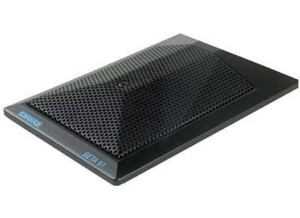
    The Shure Beta 91 is a unique boundary condenser microphone for use in the studio. I’ve only used this microphone a few times, but it’s the best of it’s type that I’ve used. It’s got a very high SPL capability as it can handle very loud signals. It’s got a half cardioid polar pattern, which makes sense considering the shape and design of the mic. It’s got a frequency range that goes from 20 Hz to 20 kHz… OVERALL OPINION The Shure Beta 91 is a really cool microphone to have around the studio. An outside engineer recently brought the mic into the studio where I work at, using it on the inside of a kick drum along with a Shure Beta 52A on the outside. I’d used boundary mics like this before, but not really for recording kick drum and have to say that I was thoroughly impressed. Between the Beta 91 and the Beta 52A on the outside, we got one of the most well rounded kick drum sounds I’ve heard to date. The mic is definitely going to be suitable for applications beyond just this, as boundary mics in general are great for picking up ambient sound in a room as well as for speech and conferences. They do now have the Beta 91A, although I can’t say if there are any major differences between the two of them. Although I’ve yet to have the means to try this theory, I believe the Beta 91 is a very versatile microphone and will most likely sound good for no matter what you use it for, although due to it’s shape and design it’s not going to be best for a lot of traditional applications. For what I’ve used it for, it really has a clear sound and another upside to the mic is that it’s super easy to place as all you need to do is set it down. The Shure Beta 91 is definitely the ultimate mic of it’s kind and worth exploring for all interested in a boundary mic.