Log in
EN
FR

Audix Microphones

151 products found

Categories
Series
Filter
Sort by
Audix
Evaluation
  • Reviewed or not
  • Editor’s award
  • Reviewed by Audiofanzine
Availability
  • Available or not
  • Sold new or used
  • Sold new
  • Sold used
Must-have products
  • All products
  • Flagship products
  • Best rated products
  • Hot products
  • Popular products
Price
  • Freeware
  • Low-cost (< $200)
  • Mid-range ($200 - $500)
  • Premium (> $500)
€
Clear
Sort by
  • Popularity
  • User ratings
  • Price - low to high
  • Price - high to low
  • Used price, increasing
  • Used price, decreasing
  • Name (from A to Z)
  • Name (from Z to A)
  • Added on
Choose a series
Sort results
  • Popularity
  • User ratings
  • Price - low to high
  • Price - high to low
  • Used price, increasing
  • Used price, decreasing
  • Name (from A to Z)
  • Name (from Z to A)
  • Added on
Filter results 151 results found
Brands
Evaluation
Availability
Must-have products
Price
  • Freeware
  • Low-cost (< $200)
  • Mid-range ($200 - $500)
  • Premium (> $500)
Show results

The best Audix Microphones reviews

The reviews Audiofanzine members found the most helpful.
  • « Huge sound! »

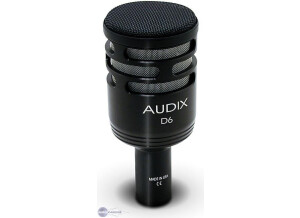
    The Audio D6 is a microphone touted as having a huge and undistorted kick drum sound by Audix. Audix engineered the D6 to have a diaphragm with very low mass so that the pickup of the beater of the kick drum is rapid and clean. The D6 is a cardioid microphone specifically tuned for kick and bass. It boasts a rather normal 30 Hz - 15,000 kHz frequency response range. It is also very compact, which makes it much easier to position in front of a kick drum. OVERALL OPINION I have generally found the Audix D6 to have a very explosive, thunderous quality to it. Despite Audix's claims, the D6 does not seem to have the tightness to it that one would expect, as the sound that this microphone produces compared to other kick drum microphones is huge. The problem with this is that the saturation of the sound tends to muddy up the general sound of whatever music is playing. Therefore, I am not the hugest fan of this huge microphone's sound in the live setting. However, everything else that Audix boasts about is certainly true. I immensely enjoy the ease of positioning the microphone on a kick drum, and which for the sake of convenience, this feature is immensely useful, I honestly would prefer to be able to adjust a little bit of the saturated sound that this microphone puts out. At any rate, the Audix D6 is a fantastic microphone for a recording situation if you are looking for that explosive boomy kick sound. Although it may not be for everyone, it certainly is a fantastic microphone for the situations that it lends itself to. It blows you away, and although that is not always a good thing, it is just as often a fantastic quality for a microphone to have.

  • moosers's review

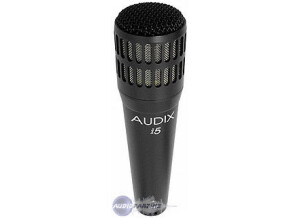
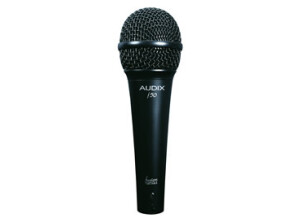
    The Audix i5 is a dynamic microphone for use on the stage and in the studio. I've only used the i5 as a vocal microphone for a live show, which was not until recently. The mic is a cardioid microphone and has a frequency response of 50 Hz to 16 kHz. The mic has been around for a few years and seems to be one of the more popular Audix microphone... OVERALL OPINION I really liked the sound of the Audix i5 for the short time that I've had the chance to use it. I don't own the mic but my good friend who I play with often has one for recording and shows and brought it to a recent gig where we used it as a vocal mic. While I don't know that I preferred the sound of it to the Shure Beta 58 that we were also using, it still has a very accurate sound and is a nice mic in it's own right. The mic is probably more versatile than the 58 as it's also advertised as an instrument microphone, although the Shure 57 is virtually the same microphone and has all the versatility that the i5 has. The sound of the i5 came in pretty crystal clear for vocals and I would imagine that this clear image translate pretty well for other instruments like drums and guitars as well. In the studio I don't know if I'd use it for too many other applications, but I've yet to be able to follow this practice. It's about the same price as the Shure SM57 or SM58, so it really just depends on what you're looking for. If you need strictly a vocal mic, I'd recommend the 58, but for something a bit more all purpose, the Audix i5 should absolutely be on the list of mics to check out.

  • moosers's review

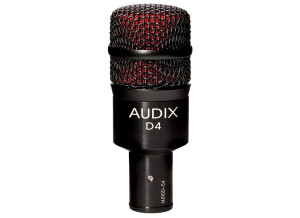
    The Audix D4 is a dynamic microphone capable of use in both the recording studio and on the stage, although I have only used it in the studio. It is a small mic and is easy to place on drums, which is what I use it for. It is built well and is enclosed in a sturdy case to avoid harm to the microphone. While it is built well, it does have a kind of cheap look to it, so don't let the appearance fool you. OVERALL OPINION I've been using the Audix D4 for about three years. While I was skeptical at first because of how cheap it is and because it does look kind of cheaply made, this is a great microphone for micing tom tom drums that are on the smaller end. This means drums that are 14 inches or less. They also will sound good on electric guitar, but they wouldn't be my first choice. While I would rather have a Sennheiser 421 on any tom tom drum, these are great because the the D4 is about a third of the price. This makes them a great option for the home studio owner looking for a few dynamic drum mics on the cheap. Even though I do like the D4, I would also probably rather have a Shure SM57 for any situation when it comes to recording and is only slightly more expensive than the D4. This being said, this is personal preference and I would encourage interested parties to shoot out the mics themselves if they can as it all depends on what you would like to use the mic for. This is the only Audix microphone I have used, so I don't know how it compares to any of the other Audix microphones. All in all, the Audix D4 is definitley worthy of a look when it comes to recording drums.

  • joshsound's review

    The Audix D1 is the first in their D line of drum mics. It is a dynamic moving coil capsule type which does not require any phantom power. The polar pattern on this mic is a cardioid that is maybe approaching hyper-cardioid. I find that this mic really has great off-axis rejection, much more so than the other mics in the D line. This makes it very well suited to stick in the center of a drum kit where there is noise coming at it from all sides. The mic has excellent transient reproduction, which means that you will get very snappy drum recordings. It doesn't have an attenuation pad that you can switch on, but it can handle a very high SPL before you get any distortion. Due to the hyper-cardioid pickup pattern and the better transient response, I would definitely recommend this mic for use on your snare drum. Believe it or not, it will sound better than your SM57! I personally like to use the Sennheiser 421 on snare drums the most, but this is my second favorite dynamic mic for this purpose. In addition to giving you a nice, full snare drum with a great attack, the bleed rejection is fantastic. No more trashy hi-hat sound coming in through your snare mic! The great rejection also makes it well suited for use in a live situation, where noise rejection will help your mixer bring out the sounds of your instruments much better. OVERALL OPINION I have been using this for nearly a decade. My favorite things about it are the super tight polar pattern and the rejection it provides, and the very fast transient response even though it's a dynamic mic. It is a very cheap mic for the imrpoved sound you can get, so I think it's a good value. If you want to upgrade from your SM57 for a snare drum mic but you don't want to pay for a Sennheiser 421, you should consider this one. Great mic!

  • joshsound's review

    The Audix D2 is probably the second most popular of their D line of drum mics, behind the more often used Audix D6 kick drum mic. The D2 is tailored to be used on close miking rack toms. It is light-weight and short, which makes it a lot easier to mount it on the rim of drums and still be able to point it at the skin right on, which gives you a more punchy and direct drum sound. It is a dynamic moving coil mic, so it doesn't need any phantom power. The pickup pattern is cardioid, so that will help it to reject any off axis sound from nearby drums or hi-hat. This will connect to your preamp or mixer with an XLR cable. The frequency response goes down to about 50Hz or so, which is plenty low enough for rack toms. There is a little bit of a bump around 200Hz, which is nice for making your toms sound more full and weighty. There is also a presence peak in the upper mids to help give your drums a better attack. OVERALL OPINION I have been using these for a very long time on toms. I feel that they usually don't do as good of a job as the tom mic king, the Sennheiser 421, but on some drums the Audix D2 just fits better and you'll get a better sound with them. They are also a lot more convenient to physically attach the drum. I've always found the 421's very cumbersome to work with. The drum sounds you can get with the D2 tend to sound good right away, which helps to minimize time spent fussing with EQ to get a passable drum sound. The D2's are also very cheap, which means that they're going to be a great value if they're nearly stacking up with the 421's. I like these mics, and would recommend them.

  • joshsound's review

    The Audix D3 is a dynamic moving coil mic from Audix's D line of mics. It doesn't require any phantom power. The mic has a cardioid pickup pattern which is not switchable. It doesn't have an attenuation pad switch. This will connect to your mixer with an XLR cable. Some people like to use these on rack tom drums, but I feel the better application for this mic is guitar cabinets and brass instruments. You could definitely use this live, since the cardioid pickup pattern will help to reject off axis noise. The sound quality is good enough that you could comfortably use it in the studio as well. The transient reproduction on this mic tends to be a little bit lacking, which makes it less suited to record drums which are all about transients. Brass instruments and electric guitars are a lot more forgiving in that category, and in some cases can be made to sound smoother with slower transients, so that's why I recommend this &quot;drum&quot; mic for these other sources. OVERALL OPINION I have had one of these for many years. For a long time I rarely used it, but one day I was short on mics and I had to put one on a guitar cab. I was actually very surprised at how good it sounded, and since then it has found its way into my rotation more frequently. It has a good low end warmth since it was originally supposed to be for toms, but the mids are definitely pronounced enough to represent electric guitars and brass instruments well. I would not bother getting this for drums since the other mics in the D line do a better job of that, but for an all-purpose dynamic for loud instruments, this mic does a good job. I recommend it for that use.