Log in
EN
FR

Behringer Electrostatic microphones

17 products found

Categories
Filter
Sort by
Behringer
Evaluation
  • Reviewed or not
  • Editor’s award
  • Reviewed by Audiofanzine
Availability
  • Available or not
  • Sold new or used
  • Sold new
  • Sold used
Must-have products
  • All products
  • Flagship products
  • Best rated products
  • Hot products
  • Popular products
Price
  • Freeware
  • Low-cost (< $55)
  • Mid-range ($55 - $90)
  • Premium (> $90)
€
Clear
Sort by
  • Popularity
  • User ratings
  • Price - low to high
  • Price - high to low
  • Used price, increasing
  • Used price, decreasing
  • Name (from A to Z)
  • Name (from Z to A)
  • Added on
Choose a category
Selected category: Electrostatic microphones
Sort results
  • Popularity
  • User ratings
  • Price - low to high
  • Price - high to low
  • Used price, increasing
  • Used price, decreasing
  • Name (from A to Z)
  • Name (from Z to A)
  • Added on
Filter results 17 results found
Brands
Evaluation
Availability
Must-have products
Price
  • Freeware
  • Low-cost (< $55)
  • Mid-range ($55 - $90)
  • Premium (> $90)
Show results

The best Behringer Electrostatic microphones reviews

The reviews Audiofanzine members found the most helpful.
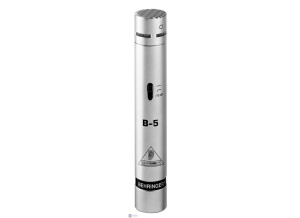
  • Deleted member's review

    *Microphones are very subjective. Some microphones that work for some brilliantly may be disastrous on others. It is therefore important to understand the context in which this review is written and take it with a grain of salt, like all reviews on microphones should be treated.* I have rather limited experience using stick condensers, as I usually work in vocals. I've been told they work well on choirs, but that's not exactly easy to test out. The Behringer B-5 is a small diaphragm stick condenser that clearly in existence to undercut the higher end stick condensers. And undercut it does. All things considered, it's a quite effective microphone. The Behringer B-5 includes a low frequency roll off filter and a 10 dB pad, although this bizarre trend that cheap microphones share in putting the roll off and pad on the same switch is beginning to get on my nerves, as both cannot be engaged at once. This is a rather annoying trend that needs to end as soon as possible. Overall, in the little time I had to use it, I found that it was surprisingly pleasant, although, as I expected, once I started stacking recordings done with the Behringer B-5 together, they began to progressively get harsher and harsher. And considering its target market, I feel compelled to tell you that these microphones do not plug into a computer directly, and require phantom power to operate. They need to be plugged into an interface with audio to digital converters which is plugged into your computer. It may seem obvious, but many newbies are not aware of this need and become needlessly frustrated. OVERALL OPINION The Behringer B-5 small diaphragm condenser is surprisingly nice, and I could see someone using it to mic a few things in a mix. However, as I suspected, it is very important to not use this microphone dominantly in a mix, because the frequency buildup will become very, very apparent and harsh. However, for the price, and even against my general distaste in Behringer as a company for most things, I can actually recommend this microphone, although I would tell you with all my heart to save up for something better.

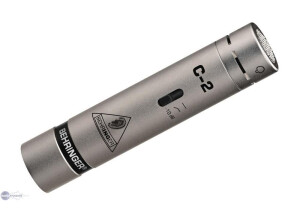
  • « Brilliant mics!! »

    With the behringer c 2s I have recorded in the studio a range of different instruments such as an acoustic guitar, a banjo, a mandolin and some hi hats, we also recorded an amped up bass but it did not sound that great. The mics come as a pair, they are condenser mics so they are quite sensitive, do not think that you will be able to use them live as they pick up quite a lot of background noise if you are not in the right environment. They are nice and small but have a problem picking up low frequencies which is why I use these for guitars and tenor instruments mainly. The connection is XLR. OVERALL OPINION I love the fact that they come as a pair at around £50, it seems like an absolute bargain if you ask me. They are nice and small, great for positioning for recording such as the X and Y and near coincident positions to record guitars. The quality of sound is rather good to say how cheap they are, expect to do a little bit of tweaking on your pro tools session though as the frequencies can be a little hard to deal with some times. But great for recording on a budget. I know I said I like how small they are but also this can be a bad factor, some people in the studio have misplaced the mics and have lost a full recording session whilst trying to find them again. This is just down to the people that own them though in my opinion. I have a range of mics for recording and I would recommend these to any one that is wanting to do some home recording or people that are starting up a studio and need to buy some mics before they make some money to buy higher quality ones. I would definitely buy some more if these were to break for some reason, I do not think that they will though since they are quite strong feeling and have been dropped a significant number of times and still work a treat.

  • « To start out before moving on to something else »

    What kind of mic? (for vocals, instruments, both...) I used it to rap and for vocals... Now I use it to sing karaoke with my wife The technology? (electret, condenser...) Condenser, cardioid, in short a very simple mic. OVERALL OPINION How long have you been using it? I used it less than a month. I tried to do the best I could with it (which is not much) but I quickly moved on to a Prodipe ST1, it's like night and day. Did you try any of other models before buying this one? I used a friend's home studio gear (SC600) and the differences were obvious. I then switched to an AT2020 and a ST1 Which feature do you like the most / the least? Well, to be honest, if you are just taking up music and you don't know anything (like everybody when we start out) you are very likely to come across this mic, which is the least expensive on the market but also the one with the worst performance. Investing at least on a SM57 would be much more profitable. It sounds pretty bad, but when we are starting out and don't know much about anything, it's OK. It has a very big dip in the mids while the low mids are really boosted. The highs and lows are not even worth talking about. This mic is a disaster and the only use I have for it is to do karaoke with my wife (even though an SM57 is much more interesting) ... How would you rate its value for money? The least expensive on the market but also the worst, so its value for money is average Based on your experience, would you buy this product again? ... IMHO, it's interesting if you are just starting out to realize whether you really love making music and see if you can invest a little more in real gear. But if you asked me to buy it again now, I would most definitely NOT do it.

  • « failed »

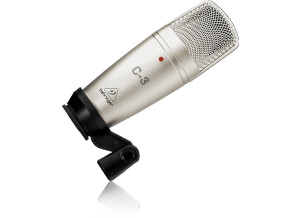
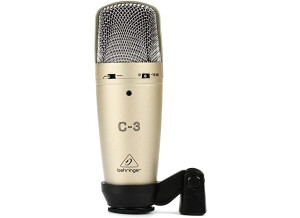
    The C3 from Behringer was an up and down mic for me. At first I was happy with it, it has some issues with losing a lot of frequencies from time to time. The crazy thing is that sometimes when I was using it , it would work fine and sound great, but then other times after recording with it then going back to mix the song before it gets mastered and you look at the eq wave forms from what you just recorded with the c3 some of the top end or high’s will be really weak and thin and the mids and lows will be thick and stong. Which means that I had to do some boosting on the higher frequencies which can really get sloppy if its not done right so I had to have someone else to it so I didn’t mess it all up because for some reason I couldn’t get it clean. But this is just too much of a hassle and for the mic to be unreliable, every time I used it I was wondering if it was going to cause this issue again, that is something that I don’t want to be worried with down the road. I want to record and be good to start mixing it down easy before It gets mastered. OVERALL OPINION The C3 is actually a failure compaired to the sound of the version that was out before this one, that is very disappointing because I have used the c-1 and I loved it many years ago. So when I was thinking of getting the C3 I got it at a discount so I thought it was a steal but when it was all done I ended up taking the mic back for its inconsistency. I had a lot of problems with e frequencies on this mic, I wouldn’t purchase it again.

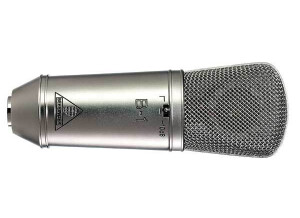
  • « Behringer B-1 »

    I'm a part-time DJ for a couple of local clubs. I'm not professional nor do I intend to be but it's a great hobby. I play guitar somewhat but other than that I enjoy mixing it up more. This condenser microphone only cost about $89 and at least in this case, I'll have to admit that you get what you pay for. It did come with a decent hard-case that was padded well. The mike does work pretty decently if you're not making a professional quality recording. The trick with this particular model is to only use the -10db setting and always use the foam shield that comes with it. Otherwise, you will pick up every little background noise even the smallest that most mikes wouldn't catch. I've not been happy with it for recording instruments as it seems a bit flat, not picking up the full tones for some reason. It does pretty decently with vocals though. The only vocalist that didn't record well with the Behringer was one woman who had one of those breathy type of voices. The mike unfortunately caught every little inhale/exhale so that she sounded quite wheezy. I am on my second one of this model because the first model went berserk after only a year of use. I was recording and all of a sudden it just began making these popping noises and then a hissing noise and it died. I thought it was because I had dropped the case (even though well padded) because condenser mikes are rather known for being delicate. I've since heard of the same poor durability from others so I no longer think that is what happened. Overall, I guess the Behringer B-1 will do okay for the home studio but for anything else, it's better to pay more to get something that will do the job satisfactorily. This review was originally published on http://www.musicgearreview.com

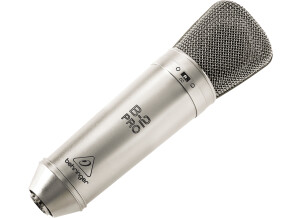
  • « Behringer B2-Pro Condenser Microphone »

    I paid $200 at an online music store (I think B&H photo) for the mic to do some home studio vocal recording. For the money, less than Rhodes or AKG's similar models, and way-way less than any Blue mic, it sounds great. It is very transparent and quiet. When I went to the studio I do my mastering at, even the engineer commented on the quality of the vocal recordings. There is some noticeable sibilance around the "ess" vocal frequency, that is not quite flat. We used a software de-esser to adjust for the problem. The construction is top notch. Heavy and sturdy casing, also came with a very nice (and hard metal) carring case and windscreen. For any newbies such as myself, don't blow $800 on a studio condenser when you can record very high quality vocals with this this mic (the B2-Pro) with small amounts of necessary correction. This review was originally published on http://www.musicgearreview.com